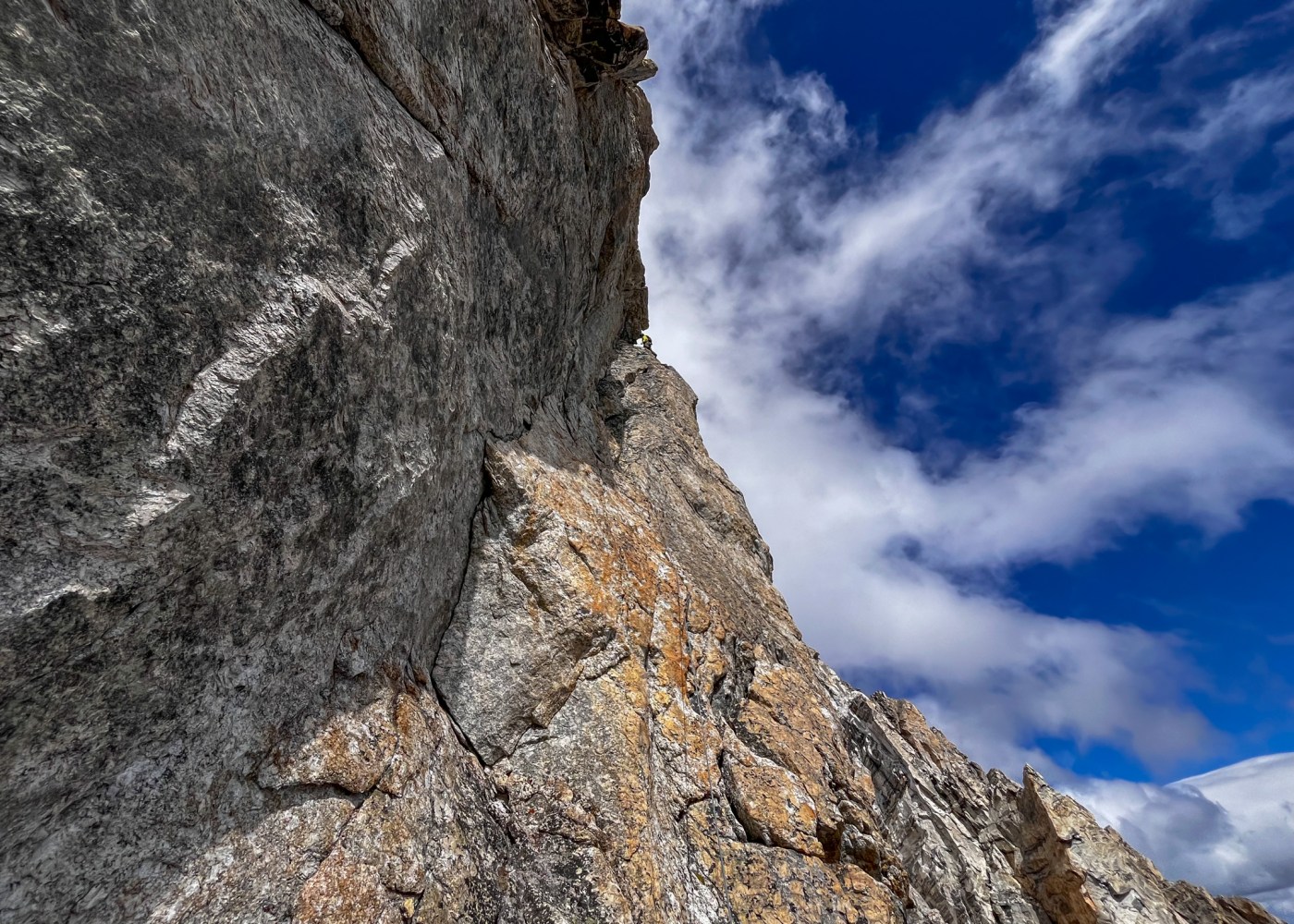
The Beyer East Face is a highly reputed Teton classic, weaving a logical 900 foot line up one of the most impressive walls in Grand Teton National Park, with several standout pitches and an exciting summit scramble to the 13,775 foot summit of the Grand Teton. Noah Burbanc and I climbed the route in 17 hours car-to-car on September 26th, 2026.
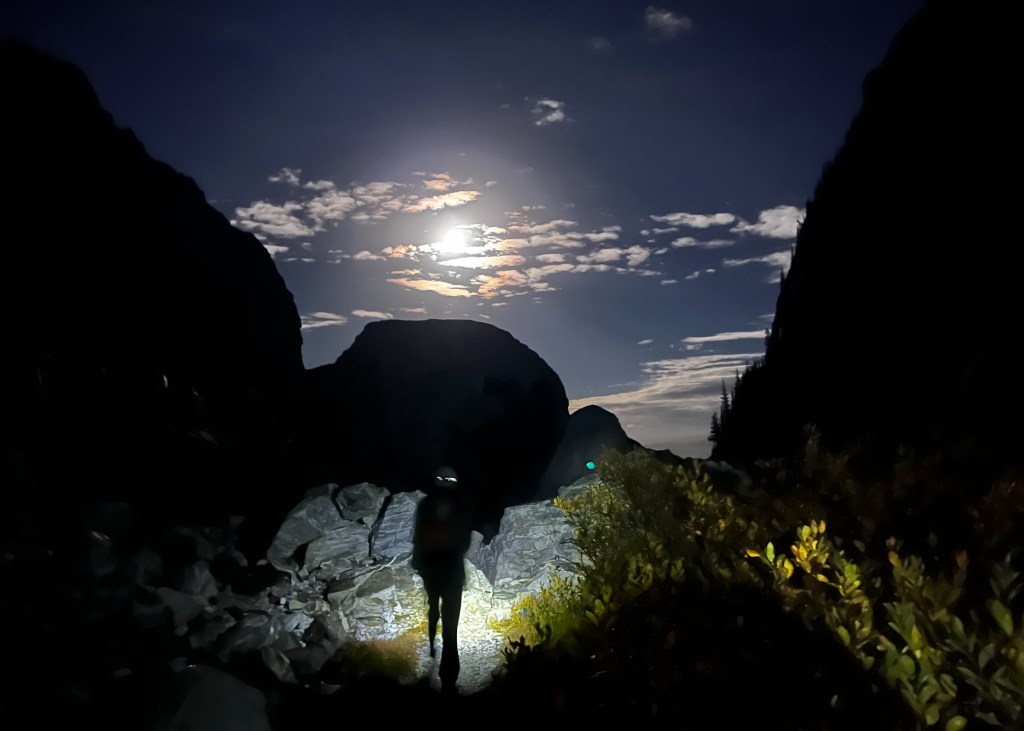
The Beyer East Face is widely regarded the best route of its grade on the Grand Teton, weaving a natural and direct line up the southern margin of the impressive East Face. Between epic positioning, generally stellar rock quality, two especially memorable crack pitches and a heroic summit scramble, all between 12,000 and 13,000 feet with stretching views of Garnet Canyon and Glacial Gulch alike, its a surefire classic. However, the Beyer ain’t no Open Book or Armed Robbery. Defended by a tenuous if not downright dangerous approach, and a committing 7,000 feet of of vertical gain if taken to the summit, this gem beckons commitment, and a motivated start if you don’t like lugging overnight gear into the alpine… like me. On a ruthlessly windy day of swirling 40mph southwesterly gusts and crisp fall temperatures, Noah Burbanc and I packed all the warm stuff, extra headlamp batteries, and a surplus of stubbornness to Lupine Meadows, casting into the night at 5:30AM. Why didn’t we pick a day without 40mph winds? Not everyone has a trust fund to wait out poor conditions, and sunny skies without afternoon precipitation is a precious commodity.
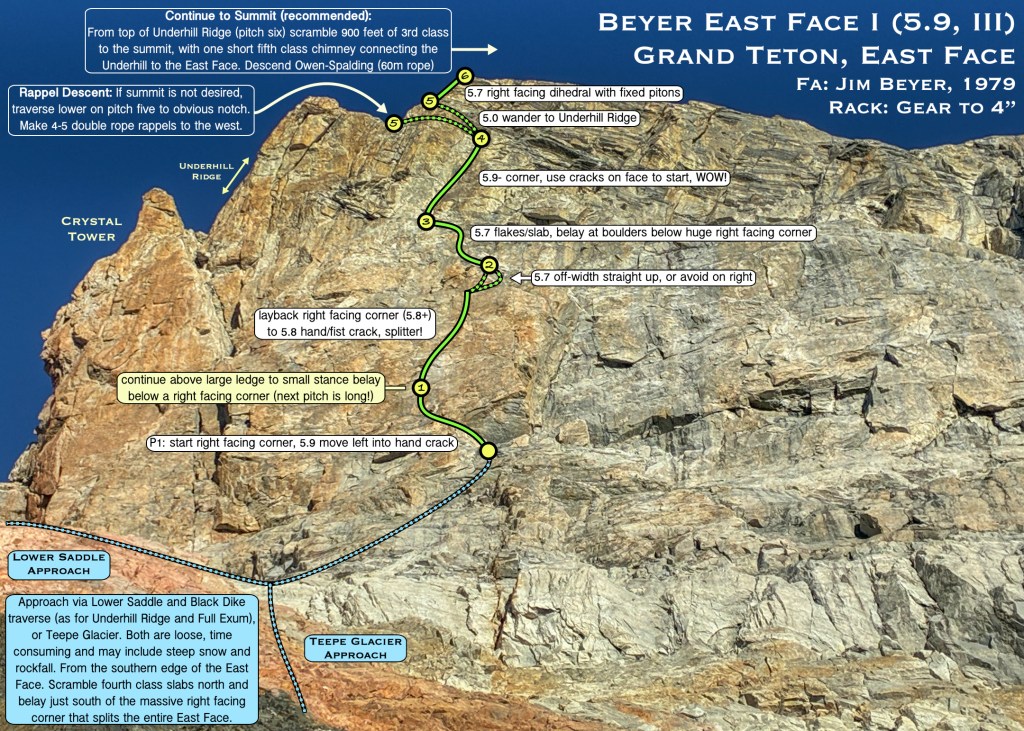
The supreme gatekeeper of the East Face, and what would ultimately be the most dangerous portion of our day, was the approach. The recommended route is via the Lower Saddle and Black Dike Traverse, contouring past the Full Exum Ridge, Petzoldt and Underhill Ridges to the southern end of the East Face. While generally considered safer, this route is significantly longer and involves crossing the Sterner Couloir – a Russian Roulette rockfall gun barrel which holds steep snow and ice into mid-season. Option two, generally less popular, is directly up the south side of Teepe Glacier. Benefits to this approach include multitudes less distance and route finding. Detriments include steep and often hollow snow which warms quickly in early summer, or satanic choss of epic proportions when melted. With extreme sunrise wind gusts ripping through the Lower Saddle, we chose the more sheltered satanic choss. How bad could it be?
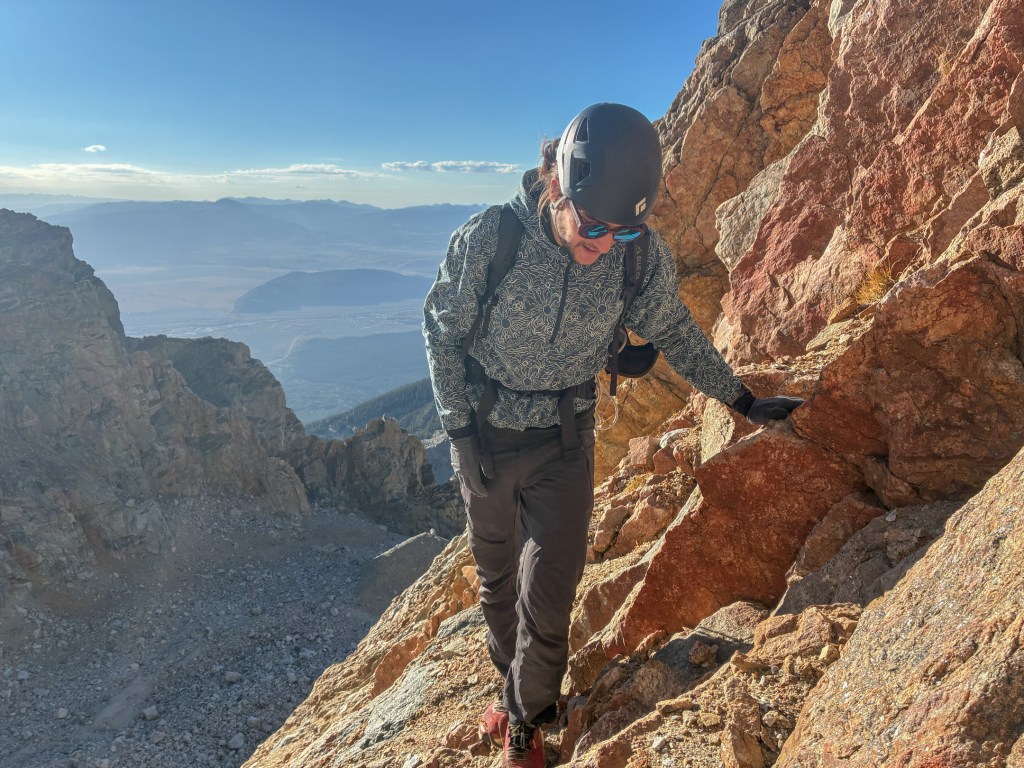
To cut a long story short – I’ve done hundreds of off-trail Teton approaches and consider myself a choss aficionado, yet Teepe Glacier was inconceivably worse than anything I’ve experienced or thought possible. Imagine four-points-on crawling up 40 degree slopes of marbles bisected by fatally large vertical bands of decomposing blocks covered in sand. Natural kitty litter sloughs cascaded from above at the same frequent intervals on which we questioned our life decisions. The last 500 feet preempting the route taxed us an entire hour. Either this approach has changed since glacial recession, or the guidebook author was on mescaline. By 10:30AM, 5,000 vertical feet and five hours after leaving the car, we set sail for the sky.
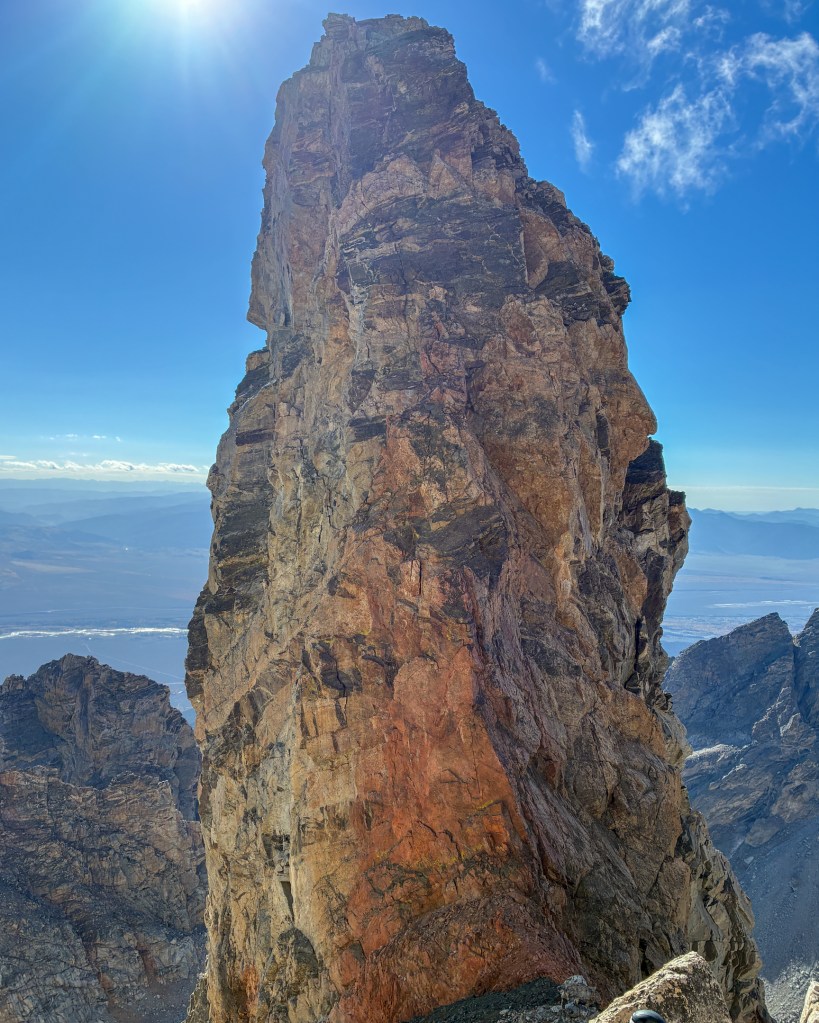
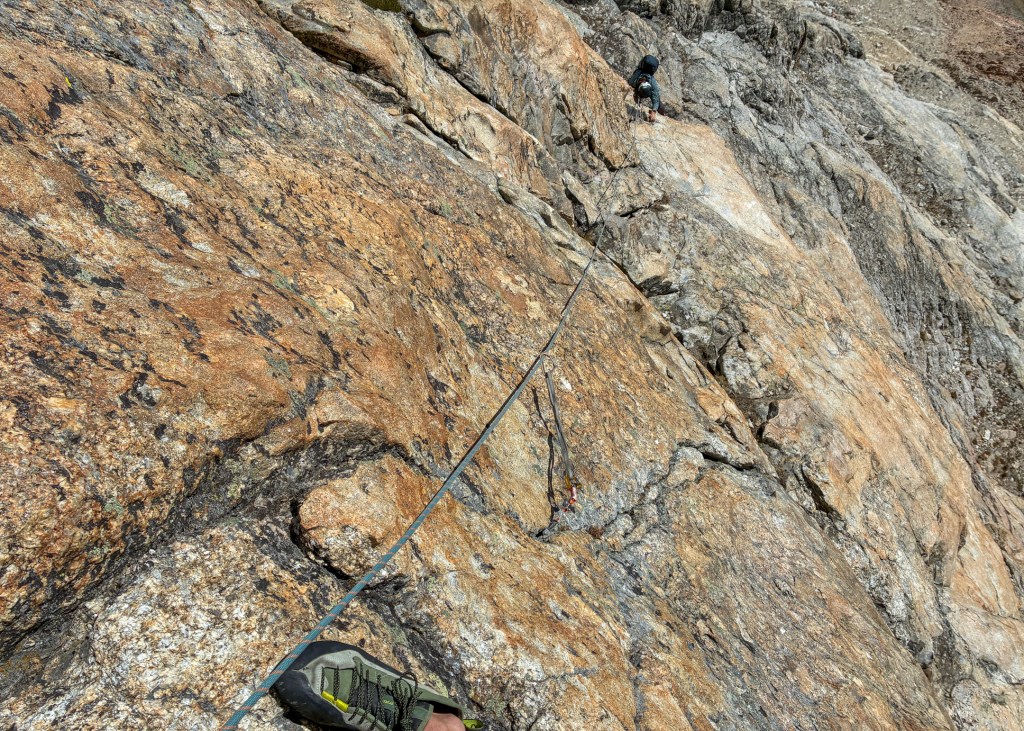
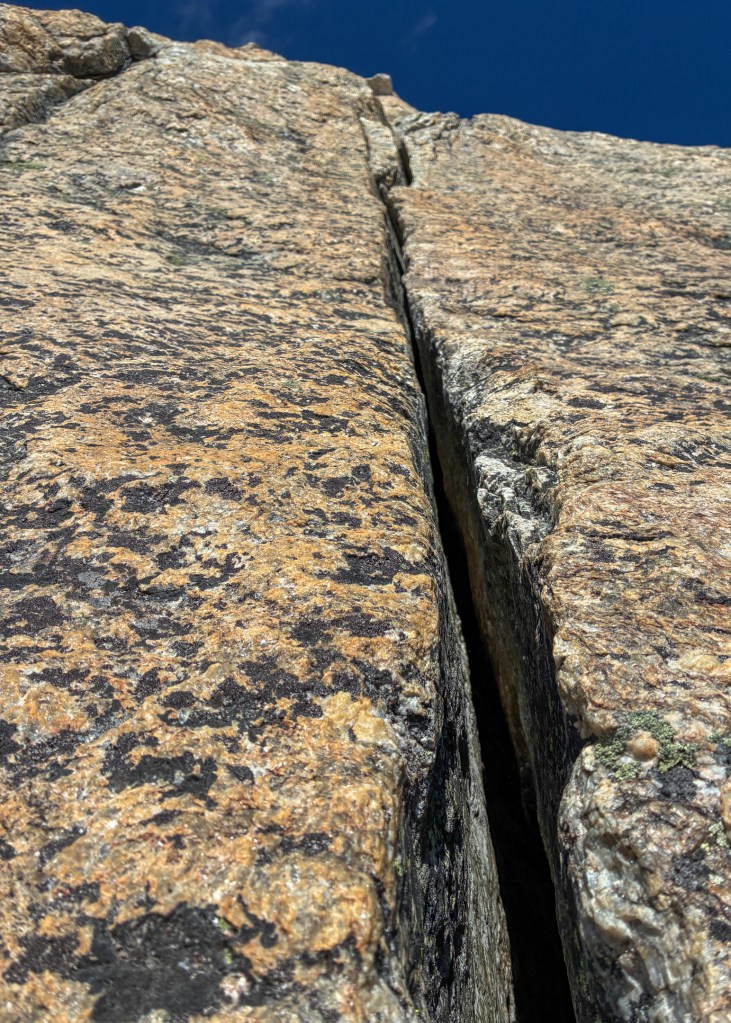
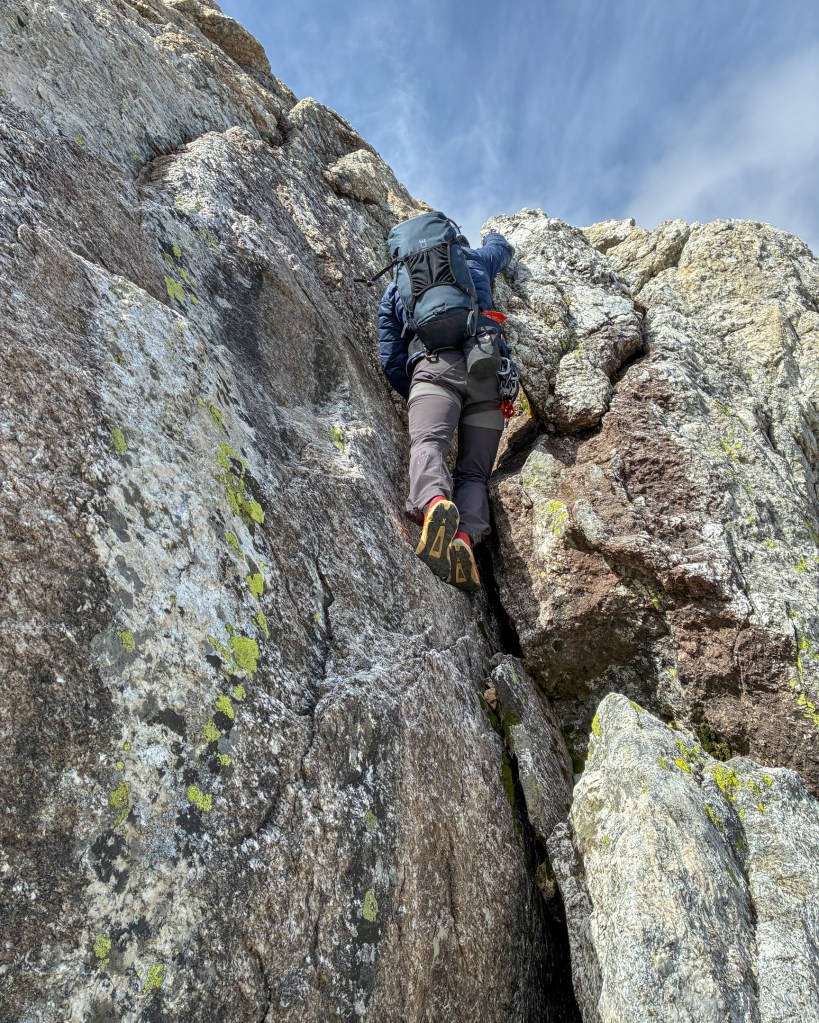
Pitch one began about ten meters south of the massive right facing corner which splits the entire East Face, in a much smaller and slightly arching right facing corner. After a few body lengths comes the hardest singular move of the climb, a strange bouldery reach over an arete, on poor feet, to a thin hands crack on the left face, which quickly fizzles into a large ledge. With a 70 meter rope this ledge would be a logical belay location, but with only a 60 meter rope and facing a long second pitch, we continued to a small stance ten meters higher. The second lead felt like a sandbag at 5.8, though high altitude, exfoliating rock, and rapidly mounting cross winds could’ve skewed our perception. We sought the Beyer for its sheltered reputation in prevailing southwesterly winds. We certainly had more reprieve than the frayed Exum Ridge climbers we would meet on descent, but with every pitch climbed we became increasingly more exposed. After a tenuous layback on crumbly chips I regained solid rock and an epic, progressively widening, 100 foot hand, fist and eventually off-width crack. The highlight of this rope-length, if not the entire climb, was an exceedingly smooth ten meter fist crack with no ubiquitous Teton bail-out face holds. Bumping a sole #4 camalot while swimming fist jam after fist jam at 12,500 feet, all while getting buffeted by deafening wind is a feral experience I won’t soon forget. Noah, a steel fingered 5.12 sport climber in his youth, took a significant break from rock climbing the past few years and has no crack climbing experience. By the look on his face at the belay, following this pitch was intense. Fortunately for our short fall day, he dealt with any struggles expediently.
Pitch three connects two large ledge systems with a playful 5.7 slab of positive flakes, trending left to a pile of large boulders beneath the obvious crux corner. By now the wind was really cranking, clouds increasing, and the sting of early winter had us both donning every extra layer. For me, that meant a wool base layer, sun shirt, light wind breaker and a 700 fill expedition puffy on my upper, wool long underwear and climbing pants on my lower, socks in my oversized climbing shoes, a winter hat, and a face cover. I was officially a fluorescent yellow Michelin Man, ready to battle steep 5.9 at nearly 13,000 feet on the Teton’s tallest peak. Leading the crux corner with progressively numbing fingers and a very light 5.9 rack was transcendent. By the belay my consciousness all but assimilated into the wind. My movement was slow – yet steady, intuitive and deliberate. The hardest moves involved a strenuous transition from a finger crack on the face into the main corner by way of an overlapping flake. Higher, powerful laybacking and exposed stemming on bomber feet, and an escape slab studded with large quartz crystals, delivered dessert. Of the 15 times I’ve summitted the Grand Teton, this pitch will forever be a highlight.
If you get value from Ten Thousand Too Far, please consider supporting with $5.10 per month through Patreon (and receive extra bonus content), or with a one-time donation. Any and all support is greatly appreciated. I do not have any paid sponsorships.
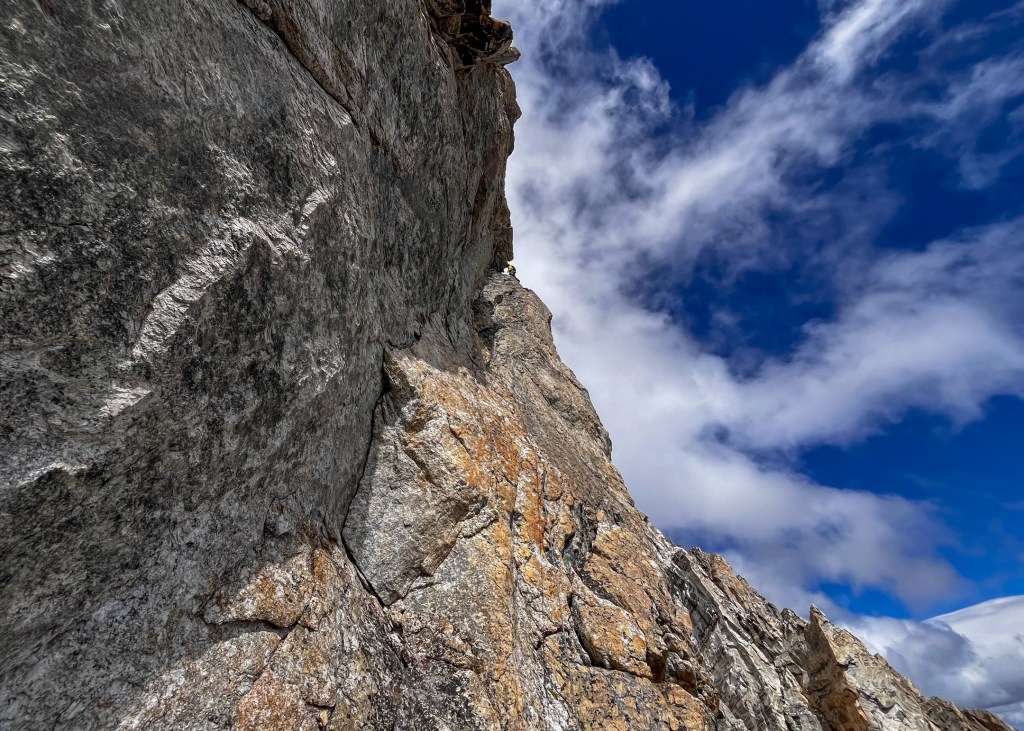
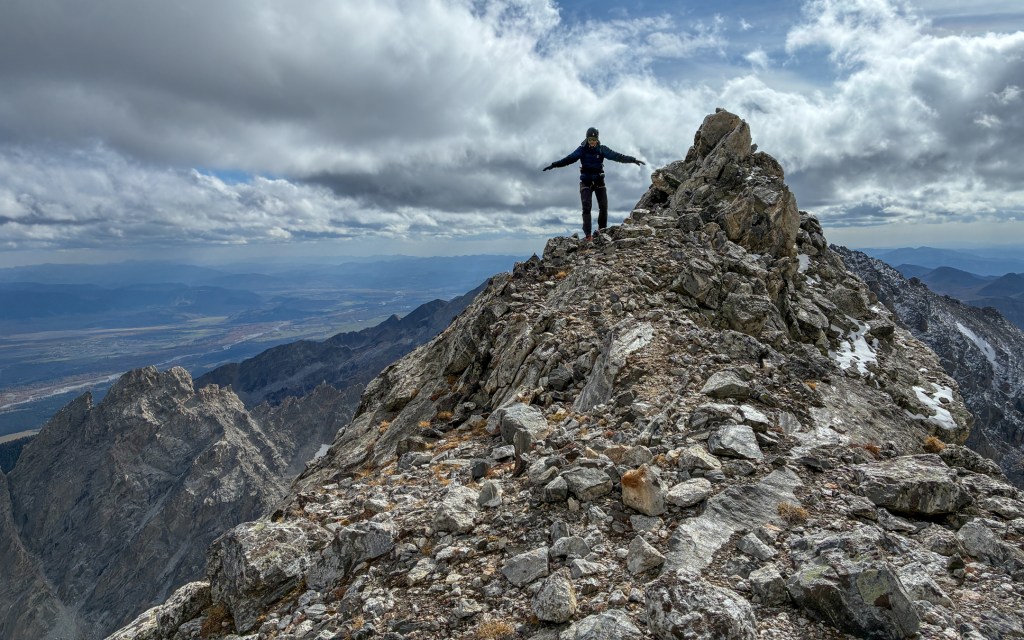
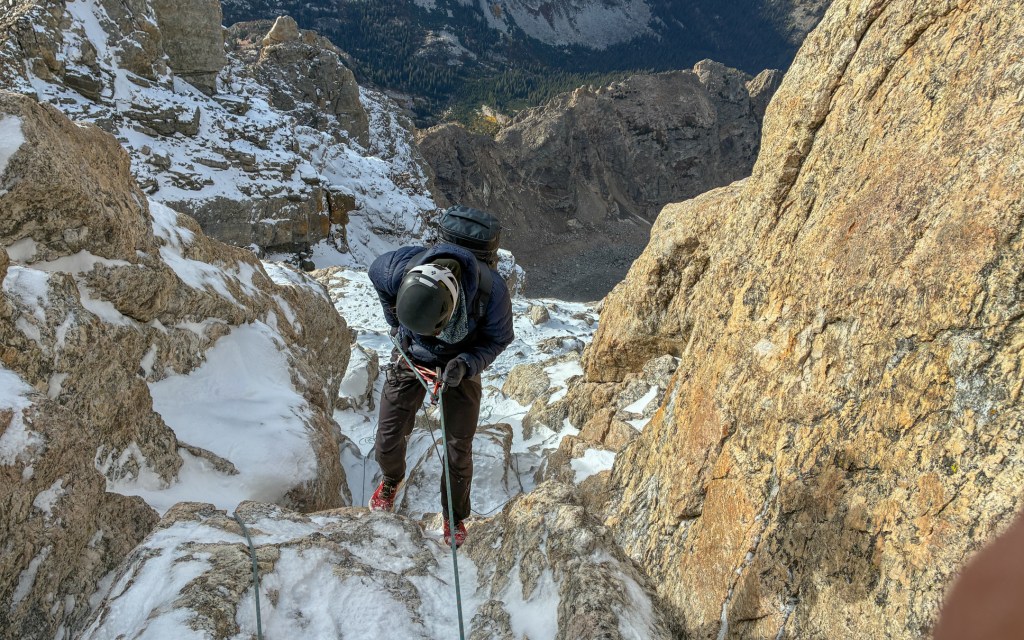
Many climbers traverse off route after pitch four, forgoing the final pitch and 900 feet of summit scrambling for five double rope rappels west into the Sterner Couloir. We had a tag-line in case of emergency – and this weather certainly could’ve classified as an emergency – but the thought of 60 meter rappels in a gale storm seemed outrageous. By the golden late afternoon light we raced up the last two pitches, 5.0 and 5.7 respectively, coiled ropes and pointed west. One short 5th class chimney easily soloed in approach shoes devolved into pleasant slabby scrambling to the familiar 13,775 foot summit. And somehow, by the time we topped the big stone, you could’ve lit a cigarette with a match. Descending the Owen-Spalding was a bi-polar shift in scenery, blanketed with widespread snow and ice from the most recent storm. Sans crampons and axe we moved cautiously, chipping footholds through verglas with carabiners and utilizing both fixed rappels. Dusk struck by the Lower Saddle, and nightfall by the North Fork moraines. We reached the car at 10:30PM, 17 hours round-trip.
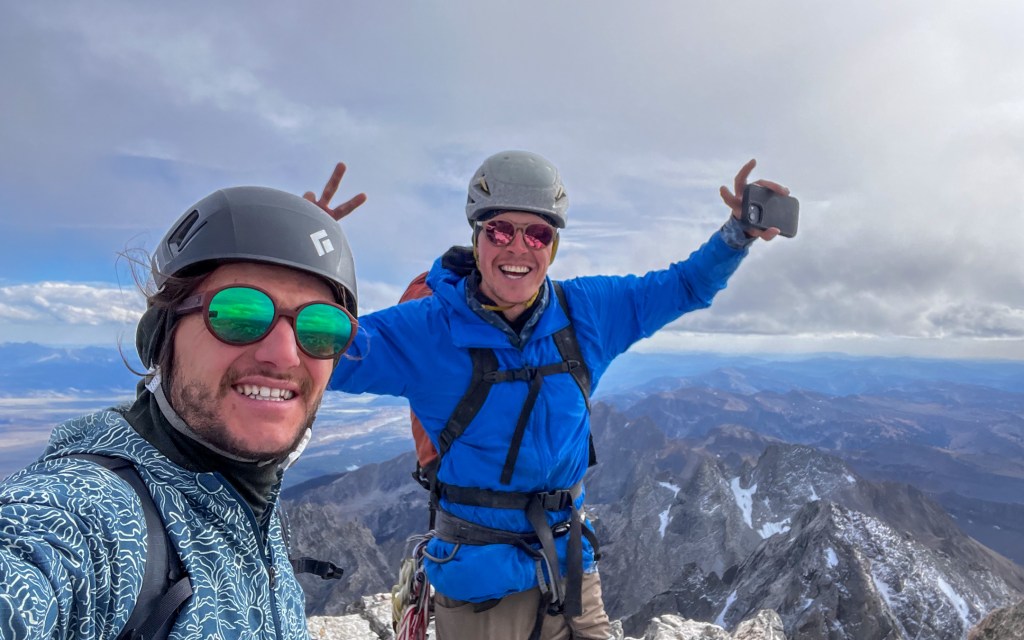
I’ve climbed nearly 100 multi-pitch routes in Grand Teton National Park, and this day on the Beyer East Face sits firmly in the top ten. The East Face of the Grand Teton is one of the most visible, aesthetic and alluring granite panels in the park. Pitches two and four are excellent. Rock quality is near perfect, and every belay is comfortable. But if not taken to the summit, the Beyer loses significant appeal. The last 5.7 pitch is a unique zebra-striped open book dihedral at 13,000 feet, the Underhill Ridge summit could almost be considered a standalone Teton peak, and the final summit scramble is the most regal fourth class romping I’ve ever done. Lastly, you summit the always novel Grand Teton. Both Noah and I feel an ascent of the Beyer East Face would feel incomplete without summitting, especially given the effort and complexity of the approach. Conferring with Mountain Project, 17 hours seems fast for a car-to-car push. But we never moved with any deliberate urgency, enjoyed a leisurely summit lunch, and I spent the entire summer at sea level in the Mojave Desert. This was a spectacular alpine day with great company, and to anyone considering the Beyer themselves, we both give full endorsement.
Want to support? Consider a donation, subscribe, check out my Patreon page, or simply support our sponsors listed below.
Ten Thousand Too Far is generously supported by Icelantic Skis from Golden Colorado, Range Meal Bars, The High Route, Black Diamond Equipment and Barrels & Bins Natural Market.



enter your email to subscribe to new article updates
DISCLAIMER
Ski mountaineering, rock climbing, ice climbing and all other forms of mountain recreation are inherently dangerous. Should you decide to attempt anything you read about in this article, you are doing so at your own risk! This article is written to the best possible level of accuracy and detail, but I am only human – information could be presented wrong. Furthermore, conditions in the mountains are subject to change at any time. Ten Thousand Too Far and Brandon Wanthal are not liable for any actions or repercussions acted upon or suffered from the result of this article’s reading.


Leave a Reply