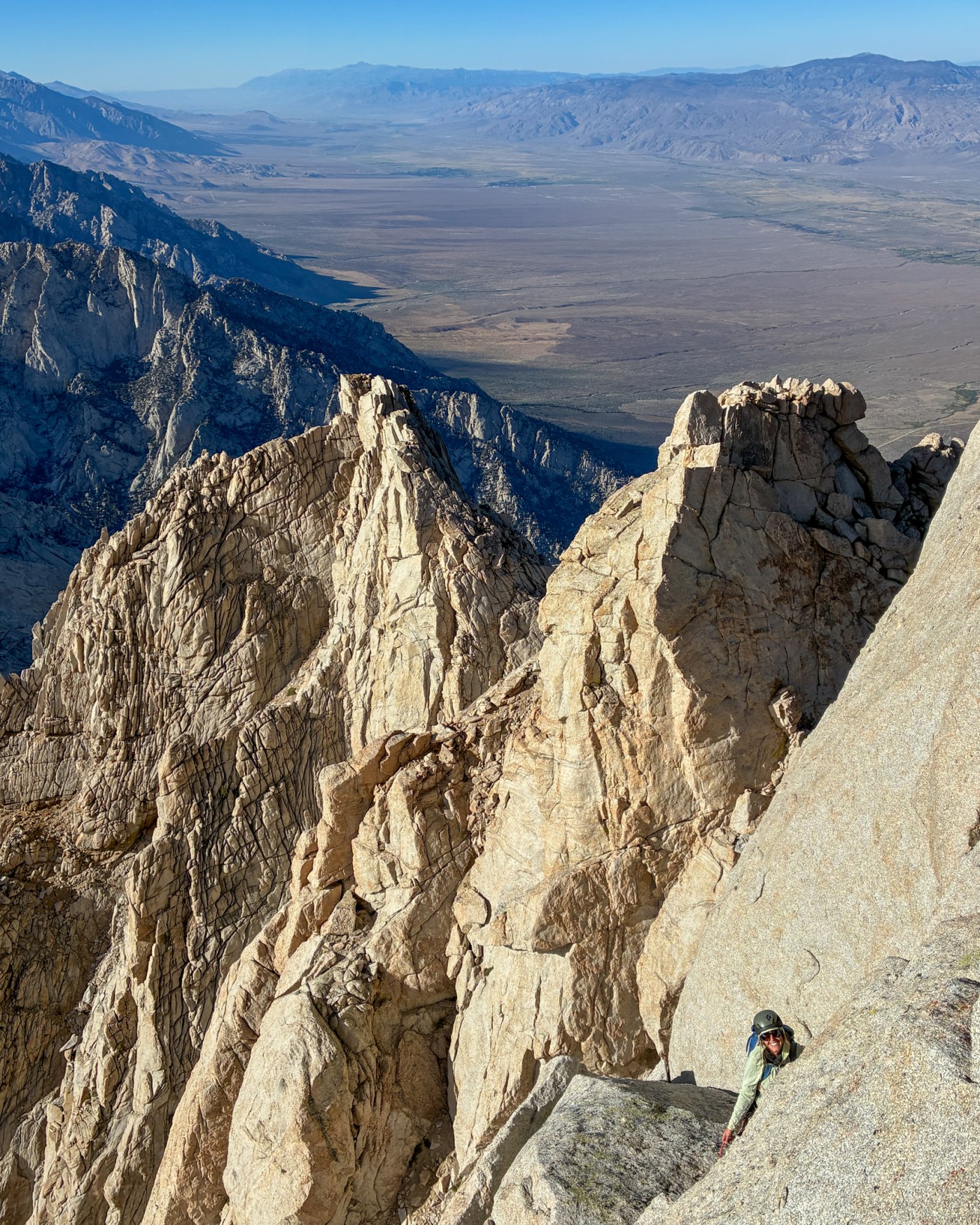
The North Ridge of Lone Pine Peak is a classic Sierra ridge scramble, with a handful of 5th class pitches dispersed over some 2,000 feet of technical climbing, and 5,000 vertical feet in full. The granite is as excellent as it is golden – and the views are world class.
Bobbi and I scored a three day weekend for Labor Day, and capitalized with a five hour strike mission to Whitney Portal, California. Our hope was to nab an elusive walk-up permit for Mount Whitney or Russel – the two tallest peaks in continental United States – but got predictably rejected. Don’t even get me started on California wilderness permitting. By 2030 we’ll need permits to photograph Whitney from the highway. Instead we picked the highest climbing objective which didn’t require permitting or overnight backcountry camping. Difficulty was not the focus, but rather, getting as high and far away from civilization as possible.
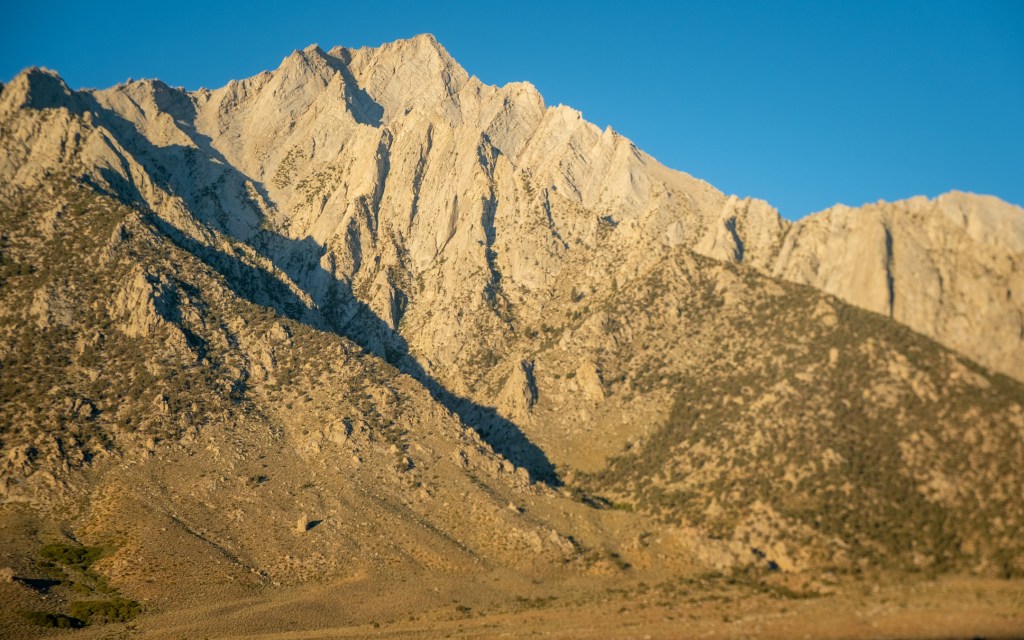
The North Ridge of Lone Pine Peak is a South Sierra classic, dominating the Owens Valley and quaint town of Lone Pine with 7000 feet of direct prominence. The technical climbing commences at 11,400 feet and continues unrelentingly to the 12,950 foot summit. Four significant towers obscure a linear path, requiring complicated traverses, down-climbs, alpine route finding experience and elevated commitment. And while the rock quality is generally excellent, loose blocks lurk around every corner. In his guidebook “The Good, the Great and the Awesome”, Peter Croft describes this route as a good choice for rest days or when hungover, but we shamelessly disagree. Herein lies a full spectrum alpine adventure that defies an otherwise pedestrian 5.6 grade, evidenced by the graveyards of bivouac sites beneath every tower. Bobbi and I wouldn’t shiver through a cold unbeknownst night on Lone Pine Peak, but we would be awfully late for dinner. Our biggest lesson learned? Don’t underestimate Sierra ridges.
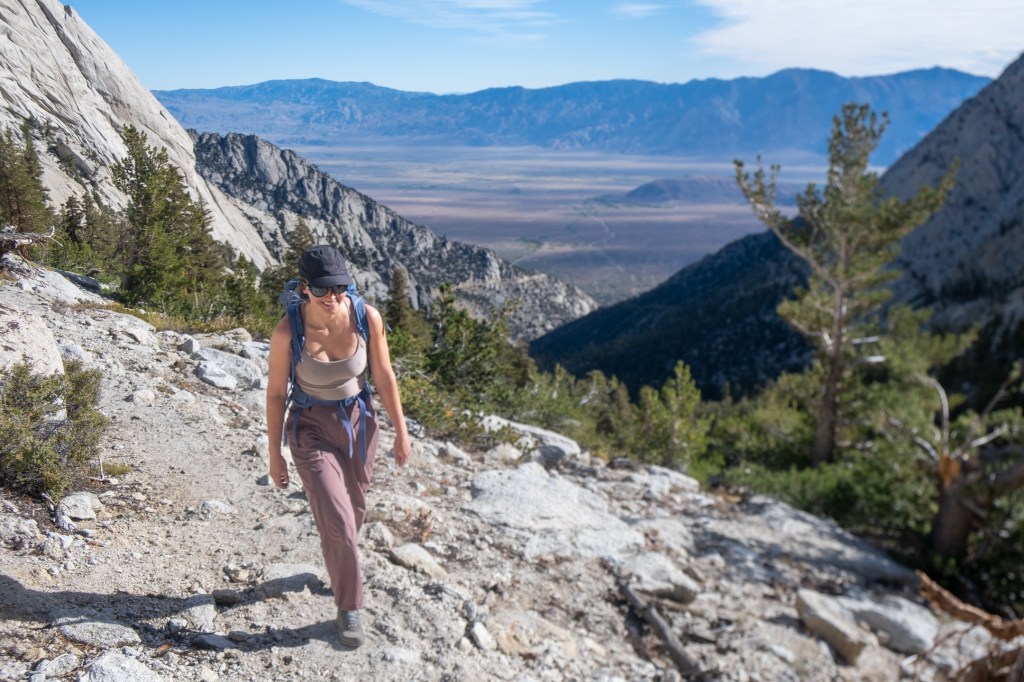
There are two ways to climb the North Ridge. The first and significantly more common is via the Meysan Lakes Trailhead, beginning at 7,900 feet on Whitney Portal road. This approach uses the official Meysan Lakes Trail before ascending a steep class three gully to intersect the North Ridge at 10,600 feet. The second is via the Owens Valley floor, involving no trailhead or trails, and an additional 2,000 feet of vertical gain. We chose the former because the lower portion of the North Ridge appeared mostly non-technical, and we didn’t have a second car to shuttle from the descent trailhead. Our strategy was simple: pack light, eschew the rope as much as possible, and reach Grass Lake – the end of the off-trail descent – by dark. Armed with a skinny 35 meter cord, approach shoes, ski-mo harnesses, four cams, five stoppers and a handful of slings we cast off at the leisurely hour of 7:30am, unknowingly headed towards a far later conclusion than our original 10 hour estimate.
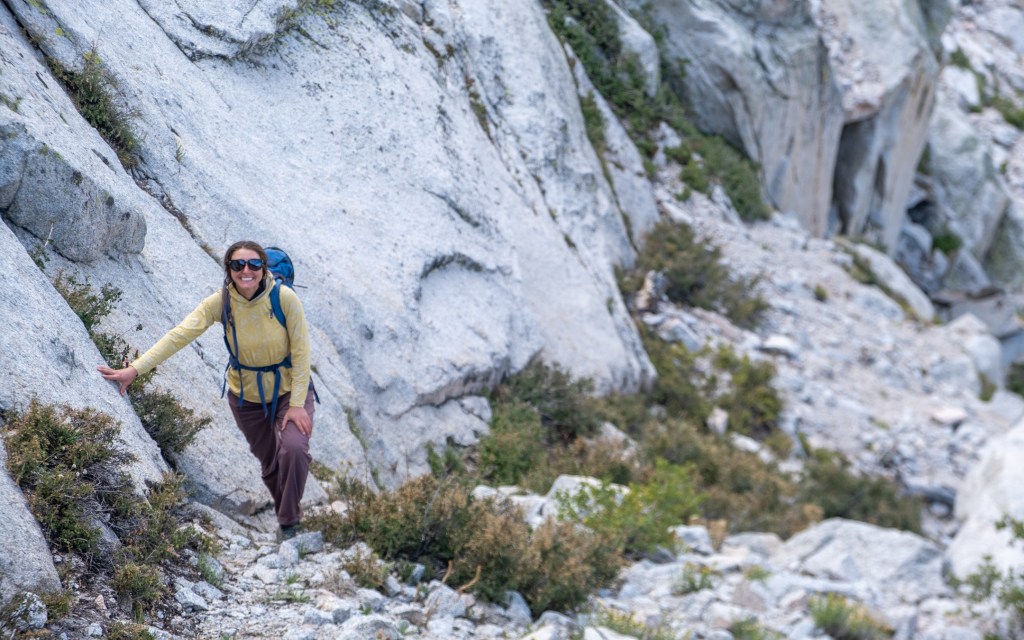
The crisp September Sierra air smelled of fresh pine and rushing water as we made our way into the high alpine. Having spent the last six months working in the Mojave Desert, even the smallest mountain sensations were cathartic. Around 9,000 feet we encountered heavy enough winds for pause, but thirsty for alpine climbing we continued. Reaching the saddle at 10,600 feet was elusive. Our GPX track from the Fastest Known Time website contradicted the terrain before our eyes, heading directly into a steepening north facing wall of smooth slabs and shooting gallery gullies. In lieu of blindly following technology we chose an intuitive vegetated ramp at the bottom of the face and found a defined user trail quickly. A few hundred feet of second and third class shuffling deposited us on the North Ridge by 10:30AM.
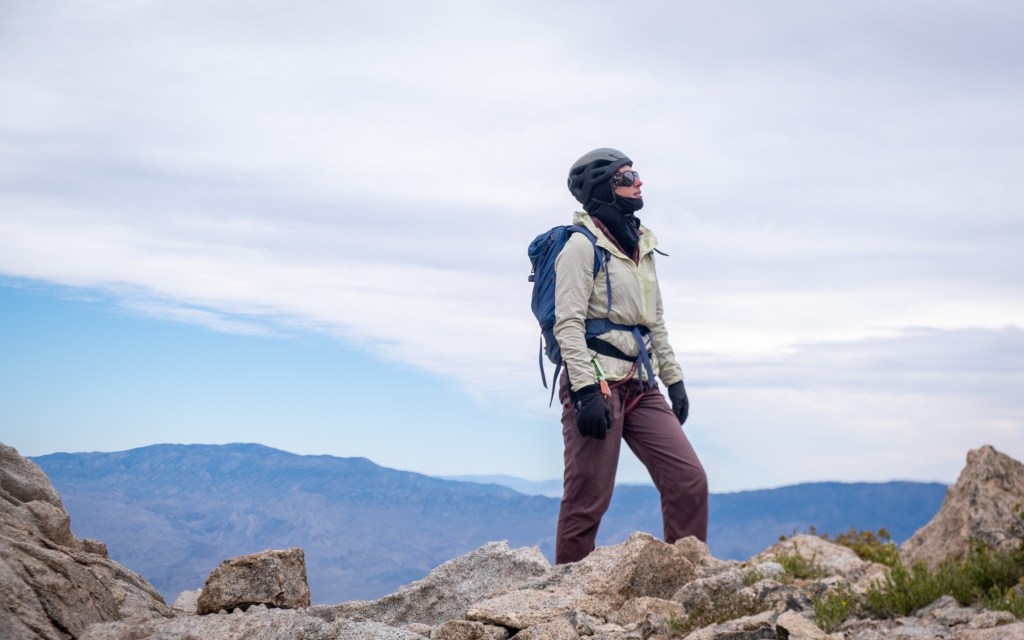
From 10,600 feet we rambled up 800 feet of nondescript terrain along the ridge crest, accompanied by increasing clouds and unnervingly intense wind gusts. The 20% precipitation forecast had diminished, but in the Sierra clear skies are never guaranteed. At 11,400 feet we entered mandatory fourth class terrain, smooth knobby slabs split by long vertical cracks. These slabs led to the first of three towers barring the ridge. We scouted the route from the First Tower summit. immediately digesting the North Ridge would be anything but simple. The two remaining towers stood like behemoth gargoyles defending the summit headwall. My heart both sunk and sang – we probably could’ve woken up earlier, but the challenge ahead looked proper – and we like challenge.
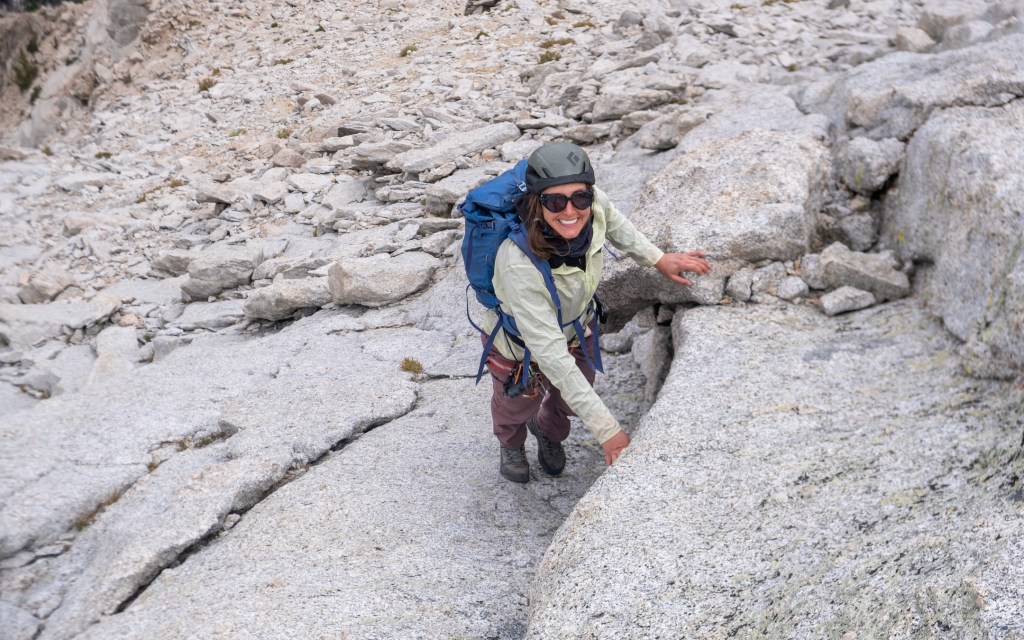
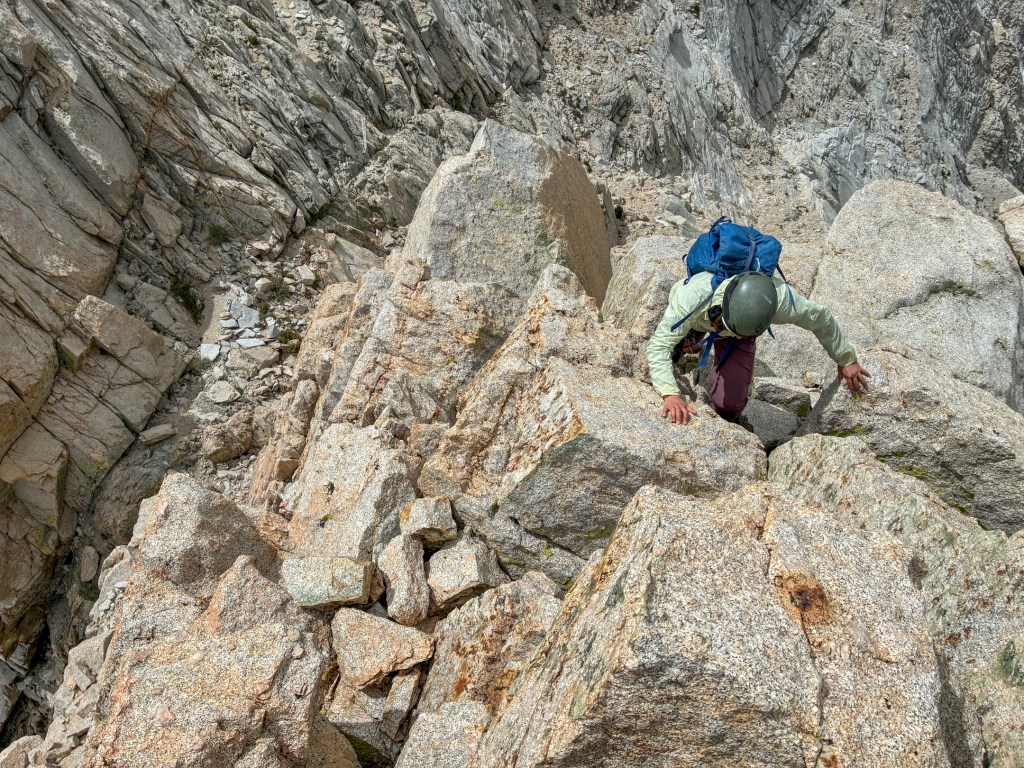
An exposed fourth class downclimb led to the notch between the First and Second Tower, where we found our first genuine pitch of fifth class climbing, a slippery 5.3 thin-hands crack on the south side. While I initially planned to free-solo, trailing a rope only for Bobbi, I quickly requested a belay when the flaring foot jams felt surprisingly slick in approach shoes. From here we short-roped through a hallway formed by the Second Tower and an incredible free standing flake the size of a two story home, and continued through a bizarre sea of wedged sawblades to the Third Tower. From this notch comes the crux of the route, two pitches of steep 5.5 with no ledges to cradle a fall. I was once again happy to have a proper belay through the next 60 meters, even though I’ve soloed well harder than 5.5. With approach shoes, backpack, numb fingers and oxygen deplete 12,000 foot air, the crux layback, up a near vertical corner with only smeary knobs for feet, felt thoughtful. The next pitch was a short off-width which didn’t take my largest #1 Camalot, but did accept brute force and determination. From the Third Tower we traversed another knife’s edge ridge, did more exposed down climbing, traversed another ridge, down-climbed, traversed and climbed back up – exactly in that order, but not really at all. Are you sensing a pattern? The trivial 1,600 foot romp we expected was quickly morphing into a full spectrum mountaineering adventure. And by 5:30pm we weren’t at the car as expected, but rather, the base of the summit headwall.
Appreciate Ten Thousand Too Far? Support independent mountain journalism with $5.10 per month through Patreon (and receive extra bonus content), or with a one-time donation. Any and all support is greatly appreciated. I do not have any paid sponsorships.
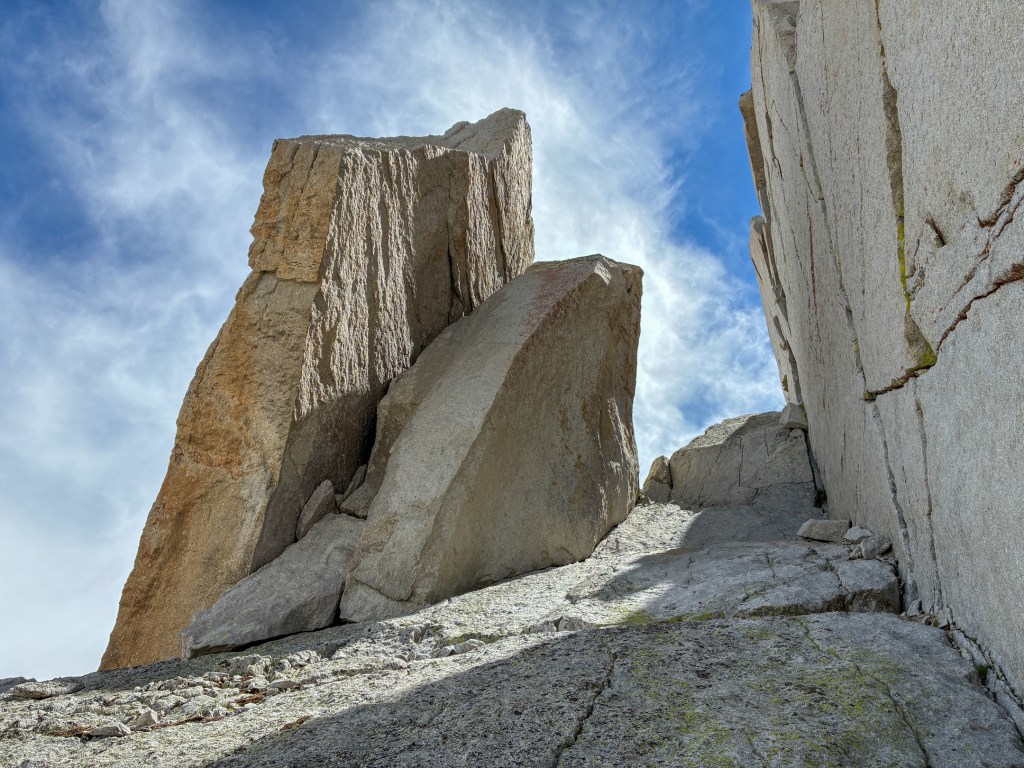
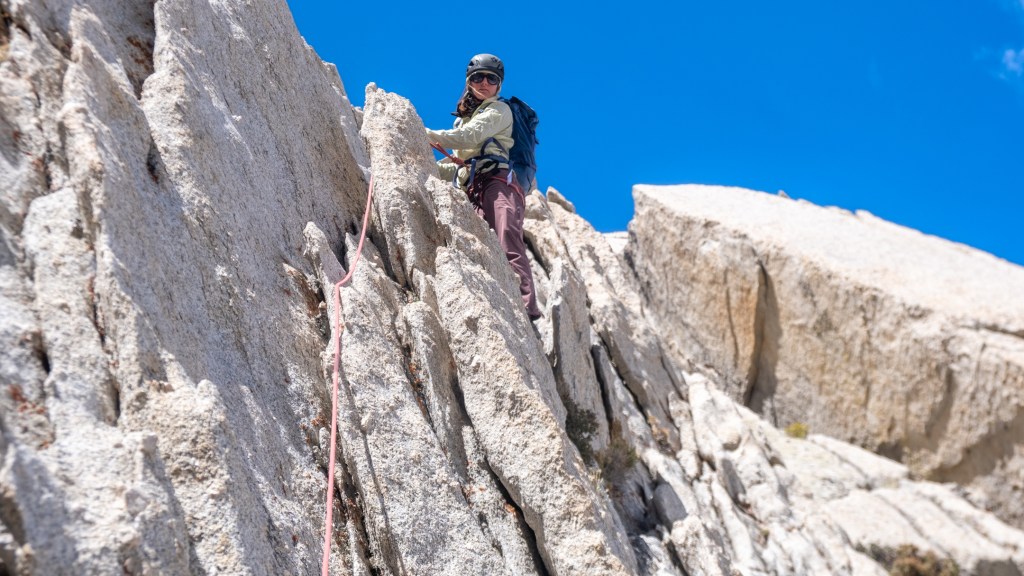
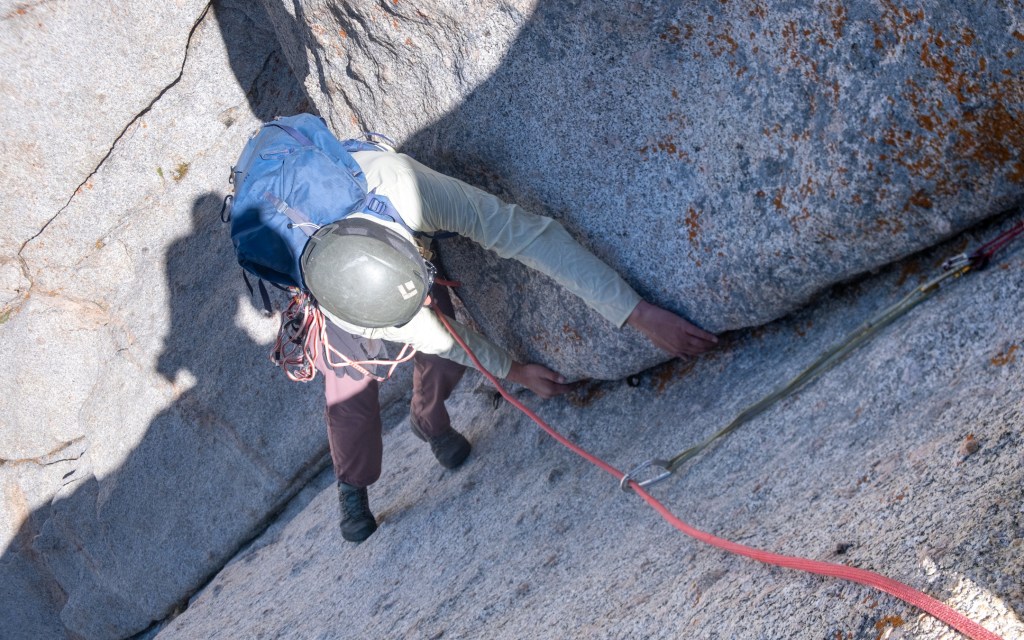
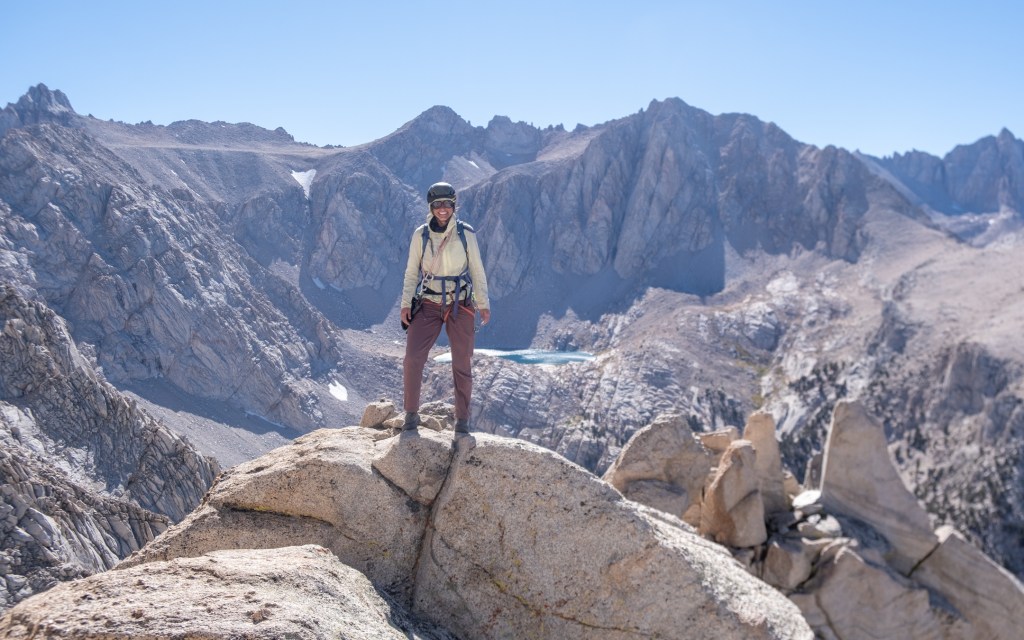
At the notch separating the Third Tower from the summit headwall we finally lost the vague route description we’d been following. The Mountain Project author told of a finger crack on the left side of the crest, but we did not see any finger cracks. Other opinions were poorly described, contradictory and generally unhelpful. Ushered by impending sunset I cast away on intuition, following a steep network of slabs and ramps to the right. This turned out to be the crux of the route, thin fingertip laybacking to a friction mantle on a single sloping diorite knob, but with climbing shoes would’ve been closer to walking. Our boldness was rewarded with two more spectacular and increasingly easy pitches on the direct crest. The sun hung only inches above Mount Whitney as we unroped and scrambled to the summit, contorting through an awkward chimney with epic positioning above the entire Owen’s Valley. Damn – we need to explore the Sierra more.
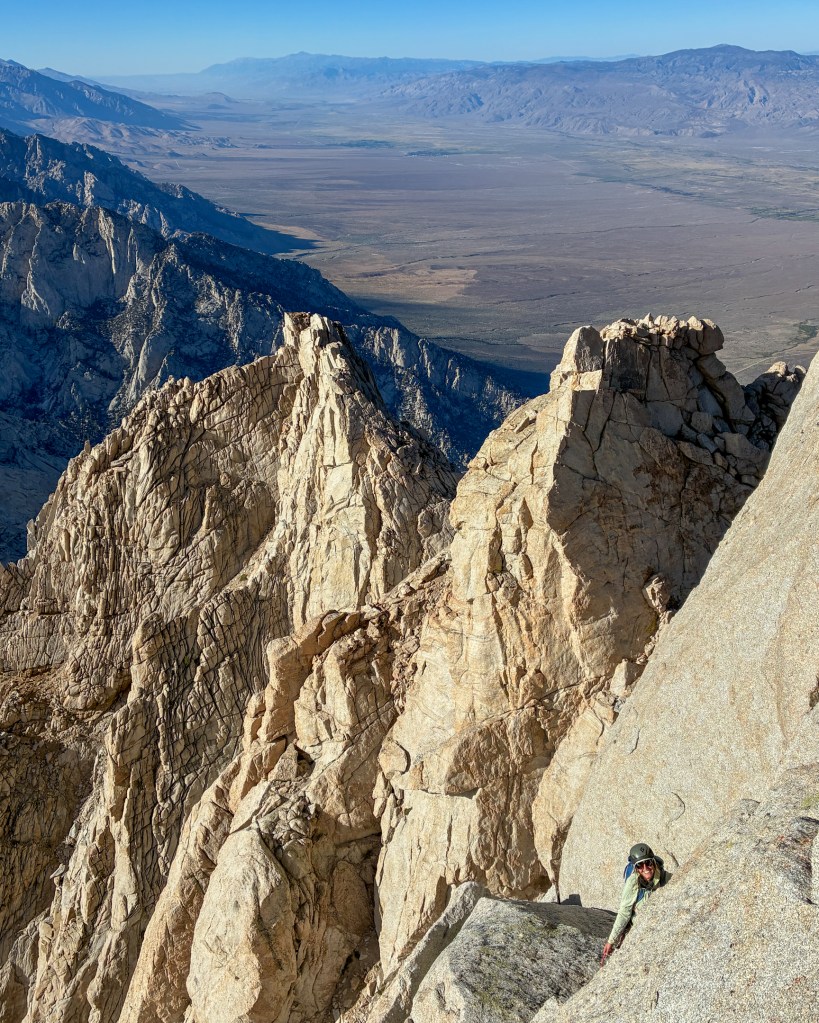
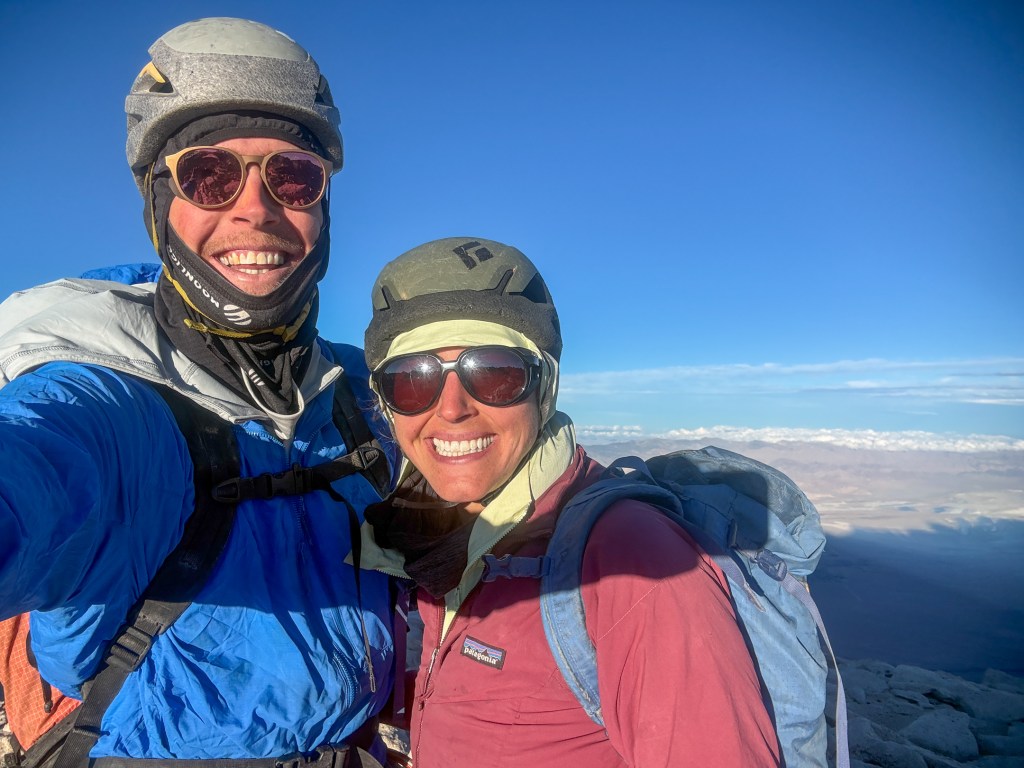
After a scant ten minutes of celebration we shuffled into dusk, elated to seamlessly find the notoriously elusive descent gully. For beta seekers, the key is descending due west from the summit to a very broad and flat notch which could host a 100 person party, then forking north and descending skier’s left to the westernmost of many couloirs which originate from this saddle. We surfed 40 degree moondust and kitty litter to Grass Lake, filtered two liters of ice cold mountain water, unsheathed headlamps, and plodded the remaining six miles with decreasing enthusiasm. Breaks from alpine climbing always promise sore knees and tender feet upon return.
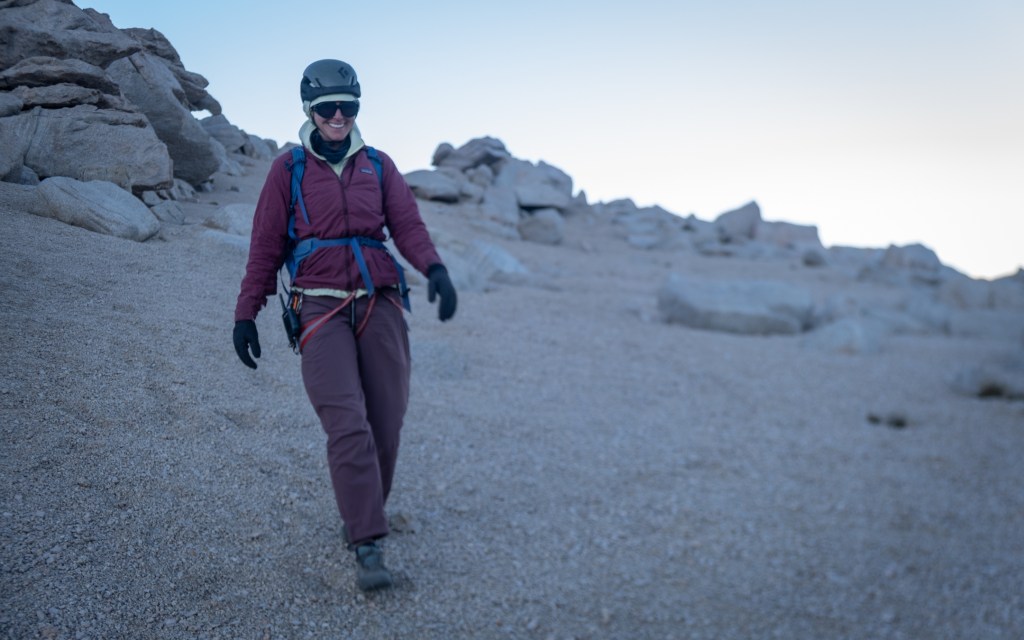
In whole, the North Ridge of Lone Pine Peak was absolutely classic. We properly belayed three pitches. I soloed while trailing a rope for Bobbi on another six or seven pitches. We moved simultaneously with 10 meters of rope between us for most of the terrain after the First Tower, and unroped only 100 feet before the summit. Accounting for traverses and down-climbs, the technical climbing is closer to 2,000 feet than 1,600. And while route finding was intuitive, it wasn’t obvious. Conferring with Mountain Project, it seems our 15 hours car-to-car time is on the faster end of roped ascents. Much like the three person team we passed 700 feet below the summit, their shouts still echoing far below as we jogged towards the descent gully, many teams get benighted. My original 10 hour estimate was based on far more soloing than a ridge of this complexity allows. Without a rope I would have been paranoid about climbing into dead-ends or vertical choss, and put zero blame on Bobbi for desiring extra security on some of the gnarlier fourth class pitches. We came for an adventure, and an adventure we found – in a wild setting with tremendous exposure, great partnership, and the perfect amount of engaging terrain.
Climber Resources
I don’t often use GPX tracks, but the this track from the Fastest Known Time website is useful for the approach, and VERY useful for the descent. As mentioned in the article, while approaching, about 300 feet below the North Ridge, this track veered into near vertical fifth class business. We followed an obvious ramp east and continued up third class terrain to the notch. On the ridge itself the track becomes predictably erratic – like all GPX tracks near steep granite. Most useful, the descent couloir is accurate.
For more route beta, Mountain Project is probably best. I do not own any Sierra guidebooks, but apparently the North Ridge description is limited. I am working on a very detailed route description I will hopefully release sometime soon on my Patreon, complete with pictures and topos. I usually list route descriptions for free, but detailing this extensive route is taking some serious time.
Want to support? Consider a donation, subscribe, check out my Patreon page, or simply support our sponsors listed below.
Ten Thousand Too Far is generously supported by Icelantic Skis from Golden Colorado, Range Meal Bars, The High Route, Black Diamond Equipment and Barrels & Bins Natural Market.



enter your email to subscribe to new article updates
DISCLAIMER
Ski mountaineering, rock climbing, ice climbing and all other forms of mountain recreation are inherently dangerous. Should you decide to attempt anything you read about in this article, you are doing so at your own risk! This article is written to the best possible level of accuracy and detail, but I am only human – information could be presented wrong. Furthermore, conditions in the mountains are subject to change at any time. Ten Thousand Too Far and Brandon Wanthal are not liable for any actions or repercussions acted upon or suffered from the result of this article’s reading.


Leave a Reply