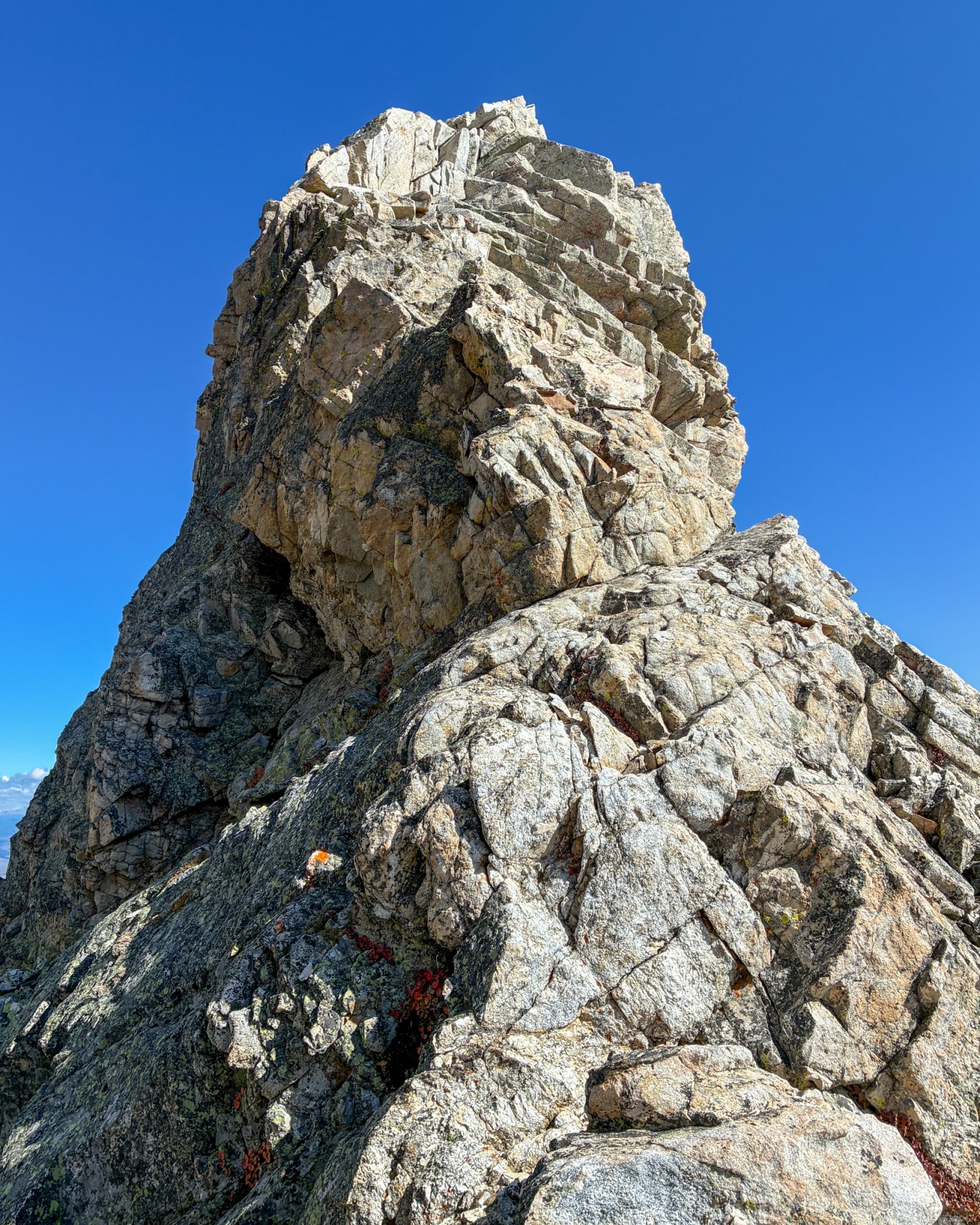
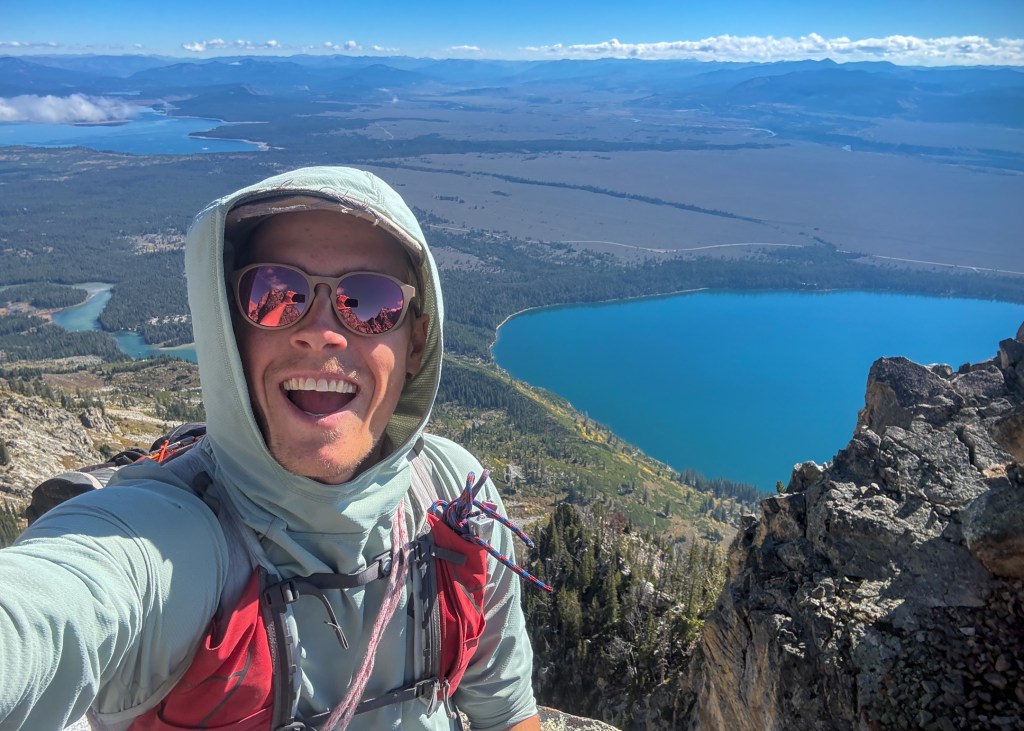
The Full Symmetry Traverse is a pleasant ridge scramble tackling five unique peaks – Cube Point (9,638’), Sam’s Tower (9,800’), Symmetry Spire (10,560′), Ice Point and Storm Point (10,052′) via a highly aesthetic ridge in the North-Central Tetons. I onsight soloed the route, including down-climbs, on September 21st, 2026.
The Full Symmetry Traverse is a semi-classic scrambling traverse in the North-Central Tetons entraining 10,560 foot Symmetry Spire and it’s four sub-peaks, Cube Point, Sam’s Tower, Ice Point and Storm Point. In full, the traverse encompasses roughly 4,500 feet of elevation gain, with difficulties up to 5.5 on mostly excellent rock. I’d climbed Symmetry Spire twice before (via the Durrance (5.6, II) and Direct Jensen (5.9, III)), the East Ridge of Cube Point (5.5, II) once, and completed a few winter ski descents in the area. Through all these experiences I’ve continuously eyeballed the Symmetry Traverse, which connects a perfect arc above the massive eastern drainage known colloquially as the Symmetry Couloir. On my first day of a two-week Teton homecoming, I finally gave it a rip.
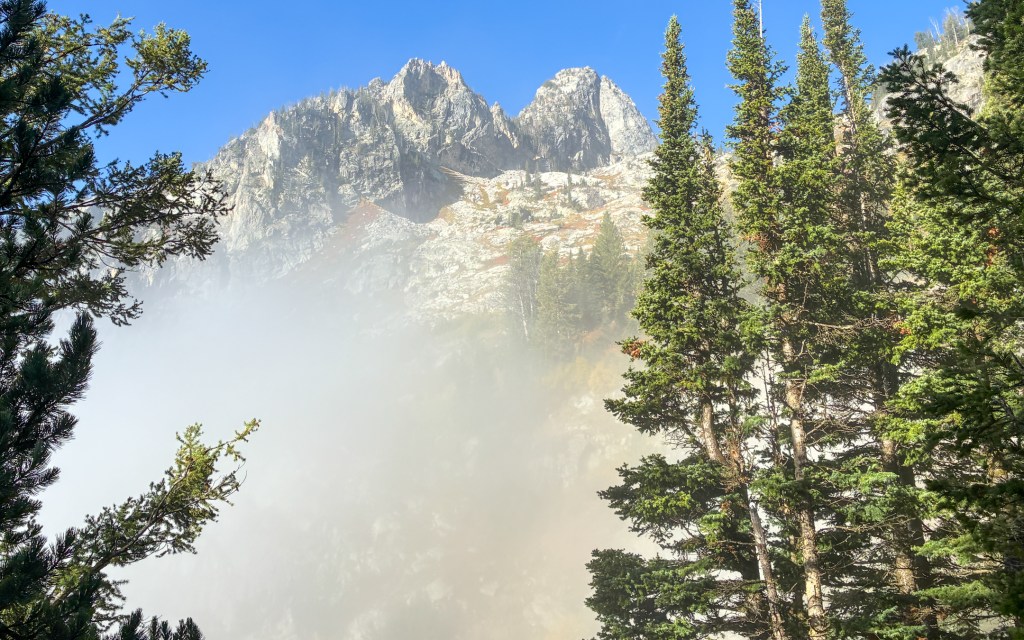
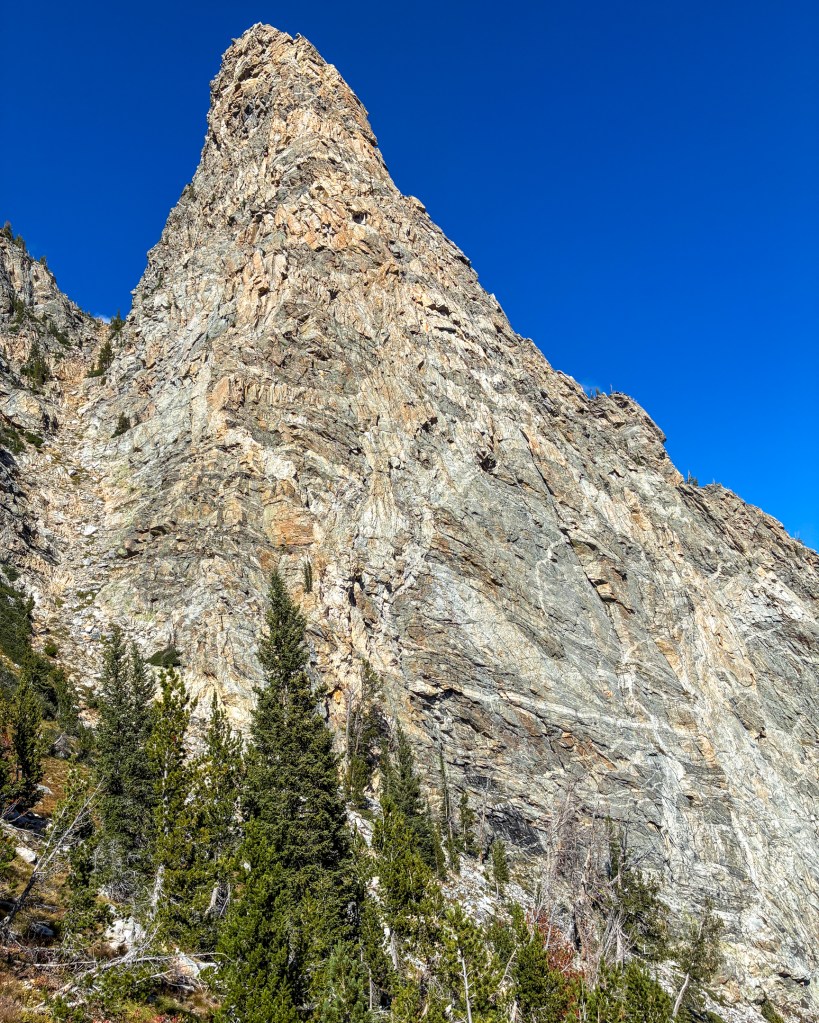
Like many traverses, there isn’t a prescribed way to reach the summit of every peak. For those determined to tag summits while keeping technical difficulties to a minimum, the Symmetry Traverse could be curbed at fourth class, with a few short rappels to bypass the otherwise mandatory fifth class down climbing in Cube’s Northwest Couloir. That said, this would involve several severe detours from the geologic crest, trading much of the memorable rock climbing for choss contouring. In it’s purest iteration, the Symmetry Traverse tackles the fifth class East Ridges of both Cube Point and Sam’s Tower before continuing into exclusively fourth class territory. The former is a Teton Classic, with 350 feet of knobby granite slabs up to 5.4/5.5, climbed regularly throughout summer by guides and budding locals alike. The East Ridge of Sam’s Tower on the other hand, while not much technically harder, is Cube’s seldom climbed ugly step child – more on this later. I left the car with climbing shoes but no rope, intent on traveling light while staying as true to the skyline as possible.
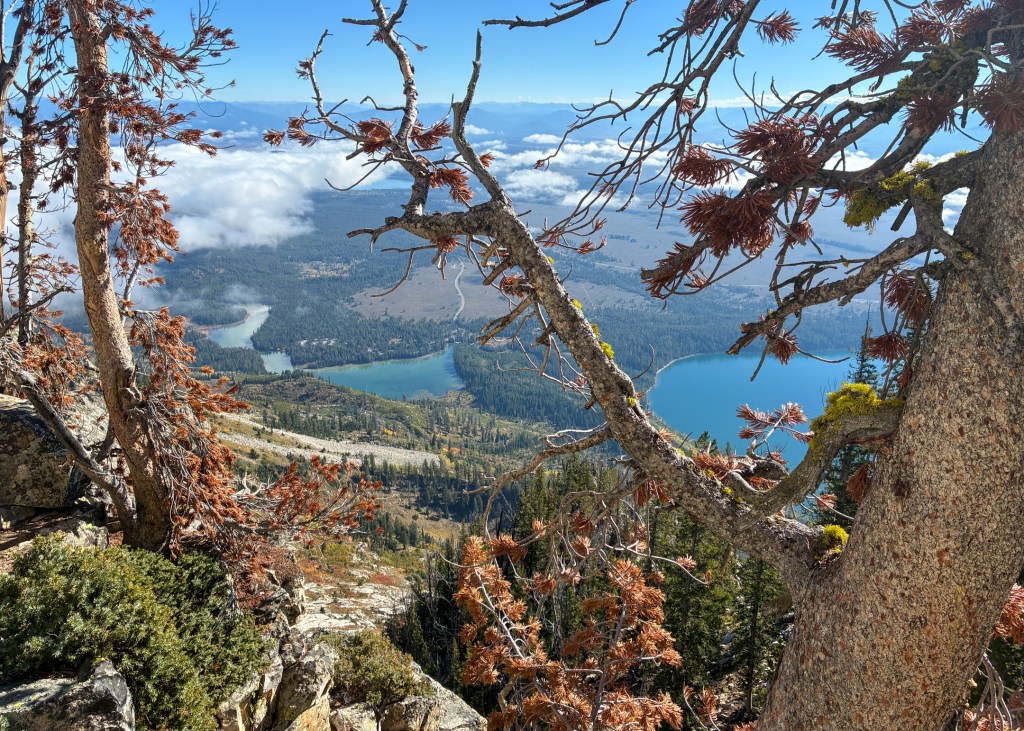
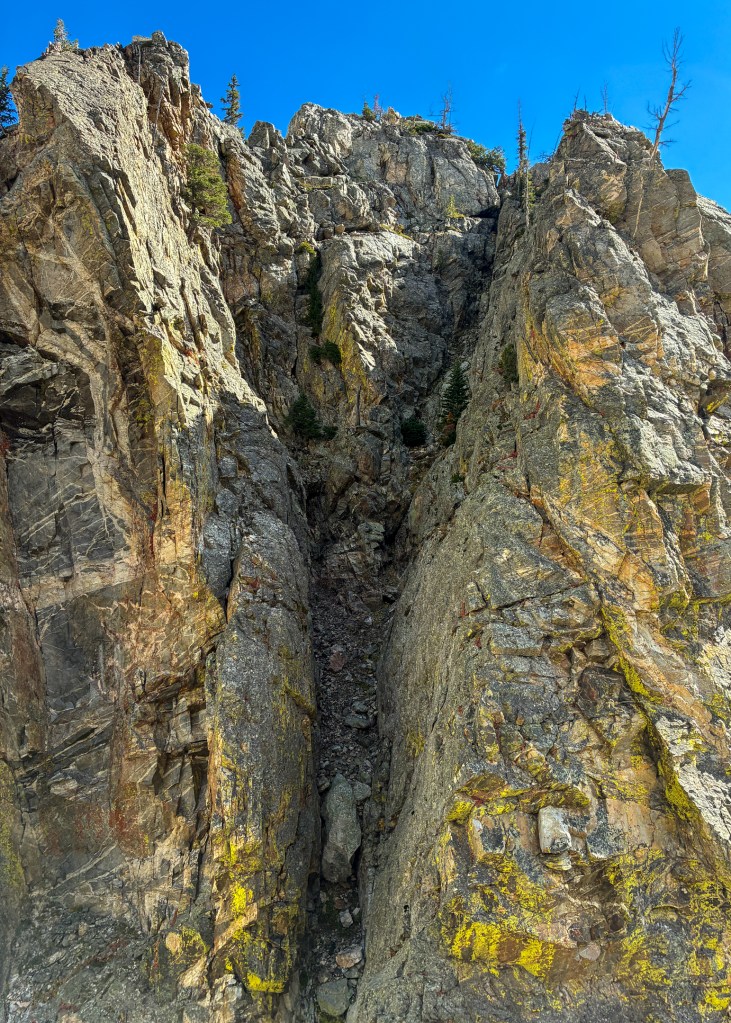
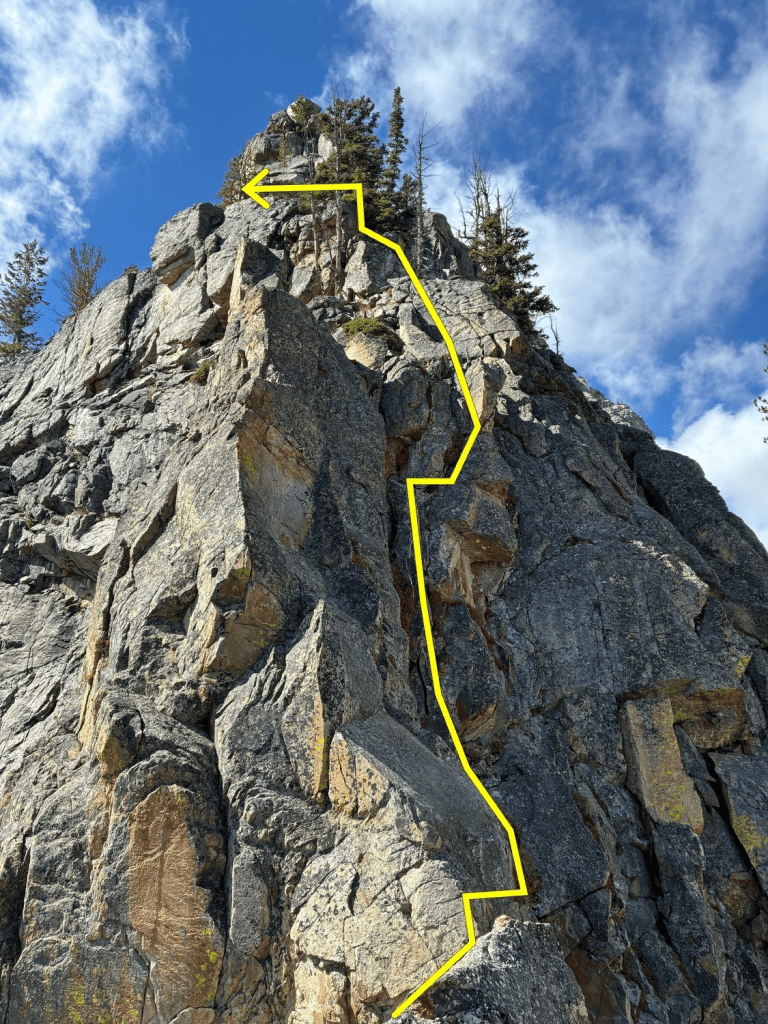
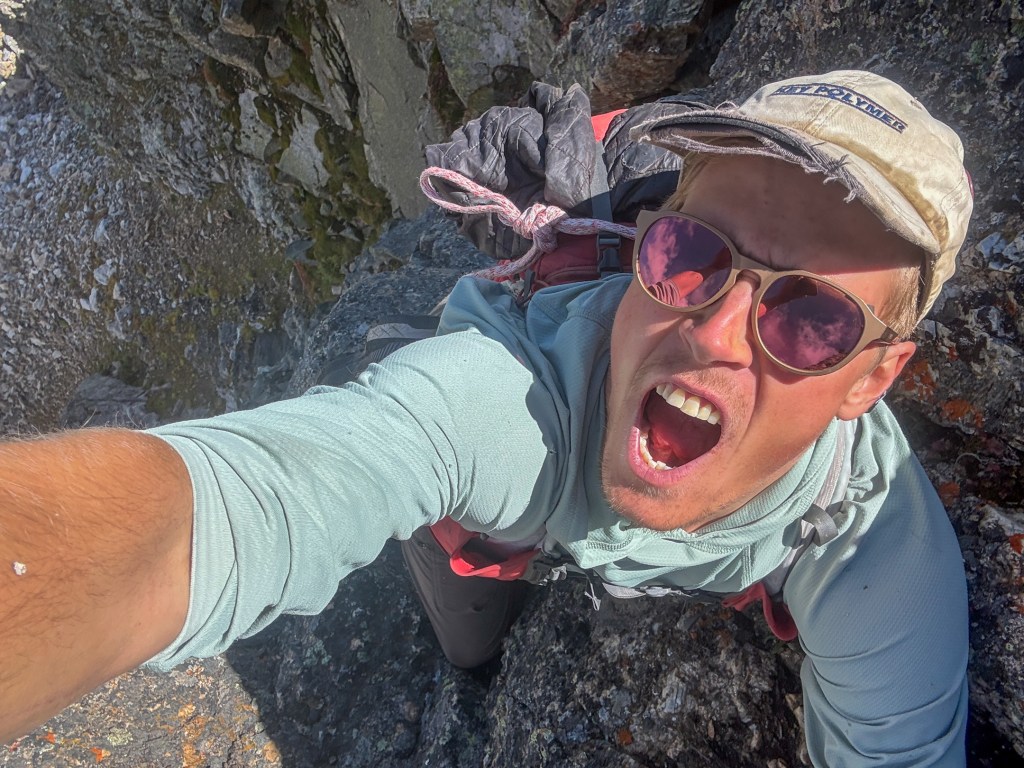
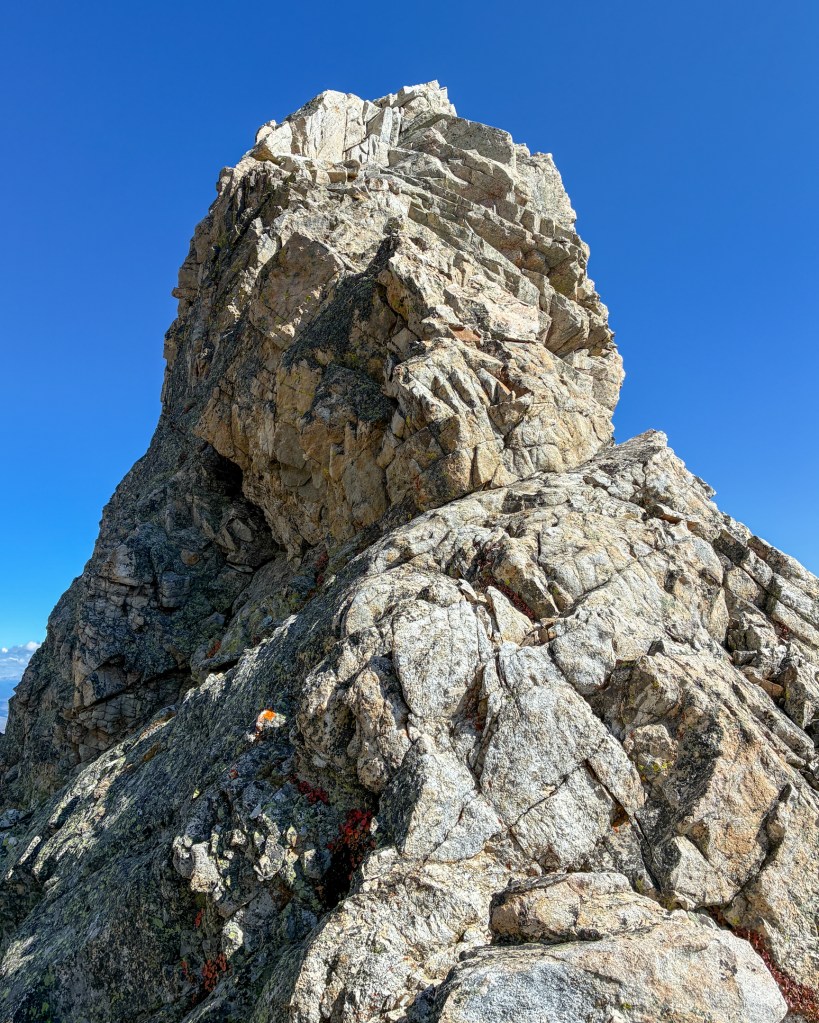
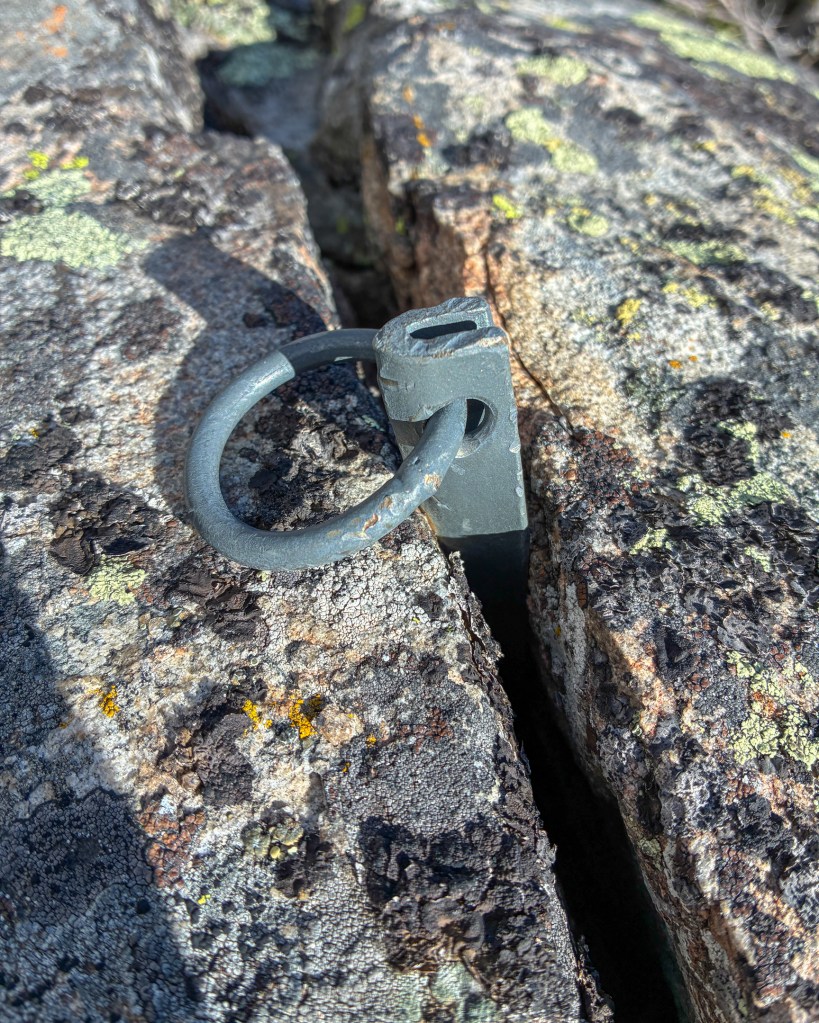
I reached the familiar East Ridge of Cube Point from String Lake and Hanging Canyon in just under 90 minutes. With sticky rubber slippers I made fast work of the two fifth class pitches and continued to the very unique and exposed cube-shaped summit pyramid. Sam’s Tower, the next obstacle in line, looked remarkably intimidating from Cube, but knowing many rock climbs look far worse from afar than the base, I forwent mental projection. Many parties bring a rope for the descent from Cube to Sam’s, which follows an improbable, steep and loose couloir on Cube’s northwest side. In fact, this couloir, described as the Northwest Chimney (5.1) in A Climber’s Guide to the Teton Range, looked so unlikely I called a friend to double check I was descending the proper way. With lingering snow the Northwest Chimney would be a nightmare of rockfall, ice and wet rock. Fully melted it wasn’t much better than a nightmare, but at least the rock was dry. I found the “5.1” cruxes to be at least 5.4, with exposed near-vertical trickery on lichen covered blocks and grassy shelves to pass three prominent chockstones. Each of these cruxes had fixed rappel anchors, and if I repeat the Symmetry Traverse with a partner I will probably bring a short rope. The couloir funnels directly to the narrow notch between Cube and Sam’s Tower, where, as expected, the geologic crest appeared exploration reasonable. Two pitches of easy 5th class in approach shoes led to a small gendarme 100 feet beneath the true summit. Looking further, my heart both skipped and sank. The only obvious weakness was a dark vertical chimney on the north face with ridiculous exposure, and I had no beta. Sam’s Tower is not included in the most comprehensive and recent guidebook available for the Tetons, and while certainly this ridge had been climbed at some point, I lacked concrete referral. Back in climbing shoes I shuffled along a bridge of wedged chockstones to an eerily blank slab with just enough in-cut edges to rationalize continuance. In the chimney I found my first sign of human passage – an ancient piton – and secure climbing on a unique detached pillar capped by gentle laybacking up a knobby crack. It’s hard to grade routes while soloing, because fear often magnifies impressions of difficulty. With the dust long settled, I think 5.5+ seems right… wait, is that a grade?
Appreciate Ten Thousand Too Far? Support independent mountain journalism with $5.10 per month through Patreon (and receive extra bonus content), or with a one-time donation. Any and all support is greatly appreciated. I do not have any paid sponsorships.
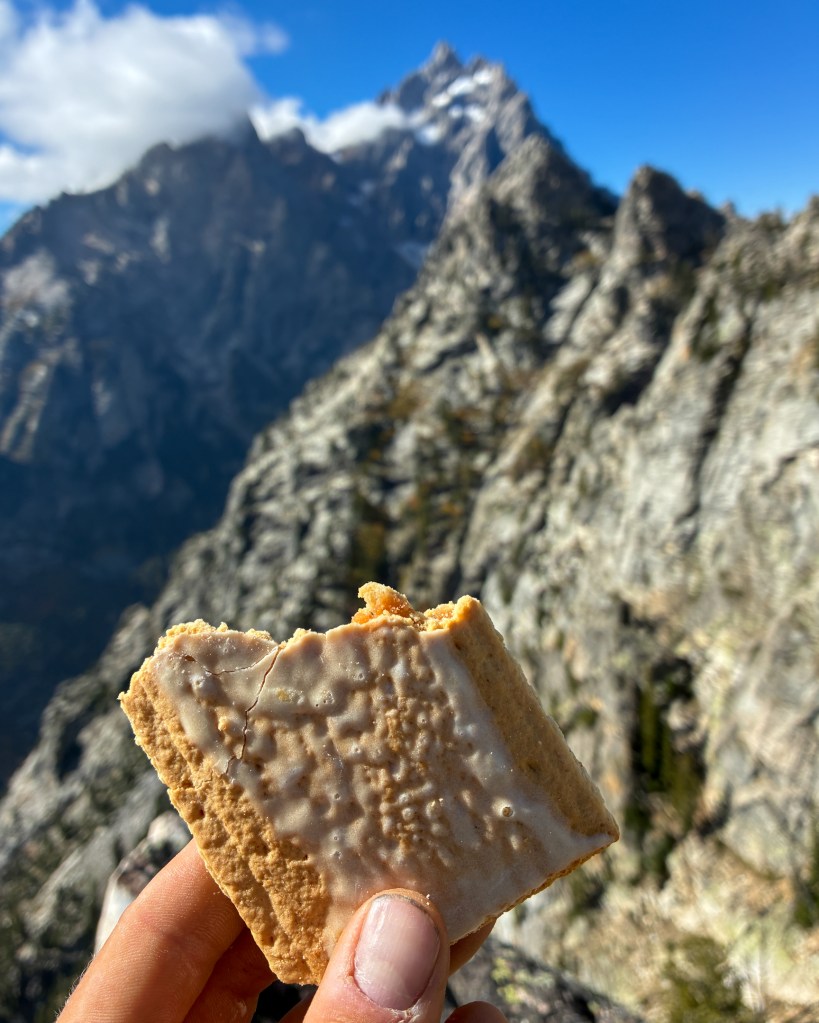
From the seldom visited summit of Sam’s Tower, with all fifth class climbing complete, I switched into mindless endurance mode. I powered up the barely fourth class, yet no less scenic, East Ridge of Symmetry Spire, shuffled down the third class Northwest Ledges and Southeast Couloir, and continued north to Ice Point. The Northwest Ridge of this small yet prominent pillar provided the most memorable scrambling of the route, steep fourth class on bulletproof golden granite reminiscent of the High Sierra. I reversed my ascent to an obvious notch where I could logically delve south, jogged across one more notch, and meandered easily up the fourth class West Face of Storm Point to a golden hour summit. The view of Mount Owen from Storm is unmatched, a fitting way to end an incredible traverse. I deeply enjoyed a shirts-off sunbathe in the fading September sun while reminiscing on the countless amazing memories, both summer and winter, I’ve had on the shady side of Owen. Having now spent 12 years scrambling, climbing and ski mountaineering in the Tetons, new experiences often come paired with visual cues to relive past memories.
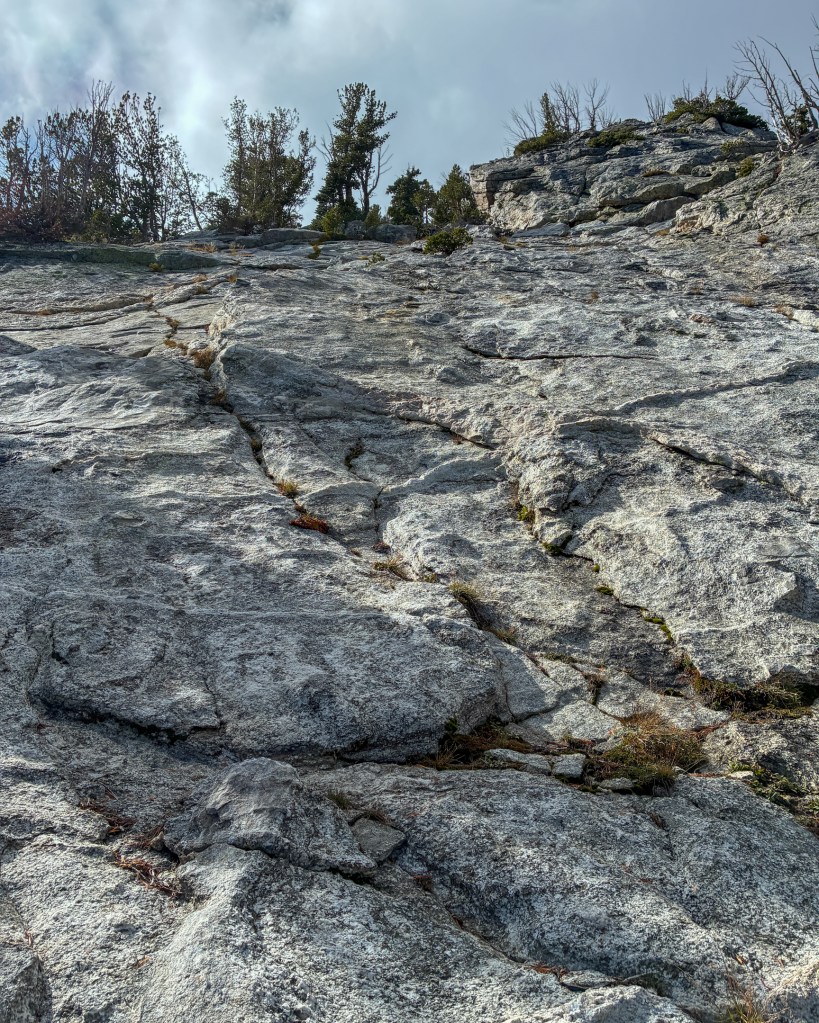
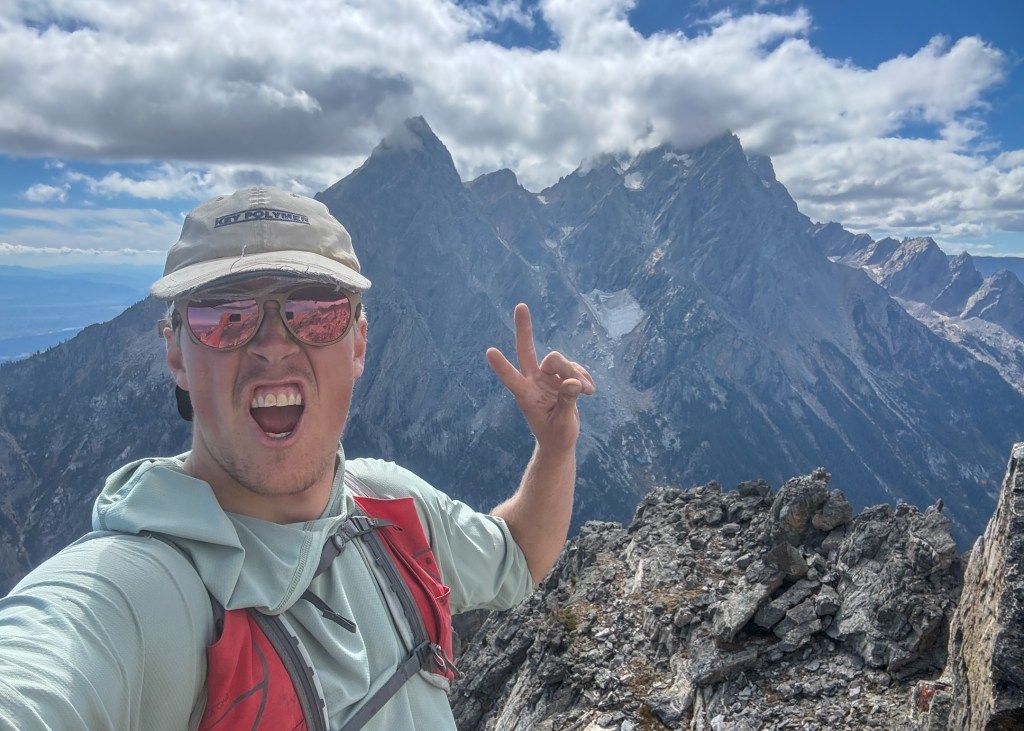
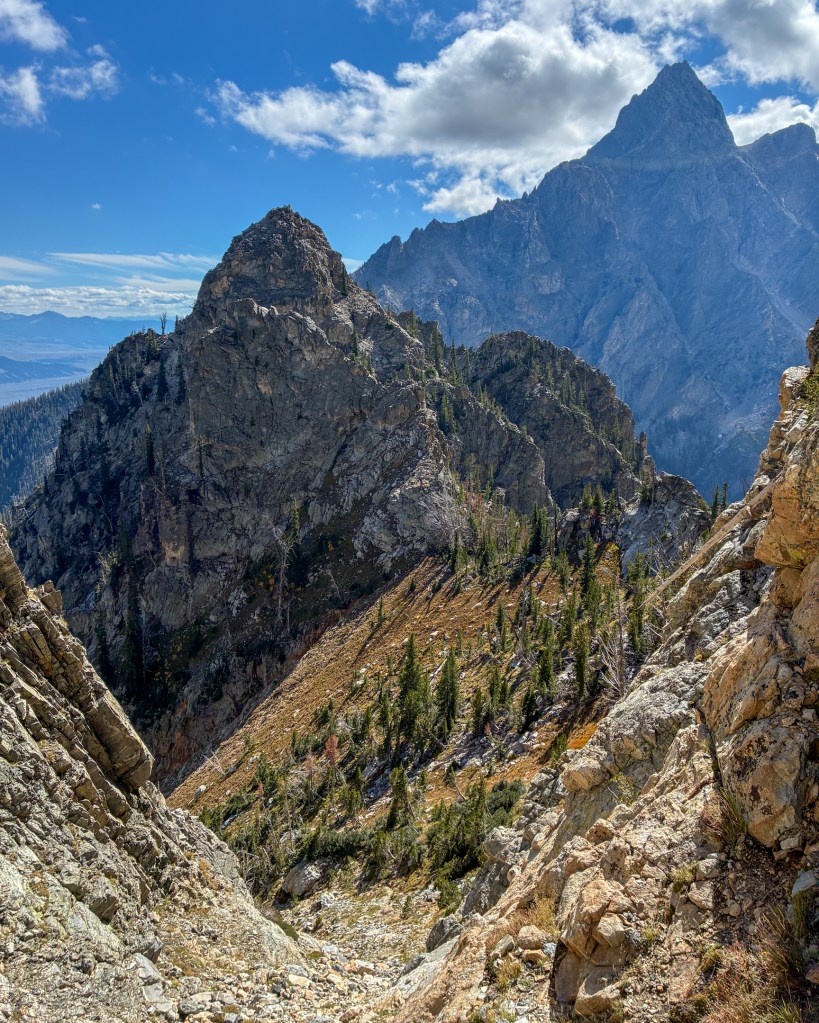
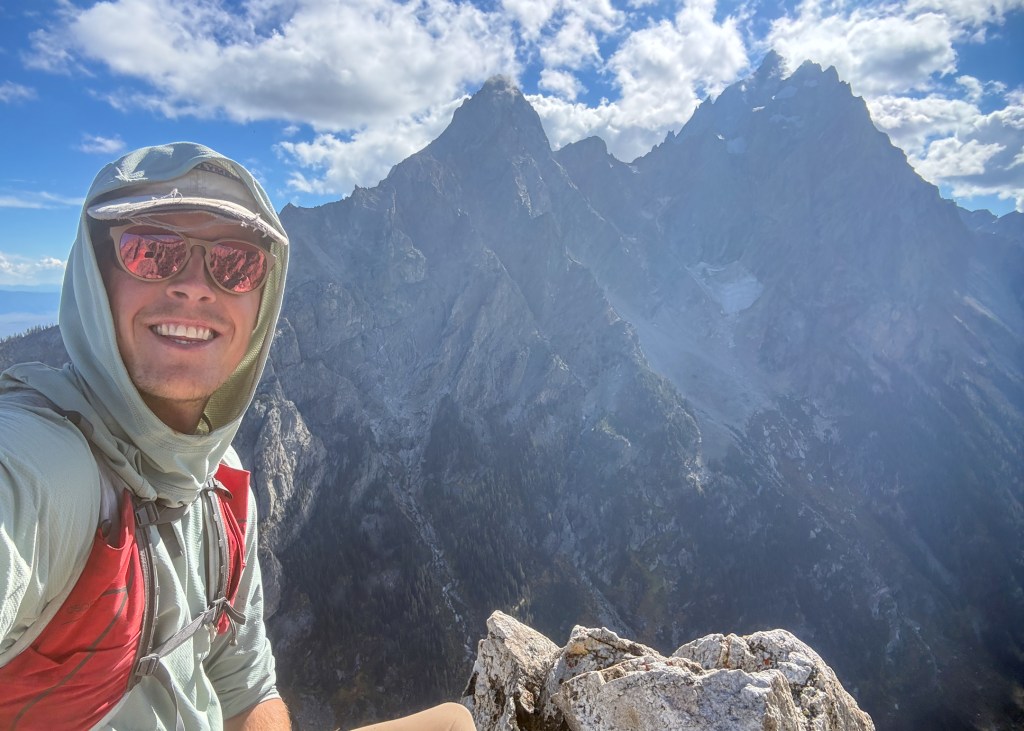
In line with my impatient personality, I impatiently chose to descend the narrow couloir between Storm and Ice Point instead of backtracking to the standard Symmetry Couloir climber’s trail. For matters not worth explaining, this is ill-advised. Rational climbers will hike around the west side of Ice Point and descend the well established trail. Ten or so hours after leaving my car I jogged back to the String Lake lot, dancing around one particularly frisky Cinnamon Bear along the way.
The Symmetry Traverse provides an engaging half-day of adventure to the soloist or fast party willing to pack light. With a proper rope and belayed lead pitches, budget a full day. While not nearly as classic as the fabled traverses of the core range, this is an under appreciated outing with a short approach and spectacular views.
Full Route Description for Prospective Climbers
~ copied from my Mountain Project description ~
Cube Point (5.5, II, 3-5 pitches) – 9,638’
Approach Cube Point via String Lake and the Hanging Canyon social trail. Climb the East Ridge of Cube (5.5, II), a classic route on great rock. The two fifth class “pitches” come right off the deck, after which the grade eases to fourth class. From the summit, descend due west and drop skier’s right into the Northwest Chimney (“5.1”), which is more of a narrow couloir. Three chockstones present steep difficulties up to modern 5.4 with optional fixed rappels. The Northwest Couloir would be difficult if not very dangerous with lingering snow, and in these conditions a rope may be prudent. The couloir drains almost directly to the narrow notch between Cube and Sam’s Tower.
Sam’s Tower (5.5 R, II, 3-4 pitches, 350’) – 9,800’
Sam’s Tower is the formidable tower between Cube Point and the East Ridge of Symmetry Spire. Most parties bypass Sam’s by descending 100-200 feet into Hanging Canyon and contouring around the north side. However, the East Ridge of Sam’s can be climbed directly from the notch west of Cube Point following the geologic crest. Expect 4-5 pitches of fourth and easy fifth class scrambling punctuated by one very adventurous vertical gully/chimney on the north face sporting a fixed piton, vegetation, and questionable stone (5.5 R). From the summit, downclimb fourth class, or do one short rappel, to the col between Sam’s and Symmetry.
Symmetry Spire (10,560′), Ice Point (9,961′) and Storm Point (10,052′) – 4th Class
Slog up the east ridge of Symmetry Spire – mostly steep hiking with occasional bits of third or easy fourth class scrambling. Descend third class slabs and ramps northwest from the summit, following a vague but intuitive social trail, eventually wrapping around to the Southwest Couloir. Shimmy down the Southwest Couloir (2nd class, loose) to the saddle between Symmetry and Ice Point. Climb up ledges on the north face of Ice Point (3rd class) to an obvious notch on the Northwest Ridge. Follow the Northwest Ridge to the summit (exposed fourth class, superb golden rock), and reverse the Northwest Ridge to the aforementioned notch. From the notch, downclimb south (3rd class) to the saddle between Ice Point and Storm Point. Contour onto the West Face of Storm Point and scramble to the summit (4th class, many paths). Reverse the route and either descend the couloir between Storm and Ice Point (4th class, not necessarily recommended) or hike around the west face of Ice Point and intersect with the well established Symmetry Couloir climber’s trail (longer, easier, not deadly). Either descent will drop due east and funnel into the well established climber’s trail. Approaching the cliff defending the drainage mouth there is one last step of slabby fourth class into a south facing gully. Watch out for bears.
Protection
Often free-soloed. Otherwise, light alpine rack with long slings and a short rope. A hand sized piece may come in handy to protect the crux of Sam’s Tower. Extra tat to replace anchors.
Want to support? Consider a donation, subscribe, check out my Patreon page, or simply support our sponsors listed below.
Ten Thousand Too Far is generously supported by Icelantic Skis from Golden Colorado, Range Meal Bars, The High Route, Black Diamond Equipment and Barrels & Bins Natural Market.



enter your email to subscribe to new article updates
DISCLAIMER
Ski mountaineering, rock climbing, ice climbing and all other forms of mountain recreation are inherently dangerous. Should you decide to attempt anything you read about in this article, you are doing so at your own risk! This article is written to the best possible level of accuracy and detail, but I am only human – information could be presented wrong. Furthermore, conditions in the mountains are subject to change at any time. Ten Thousand Too Far and Brandon Wanthal are not liable for any actions or repercussions acted upon or suffered from the result of this article’s reading.


Nice work! This would combine well with a traverse on around Hanging Canyon to Saint John, probably earlier in the season when the days are longer. I’ve done that in the other direction (Saint John to Symmetry), and it is no harder than the 5.5 you already did.
LikeLike
Thanks for the kuddos, and the beta on the Hanging Canyon traverse. It has certainly caught my eye.
LikeLike