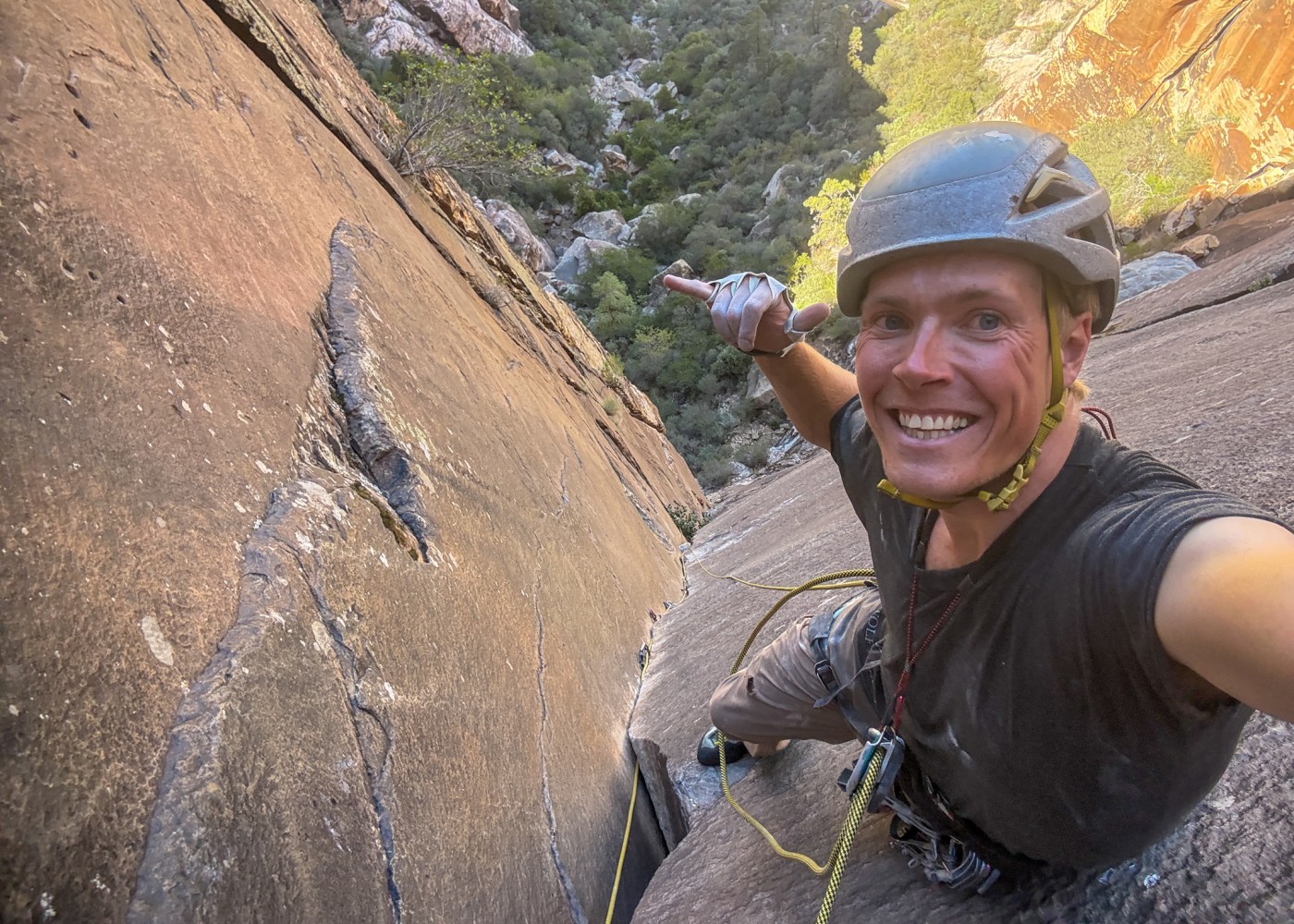
Waterboys is a Red Rocks underground classic at the 5.10 grade, with a heavy emphasis on crack climbing and no lead bolts. This was my hardest multi-pitch lead rope solo.
As regular readers of Ten Thousand Too Far will know, I’ve taken heavily to Lead Rope Soloing the past 14 months. When the Alpine Peanut and I switched careers to Environmental Consulting, working 900 miles from home in the Mojave Desert over half the year, I was instantaneously deprived of climbing partners. I can’t expect Bobbi to climb every weekend, bouldering sucks, and top-rope soloing gets old fast. Cue stage right: Lead Rope Soloing.
Over now hundreds of LRS pitches I’ve steadily worked my way through the grades, refining systems and getting comfortable trying hard without a human belay. Dave’s Deviation (5.9, II) and Healy’s Haunted House (5.9 X, III) were two benchmark ticks at the multi-pitch 5.9 grade, and the latter my first X rated LRS lead. Dark Shadows (5.8+, IV) and The Long Climb (5.8, III) bolstered my efficiency with 23 and 14 pitches respectively. And while I rarely bother rope soloing single pitch climbs, Pinched Rib (5.10a) in Joshua Tree delivered my first adrenalizing taste of solitary 5.10 crimping. Last fall I upped the ante with Clam Chowder, a three pitch, severely runout, psychological test-piece on Idyllwild’s Weeping Wall. Paying out slack for 40 foot runouts on no-holds 5.10a granite friction, with only a Gri-Gri and three quickdraws to soothe a throbbing psyche on each terrifying pitch, was transcendent. But the challenge of 5.10 multi-pitch trad climbing remained ever present, and on September 9th I finally conjured enough balls to finish the dream.
My objective du jour was Waterboys, a three pitch 5.10a/b in Red Rocks’ Icebox Canyon. With two pitches of delicate 5.9 capped by a long and sustained crux pitch in every crack size from tips to off-width, the route would be a well rounded examination of my current LRS proficiency. Atypical for Red Rocks, Waterboys boasts a granite-esque natural line with zero lead bolts and limited face holds. After a painstakingly hot and inobvious approach through far too much spiky vegetation I found the base, racked heavy, and cast off.
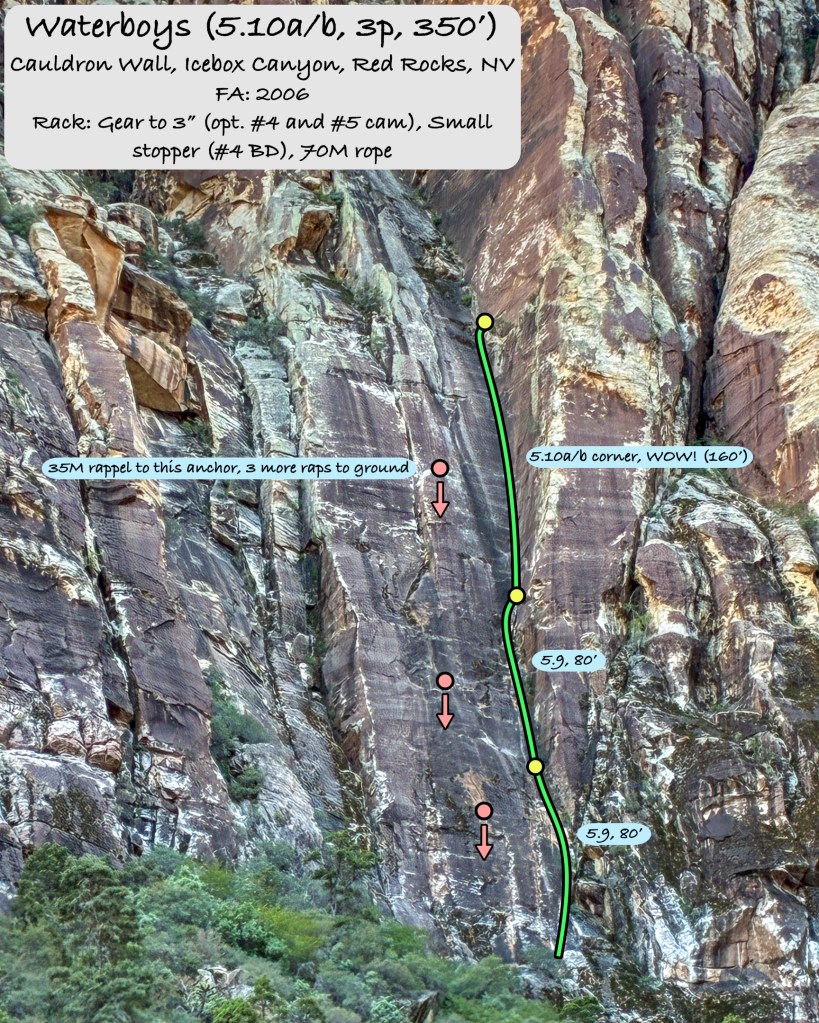
The first two pitches were a perfect warm up – each 5.9 yet not overly sustained, with just sparse enough protection to keep my rack plump for linking. 55 meters of leading and following later I sat beneath the crux pitch rife with butterflies. Although I haven’t fallen on a 5.10a/b trad pitch in many moons, the crux corner looked smooth, steep, thin and sinister. This was exactly the test I both feared and desired.
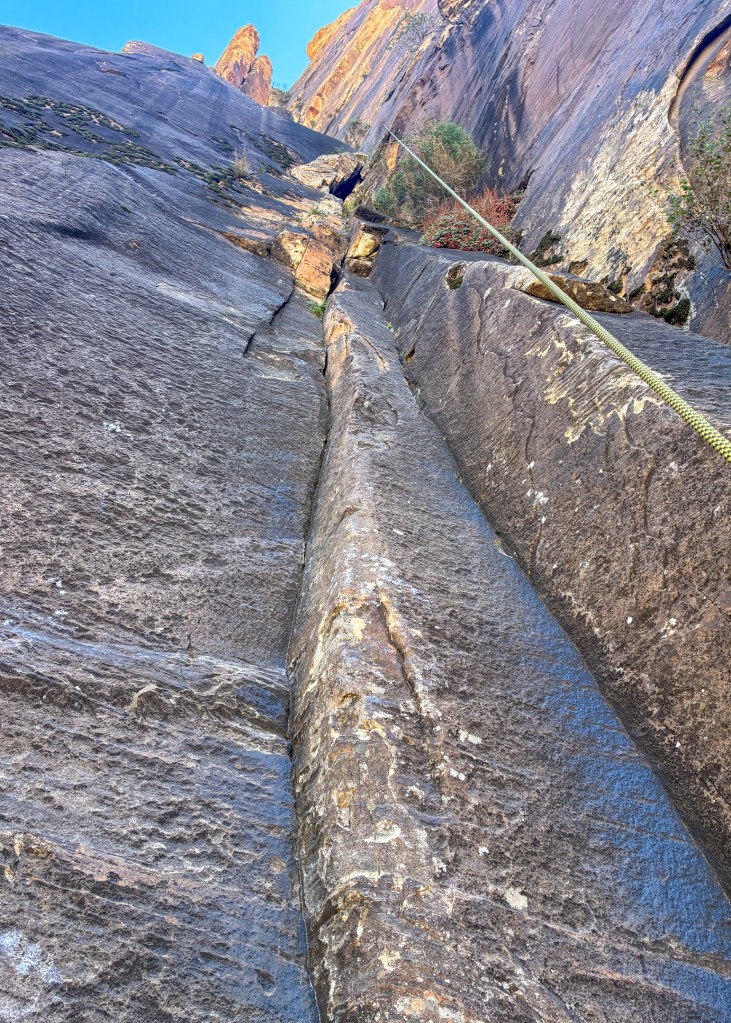
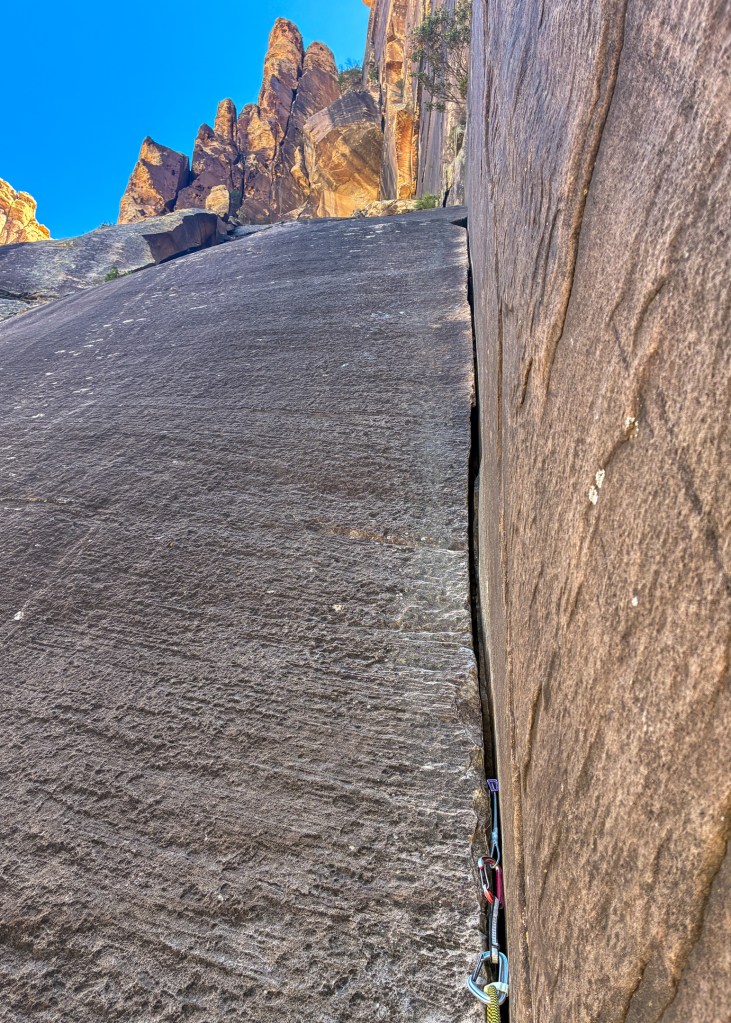
The pitch three crux is encountered quickly off the belay, a thin hands crack tapering to fingers in an otherwise blank desert varnish dihedral. From the last solid hand jam I organized two solid pieces and began cranking up solid finger locks. All went swimmingly until the last fifteen feet, where the crack widened to baggy #0.5 Camalots. Dealing with the added faff and mental burden of rope soloing on anything less than perfect jams eroded my confidence, and through overgripping I developed a raging pump. Fearing the dreaded rope solo whipper I committed to laybacking, paid out a loop of slack, and muscled to the final jug – a sinker finger lock – with seconds to spare. I continued to onsight the remainder of this excellent pitch with little difficulty, including a pesky 6 inch off-width and a penultimate glorious hand crack. Despite the generally vegetated and grungy appearance of Waterboys from afar, pitch three, at 140 feet, is sincerely the best 5.10a/b crack I’ve climbed in all of Red Rocks.
Appreciate Ten Thousand Too Far? Support independent mountain journalism with $5.10 per month through Patreon (and receive extra bonus content), or with a one-time donation. Any and all support is greatly appreciated. I do not have any paid sponsorships.
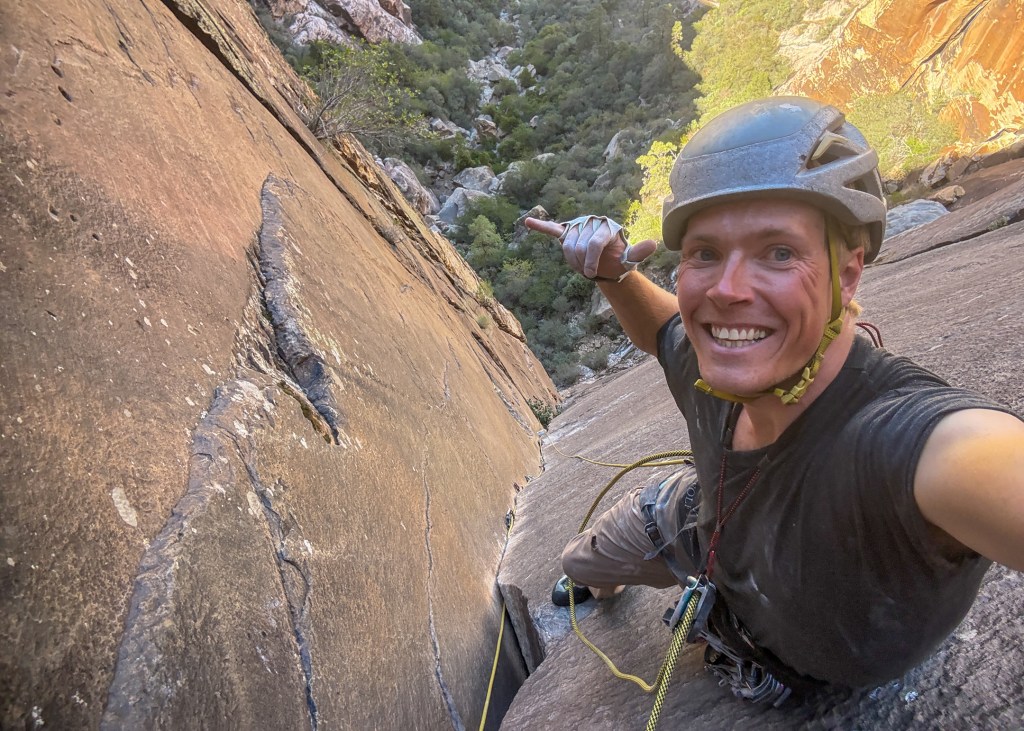
Waterboys was as perfect a 5.10 LRS experience I could’ve asked for. Yet, while following each pitch, the degree to which fear impacted my lead climbing was omnipresent. With a proper belay I’ve redpointed traditional routes up to 5.11b, and routinely onsight up to 5.10d. Leading both 5.9 pitches as one, and the third pitch alone, took 45 minutes each. Following each pitch on a fixed line took about five minutes. While leading will always require more time than following due to placing protection, this discrepancy is significant and abnormal. Particularly on the 5.10 crux, I climbed timidly and scared despite having a 4-5 letter grade buffer in ability. I placed useless blind protection throughout the layback instead of climbing confidently to the surefire jug. I over-gripped instead of trusting bomber foot jams. But to play devil’s advocate, rope soloing is not as safe as normal lead climbing. Even with a perfectly manicured system, falls are often longer and harsher than expected. Waterboys was my hardest rope solo, and first where falling felt like an actual possibility. And while the crux corner was whistle clean and safe for large falls, it’s probably wisest to treat rope-soloing like free-soloing with a parachute. Ultimately, I handled 98% of the route fluidity, and bared down with conviction when duty called. For that, and the complex system I have continually refined over 14 months that allows me to scale difficult walls solo, I am proud. Rather than pushing difficulty, I’m excited to continue building my 5.10 LRS proficiency.
LRS System Nerd Out
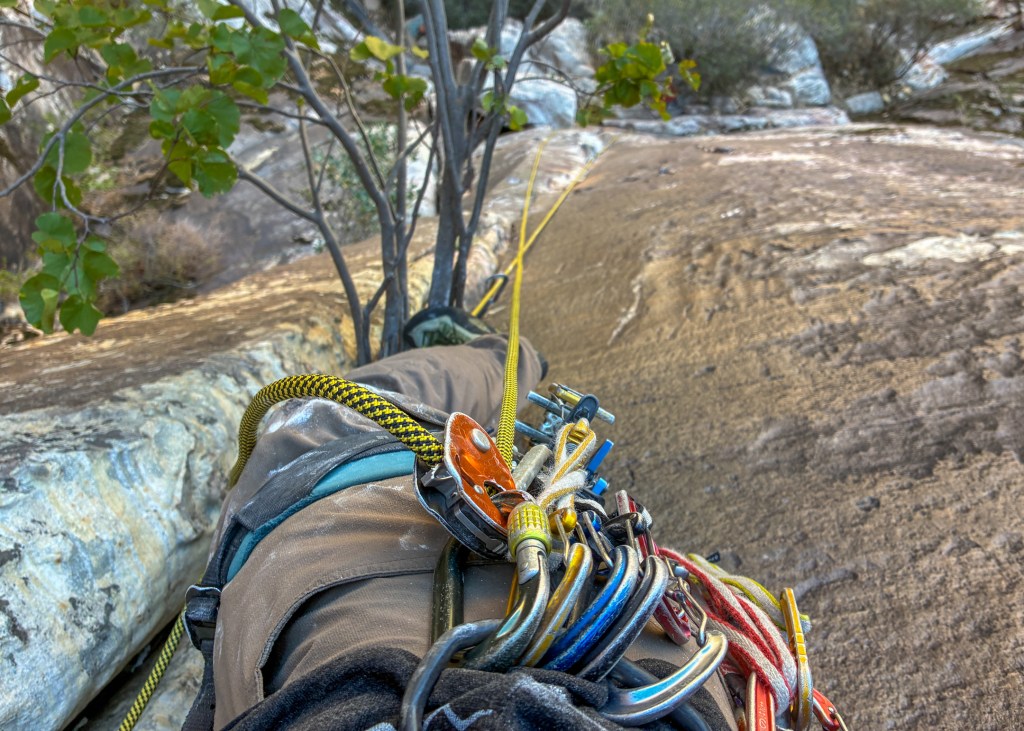
For the rope soloers out there, here’s the system I used on Waterboys. Generally speaking, it worked well. My next addition will be a proper chest harness instead of a neck bungee. I think this will keep my Gri-Gri even more reliably oriented.
- Rope: 9.4mm Maxim
- Belay Device: Unmodified 2020 unmodified Gri-Gri oriented normally, 10mm steel quick-link for belay device attachment, and Avant neck bungee for orientation
- Cache Loop Management: Petzl Microtraxion
- Following: Two Petzl Microtraxions
- Extra notes: No back up knots, five Avant climbing rope cinches
Want to support? Consider a donation, subscribe, check out my Patreon page, or simply support our sponsors listed below.
Ten Thousand Too Far is generously supported by Icelantic Skis from Golden Colorado, Range Meal Bars, The High Route, Black Diamond Equipment and Barrels & Bins Natural Market.



enter your email to subscribe to new article updates
DISCLAIMER
Ski mountaineering, rock climbing, ice climbing and all other forms of mountain recreation are inherently dangerous. Should you decide to attempt anything you read about in this article, you are doing so at your own risk! This article is written to the best possible level of accuracy and detail, but I am only human – information could be presented wrong. Furthermore, conditions in the mountains are subject to change at any time. Ten Thousand Too Far and Brandon Wanthal are not liable for any actions or repercussions acted upon or suffered from the result of this article’s reading.


Leave a Reply