
The Snazette is an especially incredible two pitch 5.10c variation to one of the Teton’s already great routes, The Snaz (5.10a, IV).
With an excess of morning downtime at work, I am circling back to this excellent day shared with the Alpine Peanut in early June. Late September and October are the prime season for the long south facing routes on Cathedral Rock. In summer, the steep black Snaz corner system turns into a convection oven by mid-morning. This time of year climbing in the sun can be excellent, facilitating a more casual pace and a lesser water requirement. If you’ve been contemplating the Snazette, perhaps it’s time to go.
The Snazette has a reputation. The money pitch is about as splitter as Teton crack climbing gets, a striking natural incision cleaving a blank panel of pearly white granite several hundred feet off the deck. If I remember correctly, there’s only one or two jugs on the entire route. Otherwise the work is characterized by relentless thin hand jamming and a bulging crux on rattly ring locks. I personally know several climbers well established at the 5.10 grade that have fallen victim to the sneaky pump-fest that is the Snazette. Mountain Project recommends a triple set of cams from #0.5 to #1. Where are we, Indian Creek?

After three long pitches up to 5.7 we set a gear belay left of the bolted anchor below the Snaz’s notorious 5.9 off-width. The overhanging ring lock crux occurs just off the belay. Like many budding crack wizards, ring locking is my kryptonite. Jam after insecure jam I thrutched to a no hands rest, truly astounded I was still on the wall. Poor beta told me the remaining thirty meters was 5.8 hands, so I forwent the recommended triple cams in thin hands. Sadly, that beta was surely a devious transmission of a devilish sandbagger. Later inspection of the most recent Ortenburger guidebook called the upper crack sustained 5.10a, more accurately describing my experience. About five meters from the belay ledge I was stripped down to a few wires and a #3 Camalot, with a final vertical bulge guarding salvation. I was pickled, and I knew it. Flamed forearms, more stressful thin jamming, and a low likelihood of further protection haunted my psyche. But a squeaky clean and steep wall below, and a perfect #2 Camalot at my waist, provided just enough encouragement to punch it.
Appreciate Ten Thousand Too Far? Support independent mountain journalism with $5.10 per month through Patreon (and receive extra bonus content), or with a one-time donation. Any and all support is greatly appreciated.
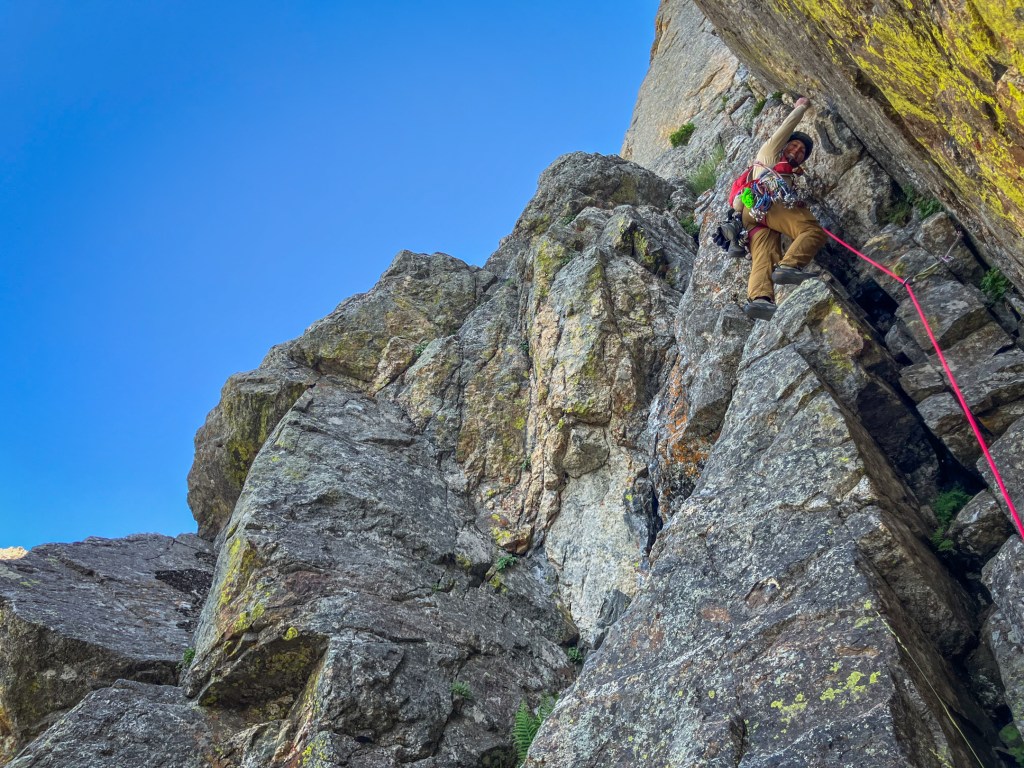
Halfway through the encore bulge matters started to unravel. My fingers were actively opening, arms a vibrating mess of lactic acid, and that gold cam looked awfully small below. The jams became increasingly shallow and flared. In an act of pure desperation I down-climbed a few moves, fiddled in a sideward nut, and clipped it with a single carabiner. Placing that wire was a huge energy suck that could’ve cost me the onsight, however, it ended up saving me from an otherwise colossal fall. The belay ledge is defended by a steep mantle on sloping holds, and my now trembling forearms had no juice to hold on. I dead-pointed over the lip for a life saving jug, only to receive another damned sloper. Airborne I went. Thankfully the wire held, and thirty feet later all I hit was clean Teton air!
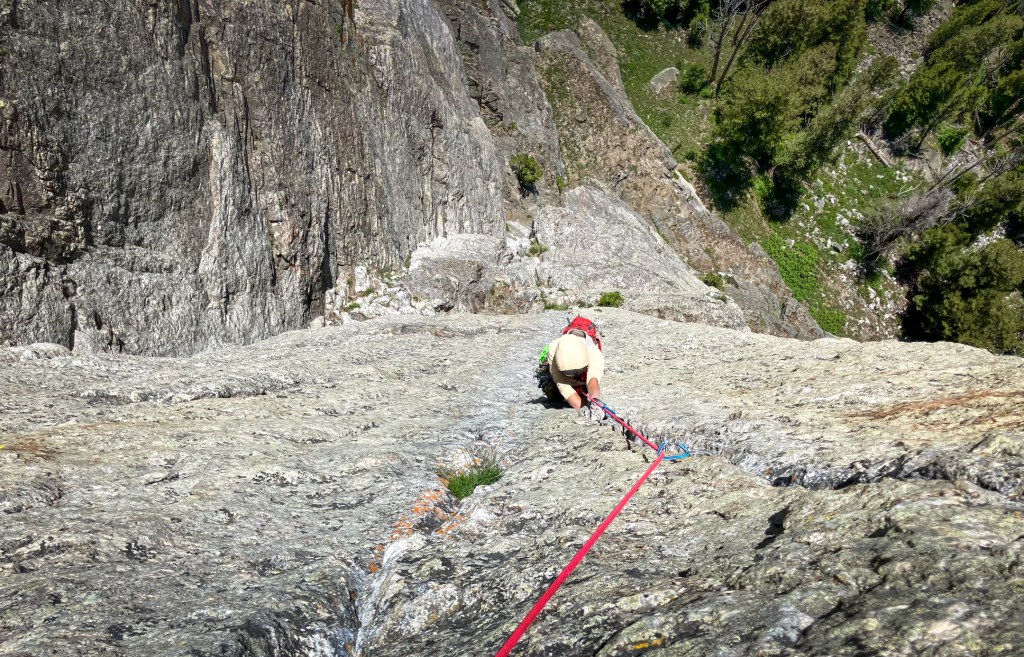
Bobbi got punked by the slippery Snazette as well, needing several hangs to reach the belay. In hindsight we deduced two things: a trip to Indian Creek was in order, and this pitch was totally worthy of every single guidebook star. Above the crux pitch, a 5.9 corner and easy ledge traverse connects back to The Snaz, which we followed for 5-6 more pitches to the last bolted anchor. Facing closing daylight we elected against the chossy, adventurous, and lesser difficulty upper pitches I’d climbed several times before, and rappelled to the ground.


A longtime friend in their mid forties, who has climbed up to 5.13 on gear, quelled my crushed ego with one simple text: “The Snazette would be 5.11 anywhere.” Having climbed an extensive assortment of 5.10 in the Tetons, I’d have to agree. This route felt like a serious step up from the standard Snaz (5.10a), Aerial Boundaries (5.10b), Vieux Guide (5.10b) and The Snake (5.10c). That said, it’s all there. Fitness, poor gear selection and conservation, and ring lock technique were our limiting factors. With exceptional protection and a clean wall tailor made for safe whippers, the Snazette is an excellent route to push personal limits. Next season I’ll be back.

Additional Notes
- The Snazette is a variation of the Snaz, and while fixed anchors facilitate a retreat from the top of the money pitch (with TWO ropes!), I highly recommend continuing to the tippy top of The Snaz. I have written several articles on the Snaz that can provide extra photos and beta:
- For climbers solid at the 5.10+/5.11- grade on thin hand cracks, a double set of cams in #0.5 to #1 alongside a standard 5.10- Teton rack should suffice. For climber’s pushing grades and wanting protection every body length or so, consider a triple set from #0.5 to #1. Running a single rack on the Snazette would require huge runouts.
Want to support? Consider a donation, subscribe, check out my Patreon page, or simply support our sponsors listed below.
Ten Thousand Too Far is generously supported by Icelantic Skis from Golden Colorado, Range Meal Bars, The High Route, Black Diamond Equipment and Barrels & Bins Natural Market.



enter your email to subscribe to new article updates
DISCLAIMER
Ski mountaineering, rock climbing, ice climbing and all other forms of mountain recreation are inherently dangerous. Should you decide to attempt anything you read about in this article, you are doing so at your own risk! This article is written to the best possible level of accuracy and detail, but I am only human – information could be presented wrong. Furthermore, conditions in the mountains are subject to change at any time. Ten Thousand Too Far and Brandon Wanthal are not liable for any actions or repercussions acted upon or suffered from the result of this article’s reading.
 Ten Thousand Too Far
Leave a comment