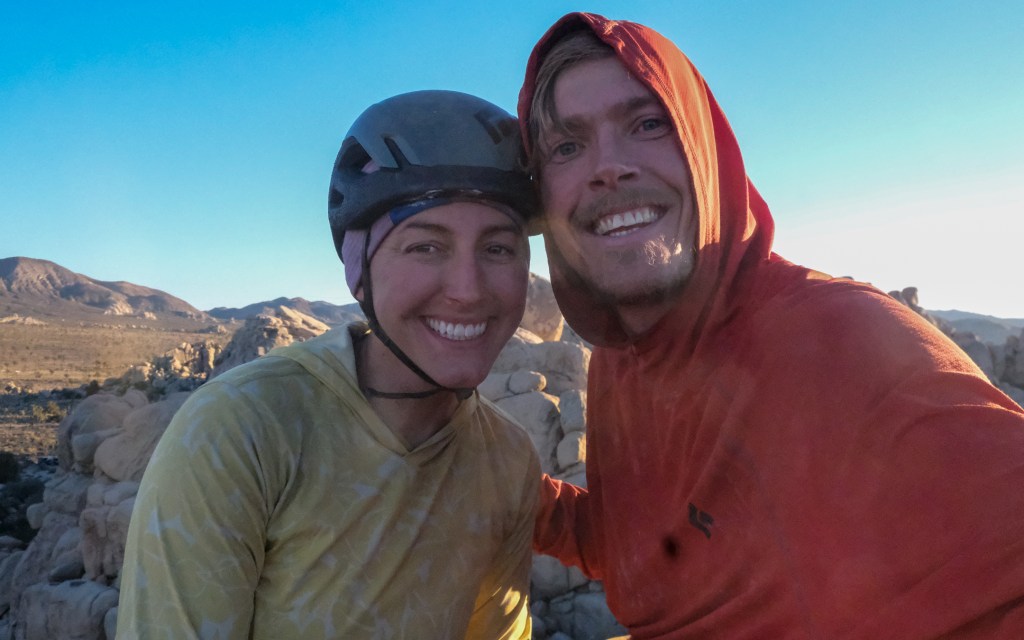
Bobbi Clemmer and I returned to Joshua Tree National Park for our second annual two week winter escape, where we climbed… and climbed… and climbed. This article is split into two parts, and features a brief creative piece on commitment as well as a traditional trip report.
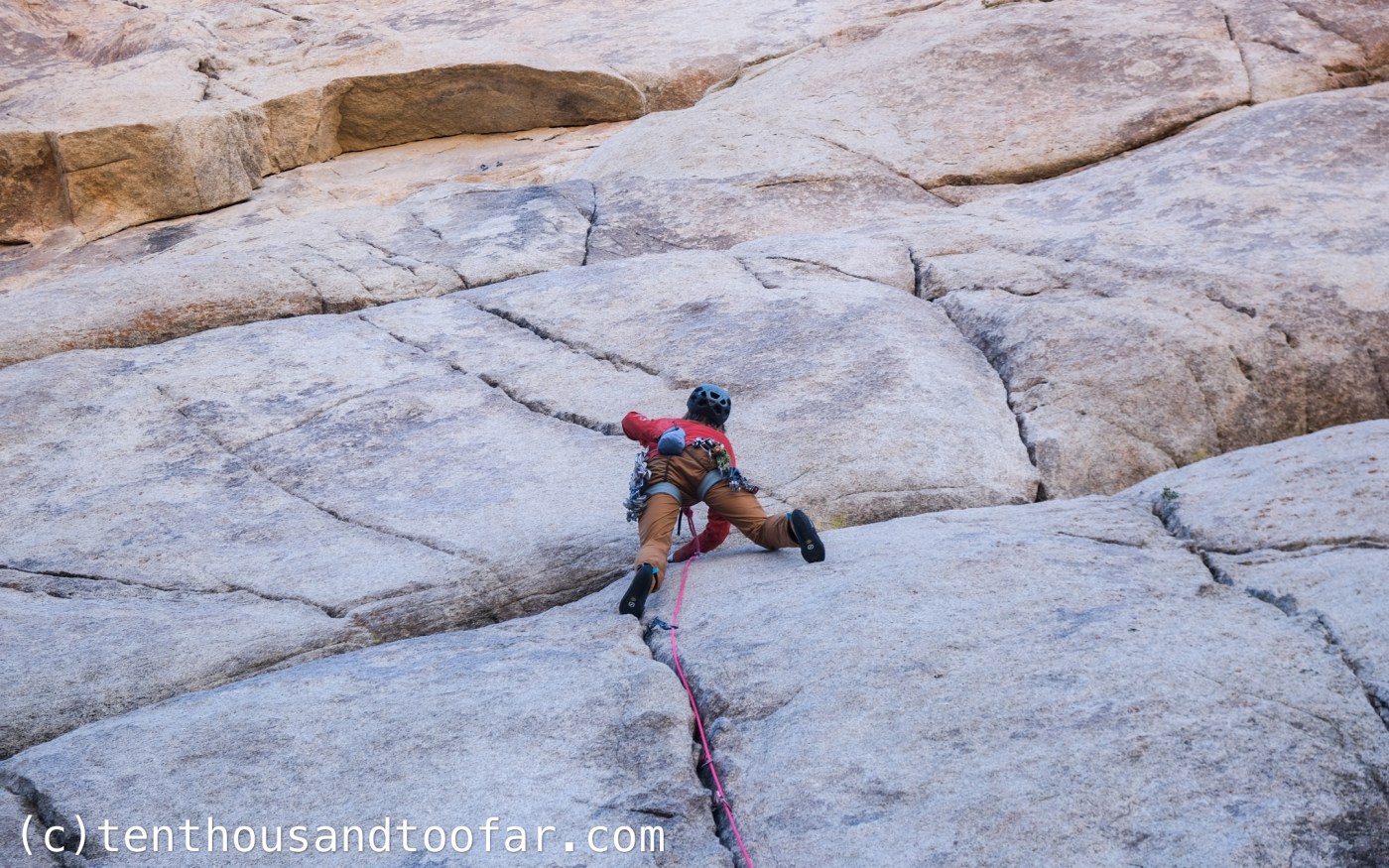
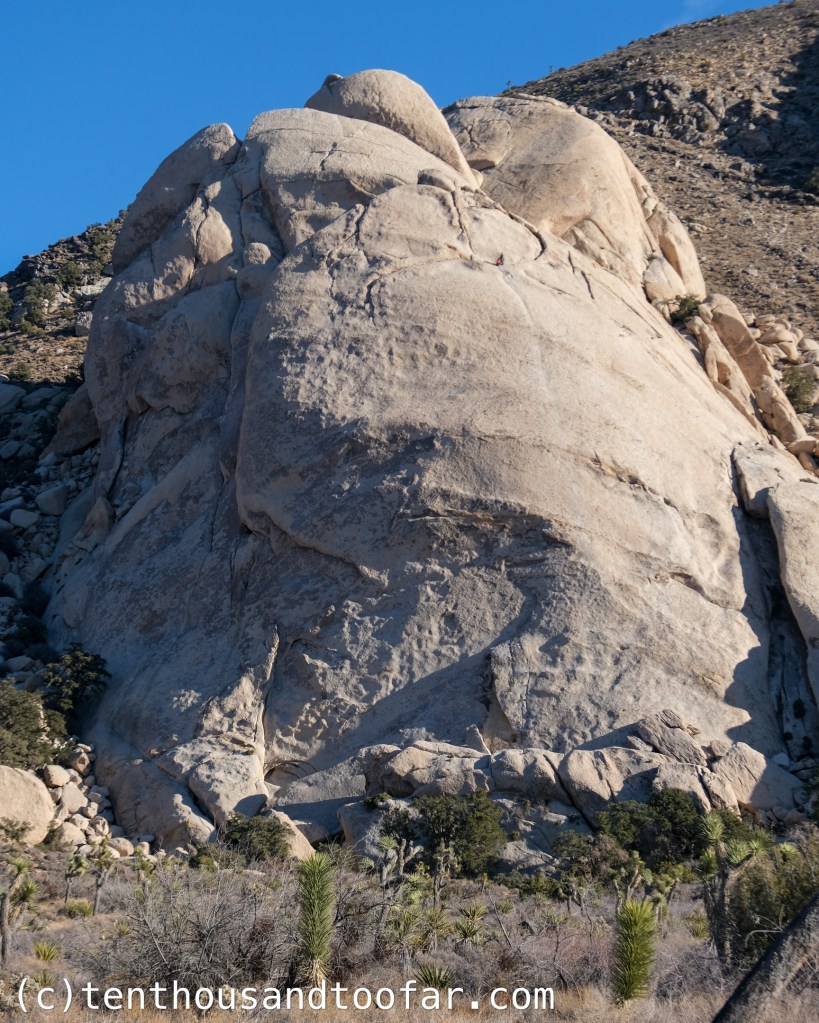
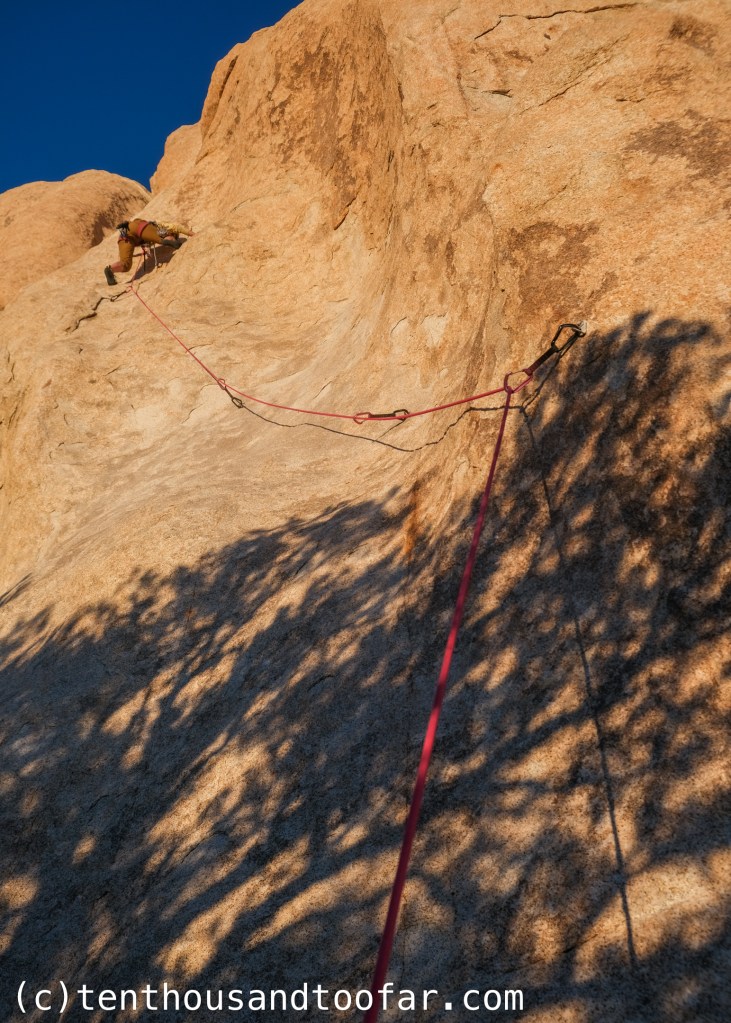
The second I step off the ground I feel the exposure. Dial 911, a two pitch 5.10a slab and face route established by Charles Cole and Karen Piel in October 1991, begins from a wedged boulder in a 50 foot chasm at the base of the famous 400 foot Saddle Rock formation. Falling from the slippery 5.9 granite edging defending the first bolt wouldn’t just mean a ground fall, it would mean a 40 foot ground fall into a slot canyon filled with talus – a surefire life changer with a difficult rescue. I climbed up and down from the first moves several times, touching the holds and calculating my ability to down-climb with every upward step. I compose myself, preform the now rehearsed sequence, latch the best and highest hold, lock off while engaging my core, reach into the void, and clip the first bolt. The rhythmic “snap” of the carabiner gate latching over my rope sends a shockwave of relief from head to toe. I ease my grip, sink into my feet, and watch as the next 20 feet of holds come into focus. I tip toe past the first bolt with ease, navigating the same sea of dime edges and friction dishes upward. With every step I become further aware of the increasing distance between my heels and the now hardly visible first bolt. Smear by smear, edge by edge, and crimp by crimp I work my way back into the no-fall zone. “Snap” – I’m safe again, and the cycle repeats. 100 feet and however many minutes later I pull the final mantle onto a horizontal dike feature marking the end of pitch one. My calfs are singeing with tension, fingers flaked dry from incessant chalking, and psyche anemic from seemingly never ending runouts, routefinding decisions, and irreversible moves. I clipped into the anchor and panned back to eyeball the crux, a committing 5.10a boulder problem protected by a lone bolt 20 feet off the belay. Sure enough, the holds were even smaller and further apart. Instead of projecting, I downshifted to neutral – it was Bobbi’s turn to climb. “On belay!” I shouted down.
Love Ten Thousand Too Far? Support the website with $5.10 per month through Patreon (and receive extra bonus content), or with a one-time donation. Any and all support is greatly appreciated.
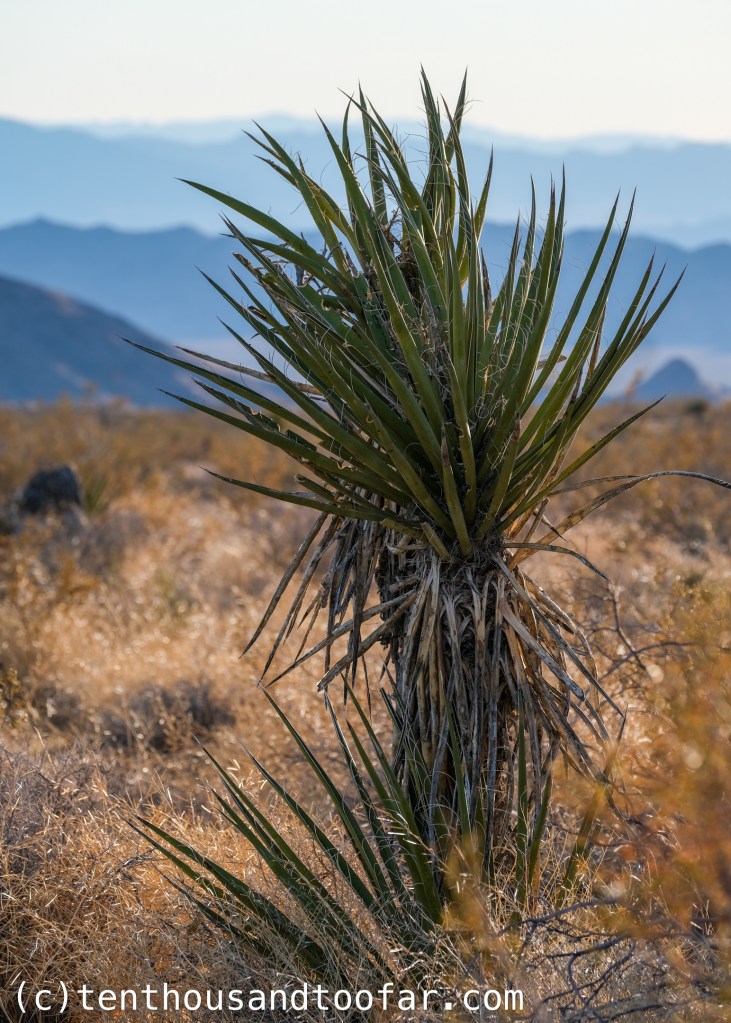
When I think about rock climbing in Joshua Tree National Park, the word commitment comes to mind. Peruse online forums and you’ll hear incessant claims, if not complaints, of sandbagging, yet I think the predicament of stiff grades in this iconic climbing destination is more complex. Succeeding on the fabled domes of Josh requires two disciplines of rockcraft foreign to the modern day climber. First off – the friction coefficient of Joshua Tree monzogranite is off the charts. A dear friend and veteran climber calls it “velcro rock”, and after a few weeks of reconditioning, you’ll realize that the most worthless smears at your local crag are 5.7 business on stone this coarse. Josh slabs are a plastic puller’s nightmare, requiring finesse, balance, and a collected mindset willing to embrace insecurity. On Quick Draw McGraw, a 5.10a on the famous low angle face of Echo Rock, you won’t find a single edge thicker than a smartphone on the entire 70 foot route, and few thicker than a credit card through the cruxes. Instead of handholds you’ll tick minuscule crystals, faint depressions, or even individual grains of granite to rise through the thinnest moves. Subtleties such as hip positioning, core tension and weather conditions reign supreme. No amount of muscle-ups will do the trick here.
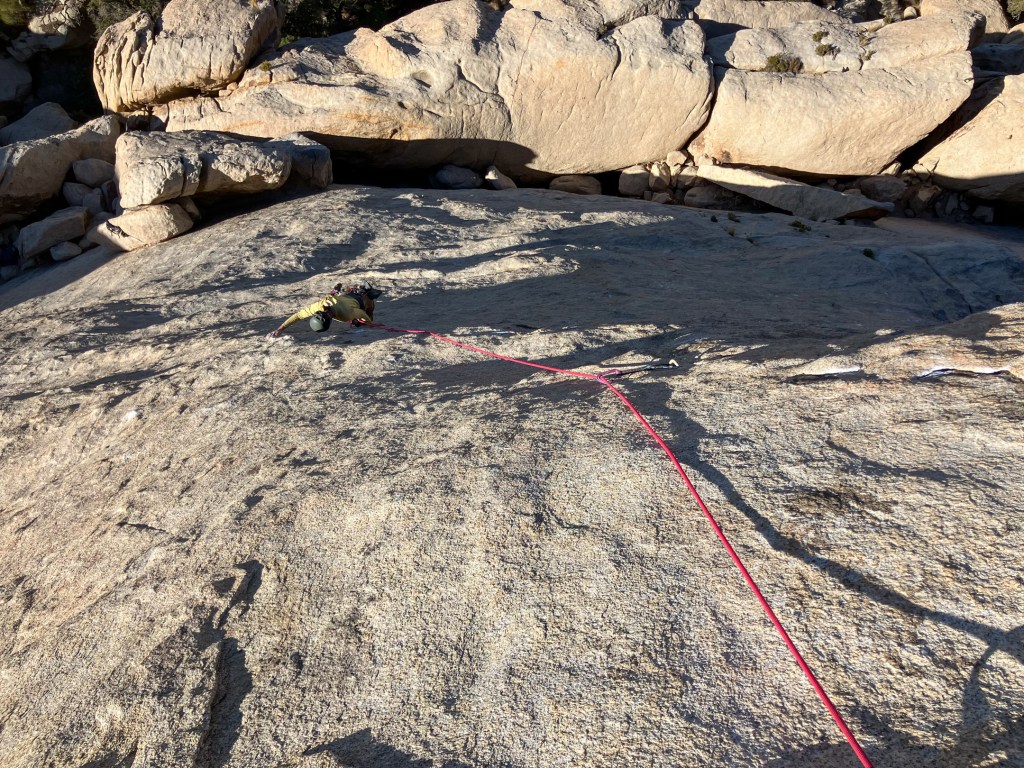
Secondly: the runouts. In Joshua Tree, a spirit of adventure, once incumbent in all climbing, is preserved. The bulk of Josh routes were established before the modern sport-climbing era, using traditional “ground up” ethics. Bolts were placed with a hand drill on lead, a laborious feat of masonry reserved solely for times of absolute necessity. The mental component of climbing was valued as much as the physical. When difficulties fall below that of the route’s overall grade, bolts vanish. Even the purest of crack climbs have a funny way blanking out near their conclusion. On Dandelion, an 80 foot 5.10a established by John Long and company in the Hidden Valley Campground, a lone bolt guards 20 feet of exit climbing above the initial 5.10 crack section. My first time leading Dandelion I got stuck at the bolt. I climbed into the crux, and back to salvation, four times before sitting on the rope to ease my nerves – something my stubbornness rarely allows me to do. Eventually I decipher a sequence that fits my body, and cast off. Inch by terrifying inch I drift further from the bolt, committing to movements I surely can’t reverse. A hand traverse on rounded holds and faint smears, culminating with a right foot 5.9 rockover move 15 feet above the bolt, was the crux. But rather than fear or adrenaline, all I felt was stillness. In that moment I had but one task: to climb my absolute best. That degree of presence is something I’ve never experienced outside of the mountains.
At the climbing gym, or modern day sport crag, the adventure element of rock climbing – of which danger is inherent – is stripped away, leaving a monochromatic activity akin to traditional sports, where physical ability and pursuance of quantifiable difficulty reigns supreme. Routes are packed together like sardines, with the only difference between each one being the steepness of the wall, and the size and abundance of holds. Years down the line, I remember 1% or less of the sport climbs I’ve done, but memories of Dial 911, Quick Draw McGraw, Dandelion, and nearly every Joshua Tree route we’ve climbed over the last two years will live on forever. Critics argue: “you’re just addicted to the adrenaline”. But I rebel against that notion. I do everything in my power to avoid adrenaline from the moment I slip on my climbing shoes. Instead, I crave mastery, kinship with my partner, and the rare feeling of total mindfulness which can only be felt in moments of full commitment.

When Bobbi Clemmer and I arrived in Joshua Tree last winter, we spent the better part of our trip deciphering the nuance of the rock, and learning basic crack technique. This year we were initiated, armed with enhanced technique, formal goals, and a handful of aspirational routes. We spent our first few days getting acclimated around the Hidden Valley Campground, climbing some lesser known routes that caught our eye in 2024: Spaghetti and Chili (5.8-), West Face Overhang (5.7+) on Chimney Rock, Sexy Grandma (5.9), Mama Woolsey (5.10a R) and Dandelion (5.10a), as well as repeats of Toe Jam (5.7), Double Cross (5.7+) and Buissonier (5.7). Of those, Buissonier and Mama Woolsey were the most significant. The former represented the hardest traditional lead of Bobbi’s life, and her first proper whipper on gear. While only “5.7” in the guidebook, Buissonier would be 5.9 in just about any other venue, with awkward crack climbing requiring equal measures of balance and raw power, following a massive arcing flake pinned against a featureless vertical slab. While Bobbi has been leading on trad gear for many years, she has always preferred to stay within her comfort zone, never risking a fall. Taking the “first whip” is a right of passage for the budding trad warrior. Furthermore, she placed her gear well, fell safely, and had the composure to finish the lead clean. Mama Woolsey was my first 5.10a trad lead in Joshua Tree. While I’ve been steadily leading 5.10 trad across the country for years, and even led my first two 5.11 Teton cracks this summer, Joshua Tree 5.10 is a different game. In ironic style, Mama Woolsey even had an “R” rating, with the crux being an insecure fingertip layback protected by a lone and dubious #1 TCU in an old piton scar. Routes like these have always been my style – technical off-vertical faire demanding composure, acceptance, and commitment – rather than steep faces and sustained cracks. Scanning the guidebook that evening, I identified a few 5.10’s that would test my weaknesses, and slept dreaming of steep hand jams.
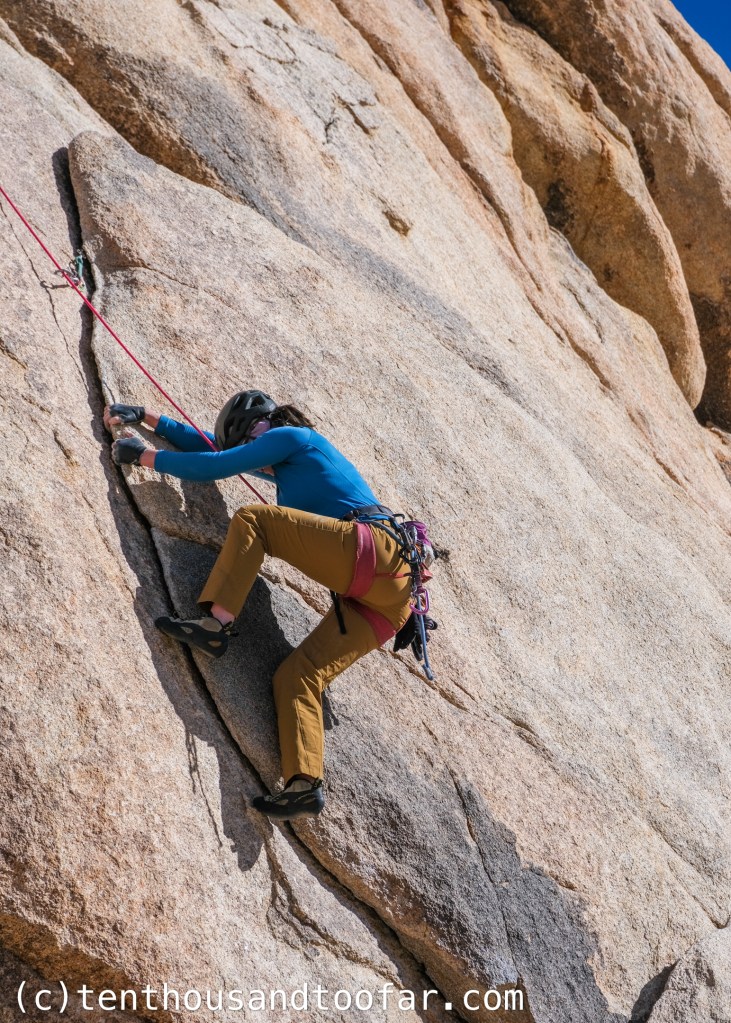
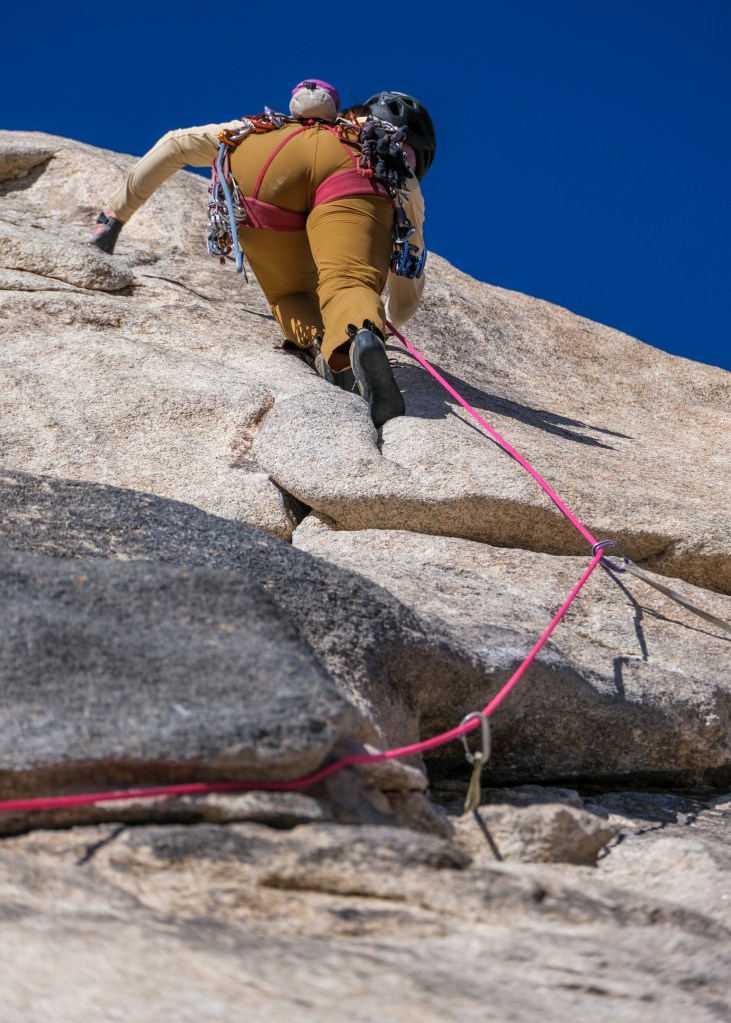
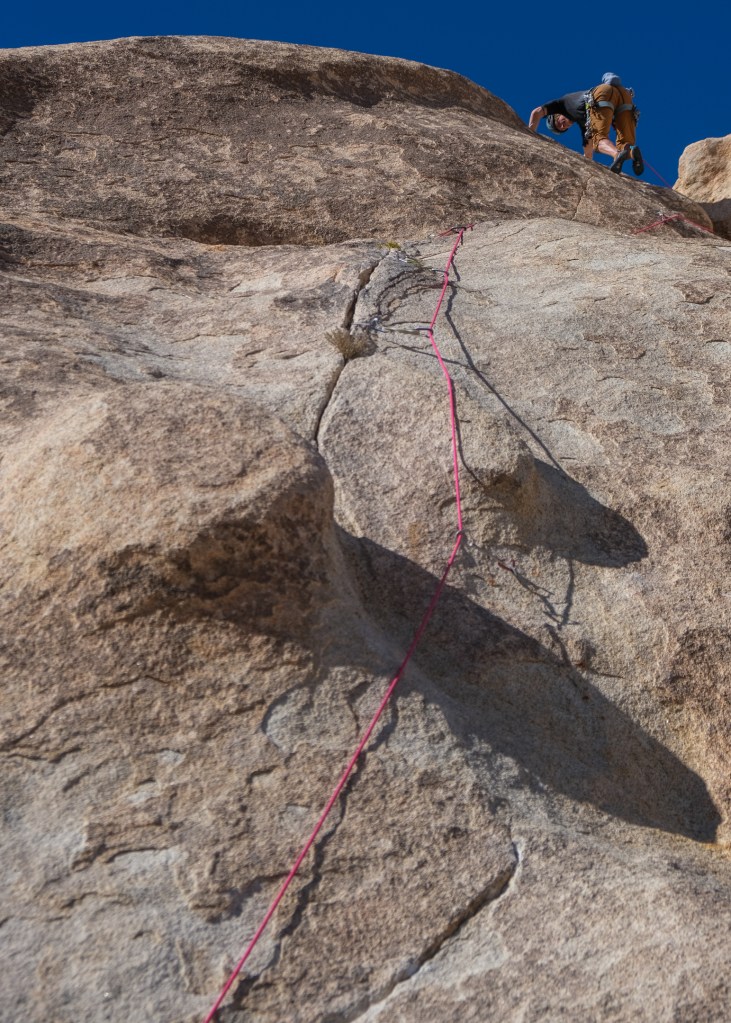
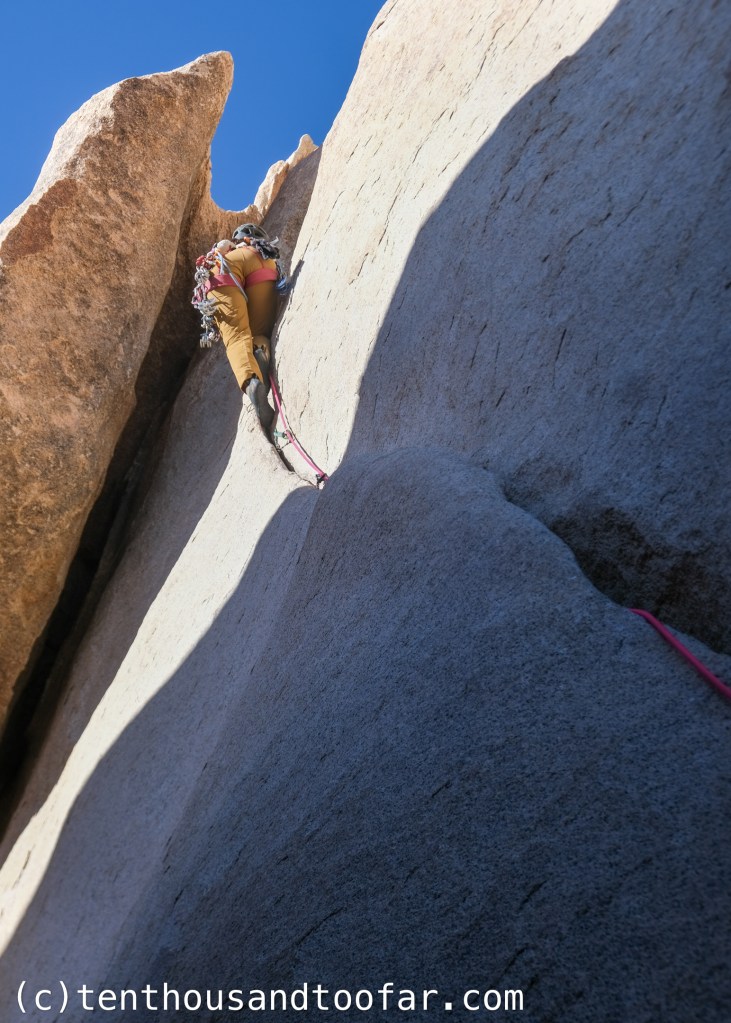
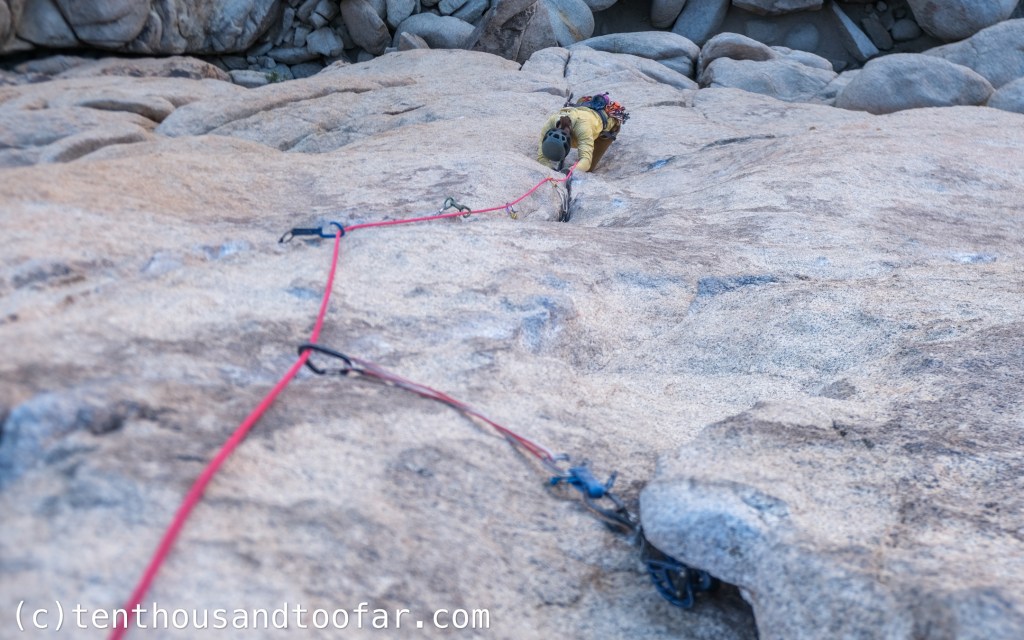
Our next two days were spent sampling new walls. At Echo Cove we climbed the classic runout friction routes Stichter Quits (5.7R) and Double Dip (5.6), as well as the four-star, striking, and unbelievably difficult double crack corner Touch and Go (5.9). At the “Real Hidden Valley” we climbed Almost Vertical (5.7) and the first pitch of Ball Bearing (5.9). The former was Bobbi’s first Joshua Tree 5.7 onsight, and the latter was just about as stellar and sustained as technical 5.9 crack climbing gets, with three cruxes in locker fingers, locker hands, and a final “tips crack” boulder problem. If I lived In Joshua Tree, I would climb Ball Bearing every other week. On the way back to the campground Bobbi graciously belayed me on a redpoint attempt of Dandelion (5.10a). Two days earlier I led the route, but not without a few falls at the physical crux, and some “hangdogging” on the lone bolt guarding the thin exit slab. On my second attempt I succeeded in redpointing the route. With slightly cooler temperatures the crack felt almost casual, and while the slab was still terrifying, I knew my sequence from two days earlier would work – all I had to do was commit. Another 5.10a in the books. We were on a roll.
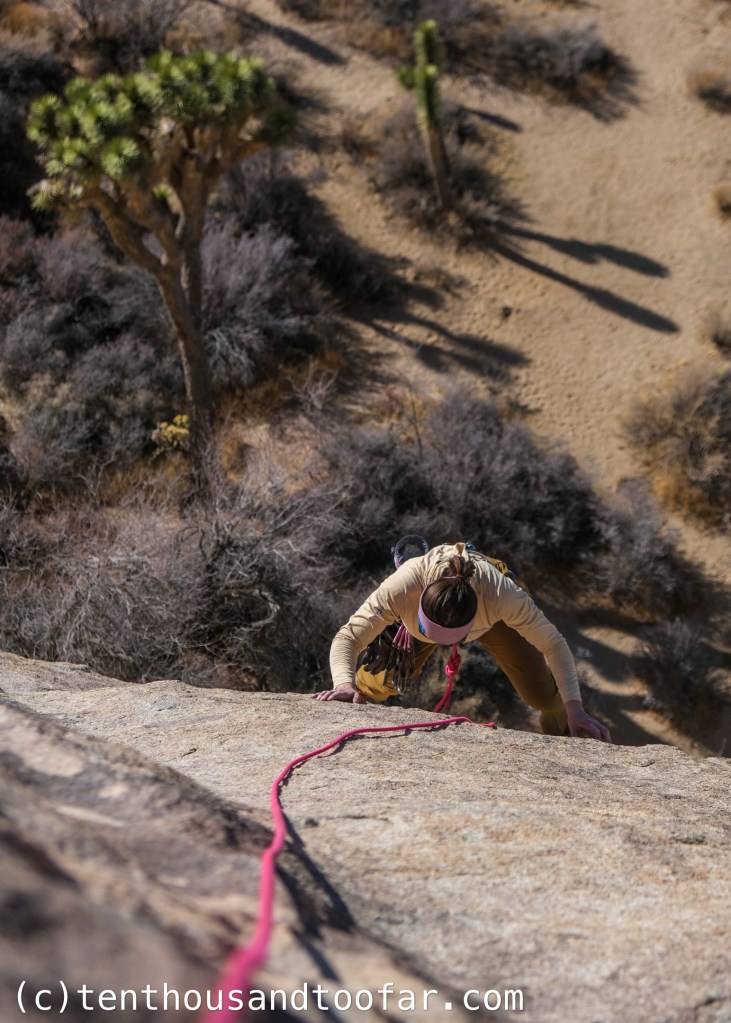
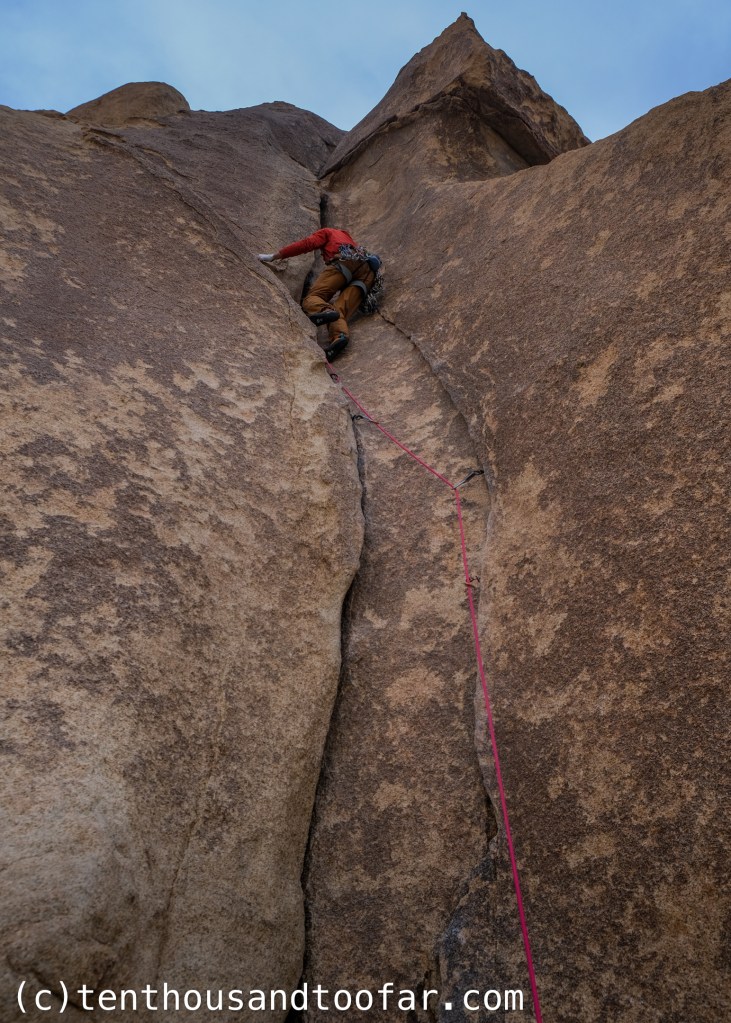
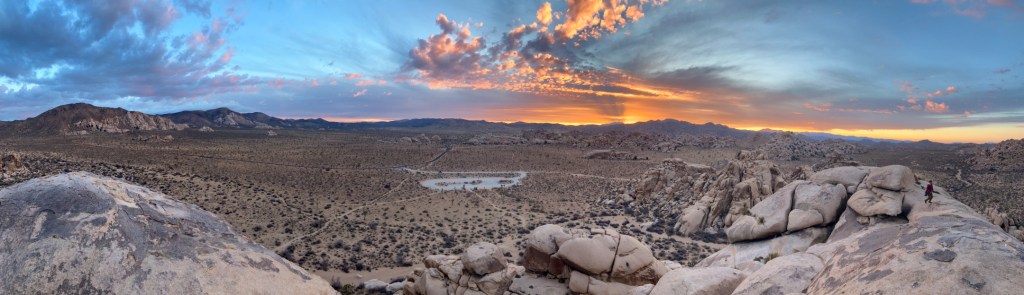
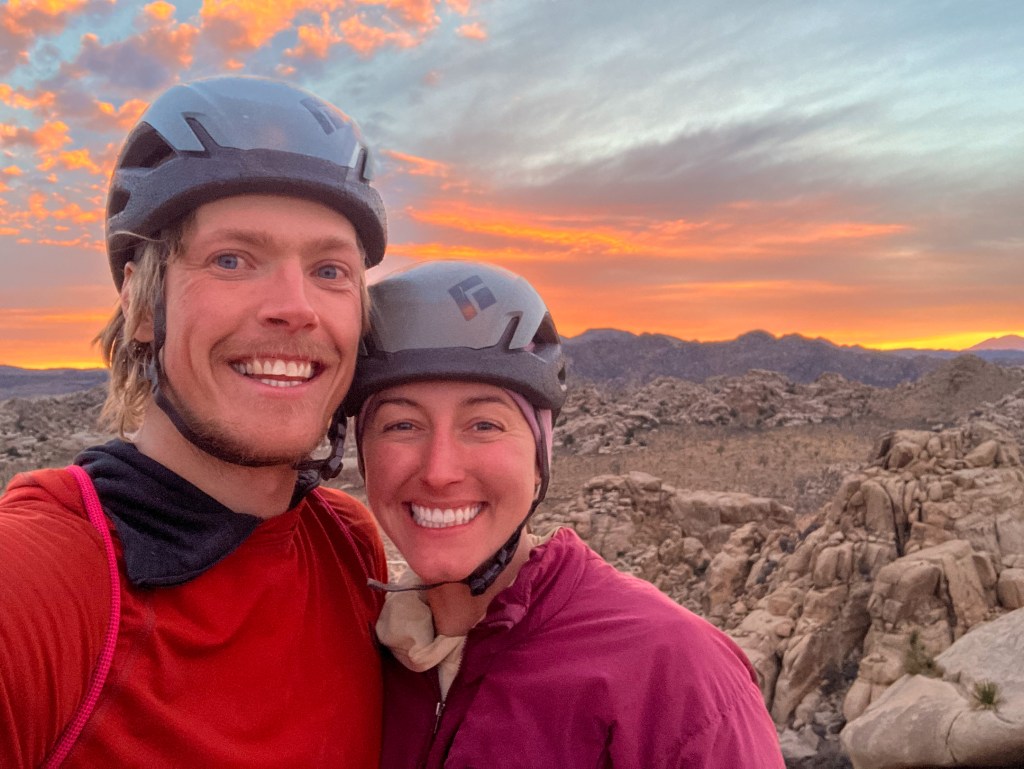
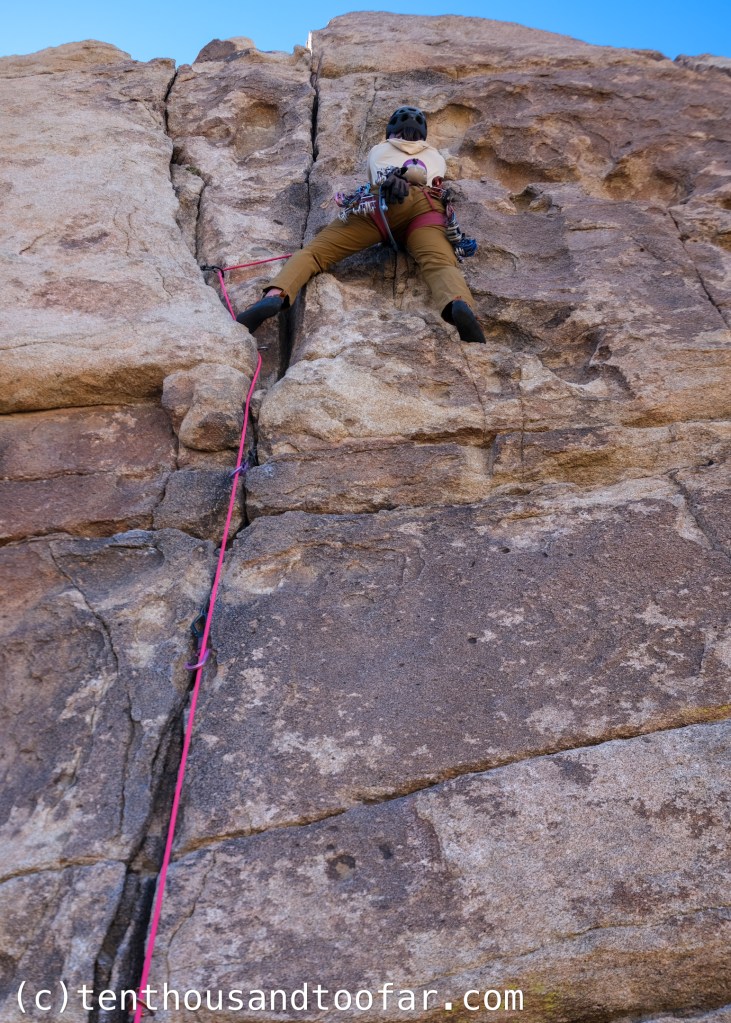
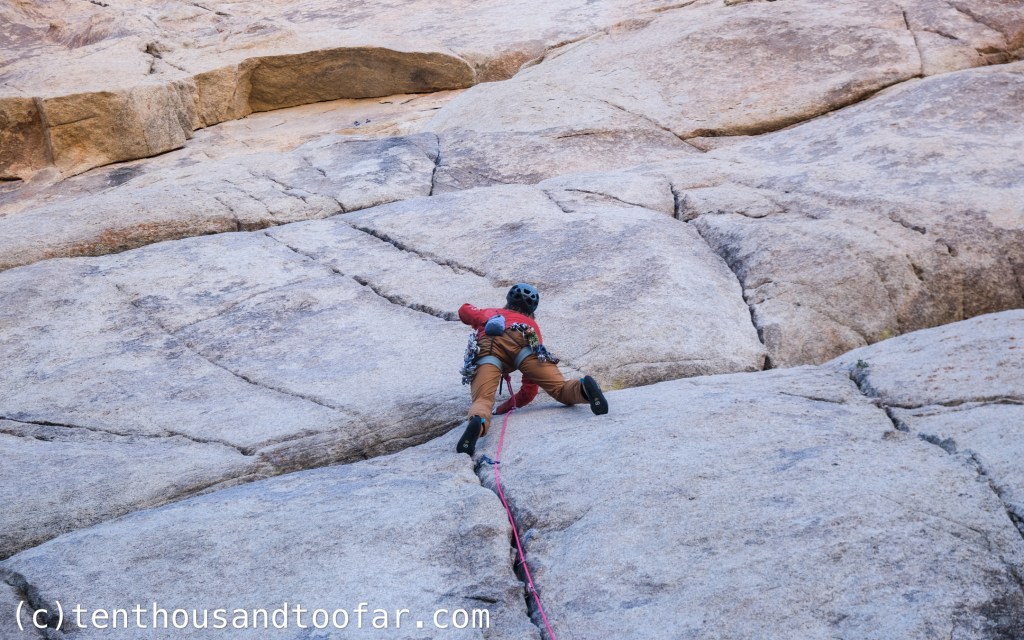
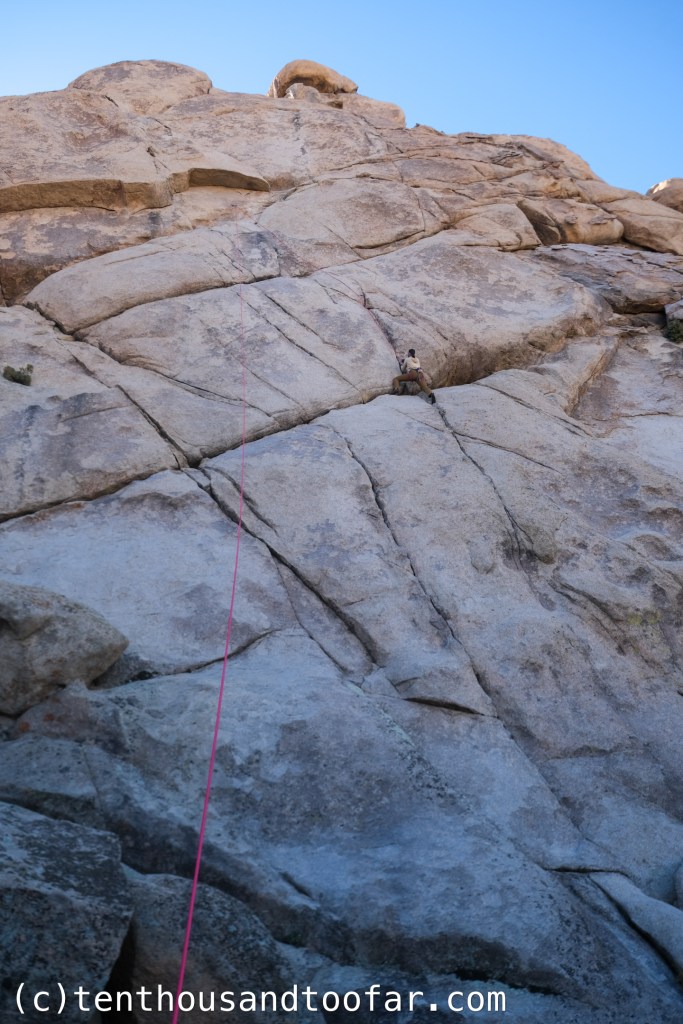
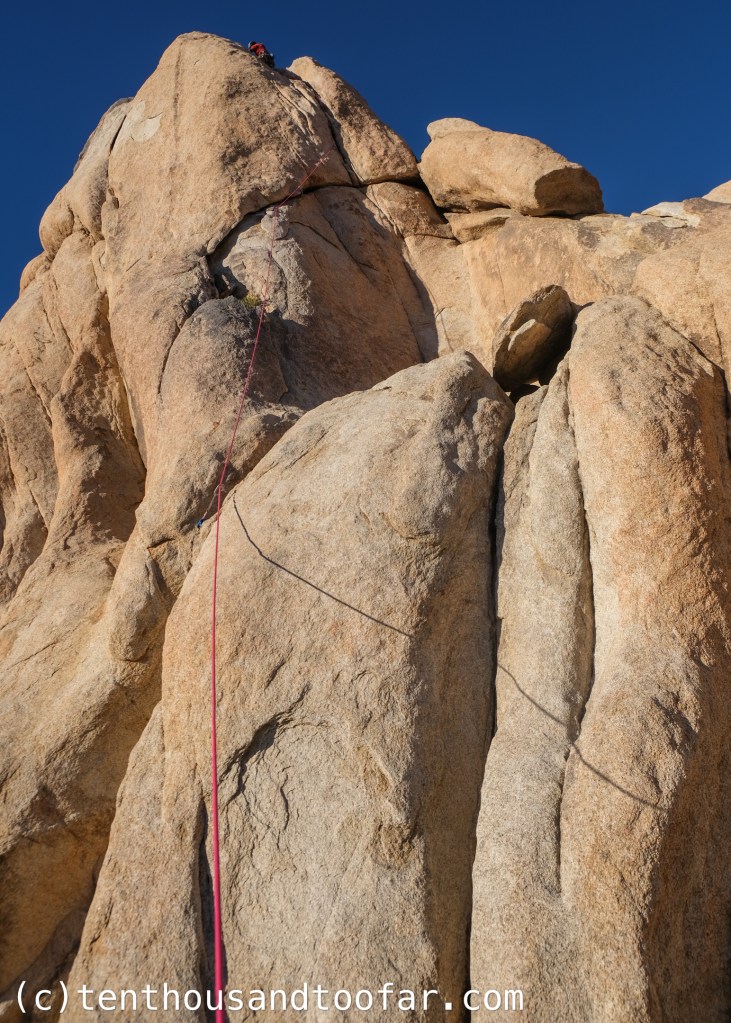
Realistically, we probably should’ve stopped climbing while we were ahead. One of the major lessons we learned on this trip is the power, and necessity, of resting. We climbed two full days of ice on the way to Joshua Tree, spent a whole day driving as “rest”, and went straight into four days of hard climbing. That said, Josh has a magical way of encouraging ridiculous amounts of climbing. It’s difficult to wake up within spitting distance of world class climbing, surrounding by inspiring walls in every direction, and not feel compelled to forgo rest. In the name of momentum we kept our streak going for another 48 hours. On day five Bobbi led her hardest route, To Catch A Falling Star (5.8) on Cap Rock. Much like Buissonier, this route is especially unique, following a near horizontal crack system for about 60 feet to it’s conclusion, and ending with a classic one-bolt runout friction crux. Protection in the bottoming and flaring crack is finicky, mostly thoughtfully placed small cams in shallow water pods. Watching Bobbi lead Catch A Falling Star was emotional. Typically she tends to favor straightforward and well protected leads – this was a step up – marking a significant milestone in her trad progression. In the afternoon we jetted out to Saddle Rocks for the aforementioned Dial 911 (5.10a, 2 pitches). This masterpiece stays true to the character of all Saddle routes, with unrelenting and daringly runout friction climbing on immaculate rock. However, as opposed to its renowned neighbor to the right, Walk On The Wild Side (5.8), Dial 911 takes a linear line. Every time I climb a route on Saddle I am captivated by imagining the first ascent. As touched on in the third paragraph, these routes were established in the purest of ground-up style, meaning the original climbers left the ground with little more than a hand drill, hammer, bag of bolts, and a vision. Every time the leader installed a bolt they proceeded to cast into the unknown, uncertain of when they would find another adequate stance to place protection. They usually carried a slim rack of traditional gear as well, but on the smooth slabs of Saddle, opportunities for cams and nuts are virtually non-existent. Having established my first ground up first ascent in the Tetons this past summer, I can relate to the exhilarating feeling of casting into uncharted territory – however, we were aiming for logical crack systems, and thereby had a reasonable guarantee of protection. One day I would like to establish a face climb ground up, placing bolts on lead, if only to understand the mental fortitude our pioneers of climbing exhibited in the olden days. As for Dial 911, well… it’s truly amazing, and made a strong bid for our favorite slab of the trip. The first pitch is only 5.9, but is truly endless, tastefully run-out, and will have the mortal climber salivating to clip the anchor. Pitch two features a steeper yet better protected 5.10a boulder problem just off a semi-hanging belay, and a buffet of 5.7 exit climbing with a classic 50 foot runout bookend. The exposure was energizing, reminiscent of the mind-bending face pitches on Idaho’s Elephant’s Perch. Keeping with our day’s friction theme, we finished through sunset on the thin and polished campground classic Chalk Up Another One (5.10a), before retreating to the van to soothe our aching calves.
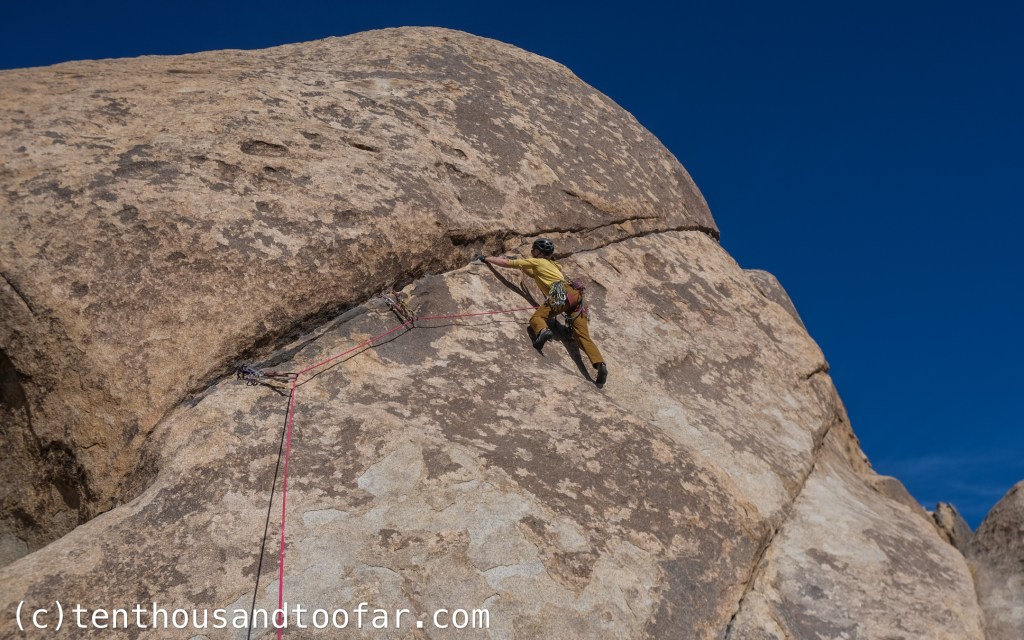
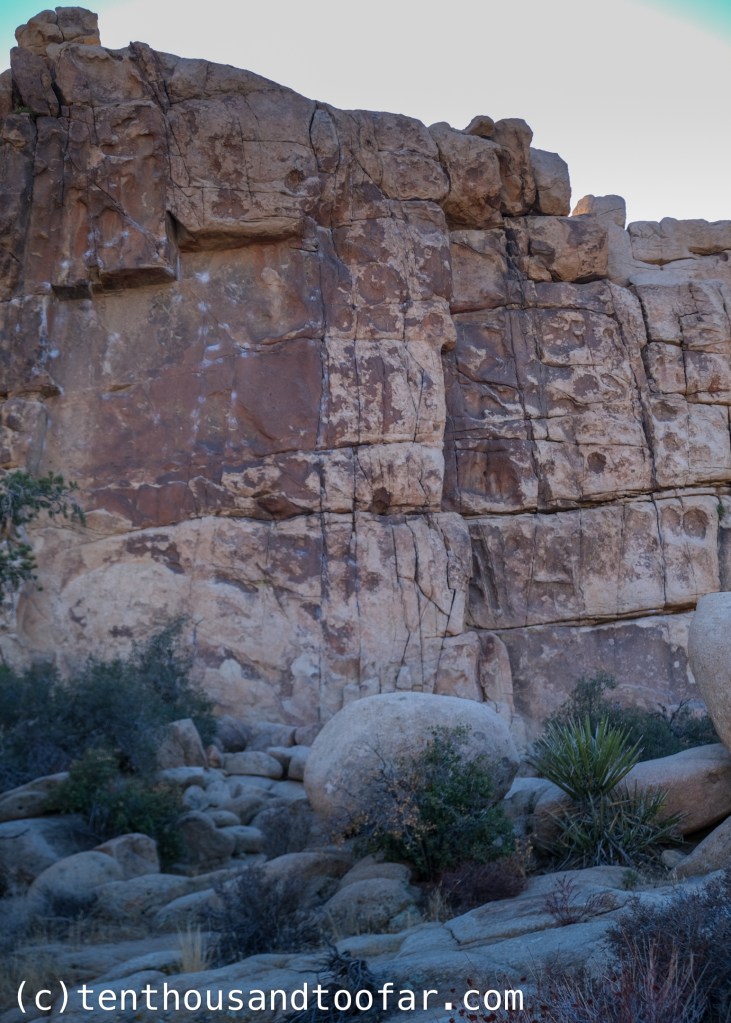
Our sixth day marked the end of our climbing streak, punctuated by a moderate pectoral strain for Bobbi while following the genuinely sandbagged White Lightning (5.7) at the Hemingway Buttress. We should’ve seen the injury coming. We both woke up exhausted that morning, and temps had plummeted to shivering conditions. Our toes were so sore we struggled to weight our feet properly, and I had a taped pulley tendon after our previous marathon day of strenuous crimping. Like proper soldiers we staggered through the rest of the day. I somehow managed an on-sight of No Calculators Allowed (5.10a) at the Thin Wall, and Bobbi returned, shielded by Ibuprofen, for a sunset lap on Sail Away (5.8), but the writing was on the wall: rest was in order.
(to be continued in a separate article)
Want to support? Consider a donation, subscribe, or simply support our sponsors listed below.
Ten Thousand Too Far is generously supported by Icelantic Skis from Golden Colorado, Range Meal Bars, The High Route, Black Diamond Equipment and Barrels & Bins Natural Market.


subscribe for new article updates – no junk ever
DISCLAIMER
Ski mountaineering, rock climbing, ice climbing and all other forms of mountain recreation are inherently dangerous. Should you decide to attempt anything you read about in this article, you are doing so at your own risk! This article is written to the best possible level of accuracy and detail, but I am only human – information could be presented wrong. Furthermore, conditions in the mountains are subject to change at any time. Ten Thousand Too Far and Brandon Wanthal are not liable for any actions or repercussions acted upon or suffered from the result of this article’s reading.
 Ten Thousand Too Far
Leave a comment