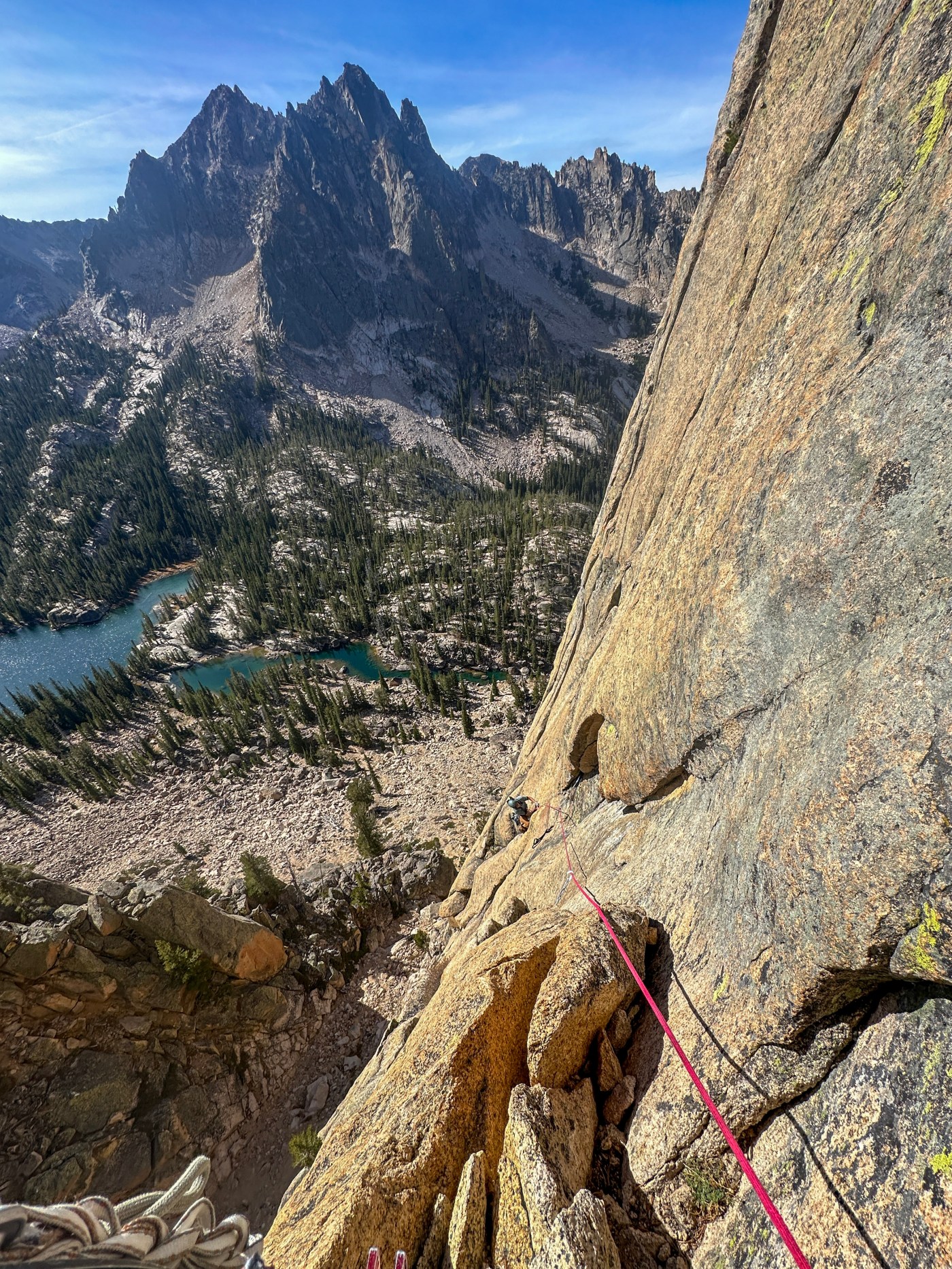
A manic two day strike to “Idaho’s El Capitan” with Jed Porter. Astro Elephant was astronomical – Jed called it Steck-Salathe and Epinephrine caliber – I’ve never climbed anything quite like it. On the way we climbed an excellent unnamed 7 pitch 5.9 slab on the Super Slab.
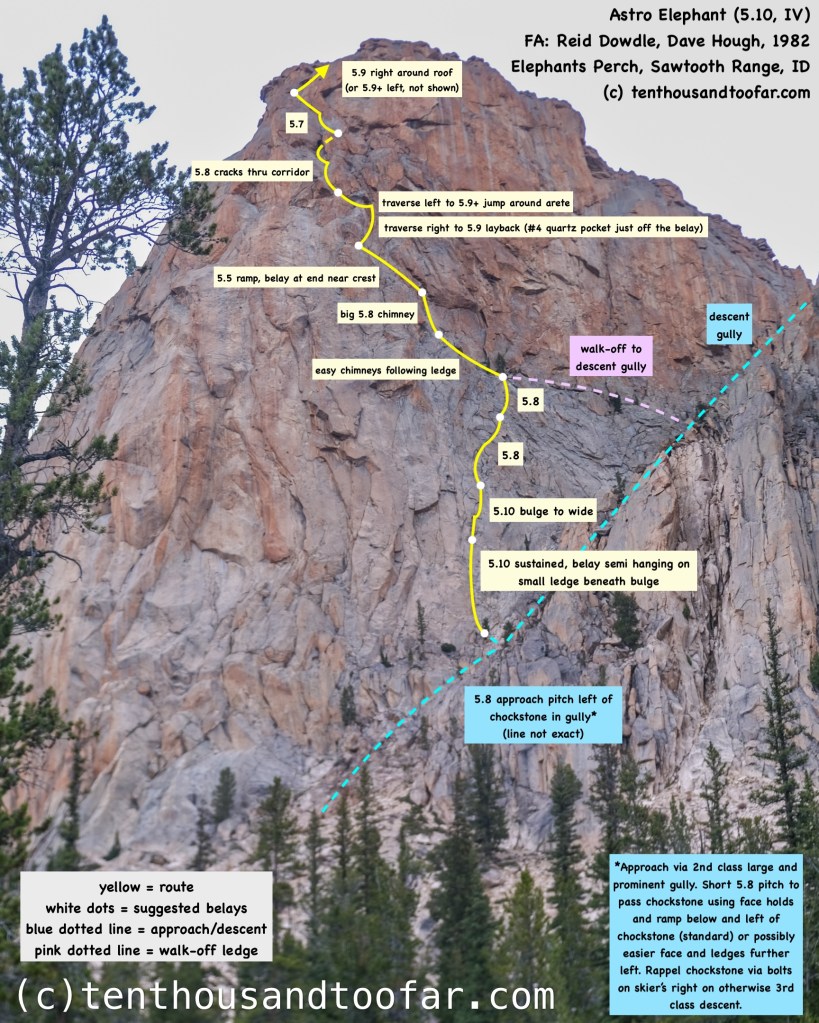
The Elephant’s Perch is a monolithic 1,000 foot golden granite outcropping pinned on the eastern frontcountry of the breathtaking Sawtooth National Forest, often referred to as “Idaho’s El Capitan” for its dramatic shield-like appearance that conjures direct visions of Yosemite. For climbers of the mountain west the Perch redefines anomaly, with very few ledges, neck craning exposure and an unrelenting steepness foreign to a region otherwise dominated by jagged and dynamic alpine peaks. The rock is leucocratic quartz monzonite, a course grained pink-orange granite with friction coefficients reminiscent of Joshua Tree and Little Cottonwood Canyon. And if the preceding endorsements weren’t enough, Fred Becky, one of America’s greatest pioneering technical rock climbers, purportedly called it the greatest chunk of alpine granite in the lower 48. I’ve heard stories from the Perch for years, though only from its uber-popular, shorter and easiest Mountaineer’s Route (5.9, III). There are at least two dozen other routes on the face stretching to futuristic 5.13. Our intention was the classic Astro Elephant (5.10, IV), possibly the longest route on the formation ascending a convex southwest facing rib that vaguely resembles The Nose on El Capitan. With five hours of driving, a boat shuttle across Redfish Lake and four miles of trails standing between our homes in Teton Valley and the Perch, splitting the climb into at least two days was an easy decision. In a parallel universe we would have stayed even longer, perhaps knocking off a second Perch route or one of the many other worthy multi-pitch outings above Saddleback Lakes, but my partner – Jed Porter – has a young toddler and I am not a trust funder – staying faithful to the punch clock is sound practice for my wallet. Alas we resigned to a good ol’ working man’s climbing trip – rise early, don’t stop, return late, chug coffee – or something like that.
Love Ten Thousand Too Far? Support independent mountain journalism with $5.10 per month through Patreon (and receive extra bonus content), or with a one-time donation. Any and all support is greatly appreciated.
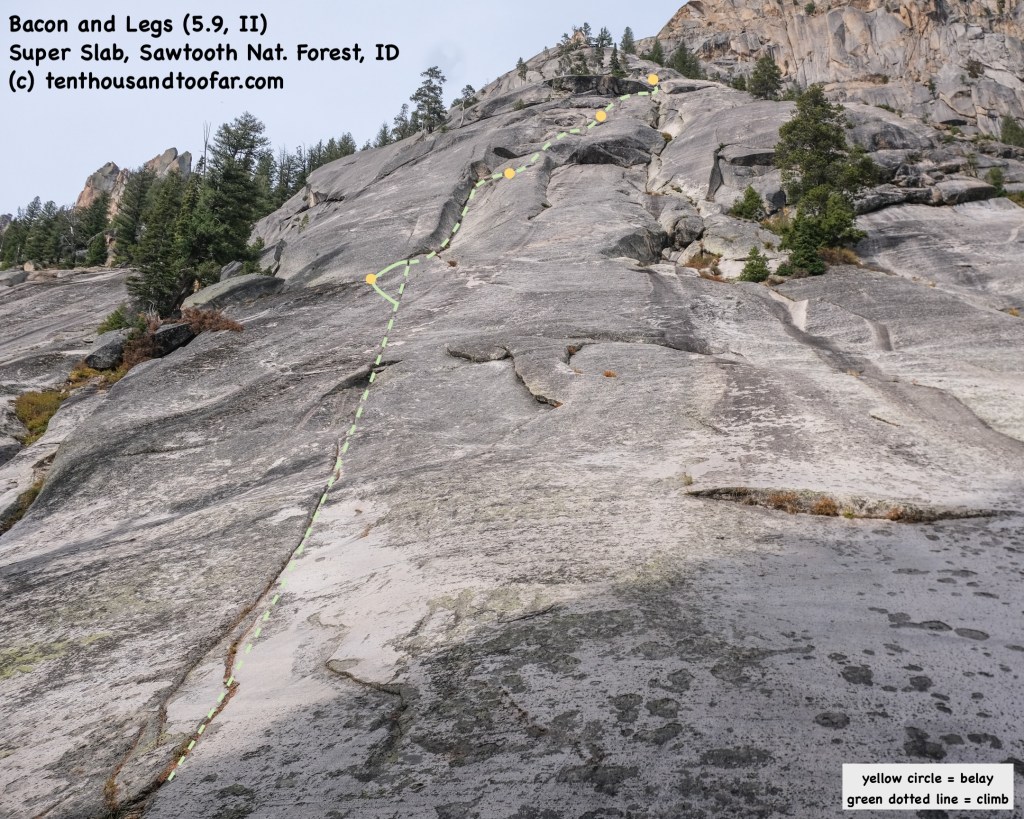
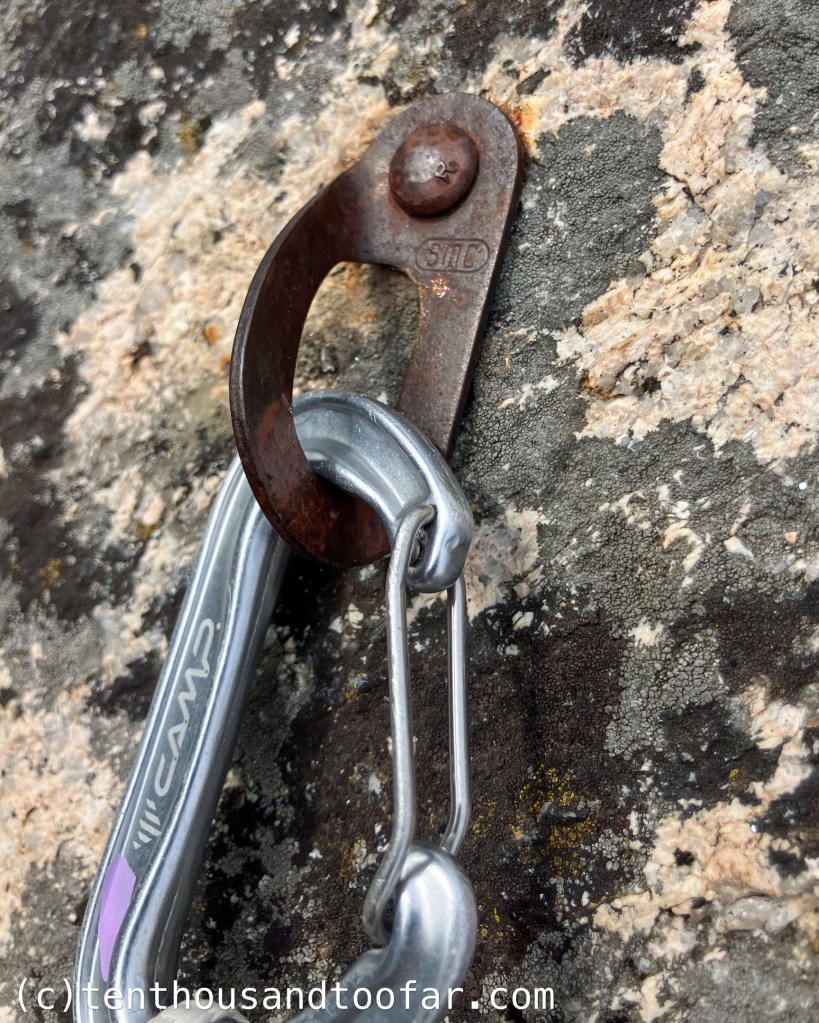
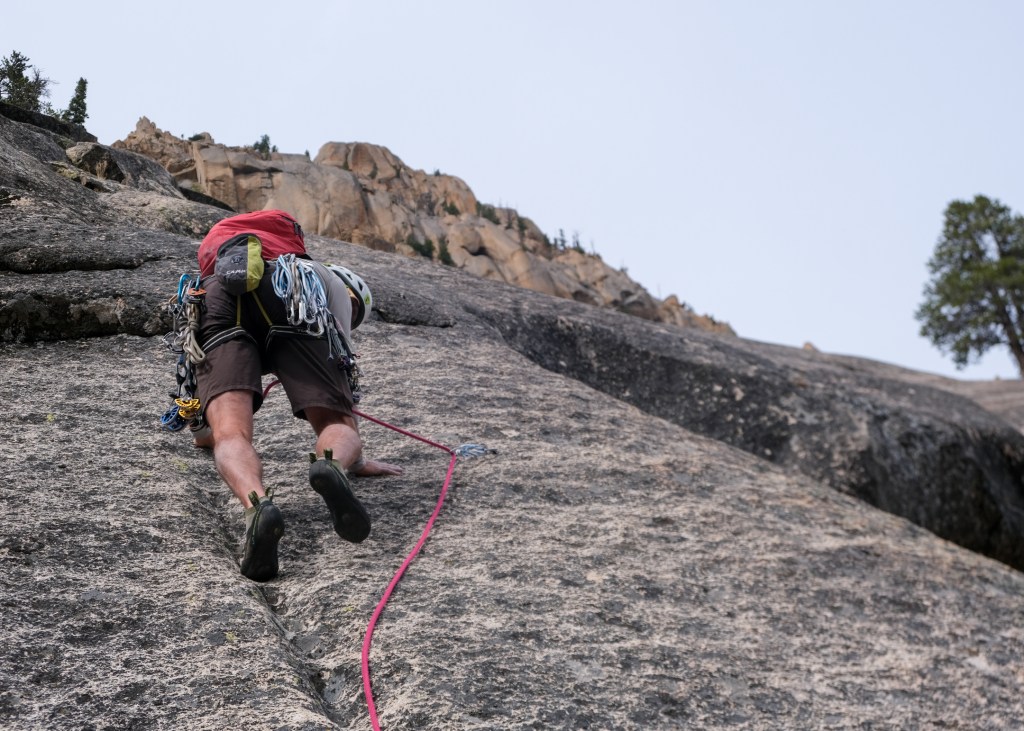
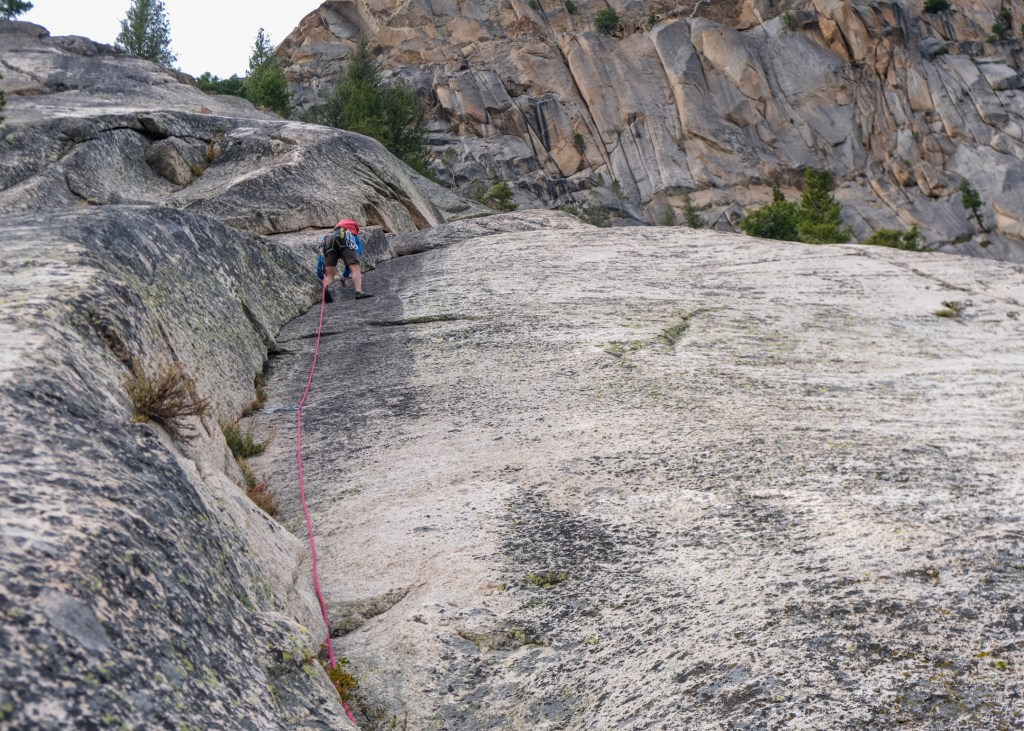
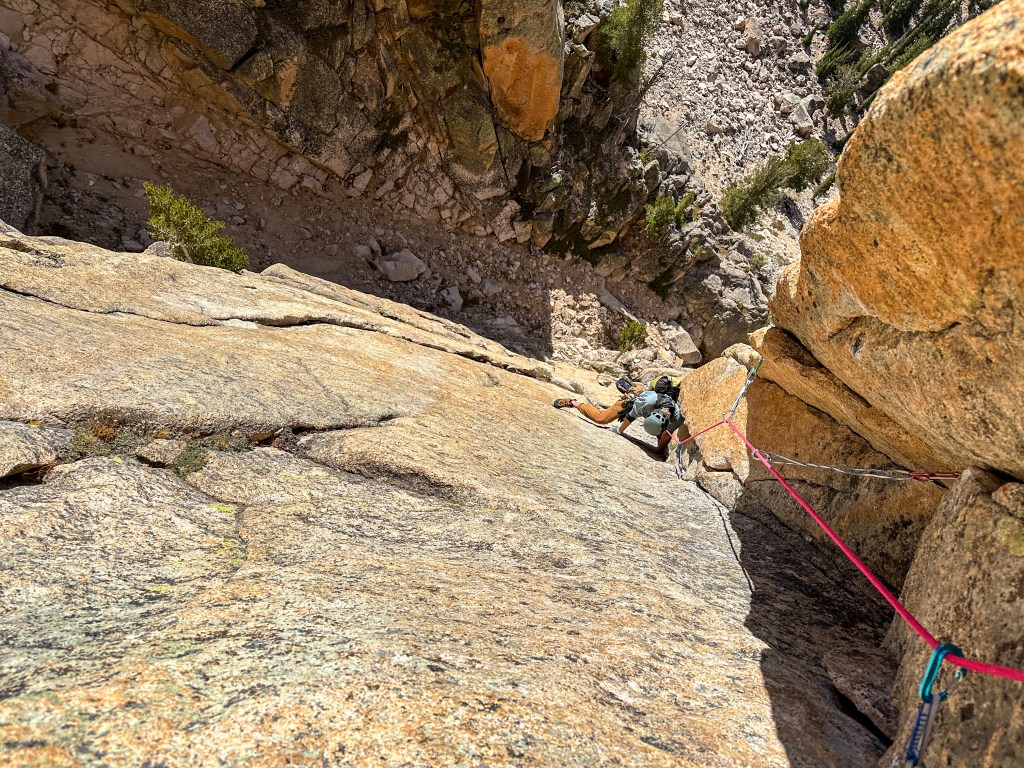
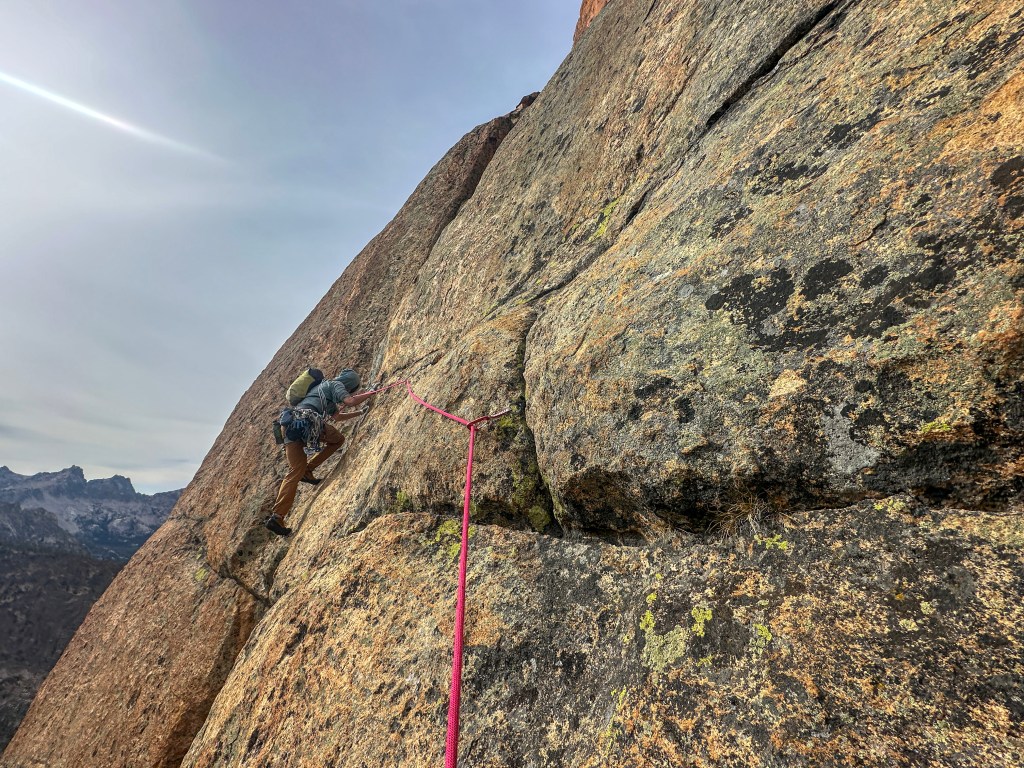
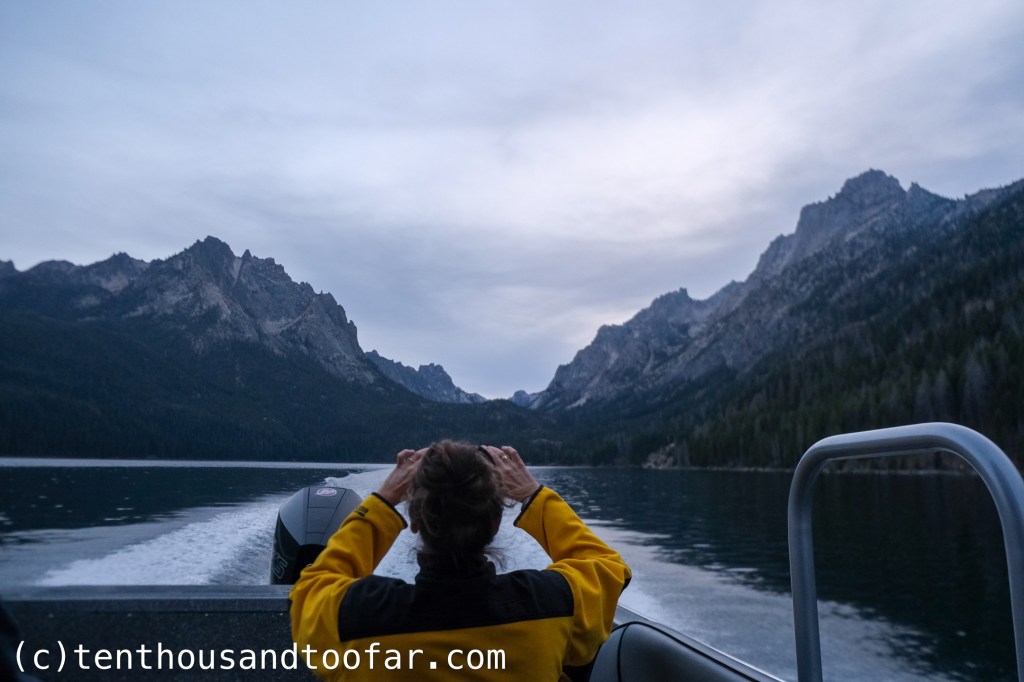
We left Teton Valley at 5:00AM Thursday morning and arrived promptly at Redfish Lake by 10:00AM. A convenient motorboat boat shuttle across Redfish eliminates an otherwise additional six foot miles. The boat runs until the onset of winter or sometime in mid-October, which ever may come first, and departs on demand for parties greater than two people. Being the epicenter of the alpine offseason we were concerned there wouldn’t be an overflowing demand for the shuttle, which could’ve delayed our departure for hours, but fortuitously two other hikers were already waiting for a second party when we staggered up. From the eastern shoreline a short two mile walk brought us to the Super Slab, a sprawling Touluene-Meadow’s-esque buttress that hosts a number of short multi-pitch traditional climbs. The primary route on the formation follows the main central weakness up cracks and corners for about 700 feet of reportedly excellent, moderate and runout 5.6 slab climbing – the Central Gully. While combing through what very little beta exists for the Super Slab, Jed found some vague details on a handful of harder bolt protected routes to the left. While 5.6 slab rambling sounded fun, desperate 5.10 paddling sounded even better. Without any real beta we casted off towards the steeper slabs about 30 meters left of the Central Gully, using some non-descript pictures from an abandoned blog for orientation. Over the next few pitches we would overlap at least three undocumented routes, though sadly each one offered bold protection on fully rusted quarter inch button-head bolts. The line we ended up climbing must be the most popular of the litter, as the crux 5.9 slab pitch was retro-bolted and the old bolted chain link belays reinforced with a single modern 3/8″ bolt. On the easier pitches we clipped many eyesores of browned steel, but nothing overly egregious. The Super Slab was among the cleanest pieces of rock I’d ever stepped foot on. I’ve never been to Yosemite, but Jed proclaimed it similar in both appearance and character to the old-school slab routes of Tuolumne Meadows. The crux was pitch three, an unassuming yet tricky and remarkably sustained 5.9 friction fest with just enough bolts to keep things civilized, yet just few enough bolts to make one think twice before high-stepping onto that measly nickel sized depression a full body length above a lonely bolt deep in the wilderness. The fourth pitch was another heady slab dance, though this time without any fixed gear. Very long runouts on 5.7/5.8 terrain led straight up to a massive roof system which we followed right to a memorable undercling traverse joining the Central Gully. The fact that both the second and third pitch belays had old rappel chains, and that our fourth pitch was uncharacteristically runout, lead us to believe the original route may have ended at the top of pitch three. However, the uninspiring age of the rappel hardware make descent from pitch three unappealing, and for a calm head capable of leading the previous pitches, pitch four shouldn’t pose much of an obstacle. Two more fun 5.6 pitches followed the line of least resistance up the Central Gully to the top of the Super Slab. To better document this appealing venue I made a topo for our route and used “Tuolumne Meadows (5.9, II)” as a place holder. Where the first ascentionists actually went, or whether or not this line is a strange fusion of many routes, is unknown – but it works, and is a pleasant outing I would gladly climb again.
EDIT: An old Summit Post article details all the routes on the Super Slab. The route we climbed is called Bacon and Legs (5.9, II).
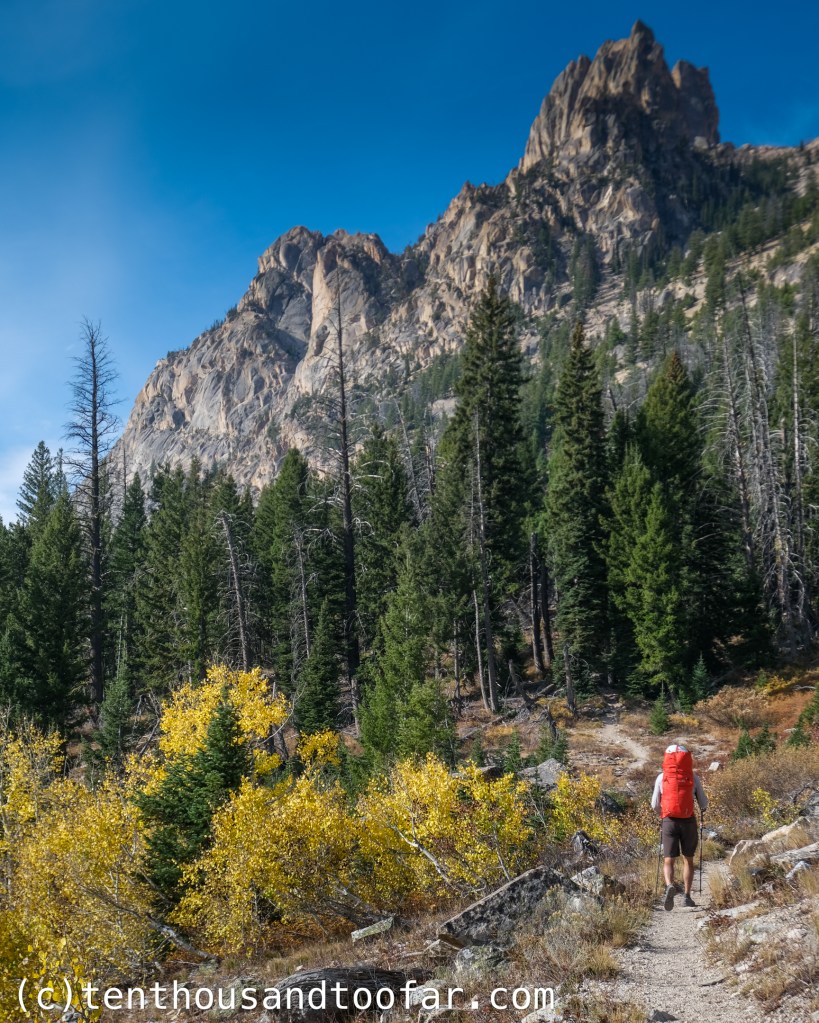
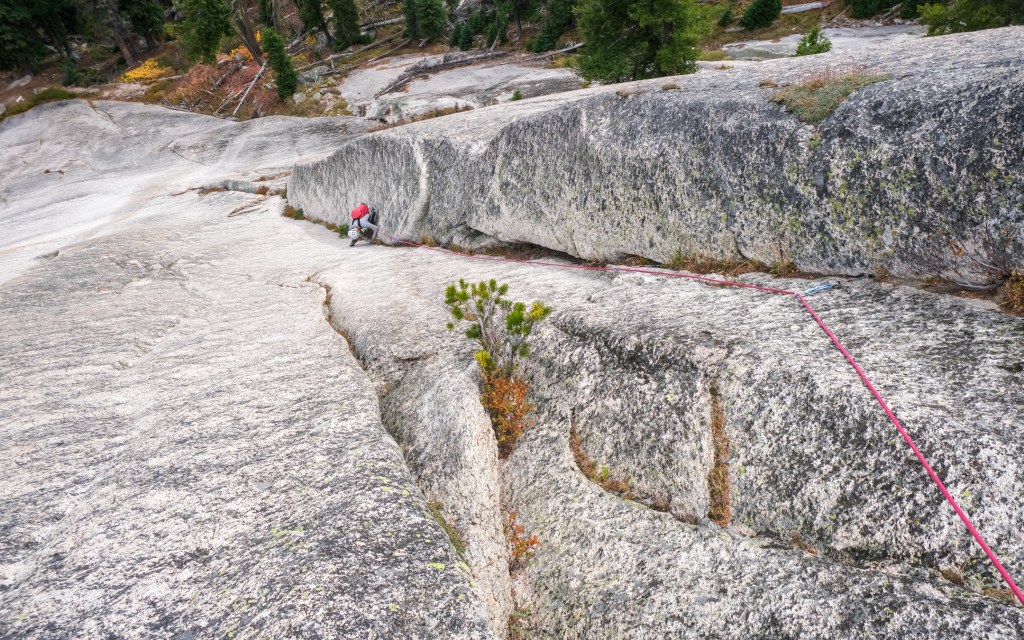
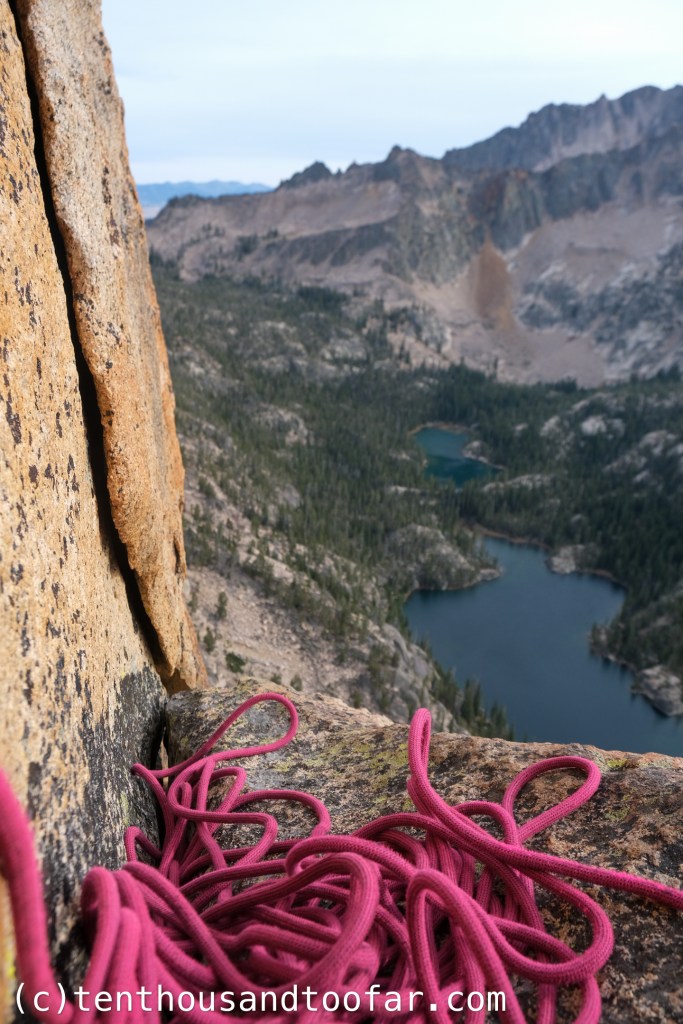
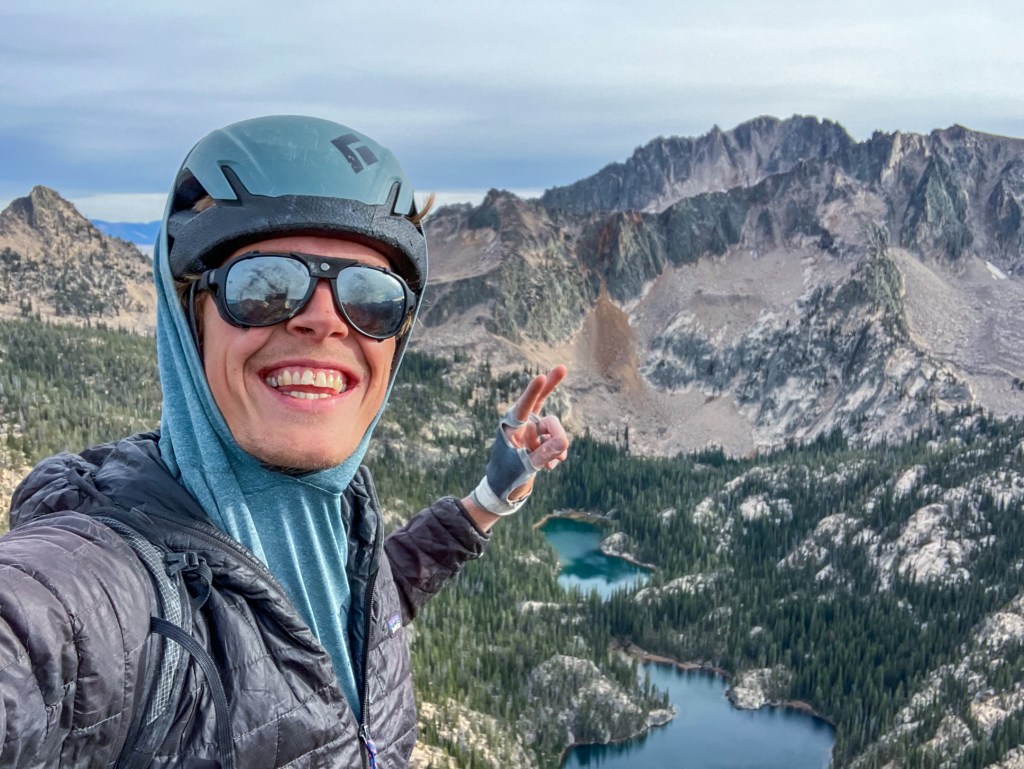
From the Super Slab we hiked another two miles up to Saddleback Lakes, a beautiful triad of alpine pools staged only minutes beneath the Elephant’s Perch. Many paradigm shifts happened for me on this trip, the first being when I caught my initial glimpse of the wall. The sheerness and imposing nature of the unrelenting golden orange face shimmering in the fleeting trails of autumn sunset is a vision I will never forget. We cozied up beneath an emerging starscape for an expedient dinner and early bedtime, knowing we would need every lick of possible sleep to scurry up the notoriously sandbagged and sustained Astro Elephant. I forwent the bivy sack and embraced the fleeting comforts of unseasonably warm late summer air, sleeping unsheltered among the elements – “cowboy camping” as we called it on the Appalachian Trail.
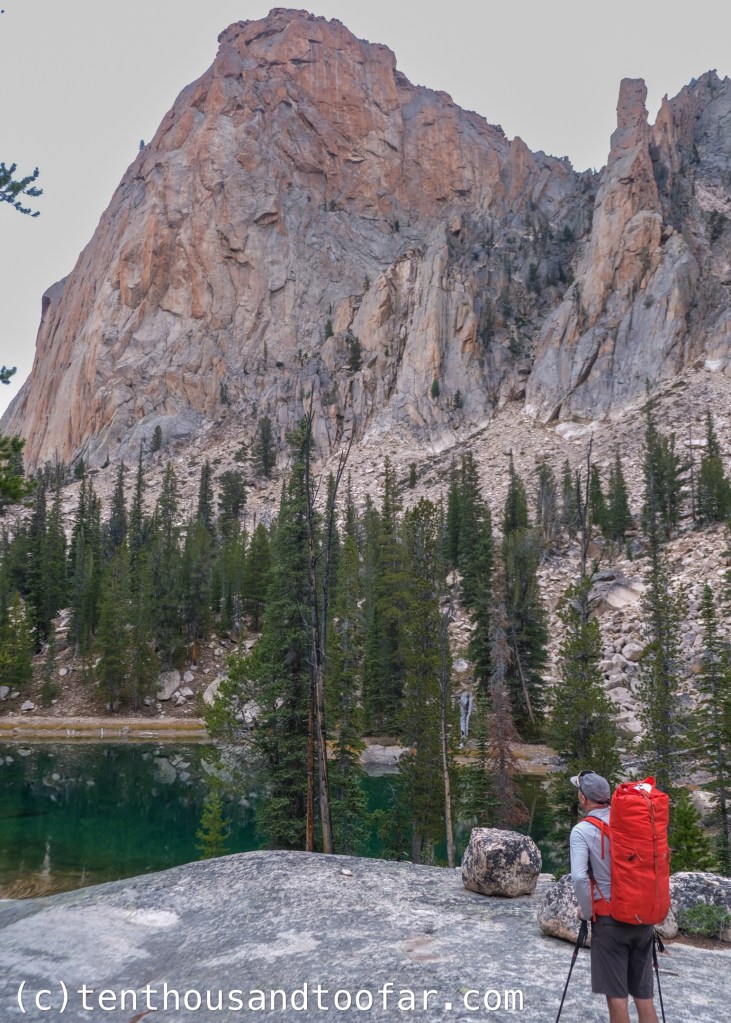
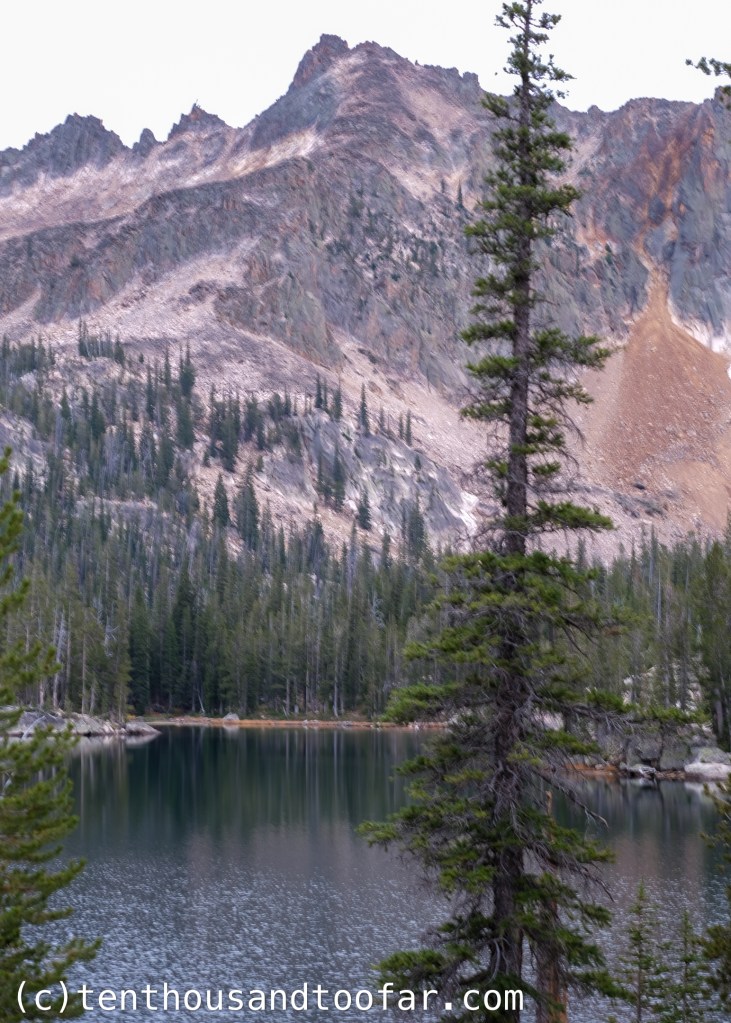
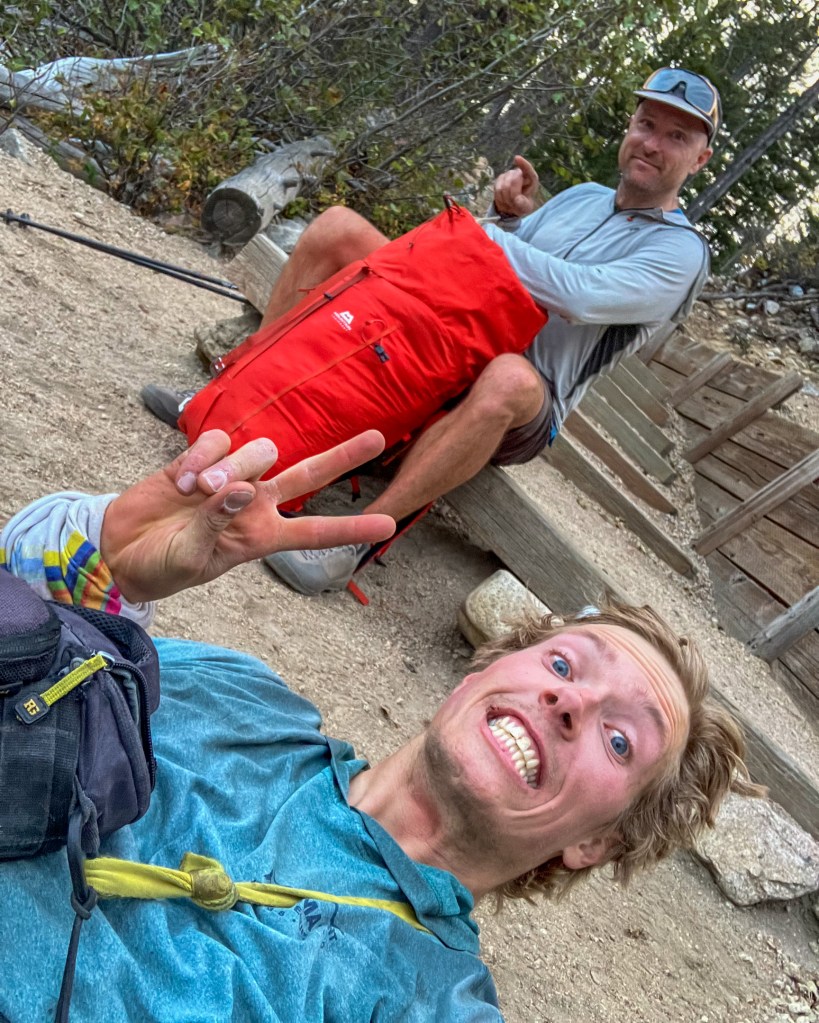
The morning saw nothing more than typical ruthless efficiency from double decade mountain guide Jed, and an attempted fast, yet lackluster and disorganized exit from your’s truly. Breakfast involved a half frozen peanut butter sandwich, twelve ounces of abrasively strong instant coffee and a mad dash to catch up with Jed’s coattails. One of my favorite things about climbing with Jed, other than the obvious pleasantries of his companionship, is tapping into his tenured guide wisdom without paying a cent. I recommend every young climber, assuming they can’t afford a professional outright, somehow con their way into a friendship with a long standing guide. I have other friends that are guides. Of course they tend to be competent and skilled athletes, but I am usually most impressed with their reflexive patterns of efficiency – how fast they make decisions, unpack and repack bags, organize the rack, build belays, transition at said belays, and especially in Jed’s case – walk on loose crumbly mountain terrain. The man has clearly tackled a mind bending amount of choss, because while I generally consider myself quite physically fit and even had a brief yet enthusiastic career of long distance mountain running, Jed just somehow, someway, ends up `suspiciously ahead on the decomposing kitty litter crap ubiquitous to any vertical alpine adventure. In simpler terms, irrespective of pure fitness, he’s just always one step ahead.
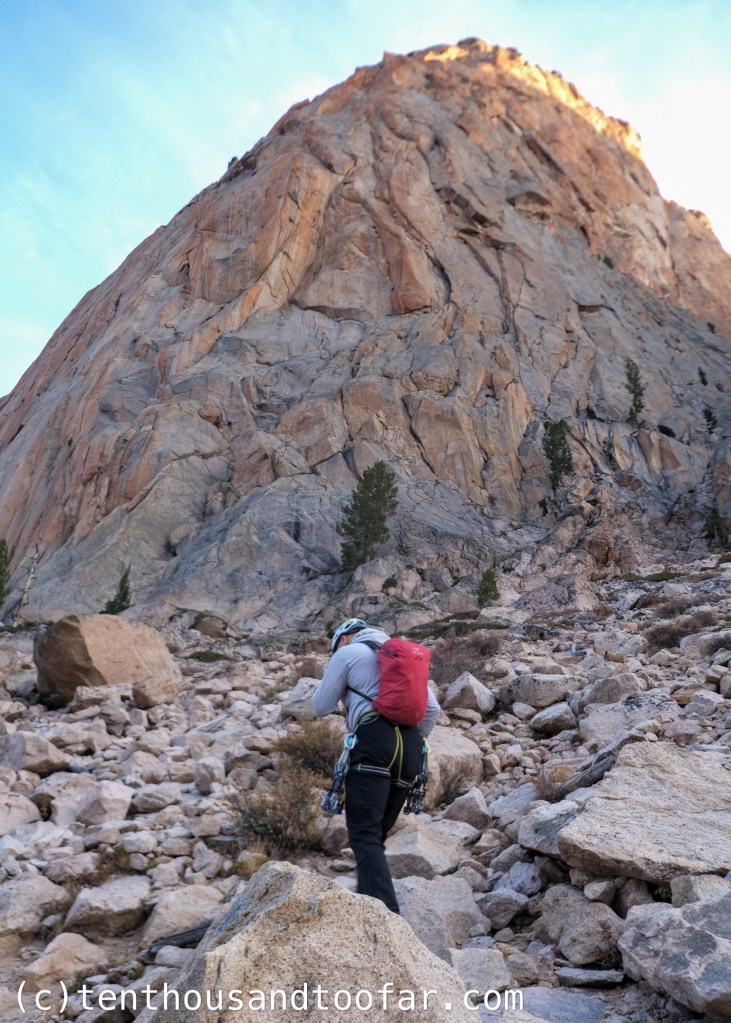
Semantics aside, we reached the base of Astro around 8:00AM and set to the sky with a touch of pre-loaded Advil. A scrappy block leading strategy roughly divided the hardest pitches, and landed me with the first two – a short lived 5.8 approach pitch and the too-early-for-a-proper-warm-up and notoriously sandbagged 5.10 pitch one. This pitch totally rocked my planet, delivering a smashing uppercut of 5.10 like I’ve never quite tasted before. Rather than pure difficulty in any one section, this beast of a crack pitch wore away at my undertrained Teton endurance until finally spitting me out of a desperate lieback around the 40 meter mark. For reference, the 5.10 difficulties started just off the ground. 15 feet of C0 aid with ballooned forearms brought me to easier free moves and a semi-hanging belay on an anemic ledge. The subsequent lead was the first of Jed’s block, another full ropelength 5.10 masterpiece with two distinct sections of extremely physical climbing he split into two chunks with a hanging belay. Somehow we both managed to wiggle through without weighting the rope, but I wouldn’t call it glamorous. Free and clear of the 5.10 business and staring up at eight more pitches of soaring granite from our pizza box belay ledge, I was grateful to draft for a while.
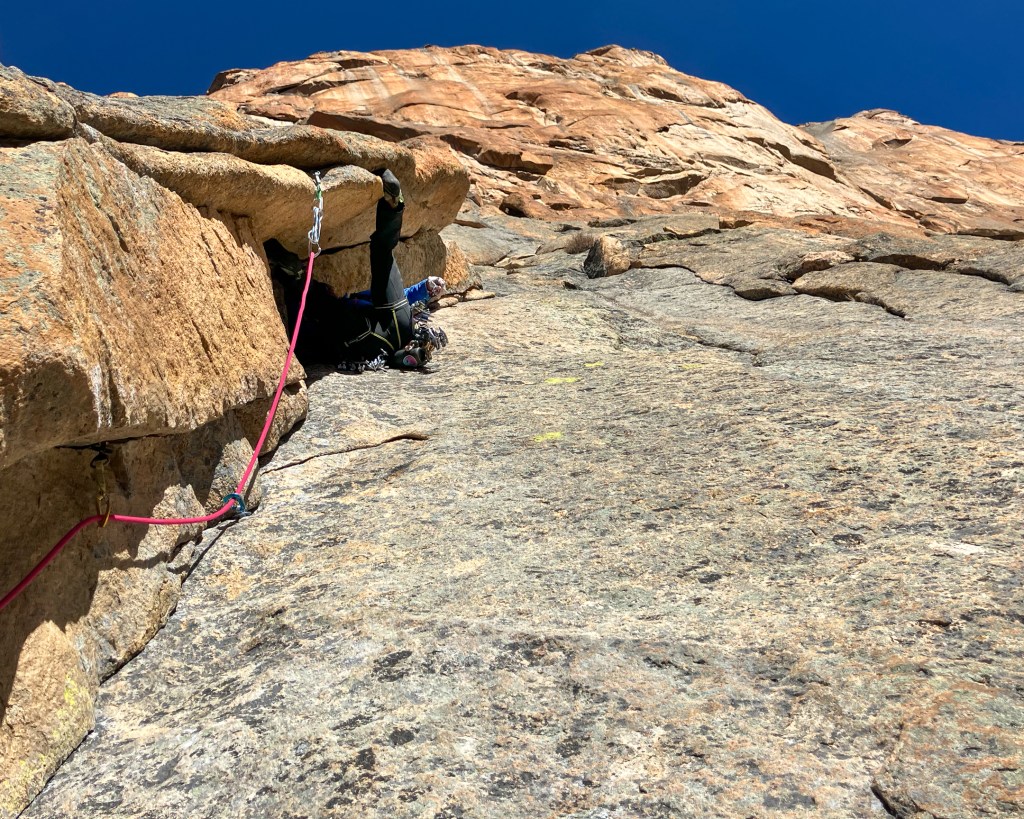
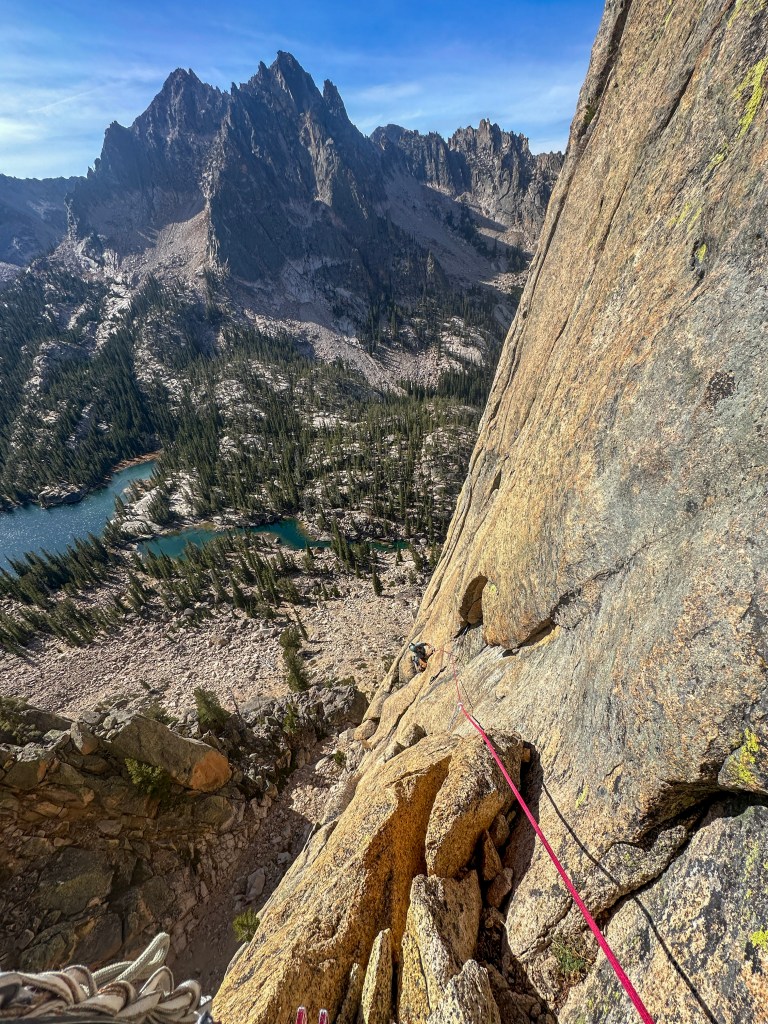
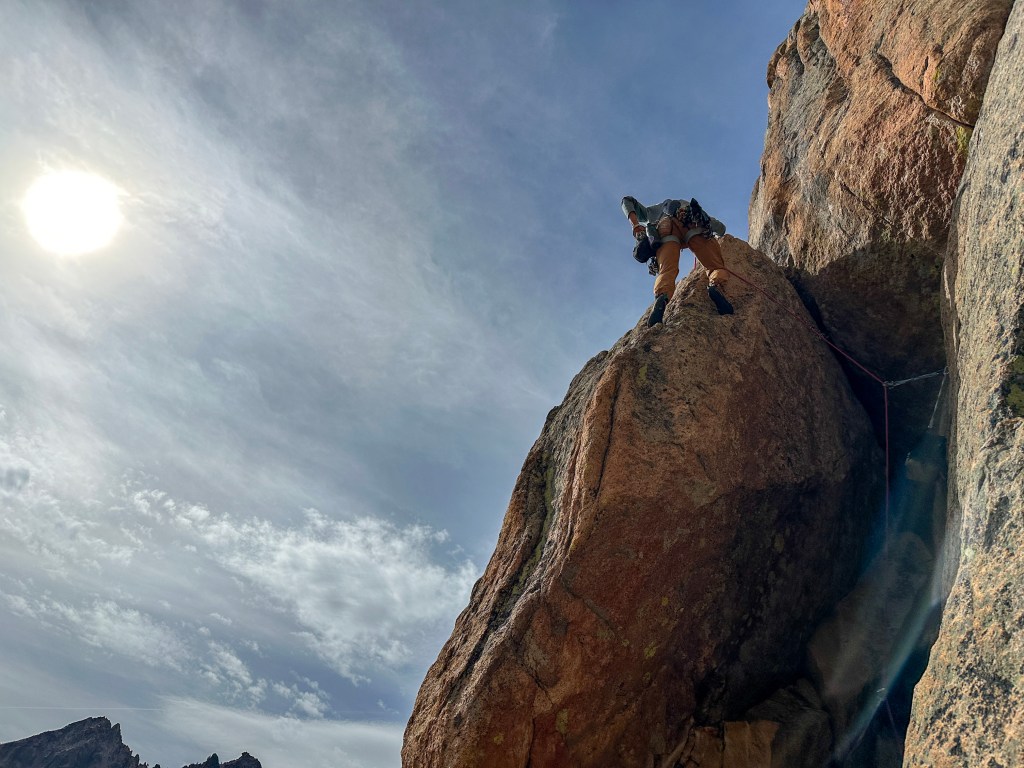
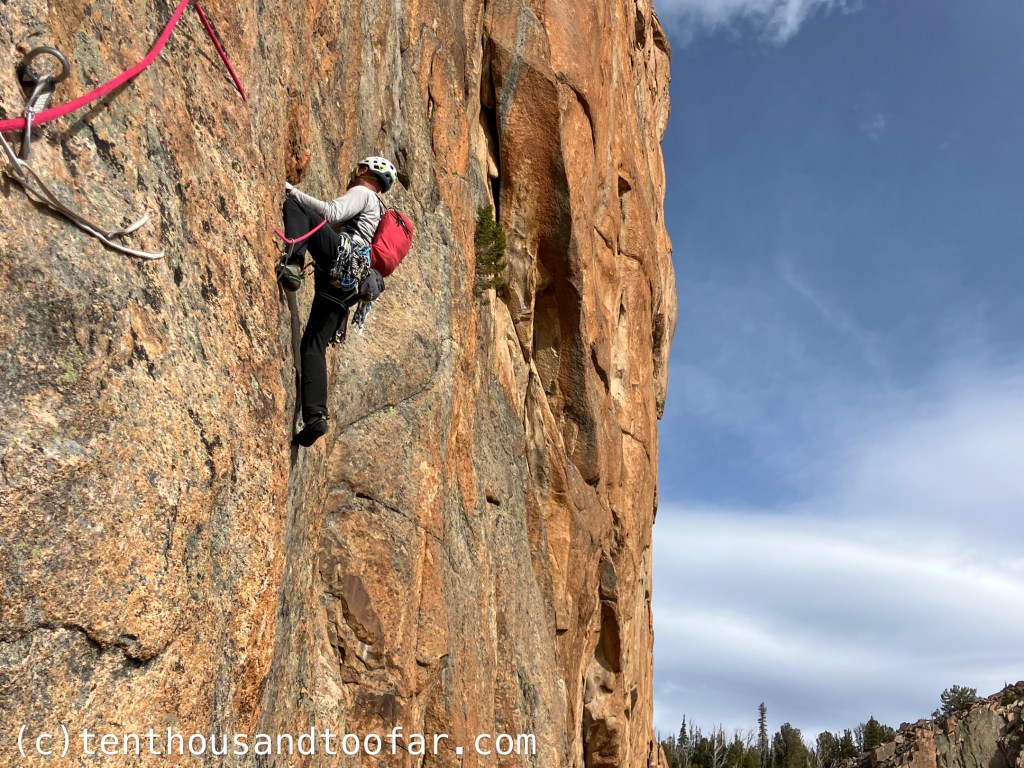
While Astro could generally be considered rather moderate with only two 5.10 pitches in 1000-plus feet of wall, two sustained 5.9/5.9+ pitches and several 5.8 pitches amidst virtually no 5.easy keep the pedal to metal. Two more leads from Jed saw us to the only large ledge on the entire route. By now we were an hour behind schedule, with the ultimate goal of catching the final 7:00PM boat shuttle across Redfish Lake that evening. Missing this shuttle would add at least two hours to the exit, the difference between getting home at 1:00AM versus ruining the weekend by arriving near dawn. From this massive ledge system above pitch five it is possible to traverse all the way to the descent gully. We deliberated for only half a second before deciding to forge on, resolving to climb as quickly as possible. The next lead block was mine, yet Jed was by far the faster leader, and our agreement stood that if I couldn’t hold our boat sanctioned pitch pace of 20 minutes per lead then he would intervene as rope gun. Of course, fate held that my next pitch was an old-school 5.8 chimney with the worst protection of any on the route. Off-widths and chimneys aren’t exactly my weakness, but they are far from a strength. I managed to put the pitch together, but not without a significant time tax – my leading privileges were thereby revoked. Aside from one intermediate pitch of 5.7 on pitch eight Jed punched us valiantly to the top, leading with commendable persistence through ropelength after ropelength of unrelenting steep crack climbing. The gem of the entire route ended up being pitch seven, a wild and unlikely 5.9+ face pitch protected by intricate gear in discontinuous crack systems, flakes and quartz pockets, culminating in a totally nutty dynamic lunge around an arete to a tennis paddle jug. Cutting feet 300 meters off the deck is nothing I even really contemplated. For half a second I felt like Kevin Jorgeson on the god damn Dawn Wall. I finally understand where “Idaho’s El Cap” comes from – this place is special.
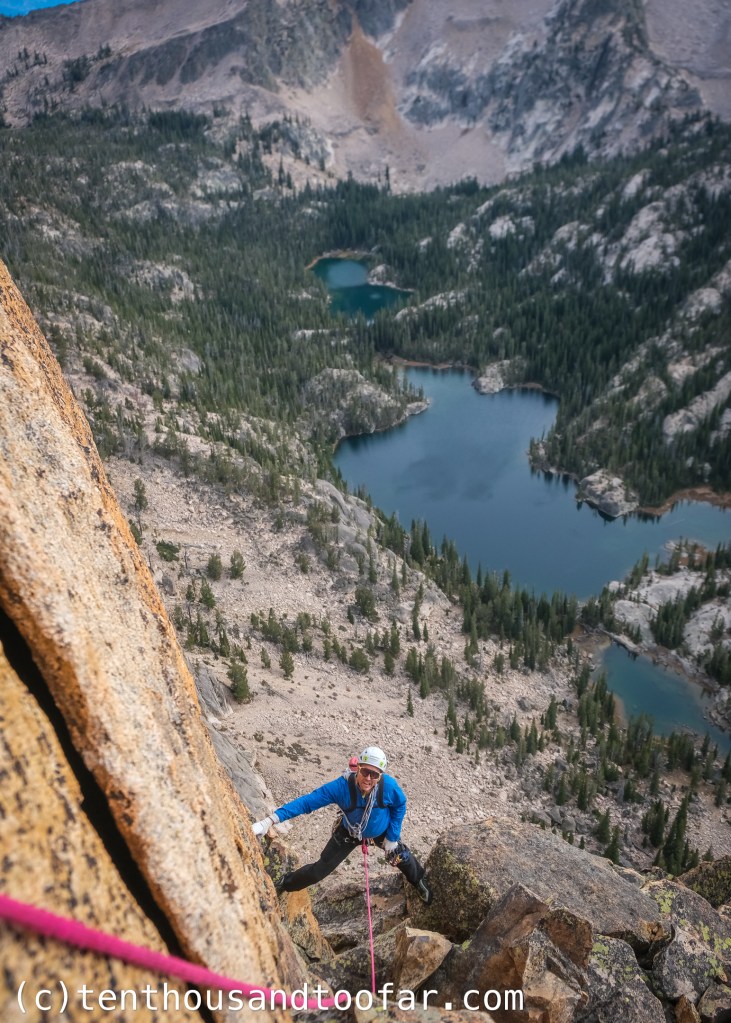
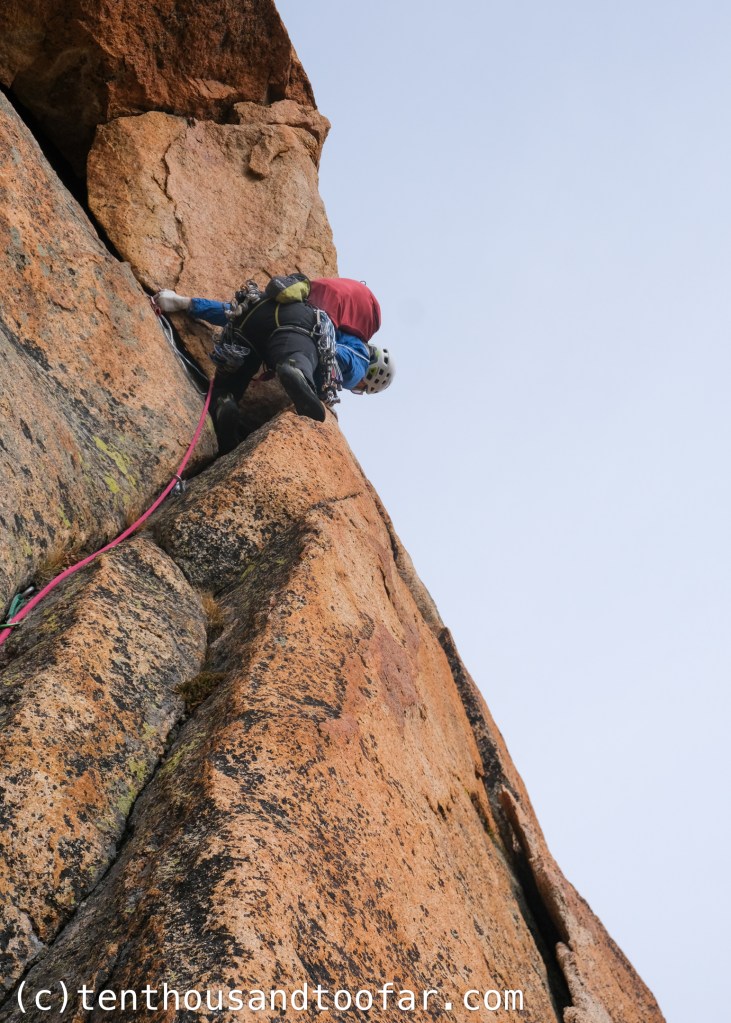
According to phone records I sent a selfie to my girlfriend from the summit of the Perch at 4:51PM. One hour and 54 minutes later we were lounging at the Redfish Lake boat dock. In tangible terms that means a manic 1,200 foot washed out scree gully descent with one rappel, and a 3.5 mile, 2000 vertical foot on-trail descent with a fully loaded overnight backpack in under two hours. Yes – my knees hated me. Had we one extra hour the whole fiasco would have felt much more reasonable, but considering we just scrabbled up a 1,000 foot 5.10 alpine wall in seven hours and change I won’t be overly critical. The sunset boat shuttle, pit stop for pizza destroyage at Stanley’s Papa Durbees and subsequent five hour pavement pilgrimage back home was akin to lucid dreaming. As for Astro, the route lived up to every ounce of hype and more. Every pitch offered something special. In 1,000 feet I didn’t touch a single loose hold or flake a single foot chip. Half the pitches would be lap-worthy single pitch classics in the City Of Rocks. Climbing aside, Saddleback Lakes represents the pinnacle of Idaho wilderness camping in a totally outrageous alpine cirque flush with a lifetime of vertical inspiration. With 17 pitches banked I’ve only scratched the Sawtooth surface, and am brimming with motivation for years to come. The Perch has permanently shifted my rock climbing paradigm. There’s no looking back.
The Biggest Lesson – Shorter Pitches to Move Faster?
Climbing with Jed is always an opportunity to grow. On this particular trip I realized the feasibility of climbing shorter pitches – yes, shorter pitches – as a way of moving faster. According to Mountain Project comments many parties spend upwards of 10-14 hours on Astro Elephant and climb 11 pitches. We climbed 15 pitches and somehow finished in about 7.5 hours. On paper this makes absolutely no sense, especially to someone like me who has always assumed that linking long pitches or simul-climbing were the keys to efficient upward progress. However, as Jed has taught me now on multiple occasions, the advantages to climbing shorter pitches include:
- Less time spent building belays because there are more protection pieces left on the rack
- Better communication because the distance between the climber and belayer is shorter
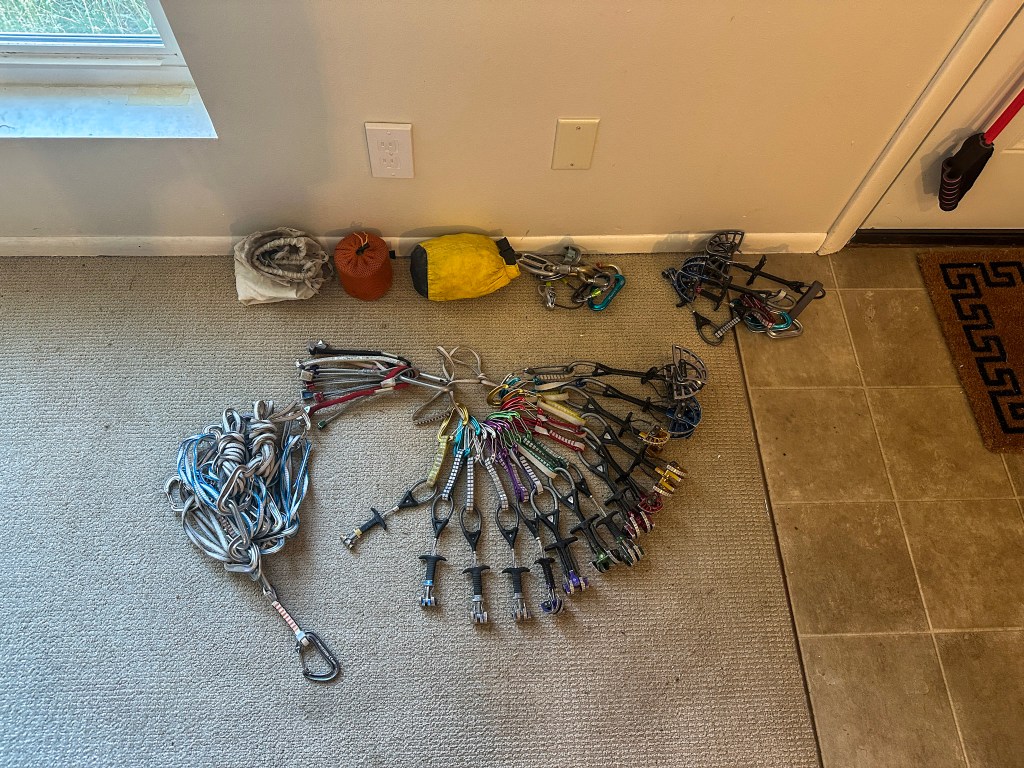
- The ability to carry a shorter rope because the pitches are shorter, which means less overall weight and less rope to pull up at each belay (the standard party uses a 70M rope to link pitches on Astro – we used a 50M)
- The ability to carry a lighter rack because the pitches are shorter, which means less overall weight and less time transferring gear at each belay
- The ability to conserve energy by not getting tired at the end of long pitches
- A lower likelihood of getting the crippling rope drag ubiquitous to long pitches
- The ability to provide a safer terrain aware belay because the belayer will usually have an eye on the leader, and there will be less rope in the system
- The ability to climb faster because of a lesser likelihood of running out of gear near the end of long pitches, which often makes the leader climb slower
Basically, every time we had climbed at least half a rope length and found a cozy belay ledge with a quick, easy and safe belay opportunity, we took it. Jed calls these a “cheap belay”. In this fashion we harvested all the fruits of the above list and actually moved significantly faster than parties reporting as few as seven or eight pitches. I look forward to applying this strategy moving forward.
The Almost Biggest Lesson – Carry Your Own Pack
In all my multi-pitch climbing we have always had the leader climb unencumbered, and the follower carry a medium sized pack with all the food, water, clothes and emergency gear for the day, shoes clipped to harnesses. While it’s nice to have the leader free and clear of added weight because they are assuming all the potential fall risk, this strategy can make hard climbing unpleasant for the follower, adding up to ten pounds to their back. Also, when the leader reaches the belay they will not have access to a jacket or other provisions until the follower finishes the pitch. On Astro Jed and I carried our own tiny packs with a 50/50 split of supplies. With a pack weight of a measly five pounds, I hardly noticed the load on my shoulders, even when climbing 5.10. I was more comfortable after my lead pitches since I could throw on a jacket and eat some calories while belaying. I think an individual pack for all climbers will be my default strategy for multi-pitch climbing moving forward.
Want to support? Consider a donation, subscribe, or simply support our sponsors listed below.
Ten Thousand Too Far is generously supported by Icelantic Skis from Golden Colorado, Range Meal Bars, The High Route, Black Diamond Equipment and Barrels & Bins Natural Market.



subscribe for new article updates – no junk ever
DISCLAIMER
Ski mountaineering, rock climbing, ice climbing and all other forms of mountain recreation are inherently dangerous. Should you decide to attempt anything you read about in this article, you are doing so at your own risk! This article is written to the best possible level of accuracy and detail, but I am only human – information could be presented wrong. Furthermore, conditions in the mountains are subject to change at any time. Ten Thousand Too Far and Brandon Wanthal are not liable for any actions or repercussions acted upon or suffered from the result of this article’s reading.

