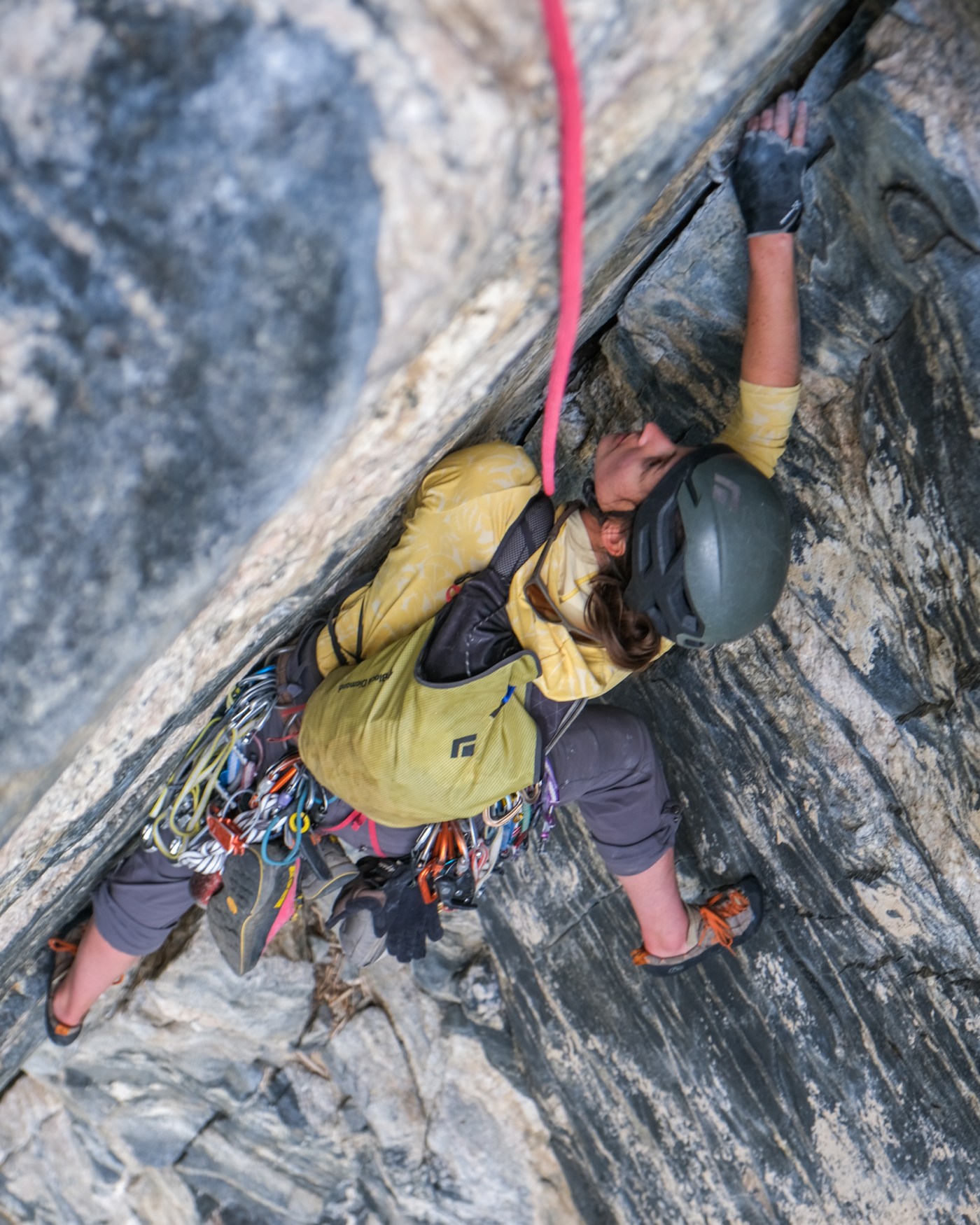
On Sunday July 7th Bobbi Clemmer and I climbed the uber-classic Dihedral of Horrors including the seldom climbed first pitch 5.10 variation. Because DOH has been documented on 10K2Far before (link below), this article serves mostly to touch on the underrated 5.10 variation that more folks should climb.
Dihedral of Horrors (5.9, II)
The Dihedral Of Horrors makes a solid bid for the finest 5.9 in Grand Teton National Park. The rock quality is excellent, positioning incredible and the 50 meter gently overhanging crux dihedral capped by a wild roof is an extremely unlikely feature for the grade. I first climbed the Dihedral Of Horrors with John Walker two years ago, when I was just breaking into the 5.9 alpine grade. I remembered the crux pitch being intense, bordering redline, yet accepting good protection and offering steep fall potential. I wriggled through with an onsight despite ballooned forearms and a spiked heart rate, a memory which left an deep desire to return as a more competent climber. On July 7th Bobbi and I had a polar opposite experience, more or less floating the dihedral pitches. Instead of doing the full 50 meter dance in one pull, we utilized a convenient belay stance near the crux roof. Bobbi struggled a little more than she wanted on pitch two, but we both rolled through free. I deeply enjoyed the feeling of running the rope confidently, cruising through a Teton 5.9 benchmark with a greater focus on appreciating the exposure and warm summer air than fearing any whippers. The movement on this climb is surefire classic caliber, something no climber, local or traveler, should miss.
Love Ten Thousand Too Far? Support independent mountain journalism with $5.10 per month through Patreon (and receive extra bonus content), or with a one-time donation. Any and all support is greatly appreciated.


Pitch One 5.10 Variation
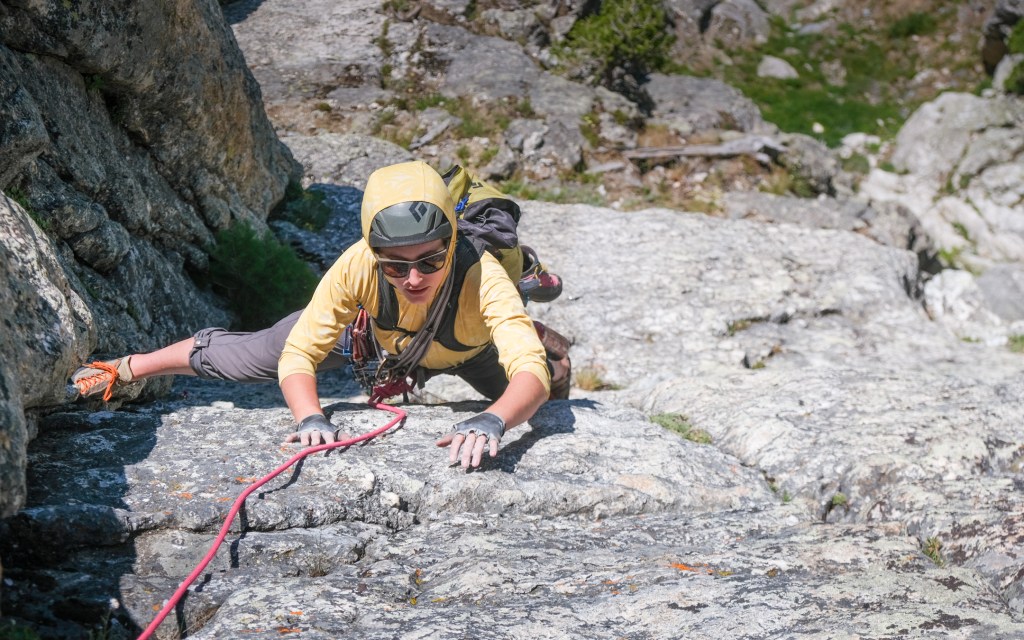
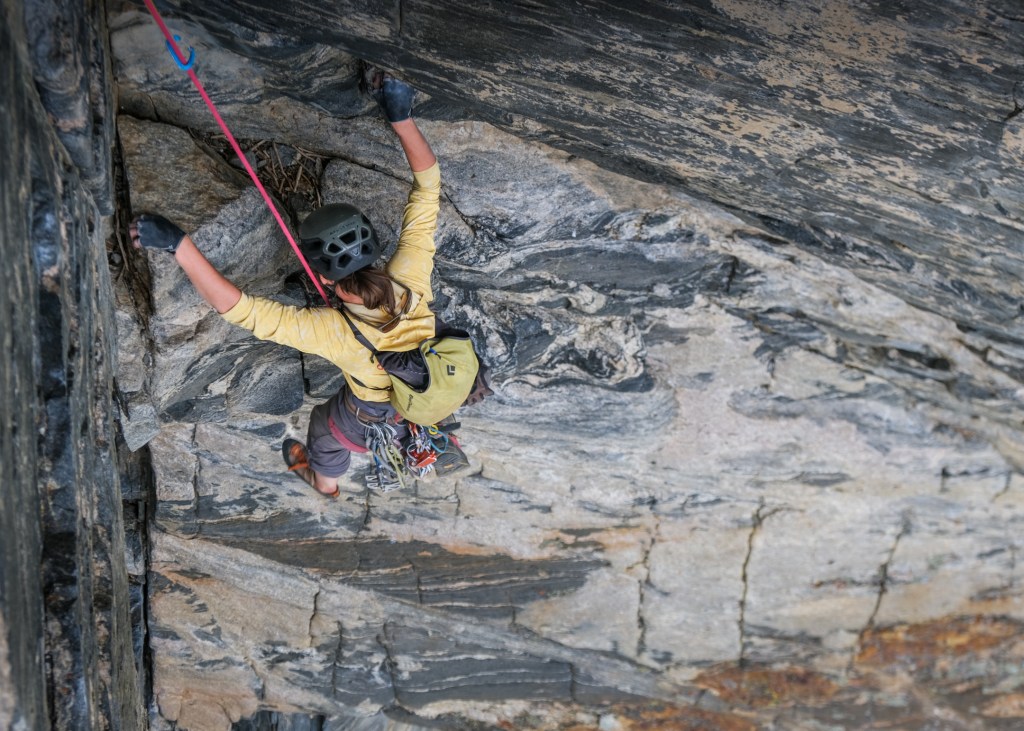
Instead of climbing the classic crystallized first pitch 5.7R slab we’ve done a half-dozen times, a stellar pitch shared by all Ship’s Prow routes, we opted for a mysterious 5.10 variation to the west marked inconspicuously by a single squiggly line on Aaron Gams’ Teton Rock Climbs topo. No beta besides “5.10” was given, and nothing of this variation was listed in either of our other two Teton guidebooks. A quick peek around the left side of the lower slab buttress reveled a beautiful arcing crack cutting through a concave section of similar crystalline rock, a striking feature impossible to miss. The crux felt a bit closer to 5.10+ compared with other 5.10’s in the Tetons, and handed me my first winger of the grade in Grand Teton National Park. The initial climbing was almost a bit too easy, slabby, varied and off-vertical crack stuff with a platitude of rests, so I arrived at the bulging thin-hands crux primed for flash pump, and flash pump I did. The whipper was decently big yet clean as whistle, and upon reflection may have actually provided a better impetus for growth than actually sending the pitch, for I hadn’t fallen on a cam in a while. I lowered and fired from a stance on my second go, and Bobbi followed suit – one punt and a redemption send. We both concurred this variation is totally stellar and worthy of more traffic. The crack is clean and provides a variety of thoughtful sizes, and now that we figured out the cryptic top-out mantle beta we figure we’ll both succeed on our next go around. The slab above the crack is easier and less runout than its neighbor to the east, and joining the second pitches of Dihedral Of Horrors or Annals Of Time is fluid. I think this crack could also be climbed as a punctuation single pitch, with a short scramble to a tree above the 5.7R slab for a likely single rope rappel.
A Quick Note on Tidying Old Anchors
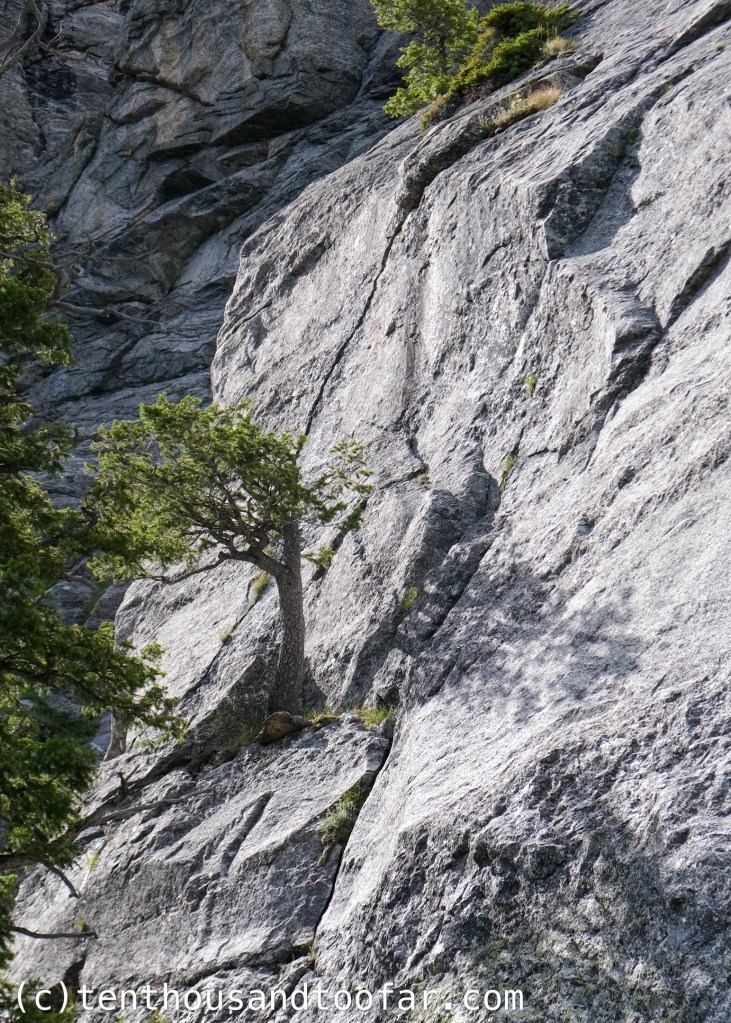
We descended an atypical route to retrieve some gear I dropped from the Dihedral, and luckily found an alarming amount of ratty fixed slings strangling a poor tree. The slings were taught and likely to impact growth relatively soon. Many people don’t know that rappel slings can suffocate and kill trees. I once found an old dyneema sling that was pulled so taught on a tree that suffocation indents were left around the base after I removed the sling. When replacing a fixed tree anchor with new cord or webbing, the standard ethic is to make the new anchor relatively baggy (without compromising safety), allowing the tree ample room to grow. Also, all other fixed slings, especially those tighter on the tree, should be removed. The new sling should be plenty sufficient for anchoring on a non-sharp object such as a tree. Petzl makes a conveniently light alpine knife with a carabiner hole if you’re in the market for something minimalist.


All in all team Bobbi and Brandon enjoyed a classic and timeless day at one of the coolest alpine crags around. The Peanut is climbing stronger than ever, and it sure is fun to watch her progress. This day also roughly marks our four year anniversary, so cheers to a fifth babe 🥂
Resources
- All Teton guidebooks and Mountain Project will cover the Dihedral Of Horrors (and other Ship’s Prow routes)
- First Pitch 5.10 Variation on Mountain Project
- Teton Rock Climbs (book) by Aaron Gams is the only guidebook with a topo of the 5.10 first pitch
Want to support? Consider a donation, subscribe, or simply support our sponsors listed below.
Ten Thousand Too Far is generously supported by Icelantic Skis from Golden Colorado, Range Meal Bars, The High Route, Black Diamond Equipment and Barrels & Bins Natural Market.





enter your email to subscribe to new article updates
DISCLAIMER
Ski mountaineering, rock climbing, ice climbing and all other forms of mountain recreation are inherently dangerous. Should you decide to attempt anything you read about in this article, you are doing so at your own risk! This article is written to the best possible level of accuracy and detail, but I am only human – information could be presented wrong. Furthermore, conditions in the mountains are subject to change at any time. Ten Thousand Too Far and Brandon Wanthal are not liable for any actions or repercussions acted upon or suffered from the result of this article’s reading.
 Ten Thousand Too Far