
I was pretty psyched to flash Blobular Oscillations, a renowned runout 5.10- variation to the first pitch of Guide’s Wall, and thought it a good excuse to talk about our whole day. Guide’s Wall has never been covered on 10K2Far because it’s one of the few super well documented multi-pitch outings in GTNP, but maybe I can add a tidbit or two to the collective knowledge.
Teton Pass was closed from June 8th to the 28th after a mega landslide crumbled some 100 feet of the road. Bobbi’s family was in town for two weeks… a convenient excuse to chill. I managed one long route on the East Face of Table Mountain via a lengthy approach from the west slope, but for the first time in many years I spent most of my season steeling up the fingers at local crags. I got itchy pretty quick. Single pitch climbing close to the car really isn’t my thing. In serendipitous fashion the road opened the weekend Bobbi’s cohort departed, so we seized Sunday for an outing in our favorite vertical playground. With only a single June climbing day on Bobbi’s belt we eased into the season with a lap on the moderate, clean and friendly Guide’s Wall (5.8, II). We had both climbed the route twice, and I did a variation that intersected with the crux upper pitch, Vieux Guide (5.10, II), with Liam Wylie last summer. I find it fun to revisit routes from year’s past, to relive memories and see tangible evidence of progress. Guide’s was one of our first alpine multi-pitches in our first year of climbing, and due to a slow approach, on-route congestion and a fundamental lack of skill we took a staggering 18 something hours car-to-car, finishing well after dark. Today was different – carefree fun in the sun, with ample time for long breaks and a bonus 5.10 pitch after pulling the ropes.
Love Ten Thousand Too Far? Support independent mountain journalism with $5.10 per month through Patreon (and receive extra bonus content), or with a one-time donation. Any and all support is greatly appreciated.
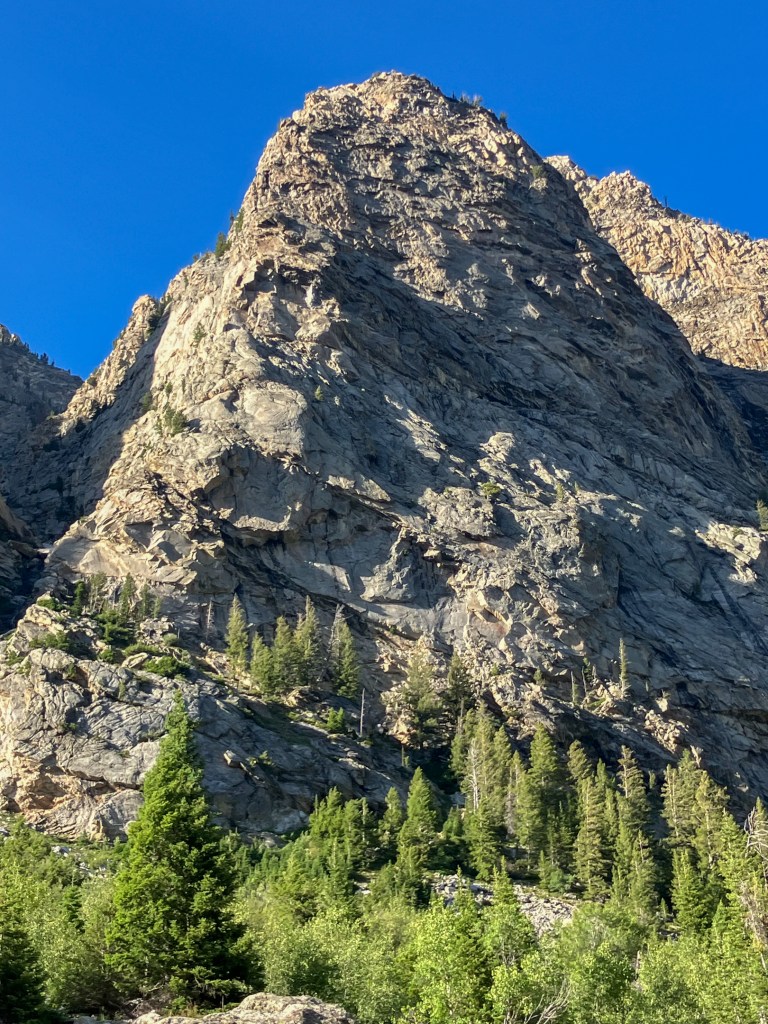
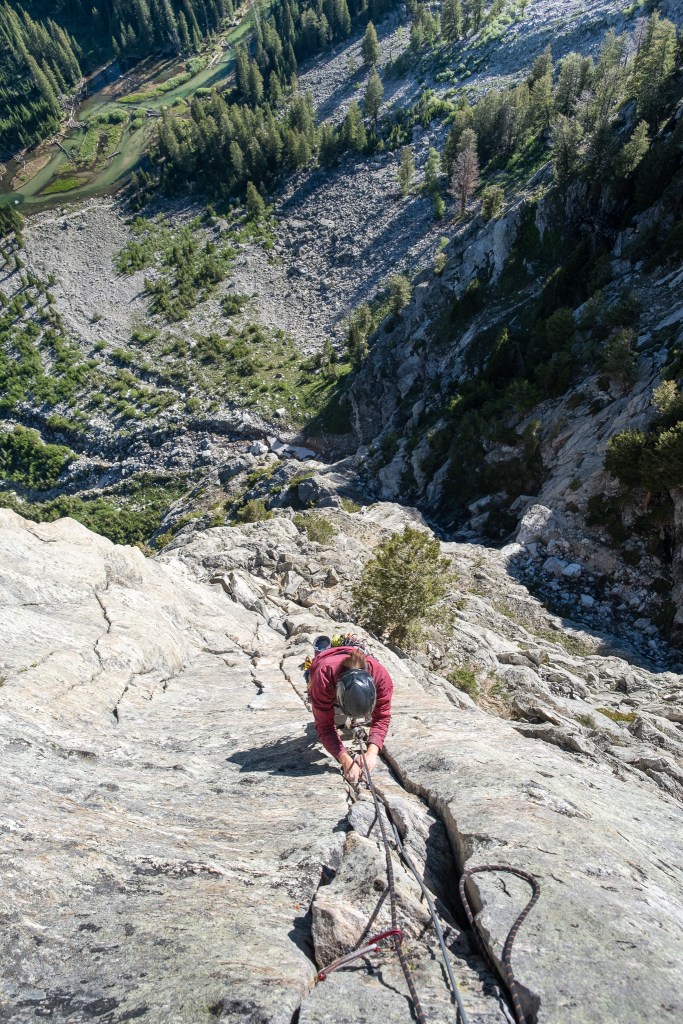
As mentioned above, Guide’s Wall is perhaps the premier moderate multi-pitch outing in Grand Teton National Park. The approach is short and well established, completed by most parties in under two hours. The rock is sound and clean by alpine standards. Four established double-rope rappel stations via bolts or trees facilitate a seamless descent. The exposure on the last two pitches is truly incredible for the grade, and the entire route, save for a slightly dodgy 5.7 slab on pitch one that still feels a little sandbagged to me, protects excellent. Several variations can produce difficulties up to 5.10 and allow for multiple traffic lanes. Six pitches are claimed in guidebooks, but we’ve done the route in as few as four quite logically – some parties have even claimed three. Guide’s is about as sanitized as Teton alpine climbing gets. Crowds can be an issue, but a confident party should have an ample reserve of time to wait their turn if need be, and retreat from the route is possible at virtually any point. Streamlined topos can be found in every Teton guidebook. Today we took the path of least resistance except for the 5.8 finger crack dihedral variation on pitch three, which we climb every time and is highly recommended. Bobbi led pitches two and four, 5.5 and 5.6 respectively, with great poise. I led one, three, five and six. Having been two years since leading the first pitch, and having led slabs up to 5.11, I assumed the 5.7 slab crux would feel a little less necky, but I was surprised by how thought provoking this little slippery corner still felt. Fortunately I’ve gotten a little more savvy with small wires so the protection felt cozier than I remembered. I was similarly humbled by the sixth pitch, which I’ve now led four times, and never fail to feel criminally insecure at the 5.8 crux! They call it a “finger crack” but don’t be fooled, the crux is straightforward smearing and highstepping on polished alpine nubbins. I’ve never fallen, but I always sorta think I’m going to. Everything about this pitch and the one before – dealer’s choice of a 5.7 hand crack or 5.9 thin hands crack, equally stellar – screams classic and provides rad opportunities for photos to send home to the family. There’s a 5.10- thin flake variation to pitch five which rarely gets climbed, even less so on lead, which I aspire to try some day. Apparently the crack bottoms and protection can be fickle, but it sure looks beautiful. There’s also a 5.10 roof above the 5.9 thin hands crack I climbed as part of Vieux Guide last summer, but found it underwhelming, ending at an awkward semi-hanging belay requiring a weird traverse back to the final pitch. There’s some other variations to pitches two and three we haven’t climbed that can be found by sifting through resources, and a stellar 5.10- variation to the first pitch, Blobular Oscillations, which we will cover in the next paragraph. Basically, Guide’s is about as customizable a climb as you’ll find in the mountains, and any which way it’s deciphered should lead to pleasant outing.
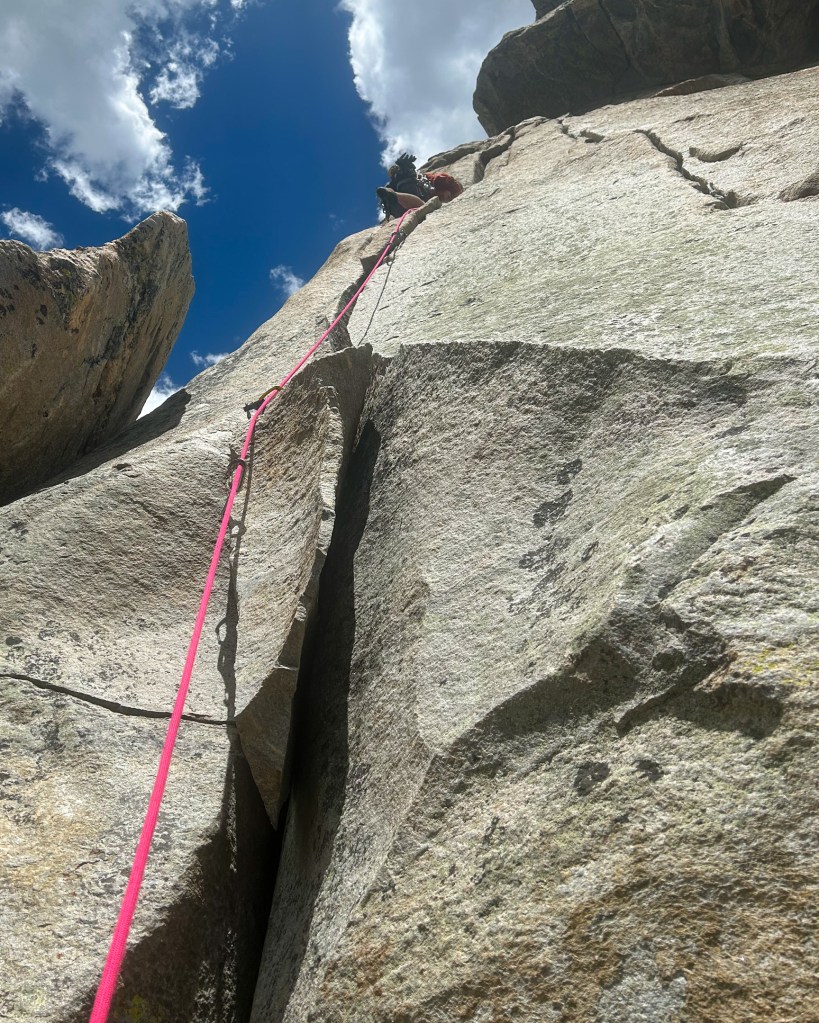
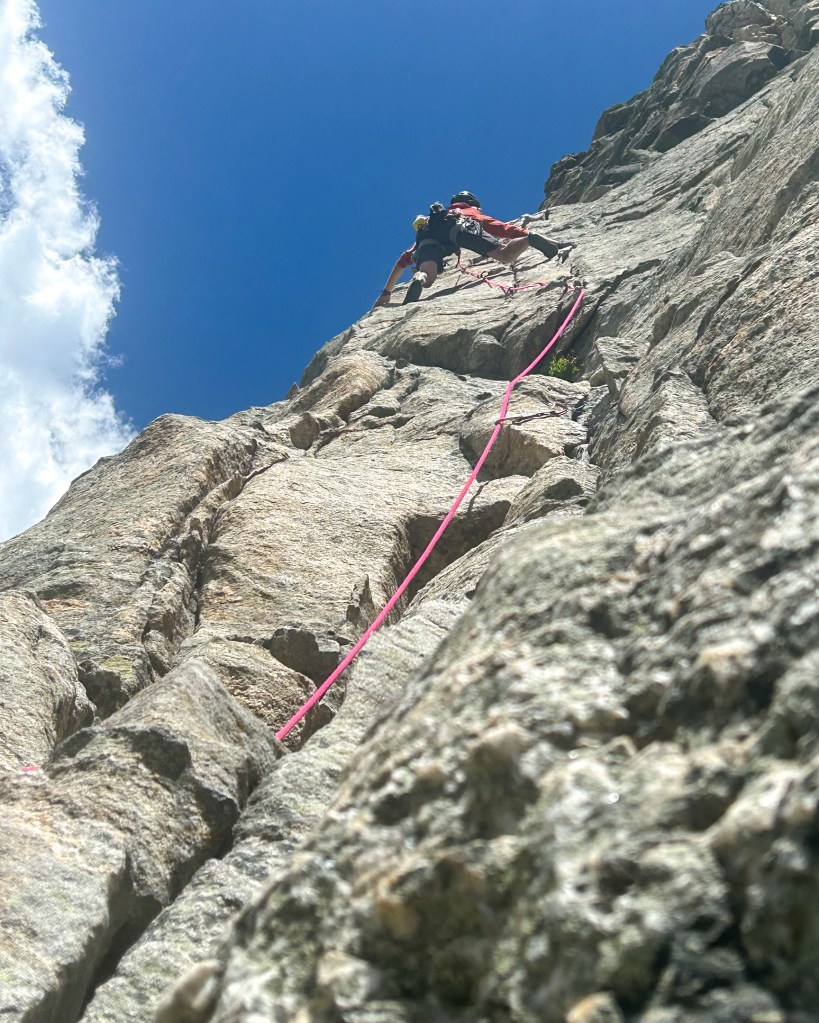

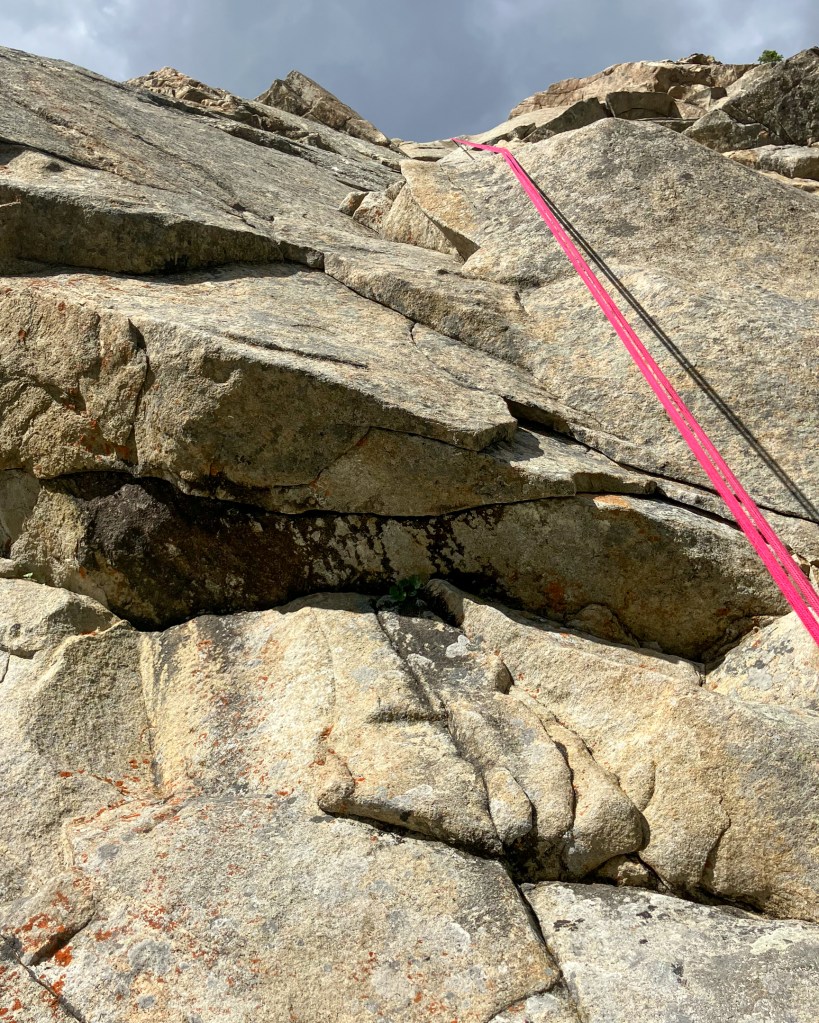
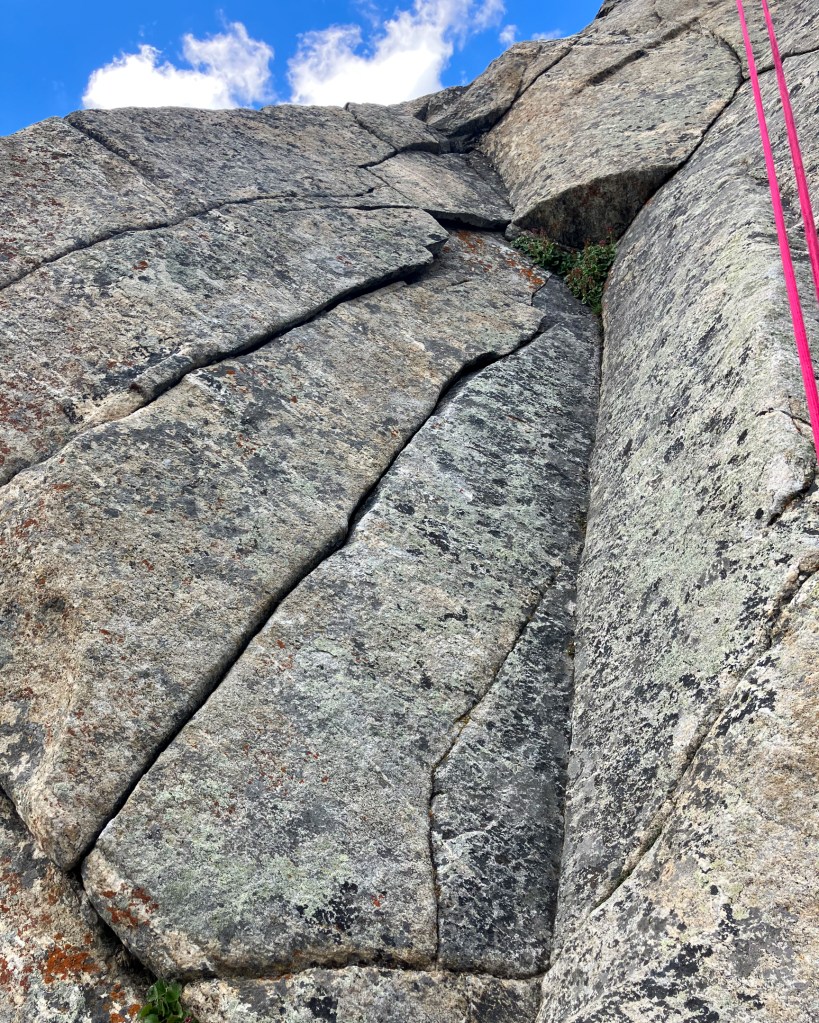
After rapping the route and dealing with some rope tangles Bobbi offered to give me a ride on Blobular Oscillations, a four-star variation to the first pitch characterized by a proud golden undercling and layback flake I’ve aspired to for years. The original Blobular established by Renny Jackson and Lenny Detrick in 1984 included two additional wild pitches off Flake Ledge (the big ledge before pitches five and six of Guide’s Wall) that are rarely, if ever, repeated – both 5.9 and offering either thin or nonexistent protection on occasionally “loose” stone. For all practical purposes Blobular is considered a single pitch variation. The final rappel off Guide’s drops directly down the matrix of seductive, clean and winding granite flakes, providing a convenient excuse for pre-inspection. A sizable runout through the crux moves beckons restraint, respect and caution. Ping from the 5.10 layback and soar at least twenty feet onto a nest of small or shallow gear which is the only barrier between the climber and a deadly ground fall. Incipient 5.8 cracks above protect solely on few well spaced wires. I did not top-rope the route nor touch any holds, but did poke around to assess whether protection opportunities looked reasonable for a flash attempt. Fourth class blocks led to a few unprotected 5.6 slab maneuvers and a great rest to organize a symphony of gear below the crux. I placed a shallow horizontal hand sized cam in a convenient pocket, #4 BD nut in a thin flake and a textbook #0 Metolius micro-cam in the crux undercling. I began cautious and scared, nearly barn-dooring while chalking nervously at the first undercling maneuvers. Recognizing trepidation as kryptonite I steadied my mind, hiked my feet high and lay-backed through the crux with exhilarating conviction. The upper cracks ease off in difficulty but still provide some technical crack and slab maneuvers above the aforementioned healthily spaced small wires. A final 5.9 stem corner crux almost stumped me. All in all, Blobular Oscillations was 35 meters of consistently challenging and clean-as-a-whistle crack and flake climbing reminiscent of classic routes like Bloody Fingers in the City Of Rocks, and Toe Jam in Joshua Tree – I really can’t recommend it enough. The route can be rappelled and cleaned with a 70 meter rope from the bolted anchor shared with the first pitch of Guide’s Wall, and the only real deterrent I could imagine is the possibility for descending parties to blindly throw their rappel ropes onto your head during the crux moves – though this is avoidable and highly unlikely.




A Micro-Relfection, and Some Notes on Gear
There’s little left to say. Bobbi’s stoked on granite and I am too. Teton summer has hit full stride. Never say never on the skis, but for now they’re on the shelf. Guide’s Wall is rad – go climb it. Blobular Oscillations is double rad – if you’re into that kinda thing. A Guide’s Wall rack plus a healthy selection of micro-cams and medium/small wires should cut the cake for Blobular. Both routes are some of the cleanest granite you’ll find in the Teton high-country.
Resources
- Guide’s Wall will be covered in every Teton rock climbing guidebook
- Blobular Oscillations, along with its unruly upper pitches, are covered in Renny Jackson and Leigh Ortenburger’s “A Climber’s Guide to the Teton Range”
- Both routes can be found on Mountain Project
Want to support? Consider a donation, subscribe, or simply support our sponsors listed below.
Ten Thousand Too Far is generously supported by Icelantic Skis from Golden Colorado, Range Meal Bars, The High Route, Black Diamond Equipment and Barrels & Bins Natural Market.





enter your email to subscribe to new article updates
DISCLAIMER
Ski mountaineering, rock climbing, ice climbing and all other forms of mountain recreation are inherently dangerous. Should you decide to attempt anything you read about in this article, you are doing so at your own risk! This article is written to the best possible level of accuracy and detail, but I am only human – information could be presented wrong. Furthermore, conditions in the mountains are subject to change at any time. Ten Thousand Too Far and Brandon Wanthal are not liable for any actions or repercussions acted upon or suffered from the result of this article’s reading.
 Ten Thousand Too Far
Leave a comment