
Montana’s revered Hyalite Canyon is one of the best North American venues for learning mixed climbing and drytooling, two invaluable skills for serious winter climbers. Below are my five favorite beginner mixed routes in Hyalite, presented as a progression culminating with the “best single pitch mixed climb in the United States” – The Thrill Is Gone (M4+, WI4).
Ice climbing season in the Northern Rockies is rapidly approaching. The usual psychopaths have been picking out Canada, trekking to the highest reaches of local mountain ranges looking for icicles, and drytooling in the rain since October. Though I’ve climbed ice as early as the first week of November, I’ve always penned Thanksgiving as the official start to ice climbing season. To celebrate the most heinous (oops, I meant wonderful) time of the year, I was inspired to write an article to the aspiring mixed climber.

For new winter climbers, water ice will be the rightly first discipline learned. But to be a well rounded frozen masochist, you must learn to climb dry rock… in winter… with crampons and ice tools. It’s an acquired taste – like whiskey and black coffee – but a necessary skill for long multi-pitch ice lines, alpine climbing, and accessing unique ice that rarely touches the ground. Let’s define some terms: mixed climbing is when both ice and rock are present on a given route, and drytooling is climbing totally bare rock in ice tools and crampons. Unlike traditional summer rock climbing, mixed and drytooling is not intuitive. Ice picks and crampon points aren’t crack gloves and TC Pros. Steel doesn’t stick well to anything besides positive incut edges. The movement of winter rock climbing is slow, tense and fundamentally insecure. Even the shortest of falls can be dangerous. Stabbing yourself with an ice tool or crampon is a very real concern, and many ankles have been broken when crampon points get snagged during lead falls. A respectful and cautious approach to winter rock climbing is paramount.
Of all the places I’ve climbed in North America, Hyalite Canyon offers the most friendly and diverse introduction to mixed climbing and drytooling. Between pure beginner dry routes bolted conservatively for new leaders, to renowned mixed classics at suspiciously approachable grades, and mostly solid rock (on the andesite, NOT the conglomerate!) Hyalite is the perfect venue to sample the dark art of choss scratching, and was pivotal in my mixed climbing development.
Below are five standout routes in Hyalite, presented as a progression for new mixed/dry climbers, culminating in the absolutely incredible The Thrill is Gone (M4+, WI4), considered by many to be the best single pitch mixed climb in North America. Yep – even if you’ve never touched ice tools to bare rock, I bet you could climb The Thrill this season.
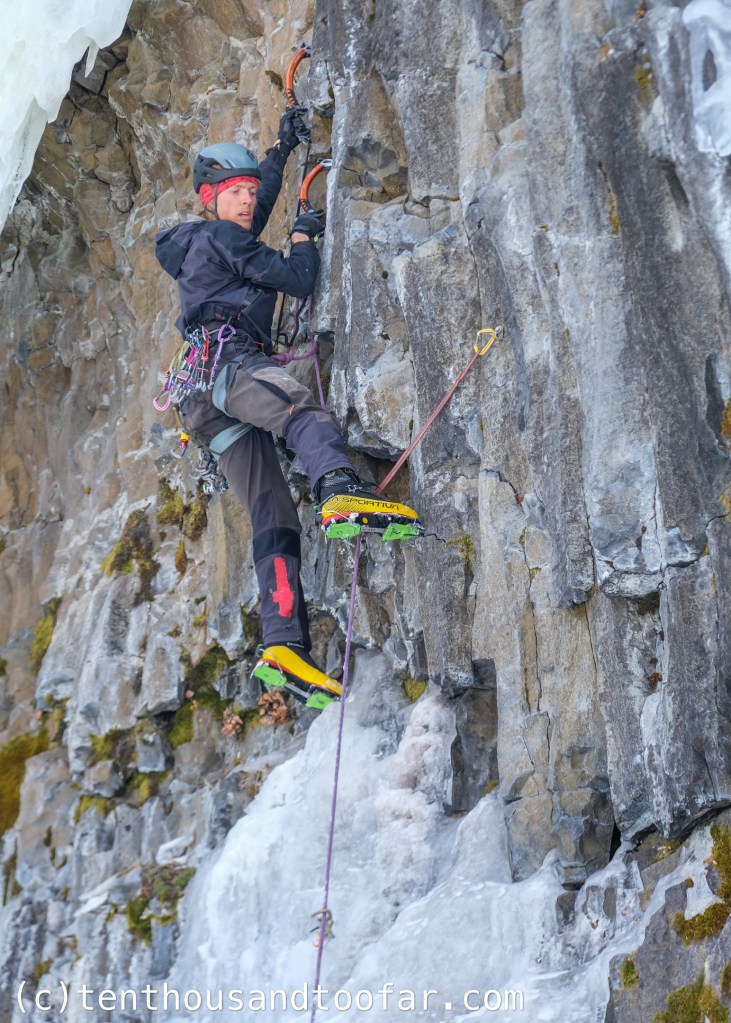
#1: My Jewish Girlfriend (M4)
Protection: closely spaced bolts
Top-rope access: easy
My Jewish Girlfriend is the easiest tightly bolted mixed climb in Hyalite that features actual drytooling moves, not just chossy slab climbing. Is it a classic? Nope. But, conservative bolting for new leaders, combined with easy top-rope access, generally solid rock and a very short crux makes this route perfect for new winter climbers. A few moves of steep and well protected hooking get you off the ground. Higher, expect thin monopoint slab climbing. The only detriment to My Jewish Girlfriend is that the upper bolts are often covered in snow, requiring excavation on lead. However, this is good practice for alpine climbing!
#2: Mousetrap (D4+)
Protection: closely spaced bolts, 13 draws, 70+ meter rope
Top-rope access: possible, best approached via The Fat One (WI3)
Mousetrap on the Unnamed Wall gets my vote for best moderate drytooling route in Hyalite Canyon. The “D” in the grade indicates pure drytooling – the route never gets icy. Like My Jewish Girlfriend, there’s mindfully placed bolts every body length and the crux comes early. Mousetrap is long (110 feet!) and features many climbing styles on solid andesite with secure clipping stances.
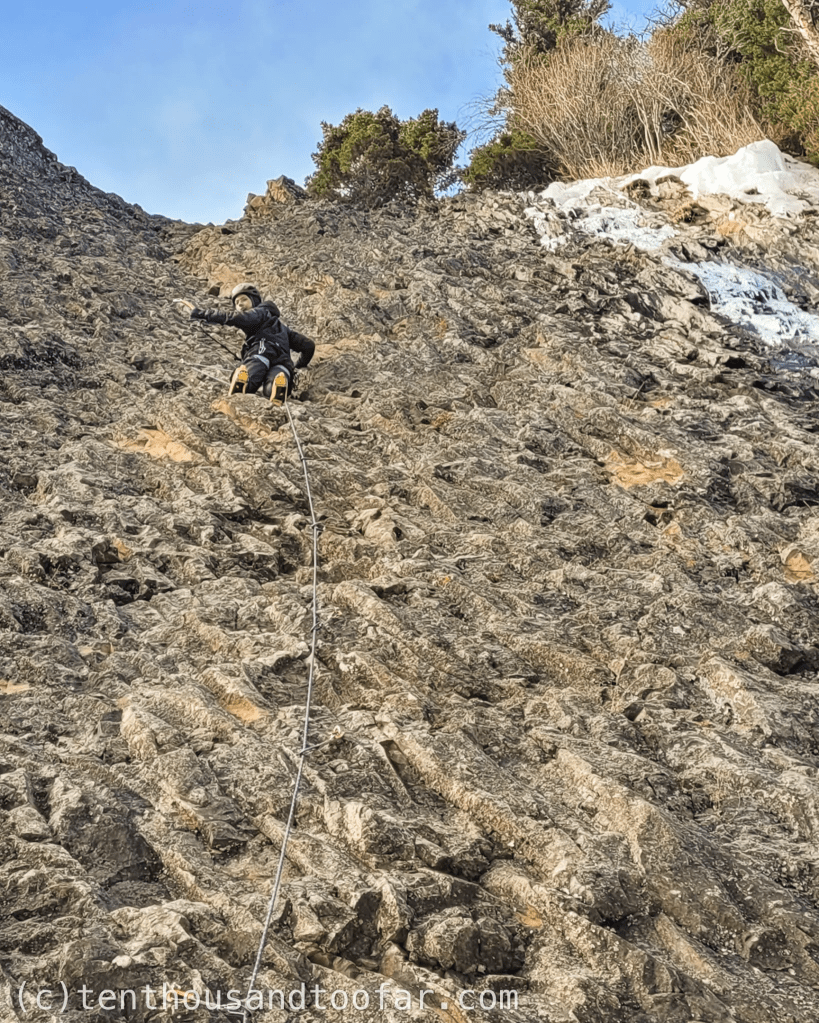
#3: Magically Delicious (M3, WI3)
Protection: traditional rock gear (thin to 2″, no pitons) and ice screws
Top-rope access: annoying, best approached via The Fat One (WI3) and a long walk
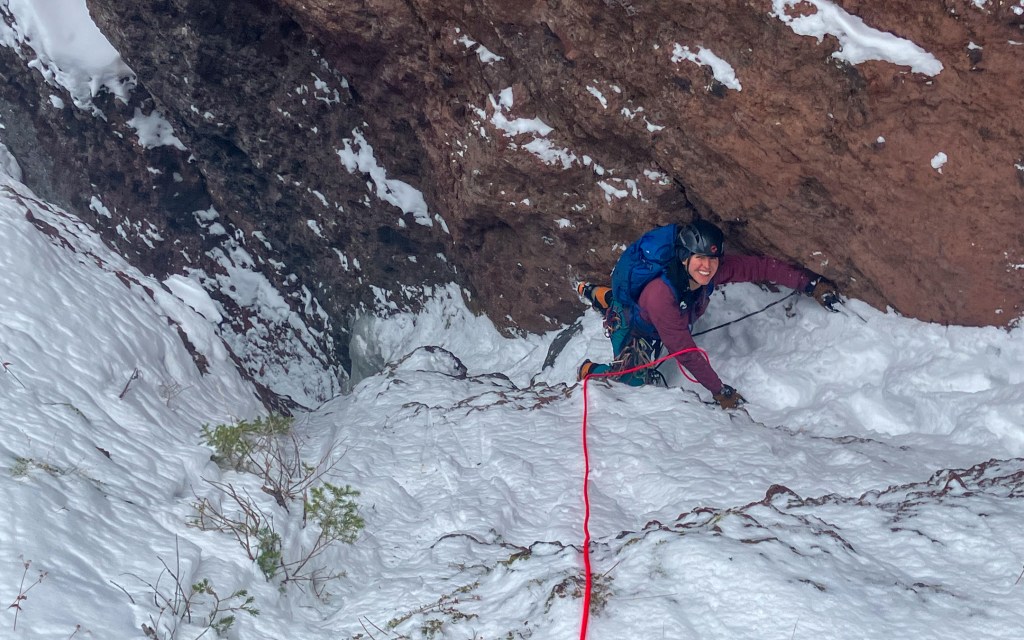
I called My Jewish Girlfriend a mixed climb because the rock is often snowy and ice glazed. However, there’s no actual ice climbing. Magically Delicious is a real deal traditionally protected mixed route, and a classic at any grade. The amount of ice on the route varies by the season. On a rare year the shady 70 foot andesite corner will bulk out with top-to-bottom ice at the carefree grade of “hooked out WI3”. Other rare years it will be mostly dry, with a short glaze of unprotectable ice at the top. Such thin conditions still provide fun climbing, but expect more technical drytooling and sub-optimal protection at the crux. Most desirably and fortunately most commonly there will be a short ice column at the bottom, a fat ice bulge at the top, and a runnel of well bonded ice blobs through the off-vertical corner – see the picture below. I come back to Magically season after season for one reason: it’s awesome. A single set of cams from thin to hand size, wires, and screws to match current ice conditions should see you through.
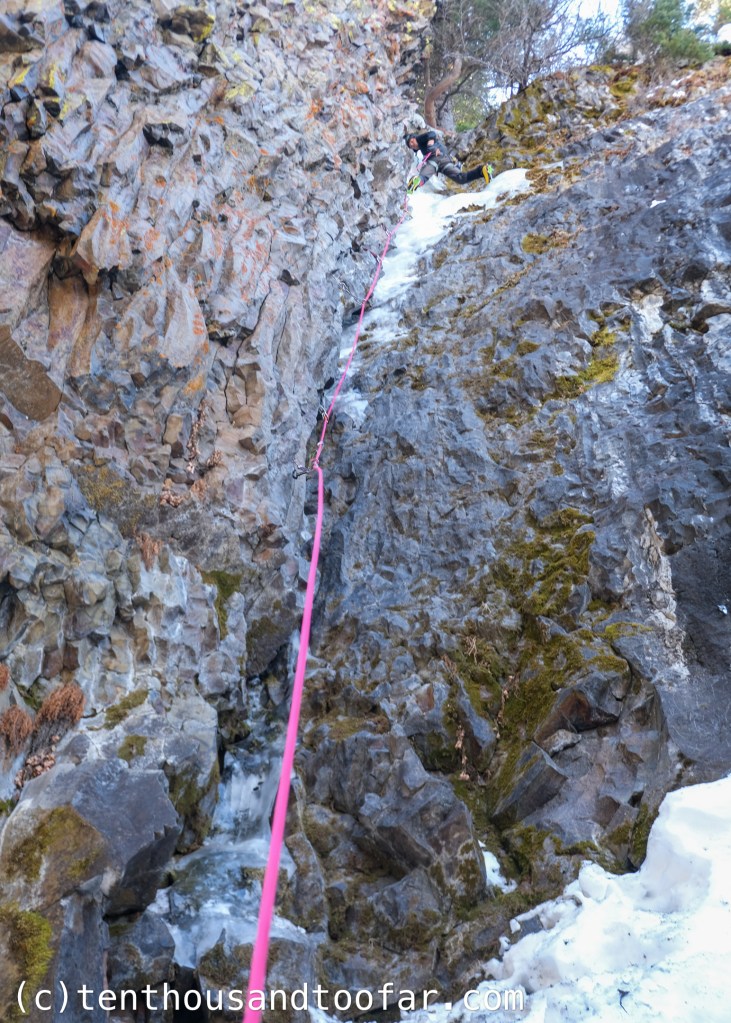
#4: White Zombie (M5)
Protection: closely spaced bolts, optional short ice screws and thin rock gear
Top-rope access: easy
White Zombie is harder than the final route on this list, however it’s protected mostly by closely spaced bolts, and steep enough where a fall from the hardest moves would be reasonably safe. It can also be top-roped after leading Thin Chance (WI4-). A real treat, it’s rare to find a route this easy on a wall so steep. Begin on the lower ice of Mustache Ride/Close Shave, place a screw if needed, and move right onto the steep andesite columns left of Thin Chance. A few bolts of very steep drytooling on very positive holds leads to the dribbles of ice left of Thin Chance. Belay directly above the hard climbing from a tree, or move right and finish on the much easier but pleasant upper half of Thin Chance.
#6: The Thrill Is Gone (M4+, WI4)
Protection: traditional rock gear (thin to 2″, no pitons) and ice screws
Top-rope access: possible – best approached via The Fat One (WI3)
Trip report: February 2022
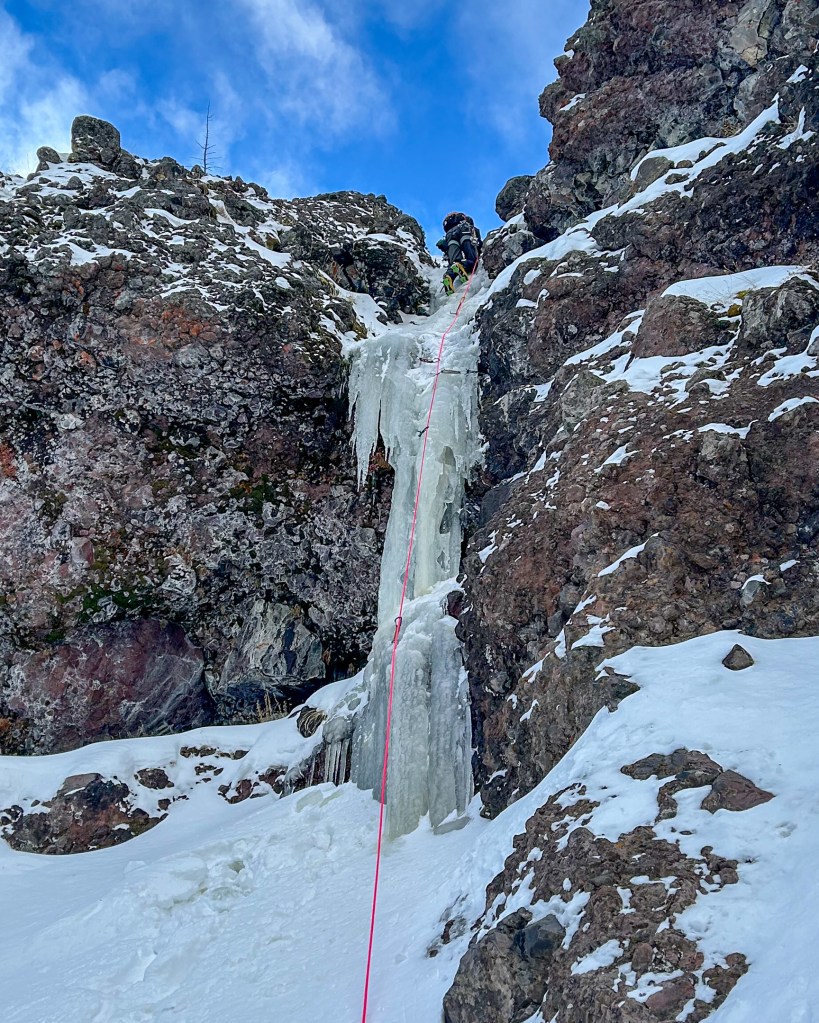
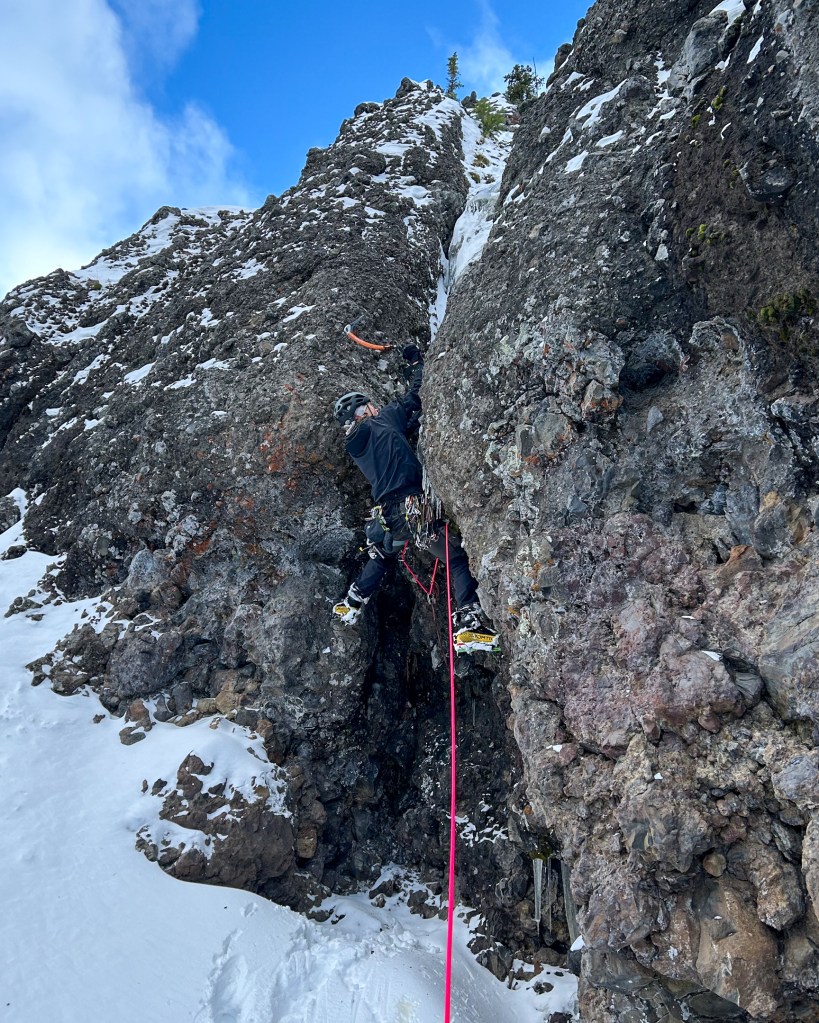
The Thrill is widely called the best single pitch mixed climb in North America. I haven’t been climbing long enough to vote, but it’s pretty damn good, irresistibly aesthetic, and exceedingly unique. Much like Magically Delicious, the volume of ice on the route will greatly sway the difficulty. In full ice conditions this classic will be predictably benign. With no ice before the always present finishing curtain, protection becomes sparse and the crux closer to M5. Common and optimal conditions involve an icy corner with blobs that will occasionally take small screws, but mostly protects with abundant traditional gear. Chimneying and stemming between thin ice and bomber rock is the game. Higher, a transition from the corner to an airy WI4 curtain is the real treat. If this often sunbaked curtain is too rotten for screws, the rock wall on climber’s right takes small gear. The Thrill is a spectacular and timeless classic, but deserves full respect as many overambitious leaders have been injured whipping into the jagged corner.
Love Ten Thousand Too Far? Support independent mountain journalism with $5.10 per month through Patreon (and receive extra bonus content), or with a one-time donation. Any and all support is greatly appreciated.

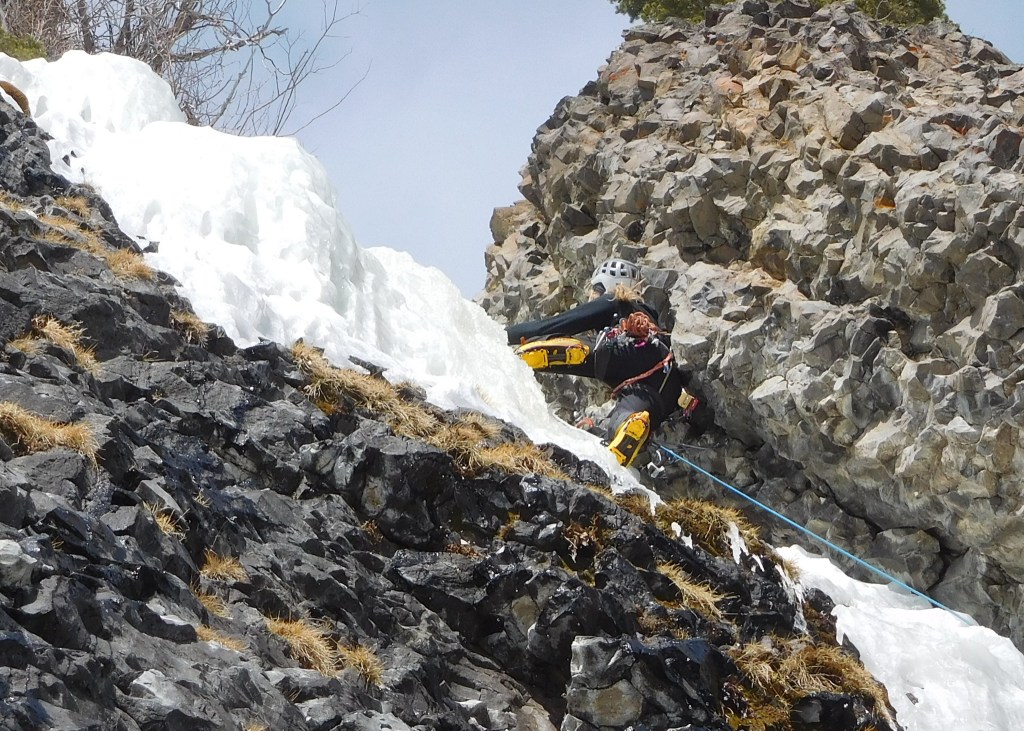
Bonus: A Multi-Pitch!
If you have the time of your life on The Thrill and are eager to take your new skills to a longer route, High Fidelity (WI3+, M4, II) in the East Fork of Hyalite Canyon is a great starting point. Like all mixed routes, the ratio of ice to rock climbing, and difficulty of the rock climbing, will vary by the season and current conditions. High Fidelity is usually climbed in early winter when the access road is still snow-free (check the Southwest Montana Ice Climbers Facebook page for current conditions), but can be climbed later with skis and determination. In optimal conditions, the first pitch is a quintessential, scenic and memorable alpine slot feature with varying amounts of ice, snow and frozen mossy choss (M2, WI2+). The second is a short, sweet and often thin WI3+/WI4- curtain pouring from a tree alcove. Above pitch two the forest relents, revealing open views of Montana’s winter backcountry. The third pitch is a thin vertical pillar rolling into a long and memorable WI2 runnel, often requiring interesting mixed moves between rock and ice, and a few bits of traditional rock protection (if this pillar is too thin to climb, a fully dry variation exists to climber’s right). Lastly, the fourth pitch can be anything from a chunky 20 foot pillar to a grueling choss cave, capped with another pleasant but steeper ice runnel. Perhaps most commonly it will be a hanging dagger with short lived but committing mixed climbing. In fully dry conditions (as when I climbed it), expect bulging M5 chimneying and hooking on crumbly rock with poor protection. It’s worth noting that this route is NOT on the Hyalite andesite of this article’s other five routes, but rather the dreaded conglomerate. A more discerning eye to rock quality is paramount, and temperatures well below 32 degrees are best. Rappel the route with two ropes from fixed anchors.
Want to support? Consider a donation, subscribe, or simply support our sponsors listed below.
Ten Thousand Too Far is generously supported by Icelantic Skis from Golden Colorado, Range Meal Bars, The High Route, Black Diamond Equipment and Barrels & Bins Natural Market.




subscribe for new article updates – no junk ever
DISCLAIMER
Ski mountaineering, rock climbing, ice climbing and all other forms of mountain recreation are inherently dangerous. Should you decide to attempt anything you read about in this article, you are doing so at your own risk! This article is written to the best possible level of accuracy and detail, but I am only human – information could be presented wrong. Furthermore, conditions in the mountains are subject to change at any time. Ten Thousand Too Far and Brandon Wanthal are not liable for any actions or repercussions acted upon or suffered from the result of this article’s reading.
 Ten Thousand Too Far
Leave a comment