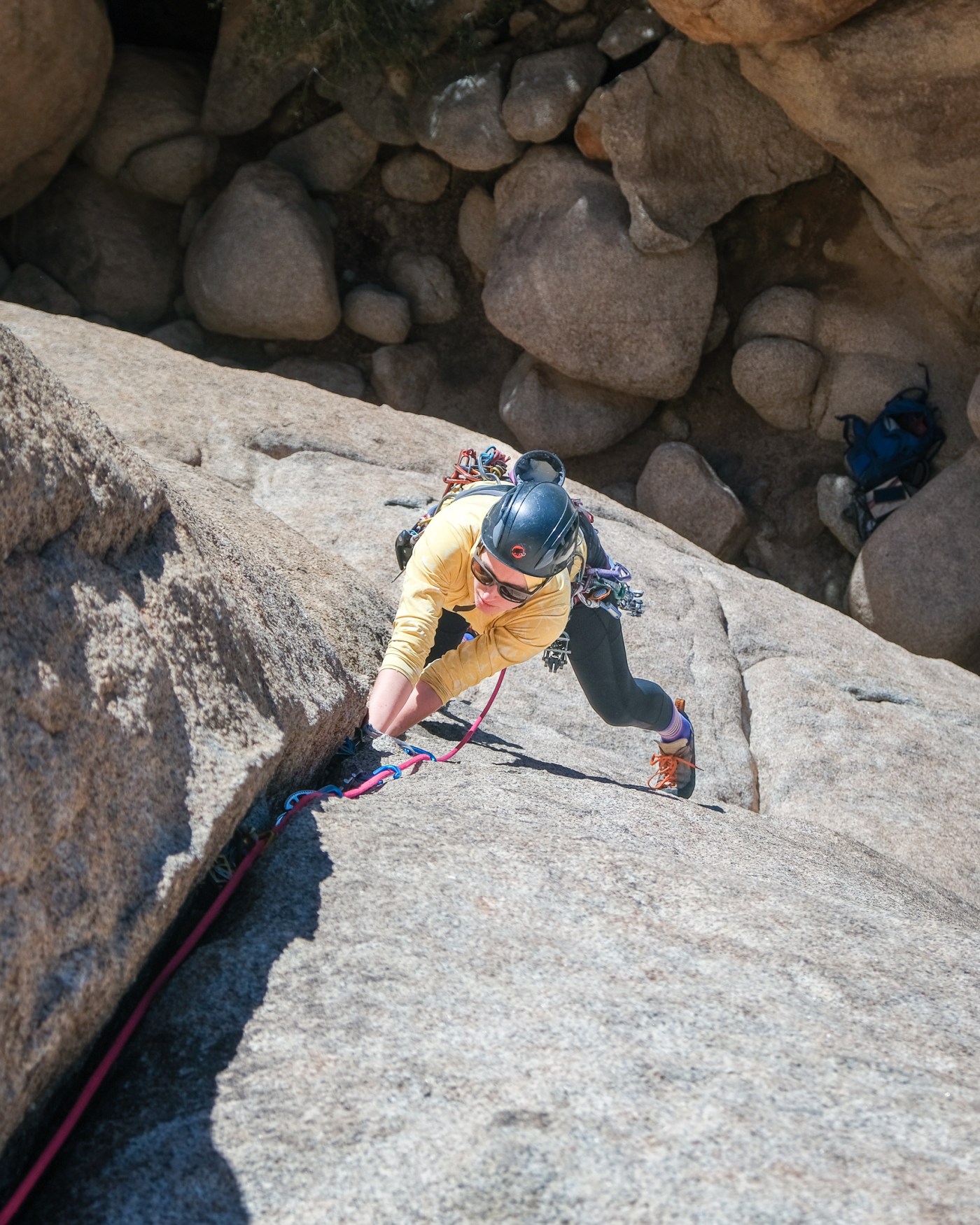
An unpublished account from a two week trip to Joshua Tree National Park in January and February 2024. Two new crack climbers set to work in splitter granite paradise, covering as many moderate classics as possible, and getting sandbagged along the way. A full tick list and recommendations is included for new Josh climbers.
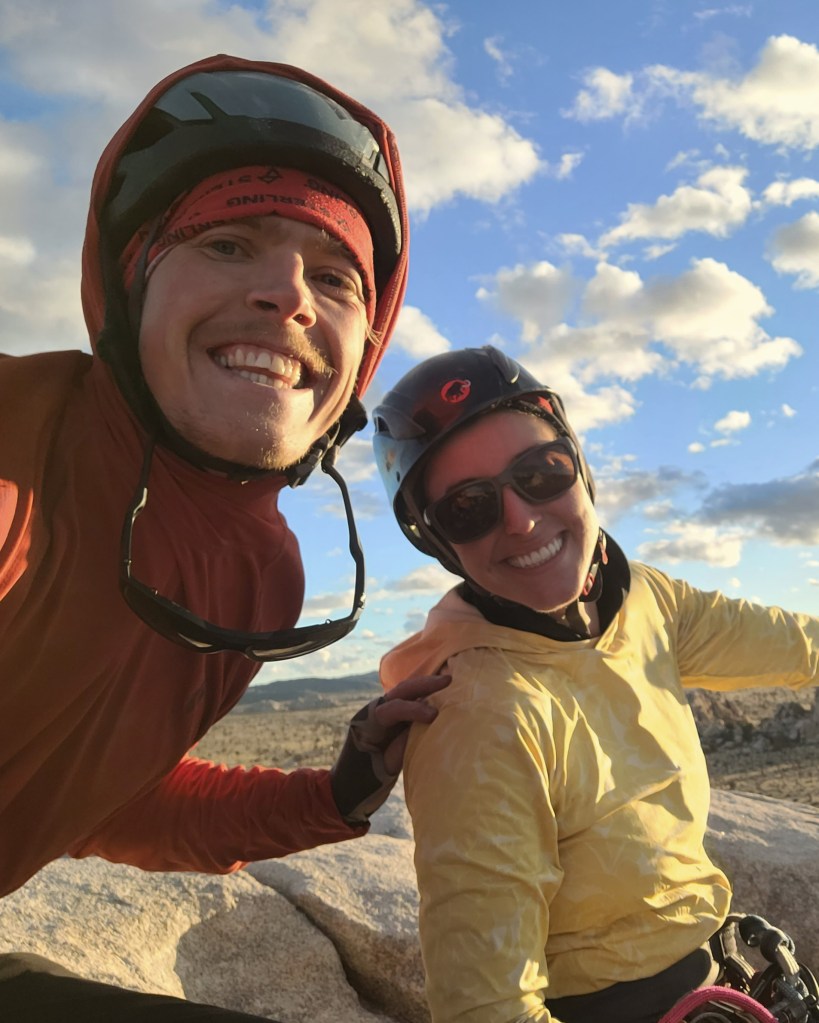
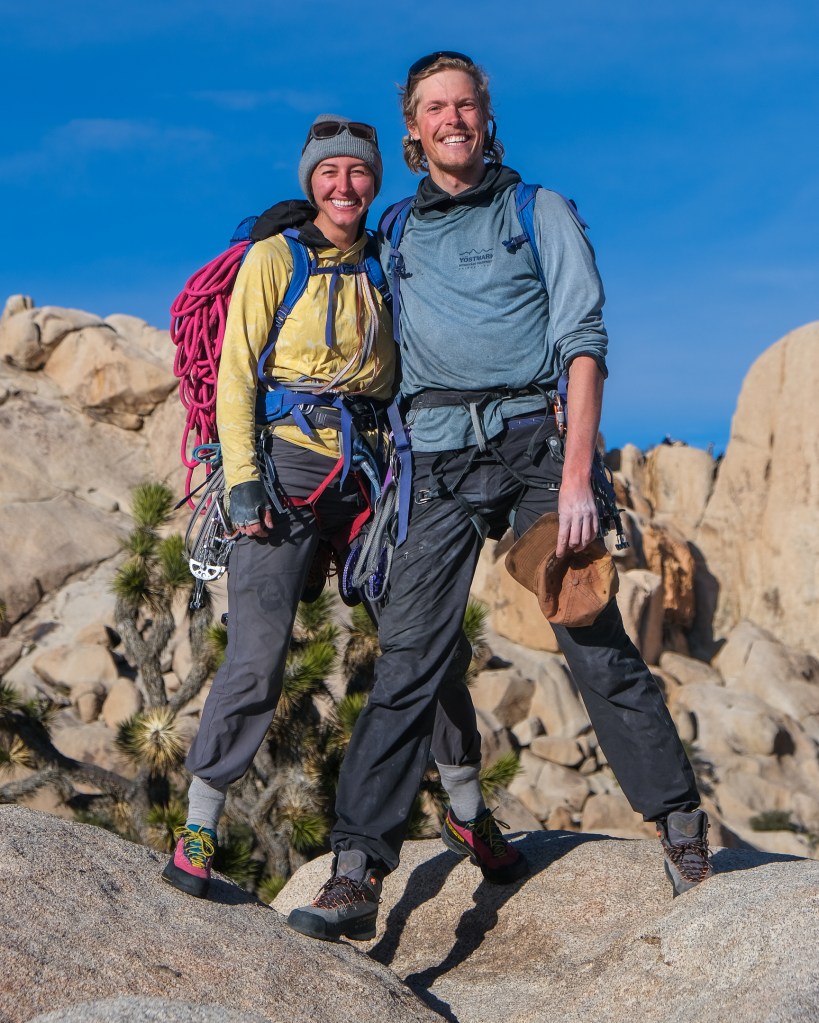
A mediocre start to winter 2024 left Bobbi Clemmer and I scratching our heads. El Nino had a stranglehold on the Tetons. A few unseasonably warm weekends allowed rare local cragging just before New Years, stoking spirits for a mid-winter escape. Las Vegas was our first thought, known for stable weather and excellent year round climbing, tainted only by fickle camping. Joshua Tree was the late addition, the place we’d stop to hone our crack technique before heading to the larger walls of Red Rock Canyon. However, we never made it to Sin City. Joshua Tree had the perfect recipe of affordable living, excellent camping, sunny skies, short approach cragging and inspiring splitter cracks to lock us down for two whole weeks, where we managed to climb 11 out of 13 days, nearly always through sunset. Armed with a tick list from our dear friends Chris and Amy who lived around the park seasonally for many years, we set to work climbing as many classic routes as possible, with an aim to find our flow in one of North America’s most storied climbing areas. Since this article is fairly long, a full itinerary and route description is provided below so you can jump around to specific climbs if desired.
Love Ten Thousand Too Far? Support independent mountain journalism with $5.10 per month through Patreon (and receive extra bonus content), or with a one-time donation. Any and all support is greatly appreciated.

2024 Joshua Tree Tick List
👎 = would not climb again
⭐ = good and recommended, worth climbing if you’re in the area already
⭐⭐ = very good, worth climbing if you’re in the area already
⭐⭐⭐ = excellent, worth building a day around
⭐⭐⭐⭐ = a true classic not to be missed, period
❓= didn’t finish, so we cant say!
- Day One
- Toe Jam (5.7) ⭐⭐⭐️
- The Hoblett (5.7) 👎
- The Bong (5.5) ⭐⭐
- Double Cross (5.7+) ⭐⭐⭐⭐
- Day Two (rain, rest day, evening bouldering)
- Day Three
- Buissonier (5.7+) ⭐⭐⭐
- Hands Off (5.8) ⭐⭐⭐
- Beginner’s Three (5.3) ⭐
- Right Ski Track (5.3) ⭐⭐
- Day Four
- Cryptic (5.8) ⭐⭐⭐
- Southwest Corner (5.7) ⭐⭐⭐
- Right On (5.6 R/X, 4 pitches) ⭐
- Day Five
- Leaping Leaner (from the ground, 5.8+) ⭐⭐
- Sphincter Quits (5.9+) ⭐⭐⭐
- The Flake (5.8) ⭐⭐⭐
- Day Six (rest day, hike 49 Palms Oasis, town)
- Day Seven
- Catch A Falling Star (5.8) ⭐⭐⭐
- The Chief (5.5) ⭐⭐
- Pops Goes Hawaiian (5.7 R) ⭐
- Love Shack (Breaking Bad finish) (5.8) ⭐
- Handicapped Zone (5.6) 👎
- Day Eight
- Lazy Day (5.7) ⭐
- Walk On The Wild Side (5.8, 3 pitches) ⭐⭐⭐⭐
- The Exorcist (5.10-) ❓
- Day Nine
- Dogleg (5.9) ⭐⭐
- The Flue (5.8) ⭐⭐⭐⭐
- The Eye (5.4) ⭐⭐
- Pinched Rib (5.10-) ⭐⭐
- Day Ten (one early route, then rain)
- White Lightning (5.7) ⭐⭐⭐⭐
- White Lightning (5.7) ⭐⭐⭐⭐
- Day Eleven
- Mental Physics (5.7, 2 pitches) ⭐⭐⭐⭐
- Dazed and Confused (first pitch, 5.9 R) ⭐⭐⭐
- Breakfast of Champions (5.9, 2 pitches) ⭐⭐⭐⭐
- Day Twelve
- Looney Tunes (5.9) ⭐⭐⭐
- Absolute Zero (5.10) ❓
- Pinched Rib (5.10-) ⭐⭐
- Chalk Up Another One (5.10-) ⭐⭐
- Day Thirteen
- Poodlesby (5.6 R) 👎
- The Overseer (5.9) ⭐⭐⭐
- The Orphan (5.9+) ⭐⭐⭐
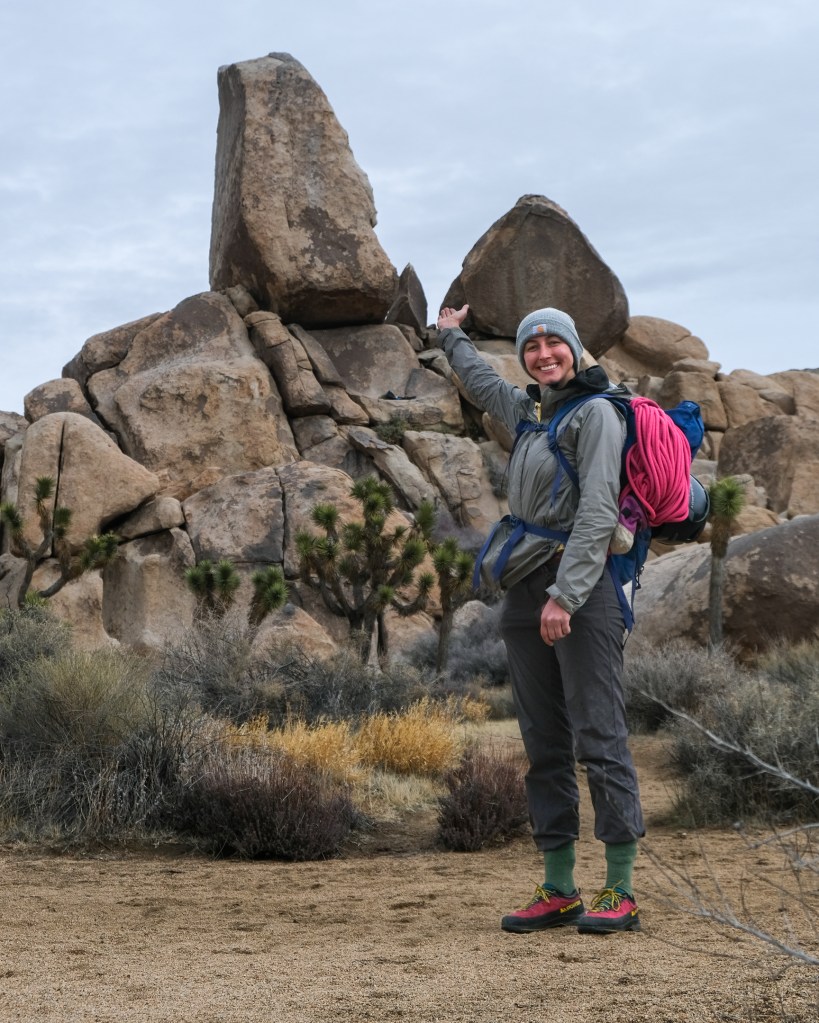
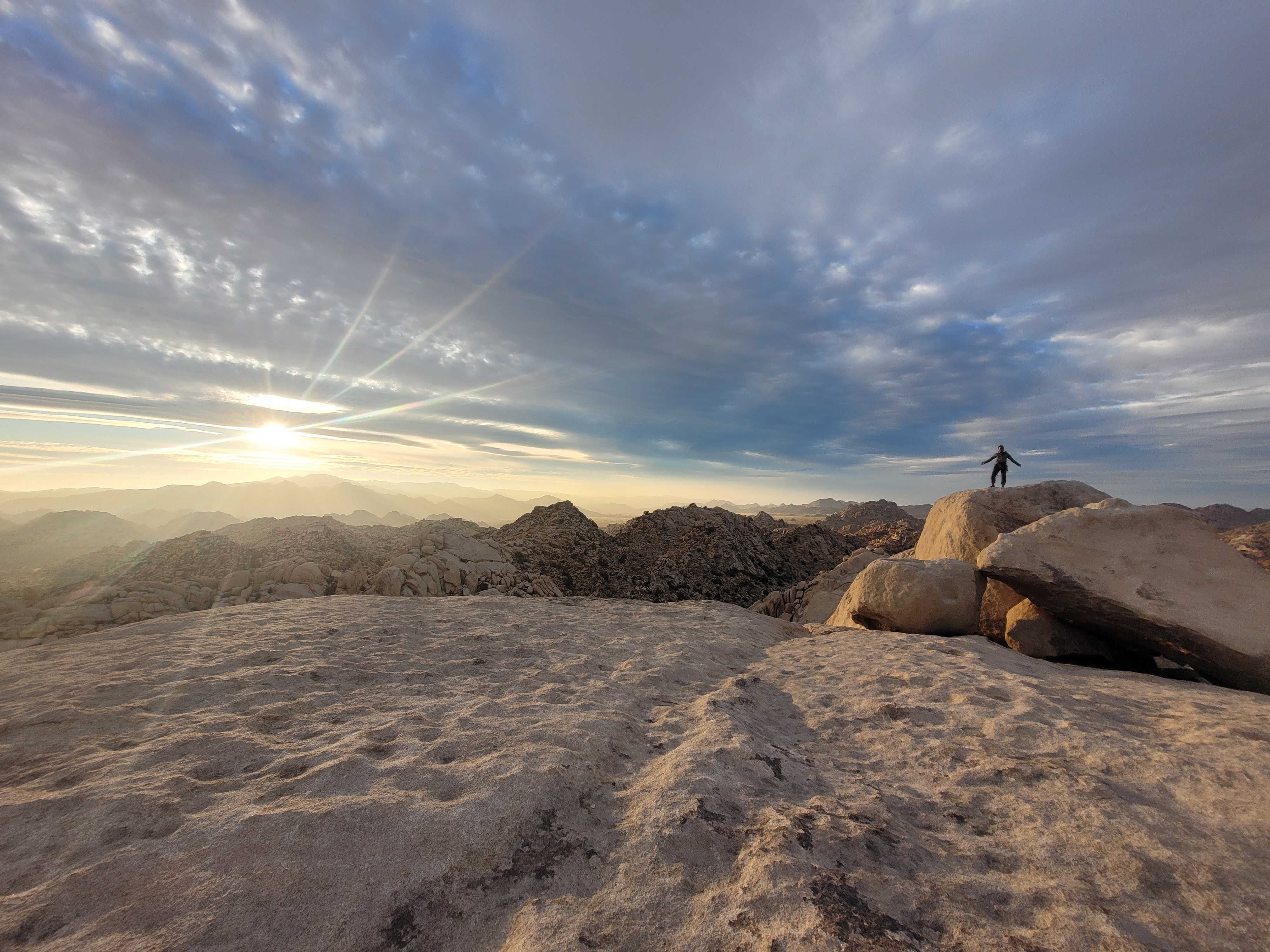
An 18 hour migration from the Tetons, with a pit stop in Phoenix to catch the Eagles’ Last Goodbye Tour, got us to Joshua Tree National Park dazed with sleep deprivation. We were lucky enough to score a coveted campsite in Hidden Valley, the storied epicenter of Josh climbing. Mesmerizing boulders strewn every which way, towering rock formations on all sides, the aura of at least seven decades of the world’s finest rock climbers – Royal Robbins, John Bachar, Peter Croft, Micheal Reardon, John Long, Brad Gobright, and Will Stanhope, to name only a few – energized the air. The course grained monzonite rock glowed crimson orange, and even when wet, as it was upon arrival on Saturday evening, retained grip. Splitter cracks cut the landscape at every turn and of course, the famous, ethereal, and ancient Joshua Trees blanketed the desert floor. Mountain Project told of some 20,000 routes and boulder problems – yes, twenty thousand. Within an hour of sunrise the compact rock baked dry, and despite bone rattling wind and spotty clouds we raced to granite faster than we could drink our second cups of coffee. As we picked our way through a few moderate classics around the campground – Toe Jam (5.7), Hoblett (5.7), The Bong (5.7), and Double Cross (5.7+), a few things became apparent. First, we were going to need crack gloves. The grainy rock flaked my uninitiated skin like carrots in a microplane. If we wanted any chance of linking together multiple climbing days we would need “jammies” – no Honnold calluses here. Second, we were going to need some proper crack technique to dent the many 5.9 and 5.10’s, let alone 5.11’s (which never quite happened), on Chris and Amy’s list. The bail out face holds of Teton cracks weren’t coming to save the day. Third, holy sandbagging! If Double Cross was 5.7+ then I was a lot further from a 5.11 trad climber than I thought. Committing my entire body to a sustained crack was foreign to this 5.10 alpine rambler, and the smooth faces of Josh were ready to teach harsh lessons. Bobbi had a similarly humbling lead experience on The Bong, which was quite a but harder than Teton 5.5. But rather than devolve into the debauchery of internet whining about stiff Joshua Tree grades, we set to work with humility. It was time to forget Coarse and Buggy, and simply work on becoming the best crack climbers we could be.

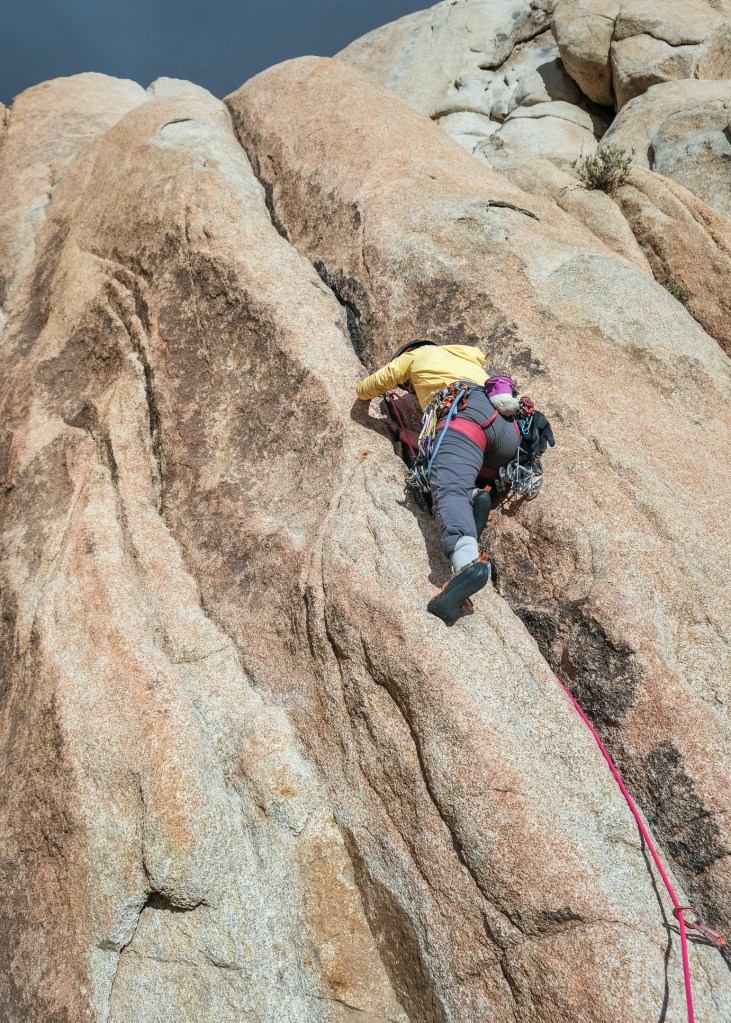
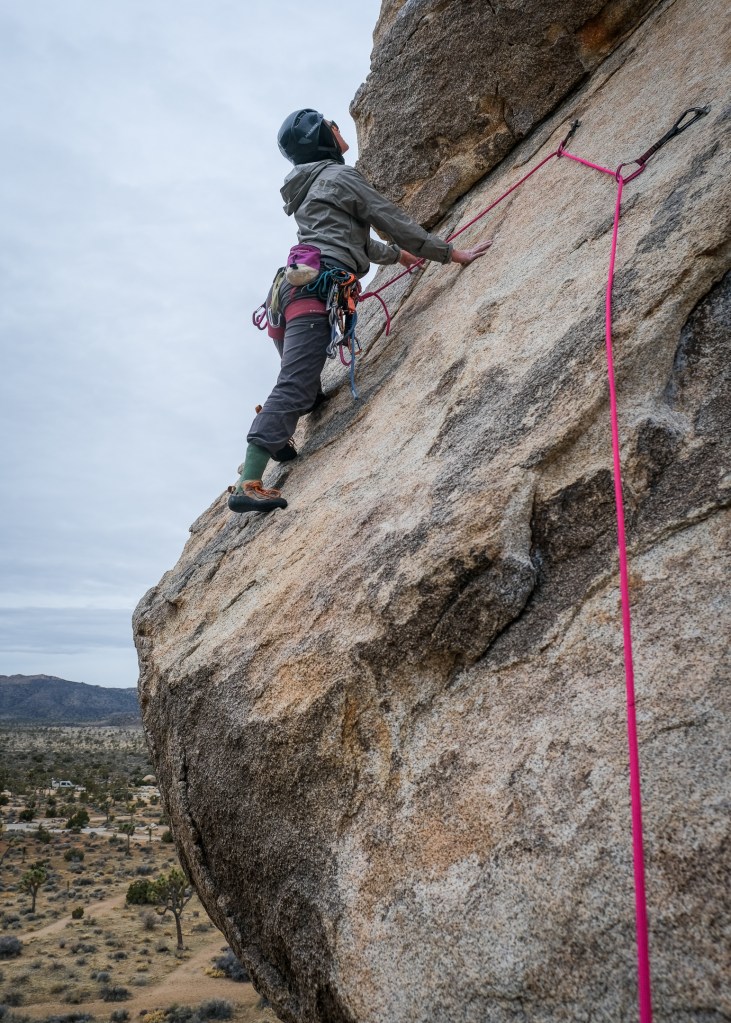
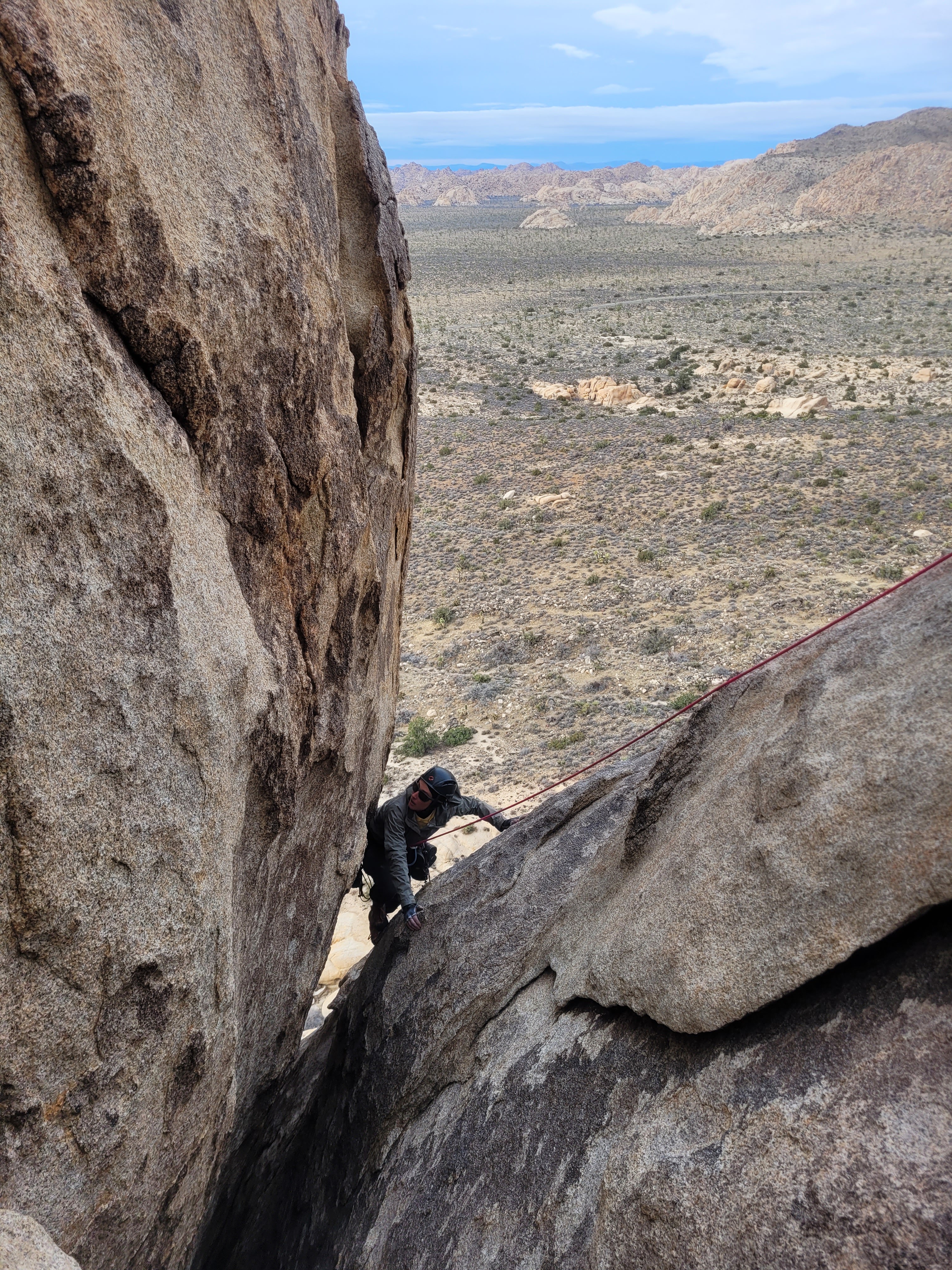
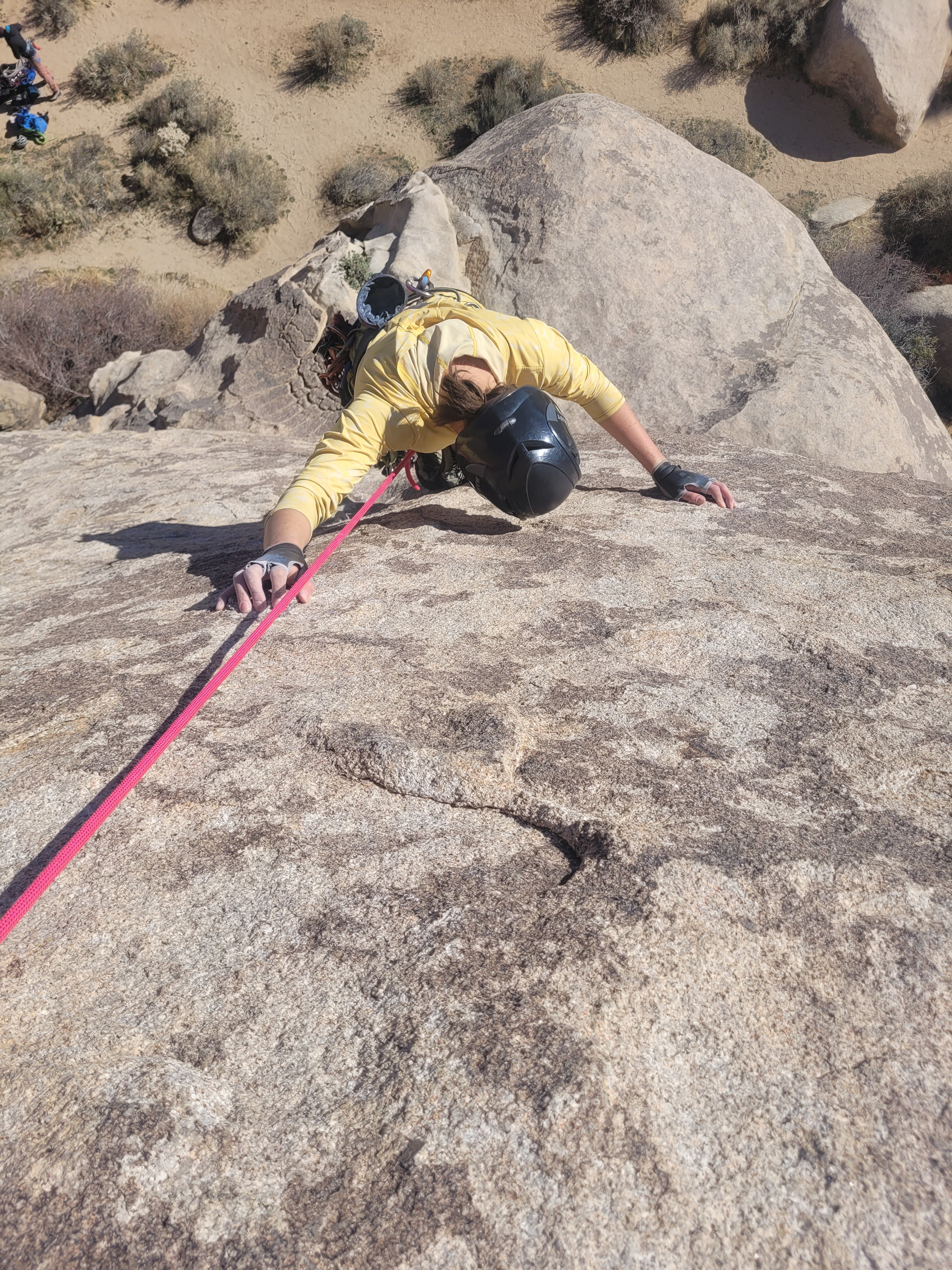
Rain followed our first day, the perfect time to get our punctured tire replaced, drink local Joshua Tree Coffee, and acquire crack gloves at Nomad Ventures, the local climbing shop. Armed with extra rest, caffeine and gloved hands we went on a three day spree. Day three saw my first trad whip in quite some time on Buissonier (5.7+), decorating the notoriously sandbagged Royal Robbins classic with a fixed #11 BD nut. I pulled back on, paddled through the crux, and powered through reachy tips laybacking towards the top. Hands Off (5.8) provided unbelievable varied crack climbing and my first Joshua Tree 5.8 onsight – the stemming sequence and overhanging mantle finish is out of this world – and Beginner’s Three (5.3) with continuation up Right Ski Track (5.3), ended our day with a gentle two pitch climb to the top of the famed Intersection Rock. Day four we headed to The Headstone where we climbed the formation’s two classics, Cryptic (5.8) and Southwest Corner (5.7), in bone chilling winds. Bobbi put up a valiant on-sight of the latter, braving a scant four bolts in fifty feet! This climb marked the first time I saw Bobbi willingly compartmentalize and fire a serious runout with sustained climbing at the grade. I experienced equal emotions of pride and nervousness while belaying, but she dispatched the work handily. In the afternoon we headed to Saddle Rocks, Joshua Tree’s premier multi-pitch venue, to attempt the super classic Walk On The Wild Side (5.8), but a party on pitch one, and another in cue, steered us towards Right On (5.5), the wall’s other renowned multi-pitch. Either I seriously fluffed the beta or Right On is the gnarliest 5.5 in North America, with run-outs on every pitch stretching upward of 100 feet on terrain that would be rated at least 5.8 in modern granite climbing areas. The first pitch was somewhat grainy with only one lonely bolt 30 feet below an unclear friction dependent crux, and the third pitch a bombay chimney with no protection for at least 100 feet. On the last pitch I got off route and ran it out another 70 feet, but fortunately on easier 5.2 lumps. Bobbi finished each pitch with a look of astonishment. The view from the top of Saddle Rock, the tallest monolith in Joshua Tree, burned particularly bright given we were still alive.

Grades, Style and Ethics
In Joshua Tree, unforeseen and seemingly inescapable consequence lurks around every turn. In not so uncommon fashion, my finest technique flourished as I ventured further into the danger zone; Bobbi too, as many of Josh’s bolt deprived slabs and discontinuous cracks traverse incessantly, keeping her in the constant cross-hairs of scraping pendulums. You may ask, why so little protection? Without delving into a rabbit hole of old-school climbing lore, the overwhelming majority of routes established in Joshua Tree were tackled in traditional ground up style, utilizing clean climbing protection whenever possible, with an extreme emphasis on minimizing fixed gear. If a bolt was placed it was done so on lead with a hand drill, a laborious task involving at least 15 minutes of masonry with both hands available. As such, bolts sprouted only in places where the leader could stand very comfortably, or dangle from an edge using an aid hook, to place a bolt. This means the difficult face climbs, where cracks for natural protection are unavailable, usually offer no protection at the cruxes, and wander illogically to connect stances suitable to drilling. Hardware expense furthers the issue. Bolts cost money, and are tedious to install, meaning the equally strong and poor dirtbag climbers of the day couldn’t afford, nor be bothered, to place a bolt anywhere they didn’t feel a fall eminent. Compounded by the strong culture of free-soloing in Josh still prevalent today, it’s no surprise that the first bolt of a 5.10 face may not appear until the first 50 feet of 5.8 entry climbing above a bed of talus and yucca is complete. Modern ethics protecting the original style and vision of the first ascent party prohibit adding new bolts to an existing climb without consent, and often times Johnny Peg-Leg, who hung his ass out with a hand-drill, a bandana helmet, and swami belt full of courage – 80 feet runout on a dime-edge slab with nothing more than a pack of Marlboros to live for – feverishly rejects proposals to add bolts to his macho statement. I’m neither here nor there on the subject. The bold routes of Josh certainly make for rich campfire stories. But, I felt the need to add a tidbit of history before getting dubbed a reckless zealot searching for ego inflating runouts. Much like the amazing Joshua Trees that can live upward of two hundred years, to climb in this park is to take a step backward in time, into an era where adventure took precedence over difficulty, and climbs were approached with reverence, humility, and purity. When climbing in Josh, it’s wise to remember that rock climbing ability is often your most valuable piece of protection.
Day five: a rally through extreme soreness; Leaping Leaner (5.8+), Sphincter Quits (5.9+) and The Flake (5.8). Each route presented its own unforeseen challenge, with The Flake’s squeeze chimney stealing the show for most grueling body length of climbing on the entire trip. It may only have been 5.8, but this particular squeeze, less than 10 feet in full, glaringly exposed my off-width weaknesses and took every ounce of whimpering effort from my straining calfs. Luckily, 120 feet of sweeping four-star crack climbing and an exciting runout slab at sunset entirely dimmed the off-width trauma. Note to self: when climbing the Flake, stay deep in the squeeze, using arm bars and heel toe cams. Day six was my 29th birthday, and while we toyed with the idea of Bobbi supporting me to climb 29 pitches, I graciously declined and climbed exactly zero. We took an inspiring hike to 49 Palms Oasis (look this up – not to be missed), restocked groceries, indulged in lattes, scrubbed down at the Joshua Tree Lake Campground and logged ten hours of sleep to give er’ everything in the morning. Day seven: Bobbi verbally announces her intention to onsight a “Joshua Tree 5.7” by the end of our second week. We warmed up on Cap Rock’s To Catch A Falling Star (5.8), perhaps the flowiest and most unique 5.8 of our trip – a diagonal water-podded crack with sustained crimping, slabbing, and intricate protection. We spent the afternoon at Reggie Dome, where we swung leads on four moderates; The Chief (5.5), Pops Goes Hawaiian (5.7 R), Handicapped Zone (5.6) and Love Shack (5.8). Bobbi’s handy leads of The Chief and Handicapped Zone cemented that she was in fact closer to 5.7 than previously thought. Day eight: Walk On The Wild Side, with a warm up on Lazy Day (5.7). Much like Right On, Walk On The Wild Side brought a haymaker of daringly spaced bolts. A Headstone climber far stronger than I waxed cautionary tales of dangerous climbing, having bailed from the route only hours earlier. The recommended rack might only be six quick-draws, and the grade “only” 5.8, but Walk On The Wild side is no sport climb. Luckily, I had my friction head screwed on straight, for many of the falls, from cruxes nonetheless, could have resulted in road rash or broken bones. The second and third pitches were particularly outlandish. I accidentally climbed past the pitch two anchor, missed the ensuing two lead bolts, and ended up on a 100 foot onsight runout to the top of Saddle Rocks. While still intense, this experience felt tame compared to the 30 foot runouts on pitch one. I was assimilating to the course grained granite, beginning to understand the magic of protecting climbs by my ability rather than cams, nuts, or bolts. Bobbi braved nearly as dangerous pendulums on follow. On this standout climb we found raw adventure in the clearest frequency.

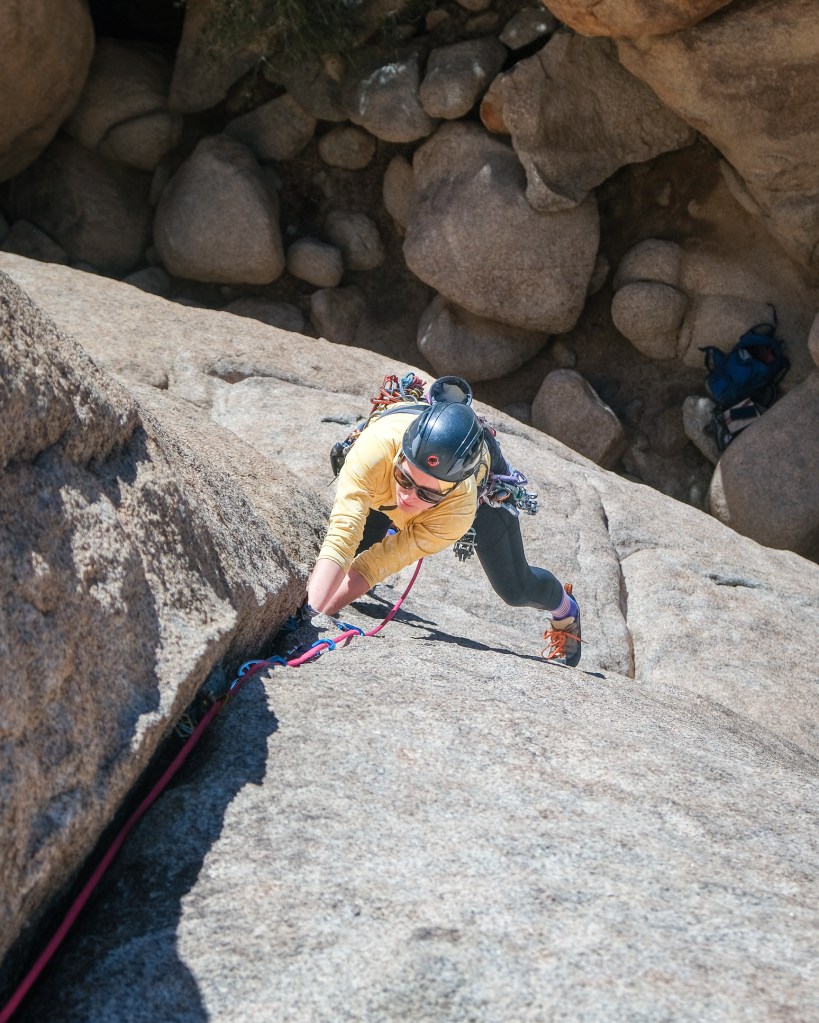

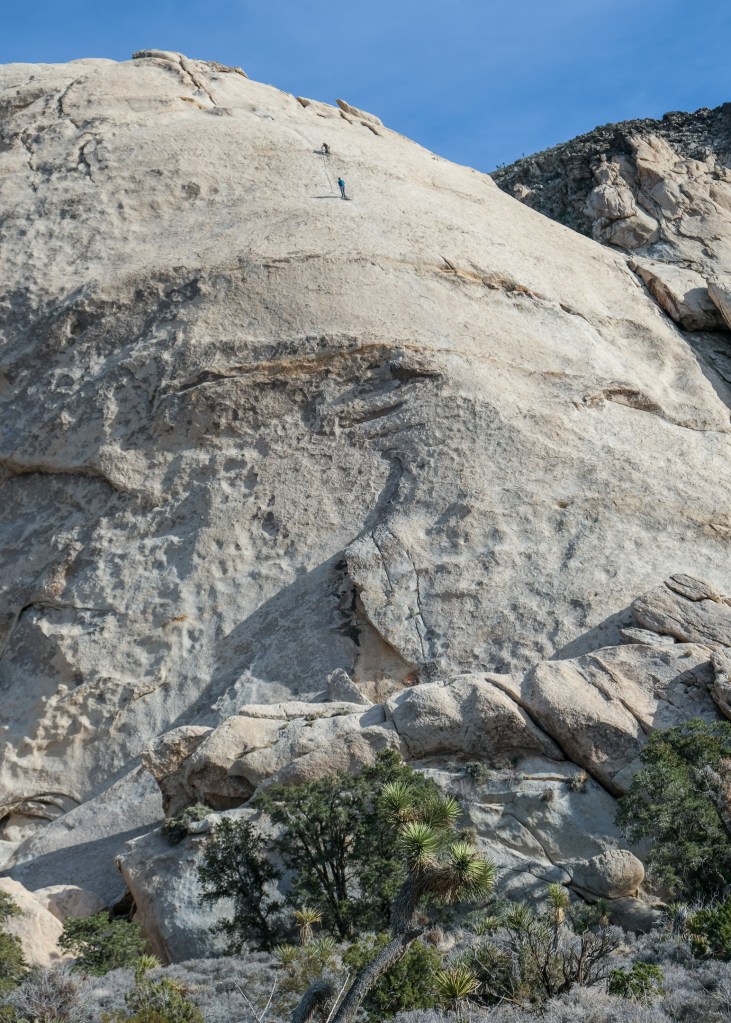

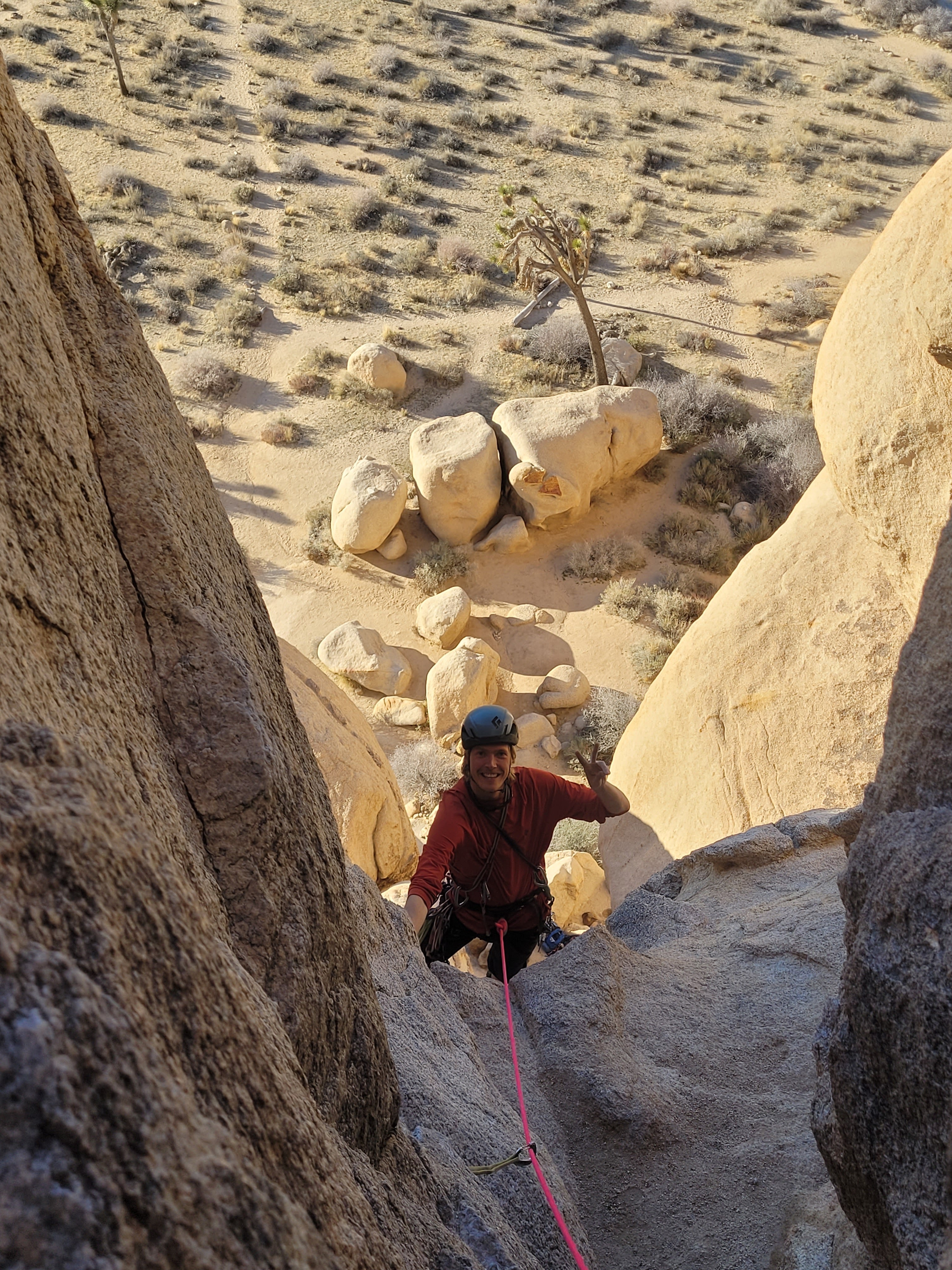
At camp that evening, while reading a Climbing Magazine article stating “if you can handily climb 5.9 in Joshua Tree than you can probably lead any 5.10 in North America”, I honed in on leading as many 5.9 cracks as my grizzled body would allow, rather than dreaming of 5.10 or 5.11. The following morning we tied in for Dogleg (5.9), which thoroughly kicked my ass in sustained, soapy, steep, and slick crack climbing. I may have achieved the onsight, but not without over gripping, foot pops and crippling fear, hardly “handily”. A surreal experience involved belaying Bobbi up Dogleg, then watching as a remarkably sweaty lone climber emitting faint techno music, whom I just met on the summit after he soloed Double Cross ten minutes earlier, cruised up right behind. He slunk past our belay with a quick “hello again”, then disappeared from sight. He must’ve climbed the Dog in less than five minutes. Onsighting the Flue (5.8) was a welcomed confidence booster, a varied route with extreme flow – a top contender for campground favorite. Bobbi onsighted the Eye (5.4), a juggy, vertical, trad-protected face climb with tricky gear placements that afternoon, and I cooled down with some thrashing on Pinched Rib (5.10-), a short, 40 foot, one-trick-pony route on Chimney Rock. A dozen sunset whippers later I pieced together the crux, and vowed to return if time allowed.

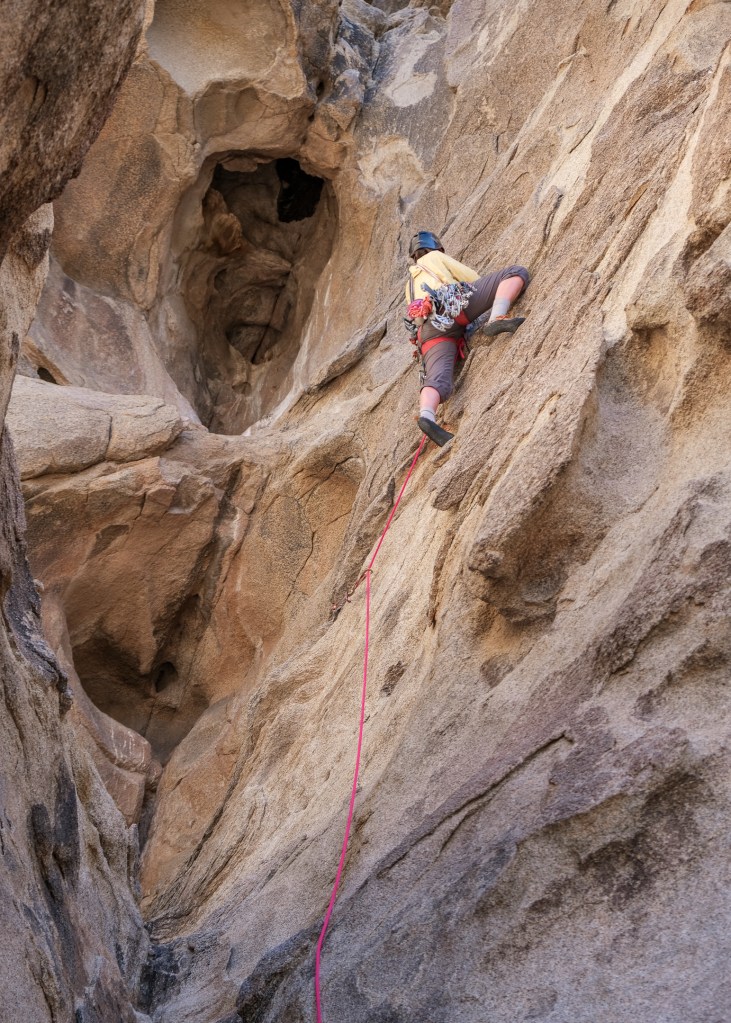
Then came the Wonderland Of Rocks, the alpine venue of Joshua Tree. The approach to Wonderland routes involves connecting sibylline washes and vague granite canyons, past ancient mining camps and thick groves of Yucca, for anywhere from 30 minutes to two hours of unmarked cross country travel. It is not uncommon for climbers to get lost trying in this area. Our motivations to enter the “Wanderland” hinged on Mental Physics, an absolutely classic two pitch route on the massive Lenticular Dome. Climbers on Mountain Project have called Mental Physics the best 5.7 in the country. Storm clouds bisected by holes of sunshine filled the sky as Bobbi tied in for the goal of her trip, and much as I expected, she was atop in a jiffy. The crack pitch was spectacular, and while perhaps not the best pitch of 5.7 I’ve ever climbed, was a true four-star gem at the grade. I helped on the second pitch, a “typical Josh bullshit” one-bolt, 100 foot, 5.7 slab directly off a hanging belay with rusted bolts. I wonder how many factor two falls that poor belay has seen. From the summit of Lenticular we rapped the formation’s other classic, Dazed and Confused (5.9 R), to preview the route and pre-clip an unnervingly high first bolt. Dazed was the pinnacle litmus test of my Joshua friction game. In fact, I think this was the best and most inspiring slab flash of my life. With the first bolt clipped, the route felt significantly less dangerous than other R rated routes in Josh. We skipped the easier second pitch to save time for another classic: Breakfast Of Champions (5.9) on the South Astrodome. Much to reputation Breakfast did not disappoint, with two distinctly different pitches and a particularly unique summit. Pitch one followed a bulging yet sinker hand crack through a left facing overhang into heroic easy laybacking, and pitch two punched yet another classic, nails runout, 5.9 slab with a scanty three bolts and one suspect micro-cam in 100 feet. We watched a turbulent sunset from the summit of South Astrodome in awe. In the Wonderland we found mecca.
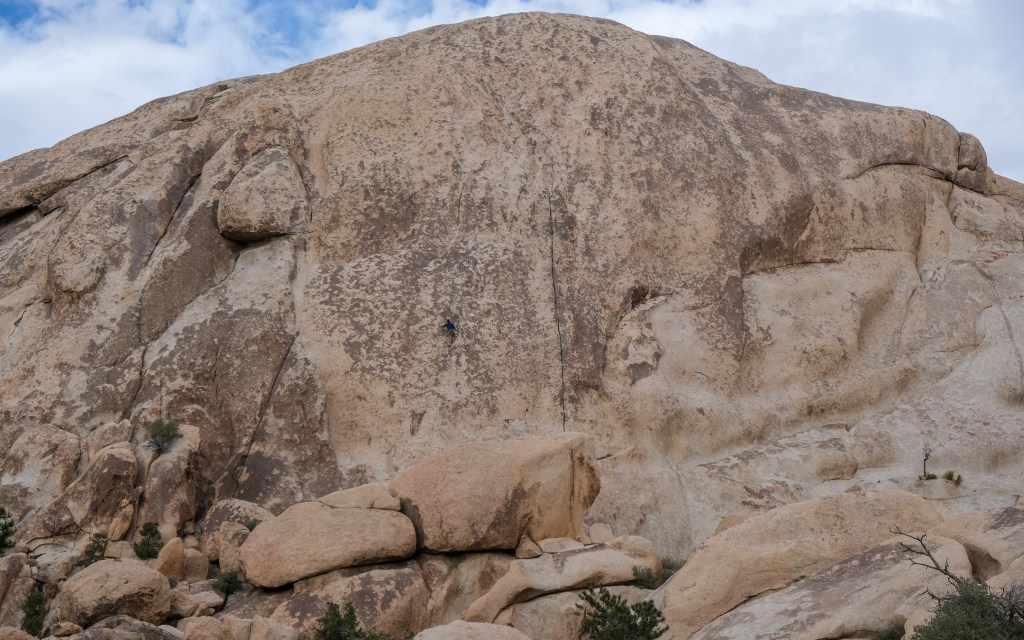

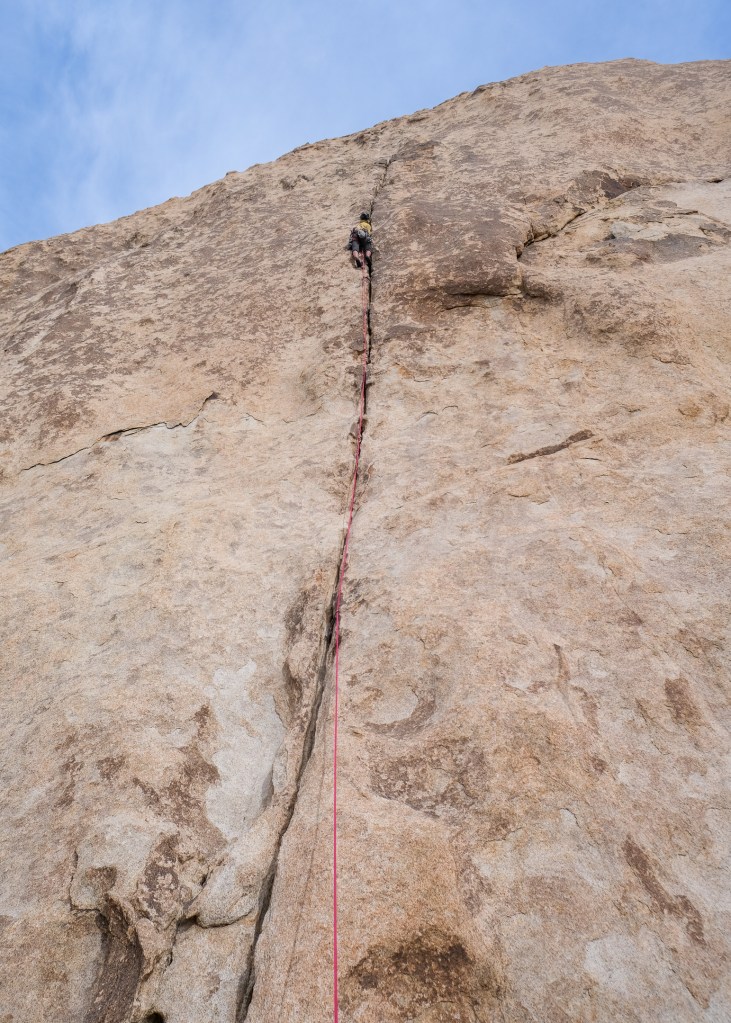
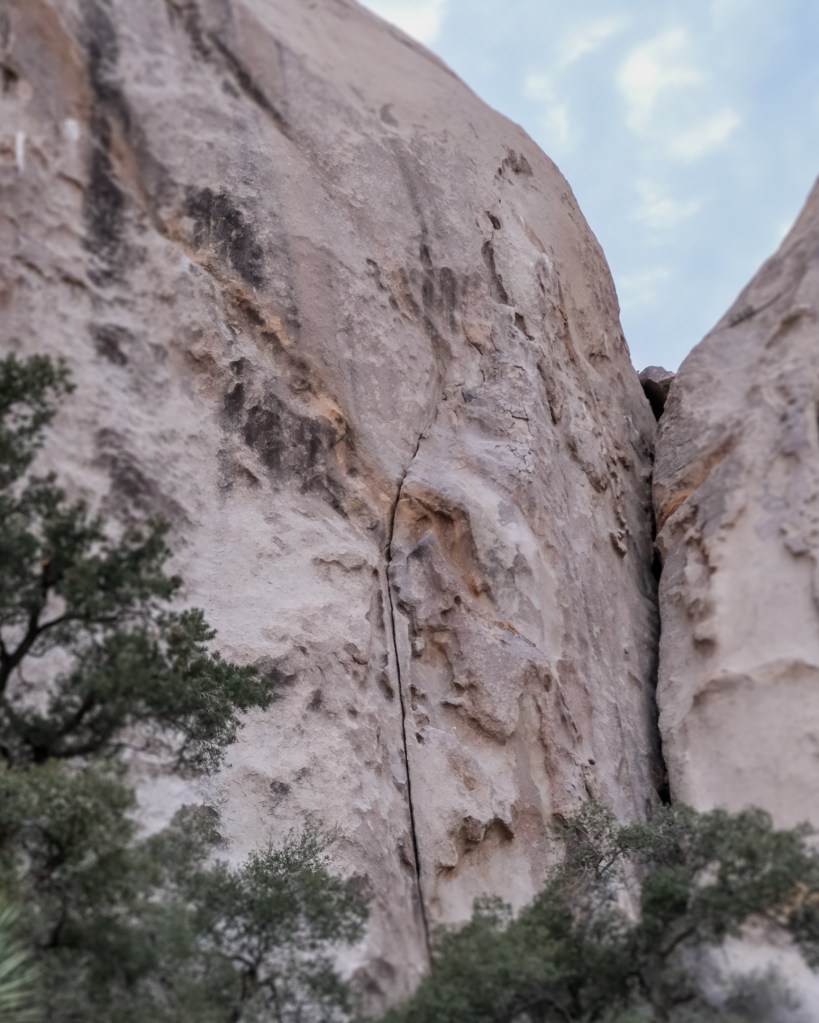

A half rest day consisting of one early morning lap on White Lightning (5.7), followed by drenching rain, clothing-optional mineral baths in Desert Hot Springs, and shoddy Thai Food, brought us back to Campsite 21 for our last two days. Jordan Creech, our friend from Teton Valley who just so happened to be traveling through Josh, joined us for a testy day of cracks and slabs including Looney Tunes (5.9), a valiant attempt on Absolute Zero (5.10), a redpoint of Pinched Rib (5.10-), and a one-hang on the thin edging masterpiece Chalk Up Another One (5.10-). It was Creech’s first day in Josh, and we enjoyed watching his reactions to the bold-school climbing: “Josh is so freaking runout!” He marveled at the lack of bolts and convoluted walk-offs in the same way we did two weeks prior. Much like the weathered Joshua Trees, we had hardened. Our departure day finished with Poodlesby (5.6 R), The Overseer (5.9) and The Orphan (5.9+), the latter vying for the best crack pitch of our entire trip. Bobbi one-hanged the beast on follow while I squeaked out a necky onsight. The Orphan had a bit of everything, testing most every crack skill we’d developed the last 13 days. The route progressed through tricky stemming on face holds, a vertical baggy finger crack, an off-kilter and slightly overhung two-inch jam crack, and finally, a sustained 5.9 off-width and squeeze chimney necessitating bold climbing far above a lonely #5 Camalot below. Chicken wings, heel-toe cams, knee bars, deep flaring hand jams, and a burning desire for larger protection frayed my psyche. A crew of nearby boulders gave a flattering round of applause as I topped out. The Orphan is a four star climb that receives less ascents than it deserves. It wrung every last ounce of energy from our depleted bodies, and capped our trip with a deep sense of reverence.
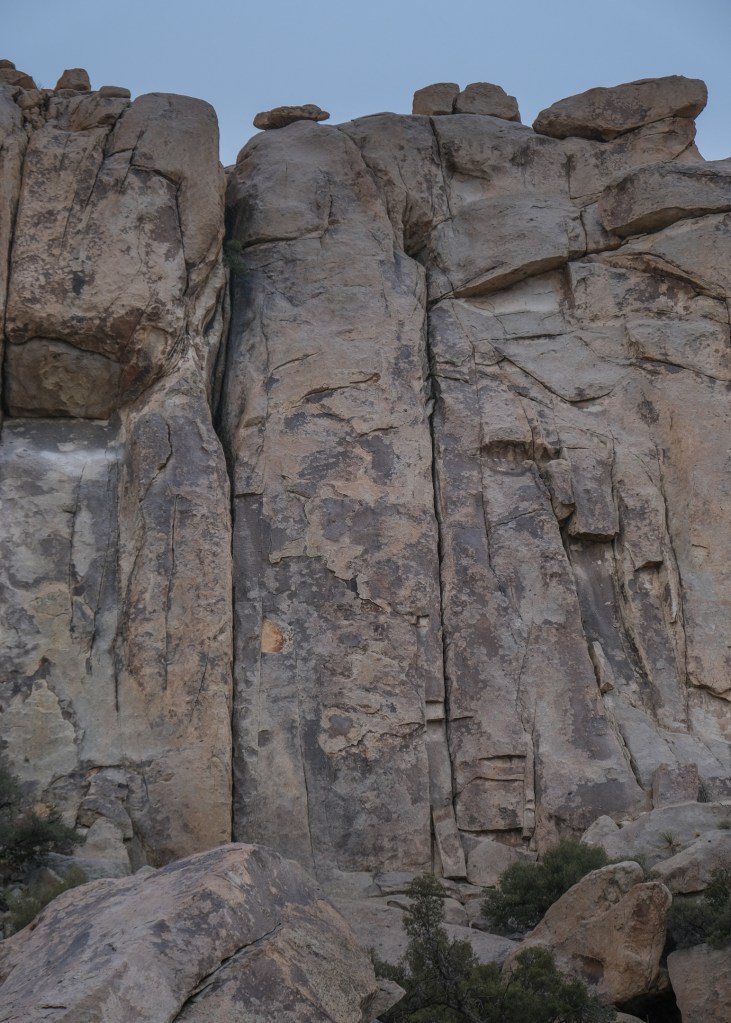

Reflecting on Joshua Tree while slumped over the steering wheel on a fourteen hour marathon back to the Tetons, emotions welled. We integrated into the Joshua flow perfectly, achieving the perfect balance of slabs and cracks, intensity and casualness, to achieve an unimaginable string of climbing days. We got our egos checked early, but rather than grade chasing we humbled ourselves – shifting intentions towards incremental progression, aesthetics and adventure. For Bobbi, the carrot was regaining her lead trad climbing momentum, culminating in a sustained 100 foot pitch that required mindfulness towards gear and energy conservation. For myself; immersion in hard off-width climbing, leading sustained pitches of committing cracks and learning to trust my technique as a piece of protection in challenging terrain. Off the wall, realizations of the affect of technology on my mental health was evident. Waking up each morning without cell-phone reception, deprived from external world contact for many days at a time, brought a deep sense of peace. Furthermore, as someone who regards himself as a passionate winter climber and ski mountaineer, I was left questioning the relationship between complex winter environments and risk, and the sustainability of such pursuits compared to rock climbing, which seems to scratch a similar itch with a higher margin of safety. Lastly, watching my crippling shoulder and biceps tendonitis magically vanish alongside a dramatic increase in climbing load made me consider the negative role of a sedentary career, and high levels of life stress, on my body. Is it possible that work days are actually a greater driver of physical pain than my extreme mountain pursuits? I am now on full vigil, and will report back when I gain clarity. To conclude, Joshua Tree is truly a magical place that all climbers, especially those adventure minded, should experience. The variety of easily accessible climbing styles, pristine natural beauty, sense of disconnection from the material world, and rich history is pure alchemy. Plus, we spent a measly 600 dollars each, including gas, for two whole weeks. Some may call it a dirtbag paradise.

Want to support? Consider a donation, subscribe, or simply support our sponsors listed below.
Ten Thousand Too Far is generously supported by Icelantic Skis from Golden Colorado, Range Meal Bars, The High Route, Black Diamond Equipment and Barrels & Bins Natural Market.


subscribe for new article updates – no junk ever
DISCLAIMER
Ski mountaineering, rock climbing, ice climbing and all other forms of mountain recreation are inherently dangerous. Should you decide to attempt anything you read about in this article, you are doing so at your own risk! This article is written to the best possible level of accuracy and detail, but I am only human – information could be presented wrong. Furthermore, conditions in the mountains are subject to change at any time. Ten Thousand Too Far and Brandon Wanthal are not liable for any actions or repercussions acted upon or suffered from the result of this article’s reading.
 Ten Thousand Too Far
Leave a comment