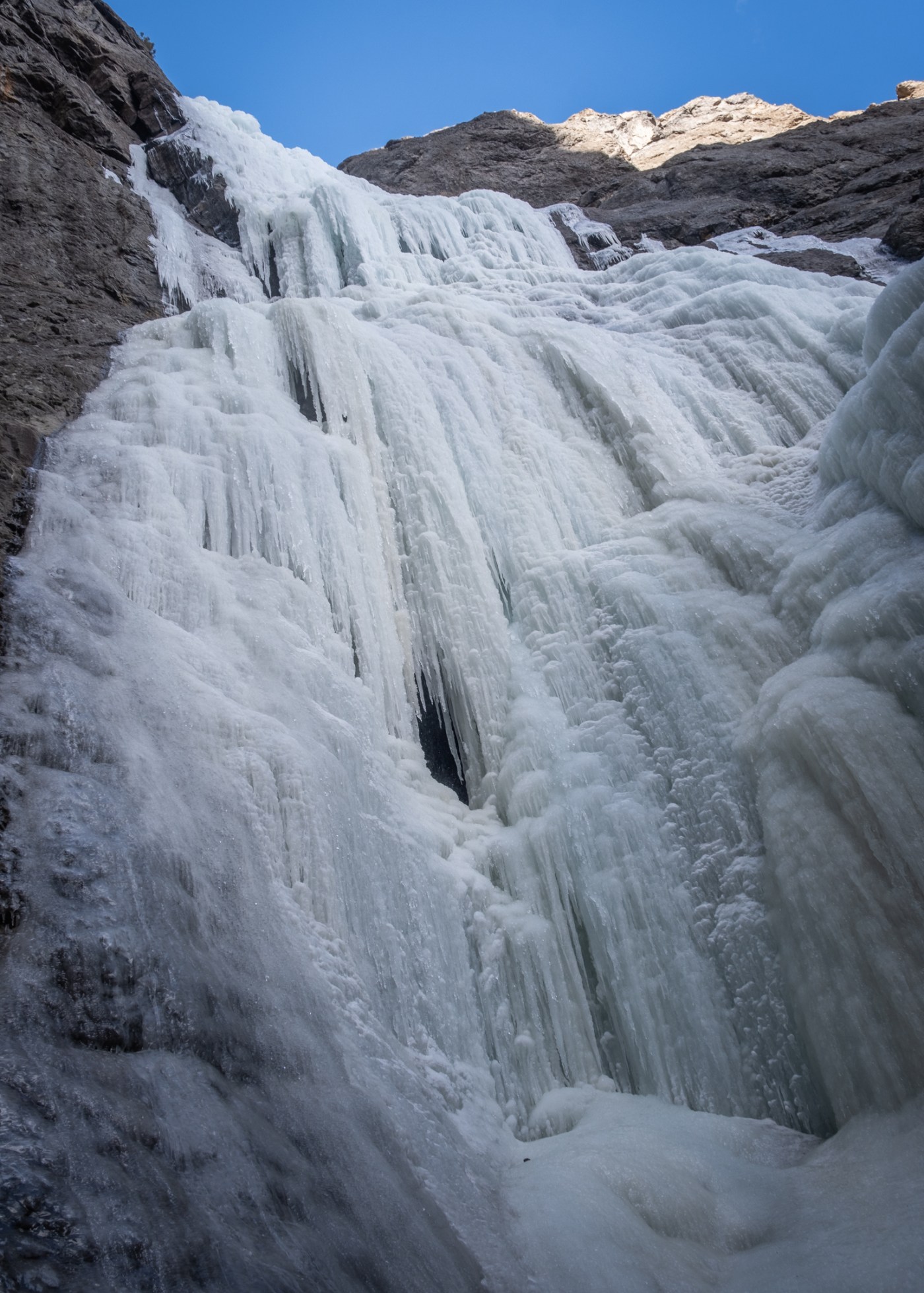
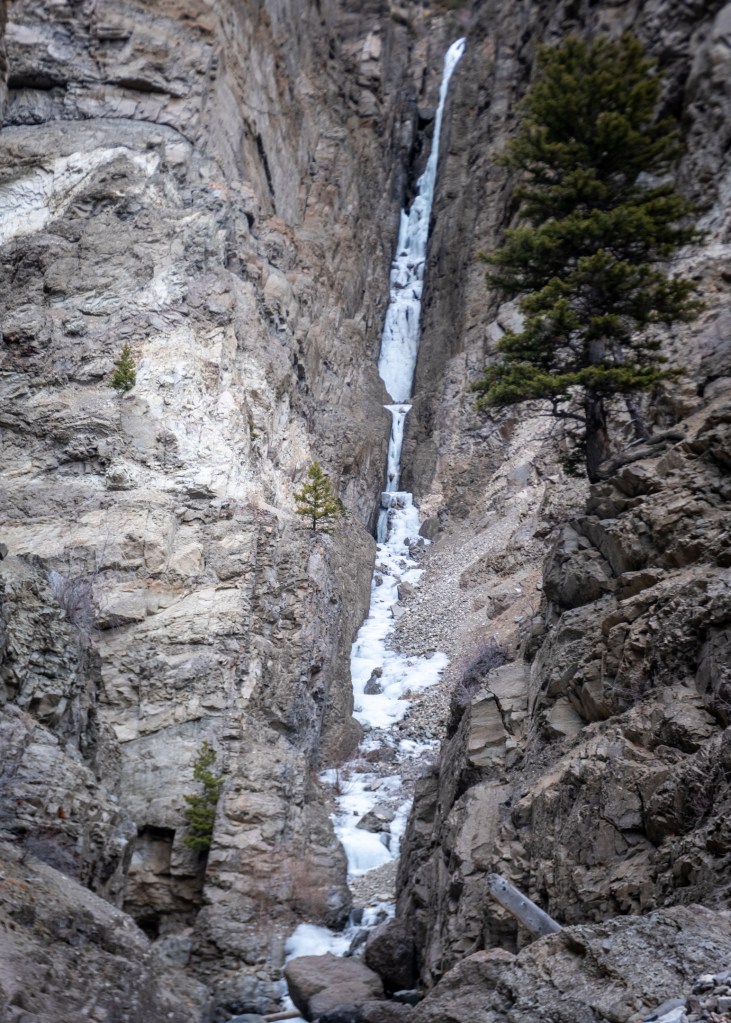
The Main Vein is considered one of the top ten ice routes in North America, with 900 feet of technical ice climbing connected by a snaking ice hose in a dramatic gash canyon. Moonrise is an uber-classic three pitch WI5, and Too Cold To Fire is a unique and novel two pitch WI4.
After three hard climbing days on shorter routes in the Upper and Lower Bench areas, followed by a single rest day, we dedicated the last three days of our Cody trip to longer multi-pitch adventure routes. Animal Rights Activist (WI4+) and the Hunter Creek Pillar (WI5) introduced Bobbi to her ice climbing limit. Despite having climbed a few WI5 routes in the Tetons and Hyalite Canyon, she struggled to catch a groove on the same grade in Cody. This is a common phenomena. South Fork approaches are exponentially more arduous and time consuming than the well trodden trails of Hyalite. Lesser climber traffic makes for inobvious climbing with few natural hooks or established feet. Volatile weather and heavy winds often generate brittle ice and tricky three-dimensional climbing. And across the board, South Fork grades are notoriously stiff. After all, Cody’s nickname is the “alpine simulator” for a reason. I was comfortable leading WI5 in Hyalite my second season on tools, but it took three more years to be comfortable on the same grade 2,000 feet off the deck in Wyoming’s wild west.
The Main Vein (WI3+, III, 1500′, 4-6 pitches)
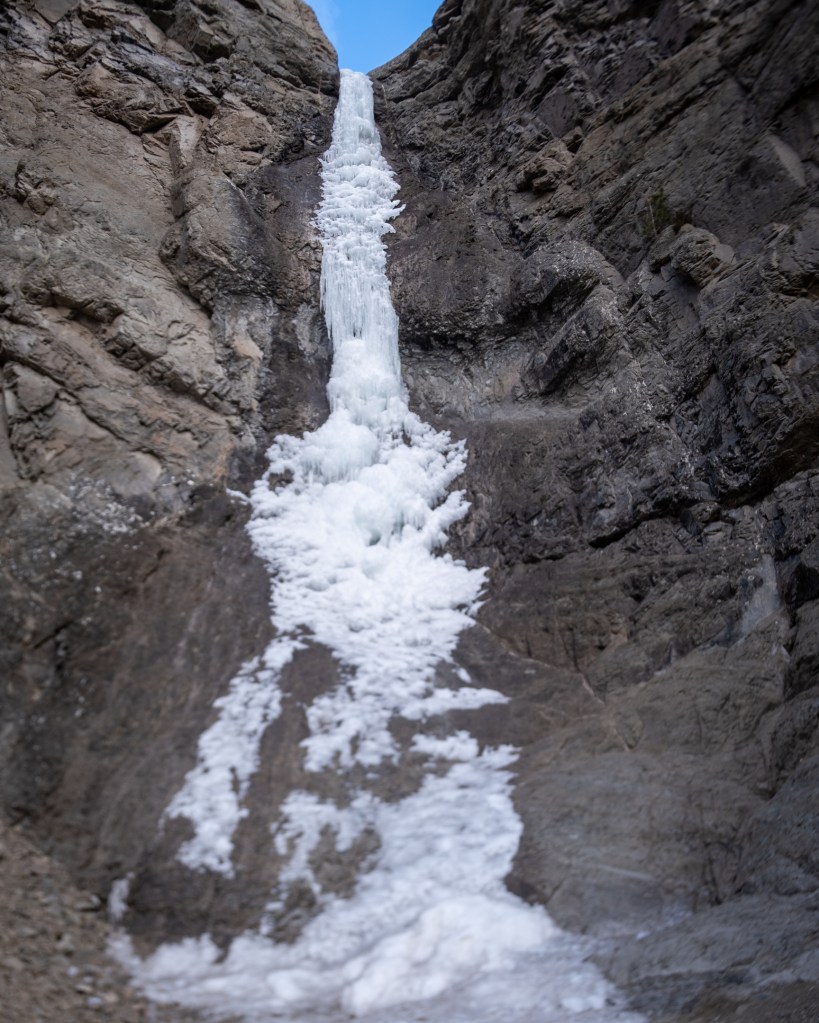
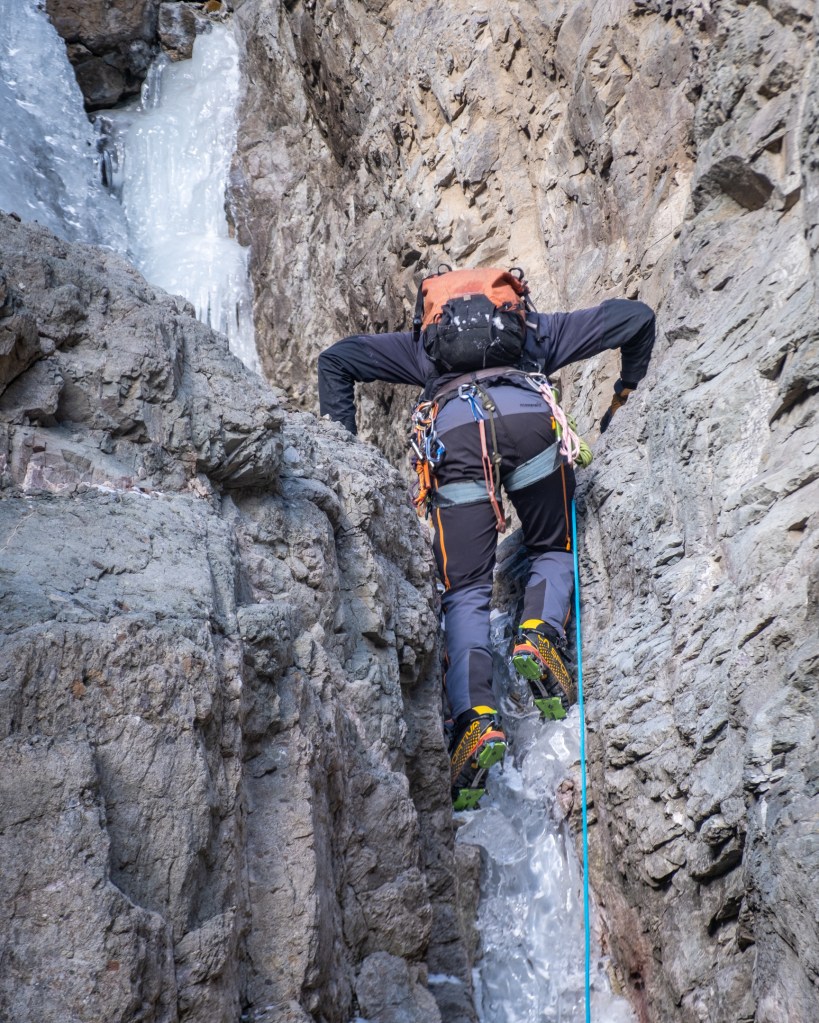
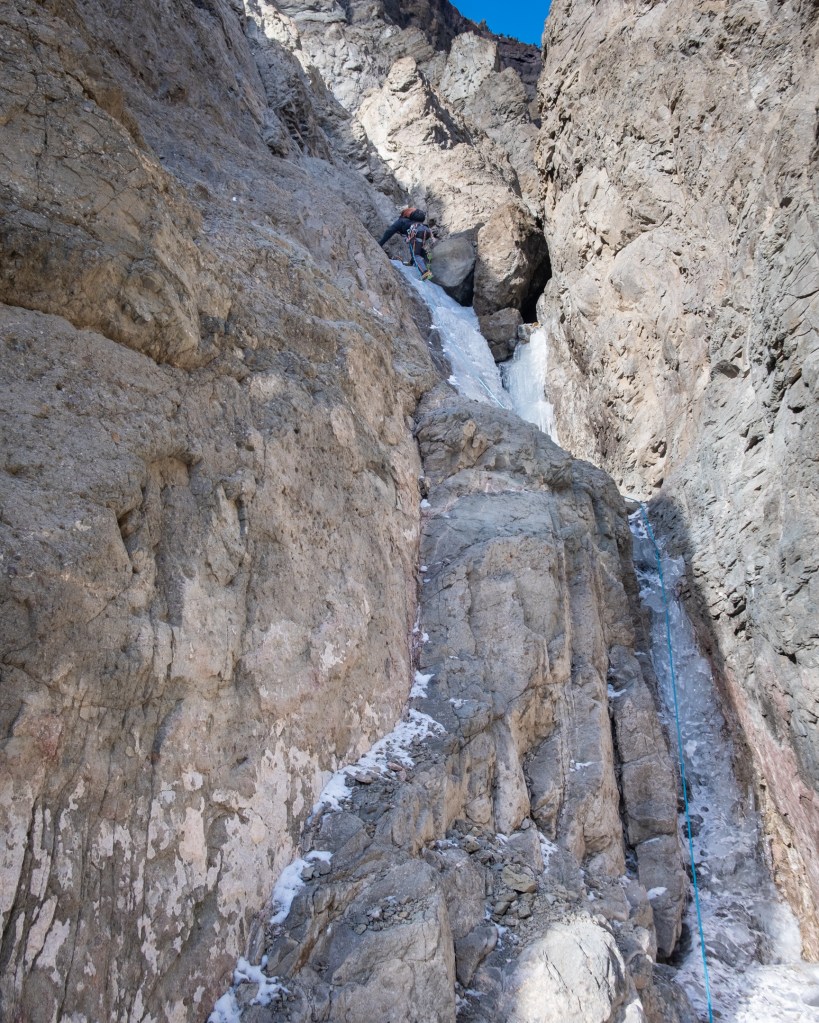
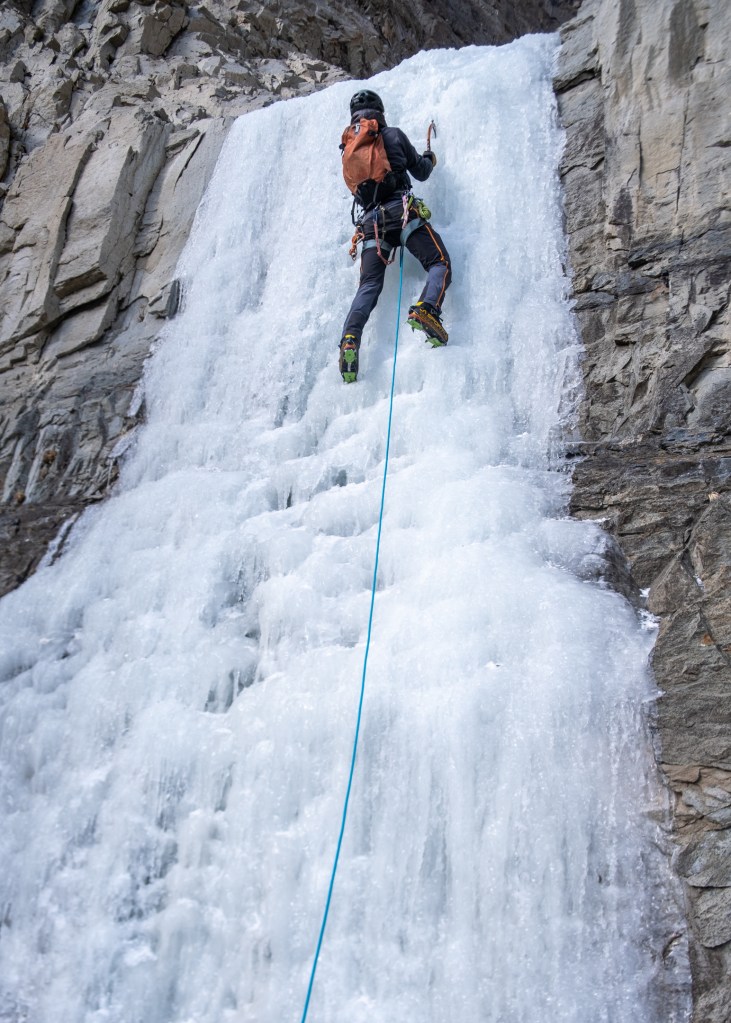
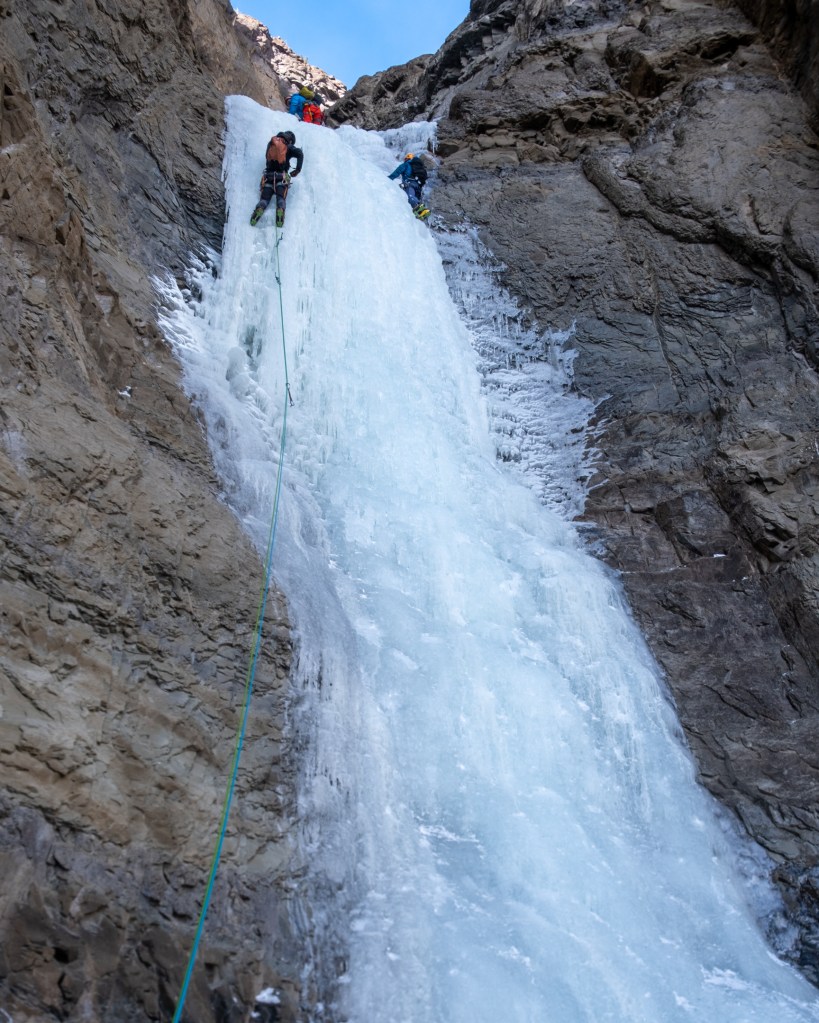
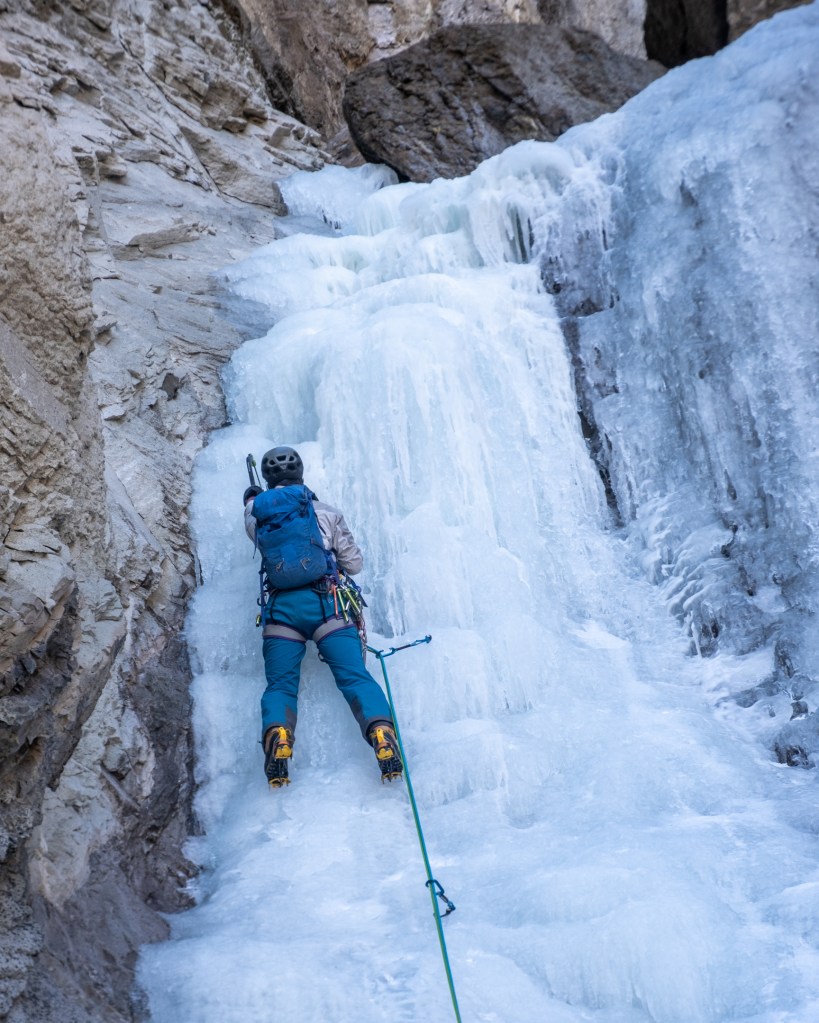
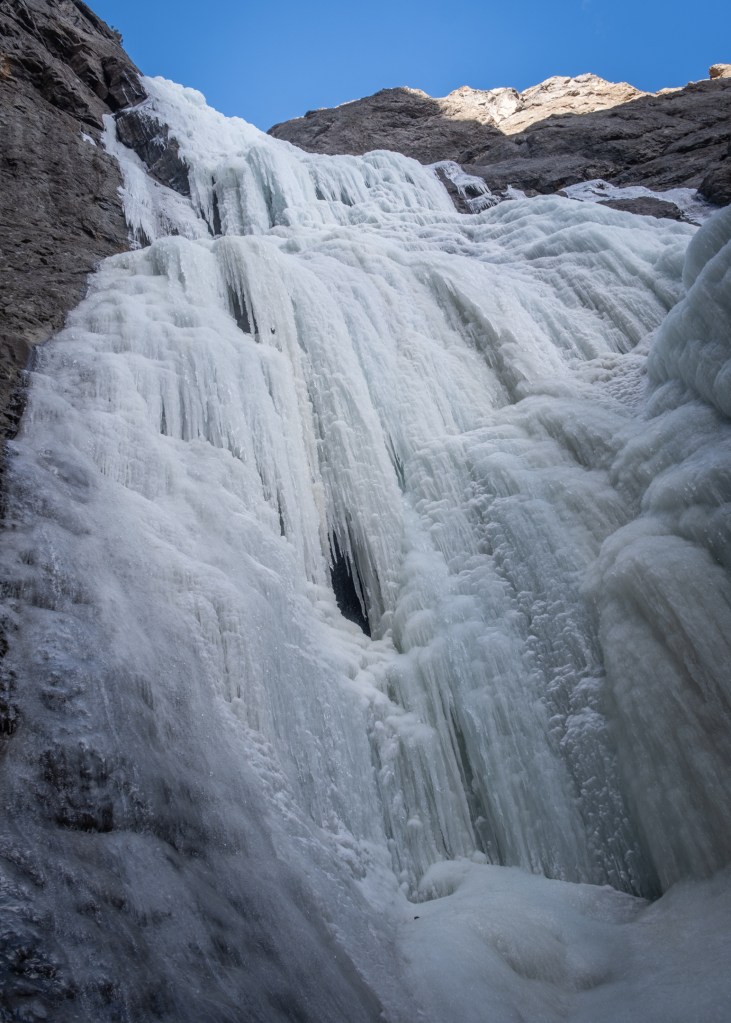
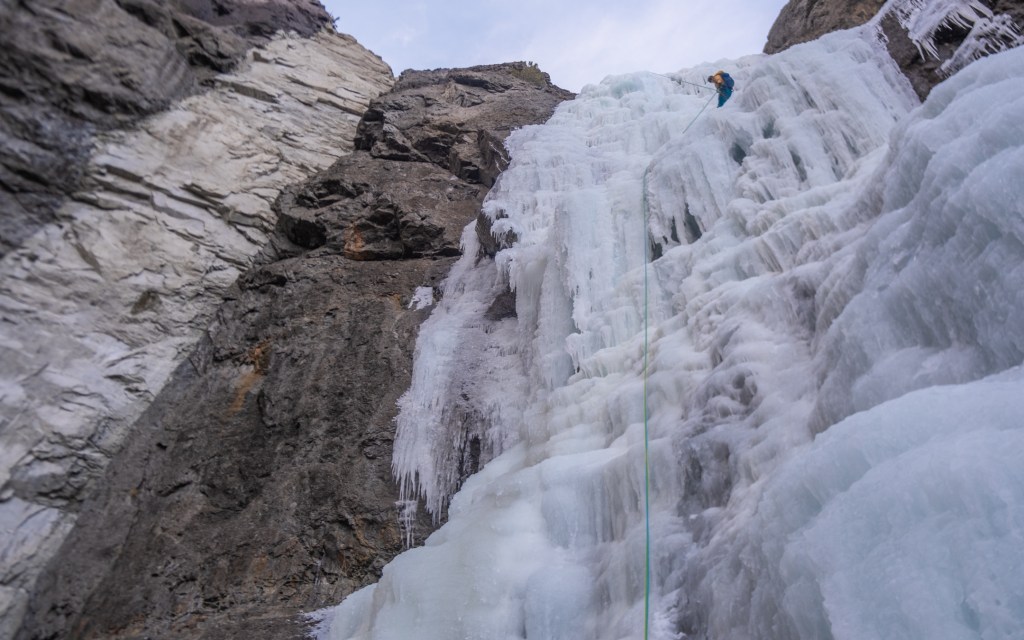
Up first was the Main Vein, a 1,500 foot WI3+ journey up a dramatic gash canyon on Peak 10,777, ending with an impressive 80 meter pitch of WI3/4. The Winter Dance guidebook proclaims the route a North American top-ten, with 4-5 pitches and 900 feet of climbing at the grade interspersed by 600 feet of rambling on lower angle snow, rock or ice. Given the leanness of our current winter, that filler 600 feet would be nearly entirely ice. To quote a longtime South Fork ice veteran, an entire season’s worth of experience can be gained in a snow free Main Vein, and this sentiment held true for us. The only real detractant is that the first pitch, which receives direct sun all day at a low elevation, is rarely climbable. We found the 70 foot smear and pillar touching, but incredibly thin, delaminated and hollow. Fortunately, it’s the only pitch that can be bypassed. Loose but ultimately harmless fourth class scrambling climber’s right got us to a bolted anchor and a single rope rappel into the canyon. Three excellent steps of steep ice up to 30 meters, and a near endless amount of low angle free soloing, brought us to the incredible crux pitch. Despite the pedestrian grade, 1,250 feet of continuous climbing over four hours made this 80 meter beast look intimidating. Donning 60 meter ropes we broke the last pitch into two. I free-soloed the first pitch to a sheltered ice screw belay on the far right margin, forgoing gear because of a previous party’s report of natural ice fall combined with some dodgy hanging icicles on climber’s left. Placing and removing protection would’ve added substantial time in the firing lane we had to cross. From our belay at roughly 20 meters I led a full 60 meter pitch through a sandbagged vertical curtain, followed by heroic, wet, and endless one-stick-wonder WI3. This pitch would be classic even in the thickest scenery-devoid forest, but with 2,000 feet of exposure above the beautiful South Fork Valley it’s all-time. As far as I’m concerned, ice climbing doesn’t get better than this. We descended with nine rappels, mostly from v-threads, and reached the car in 11 round-trip hours. Had we not started late and been descending in the dark, we would have done more down-climbing, likely cutting the rappels in half.
Moonrise (WI5, II, 500′, 3 pitches)
We took a second rest day after the Main Vein, ironic, because I thought Main Vein itself would be a glorified rest day. Turns out 3,000 feet of climbing, down-climbing and rappelling, entirely on ice, takes a toll. My old ankle injuries from mountain running flared with tenacity. Bobbi’s calves were roasted. A break was prudent. The following day we aimed a little lower and shorter, but upped the difficulty. Our plan was a lap on the most popular route in Cody- High on Boulder (WI4, II, 500′) – and climbing the crux pitch of Moonrise (WI5, II, 500′) on the way down. The two routes share a first pitch and converge at their respective crux pitches like a V, making for a unique alpine-cragging environment. Unfortunately, an abnormally early party beat us to the route. After leading the first pitch with much overhead shrapnel, continuing up High On Boulder was a fools errand. Moonrise looked juicy and incredible, soaring skyward with 50 meters of sustained vertical climbing and it’s notorious cauliflowers. The climbing gods spoke: the hardest climbing would come first.
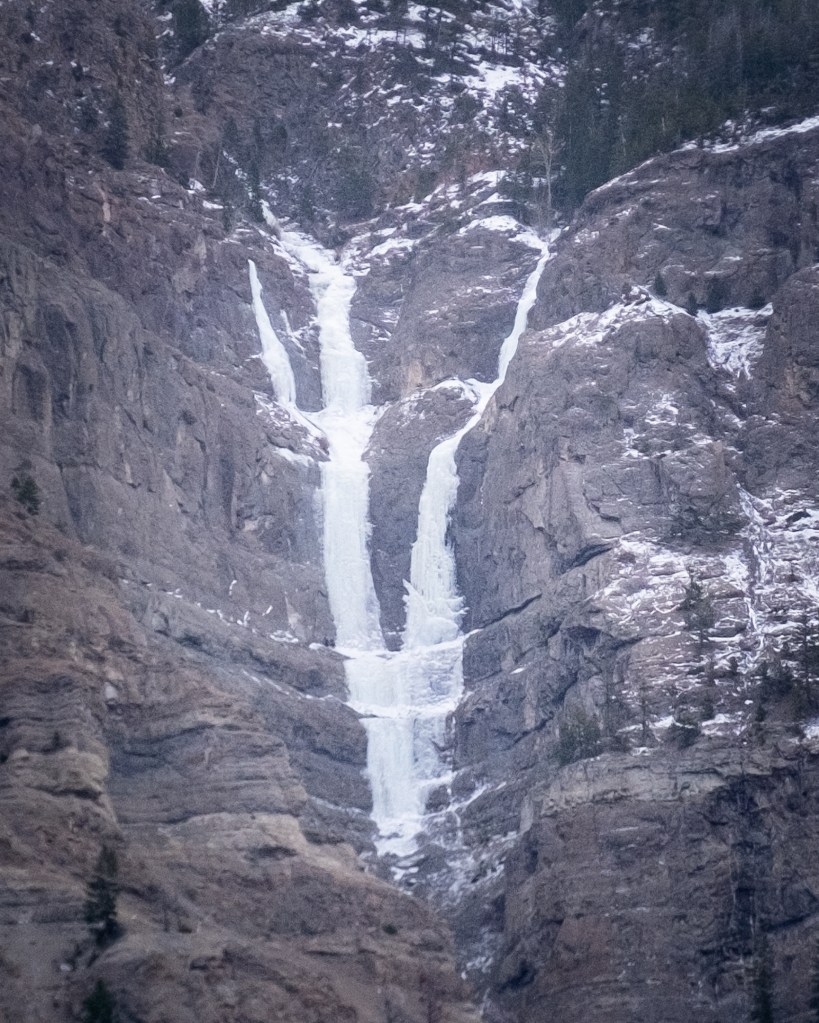
Moonrise was nothing short of a delight, a much easier WI5 than Hunter Creek, even tamer than Animal Rights at WI4+. Several factors played into this: we were well rested, ambient temps were 30 degrees warmer than the aforementioned routes, and there was just enough climber traffic to provide some footholds and hooks. Regardless, with 50 meters of sustained vertical climbing on strange geometric features, often with poor protection, Moonrise was still a challenging lead. Bobbi followed free with commendable poise, her proudest climbing of the trip. From a semi-hanging belay we knocked out the 40 meter WI3 third pitch, forgot about High on Boulder entirely, and rapped to the ground satiated.
Appreciate Ten Thousand Too Far? Find the information useful? Support independent mountain journalism with $5.10 per month through Patreon (and receive extra bonus content), or with a one-time donation. Any and all support is greatly appreciated.
Too Cold To Fire (WI4, II, 500′, 2 pitches)
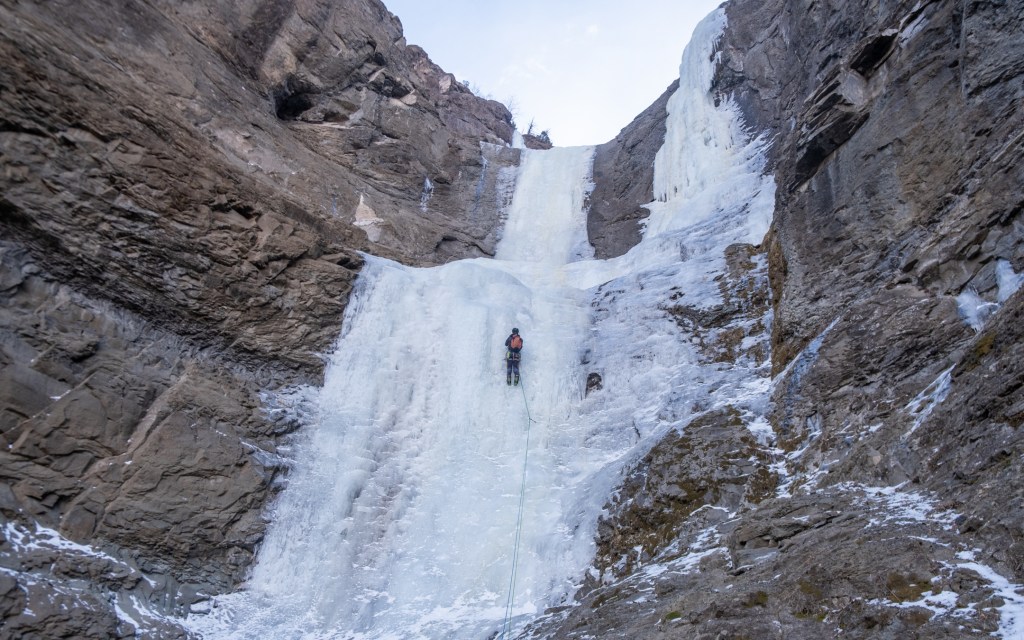
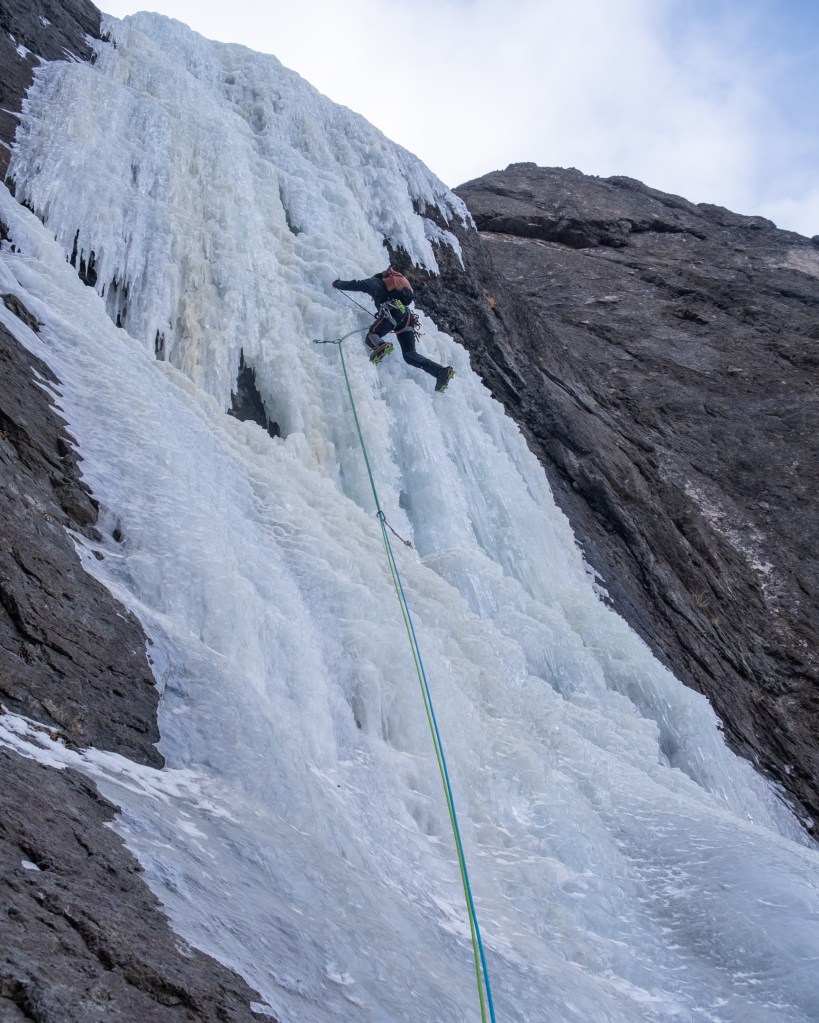
Our final day we were ambushed by a full parking lot and 50 degree temperatures. We planned on rounding out our trip gently, linking Cabin Fever (WI4) to Wyoming Wave (WI3, III) for another long day of moderate terrain, but three parties were already headed that direction. We got shelled with enough frozen and rocky artillery on Moonrise to render us crowd allergic, and the surrounding routes were either occupied or too long for our late start. We packed up and headed to Deer Creek, home of Too Cold To Fire (WI4, II), a downright striking two pitch tango pouring into a deep and tight slot canyon. The first pitch is a quirky and sometimes mixed 60 meter WI3, last pitch a 30 meter vertical WI4, and the approach a pretty hike over and skirting a frozen Deer Creek. Apparently this route is notorious for being wet, but with today’s exceptionally warm temps water was absolutely ripping. The first pitch offered fun mixed climbing through a tight chimney followed by a precarious 20 meters of hollow tip-toe shell climbing. A body sized hole on the lower angled left side looked like a previous party many have plunged through, so I took a harder line on the steeper right side with thicker ice. The crux pitch was in similar condition to the previous. The easiest line was a 100 vertical foot shower pouring with water. I led a traversing line up the right side on wet blobs and columns, avoiding wetness at a much harder difficulty. Bobbi expressed interest in not climbing this pitch, but offered to follow if need be. Given the wandering nature I should have asked her to follow, but stubborn masculinity ushered me into difficult angled rappel cleaning. At the third screw my rope snapped over an edge, dislodging a suitcase sized ice block that connected directly with my neck from 15 feet above. I heard a pop on initial impact, slammed into my prussik backup, and for a short moment feared spinal injury. I was dizzy, puffed with adrenaline and scared. Fortunately, symptoms quickly cleared and I escaped with nothing more than bruising. This incident was an extreme buzzkill after an otherwise incredible trip. I still don’t know exactly what caused the block to dislodge. Was it already fractured ice leftover from my lead? Was it a freak accident involving a poorly attached natural column? We will never know. But what I do know is cleaning a traversing pitch on ice or rock is dodgy business, best avoided at all costs, and had my partner been anyone but my fiance’ I would’ve insisted they follow the pitch. Love makes you do stupid things, and the real lesson I learned was the importance of separating desire and practicality in the mountains. No harm no foul today, but with a little less luck that may have not been the case. All in all, Too Cold To Fire was a very interesting route and the prefect bookend to a long trip.
We celebrated our ultimately fruitful trip, recent engagement and my three day removed birthday with a grandiose steak dinner at the Proud Cut Saloon, complete with a salad, steak fries, 14 ounce ribeye and brownie sundae. The drive home was sore, bleary, and fueled by fresh muffins. Our trip stats totaled over 3,000 vertical feet of technical ice and some 60 hours of movement, with six out of eight days on. My heart was chock full of stoke and love, and a side dish of gratitude for my quickly healing neck. The South Fork is beautiful untamed wilderness offering the highest value ice climbing I’ve found in the lower 48. We can’t wait to return.
Want to support? Consider a donation, subscribe, or simply support our sponsors listed below.
Ten Thousand Too Far is generously supported by Icelantic Skis from Golden Colorado, Range Meal Bars, The High Route, Black Diamond Equipment and Barrels & Bins Natural Market.





subscribe for new article updates – no junk ever
DISCLAIMER
Ski mountaineering, rock climbing, ice climbing and all other forms of mountain recreation are inherently dangerous. Should you decide to attempt anything you read about in this article, you are doing so at your own risk! This article is written to the best possible level of accuracy and detail, but I am only human – information could be presented wrong. Furthermore, conditions in the mountains are subject to change at any time. Ten Thousand Too Far and Brandon Wanthal are not liable for any actions or repercussions acted upon or suffered from the result of this article’s reading.
 Ten Thousand Too Far
Leave a comment