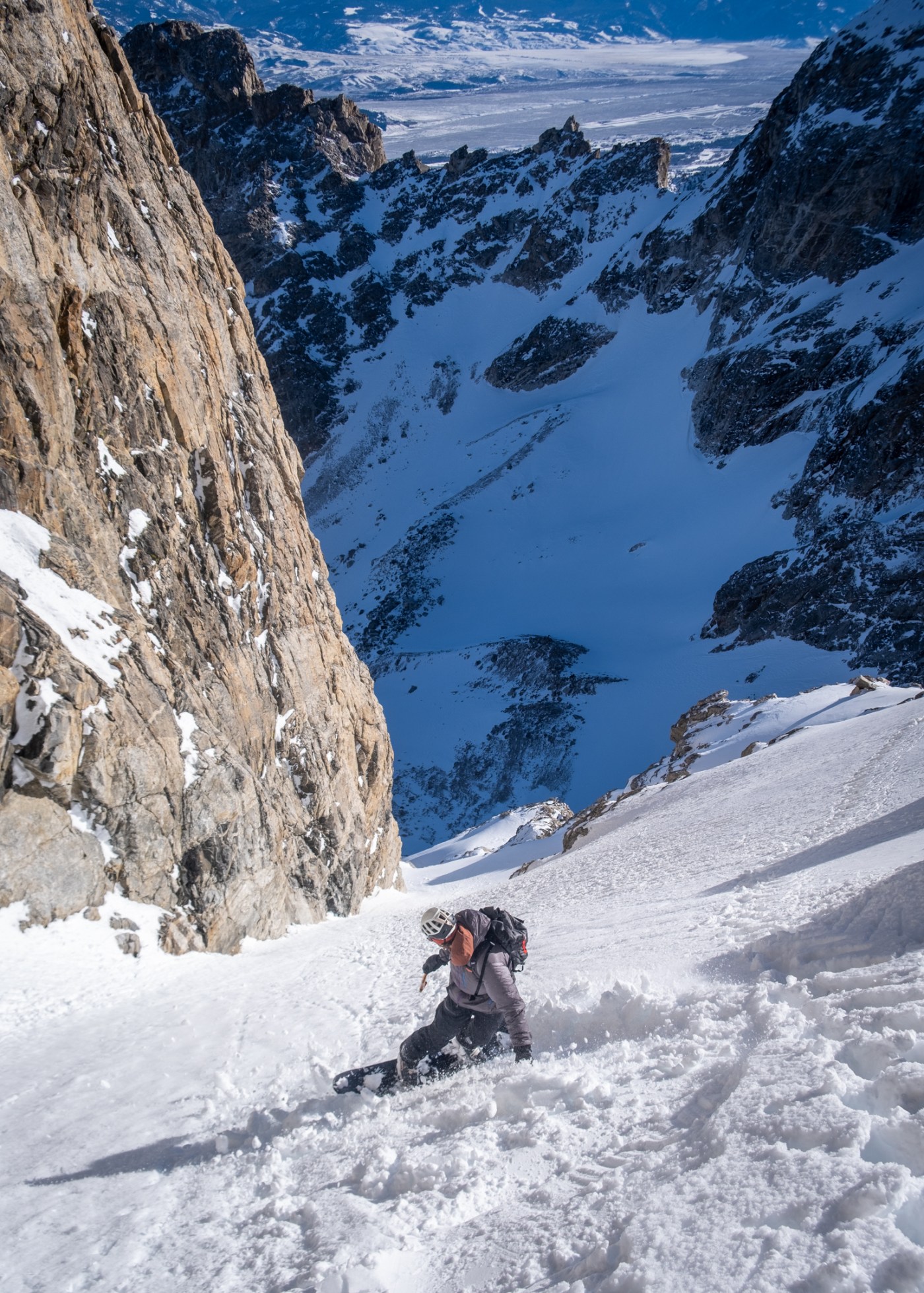
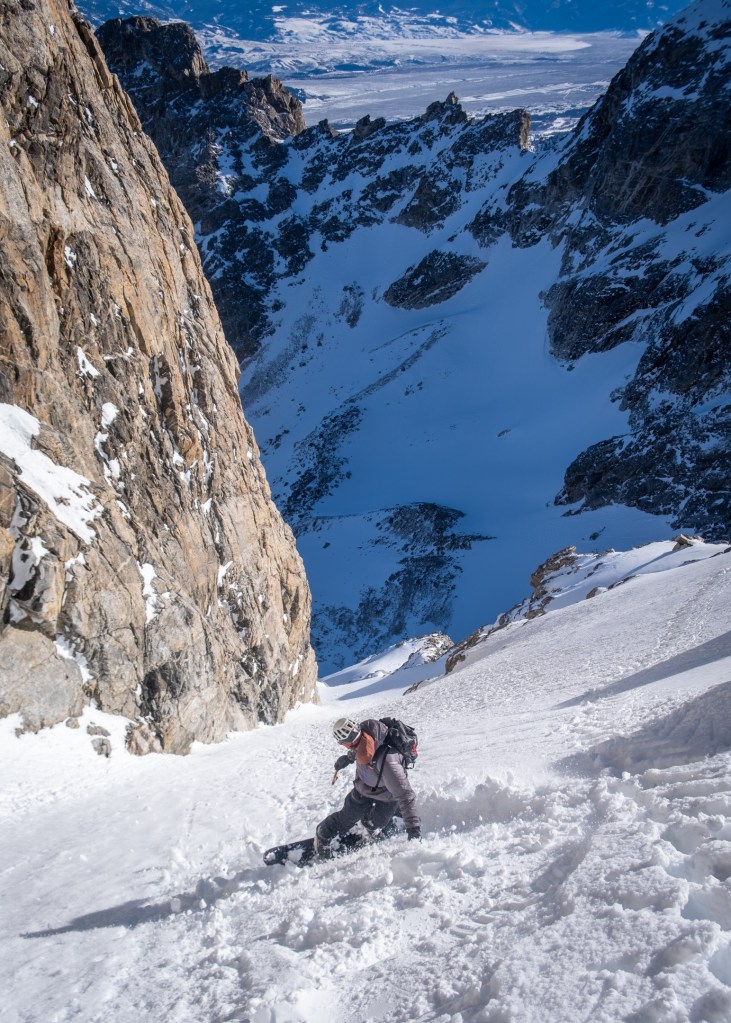
On December 31, 2025, Julian Winston and I skied the Chouinard Couloir from 12,200 feet, 300 feet below the summit. We turned around due to firm snow conditions, a usually buried rock step that would’ve forced downclimbing, and overhead hazard from falling rime ice.
Like most Teton winters, 2025/26 has stared bipolar, with a few problematic weak layers and one particularly concerning persistent weak layer brought by long droughts. Fortunately, recent generous upper elevation snowfall and temperature cycling has helped heal this layer faster than usual. During the last big dump I opened my season with two stormy laps on Taylor Mountain, happy to find my uphill fitness in better shape than expected after nine months of desert living. A few days of progressively warmer high pressure followed, consolidating the snowpack just enough to rationalize a recon trip up high. Our objective was the Chouinard, a 1,600 foot boomerang shaped couloir on the south face of the Middle Teton, just west of the classic and equal caliber Ellingwood Couloir. The line’s steepness is generally undulating but does have gradients in the 50 degree realm, with a particularly tight choke near the top, and an east-southeast facing tail prone to wind loading.
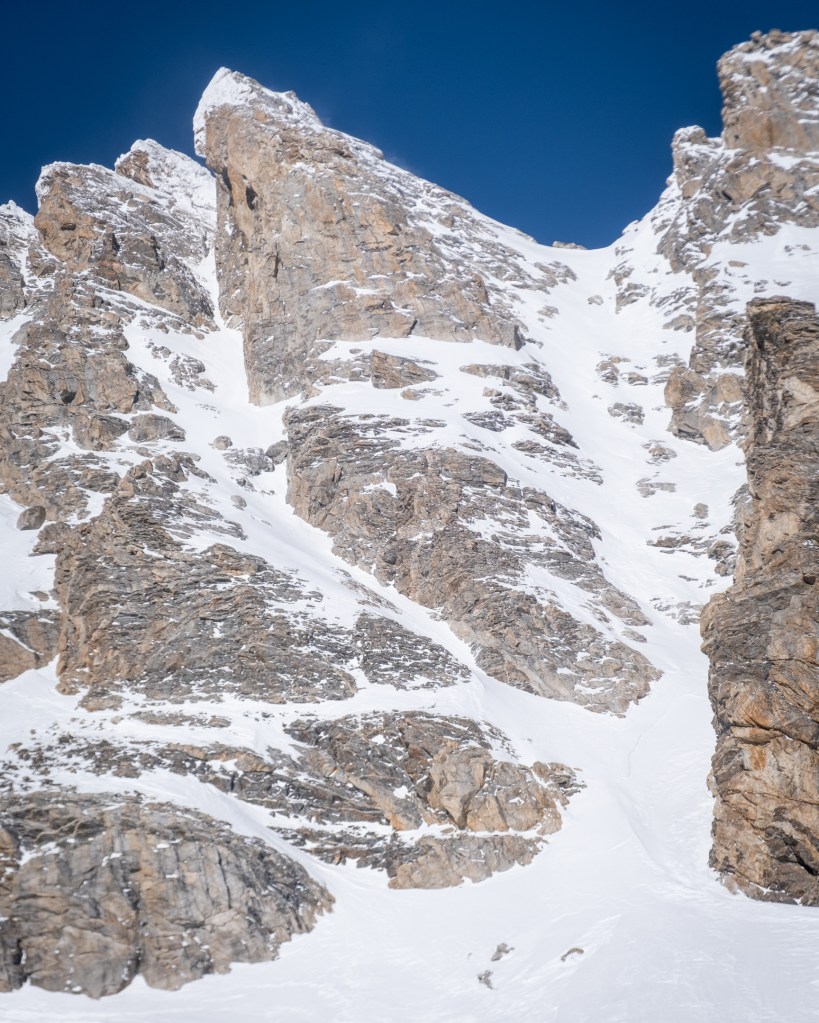
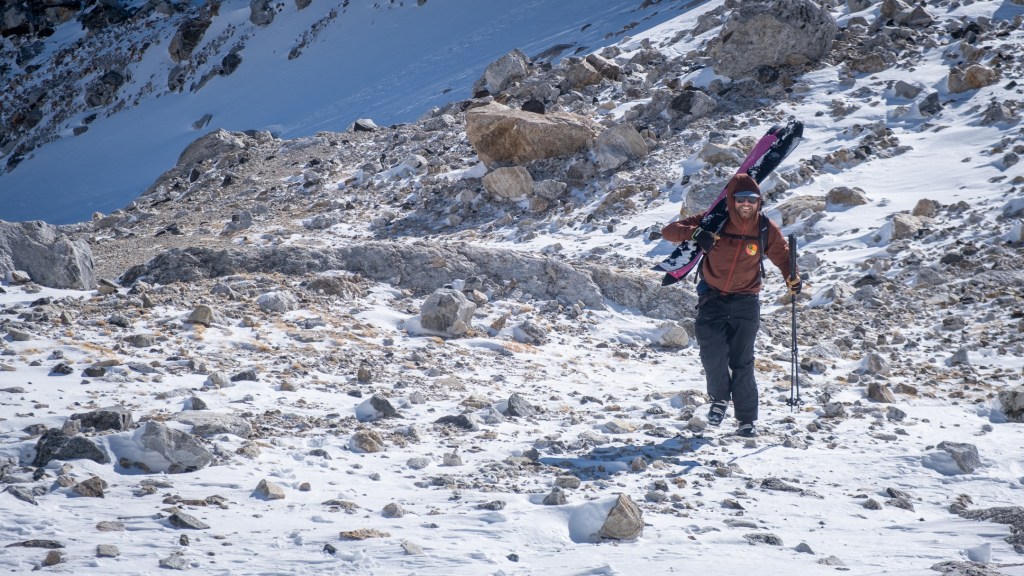
Over the years I put two lighthearted solo attempts on the Chouinard, bailing twice at the aforementioned tail due to wind loading, skiing other lines in the vicinity. Today was my first voyage into the annals. After making surprisingly quick “December pace” to the base of the line, 4 hours flat, we were relieved to find well bonded snow conducive to steep skiing. However, an unforeseen temperature inversion was warming surfaces “April fast”. Dry snow in Garnet Canyon progressively saturated as we climbed towards 12,000 feet. Radiant heat from the massive west facing granite walls exacerbated warming in the couloir, so we stuck climber’s left, which faces easterly with afternoon shade. The crux of the Chouinard is at approximately 12,200 feet, where a generally wide couloir pinches to a mere 10 feet, for 50 vertical feet. In mid winter this choke is “ski through”, but today there was a body height rock step which would require down-climbing on descent. Furthermore, the strengthening afternoon sun was releasing rime sheets and icicles from a freshly plastered headwall above, which shattered and funnelled directly through the choke as high speed artillery. These fragments were no bigger than kiwis and usually smaller, but the debris onslaught was consistent and should anything larger detach, we could be in trouble. Turning around 300 feet from the couloir summit wrenched my heart, but today bailing was unquestionably the right decision. Plus, skiing a typically ski-through line with a down-climb is bad style anyways.
Love Ten Thousand Too Far? Find the information useful? Support independent mountain journalism with $5.10 per month through Patreon (and receive extra bonus content), or with a one-time donation. Any and all support is greatly appreciated.
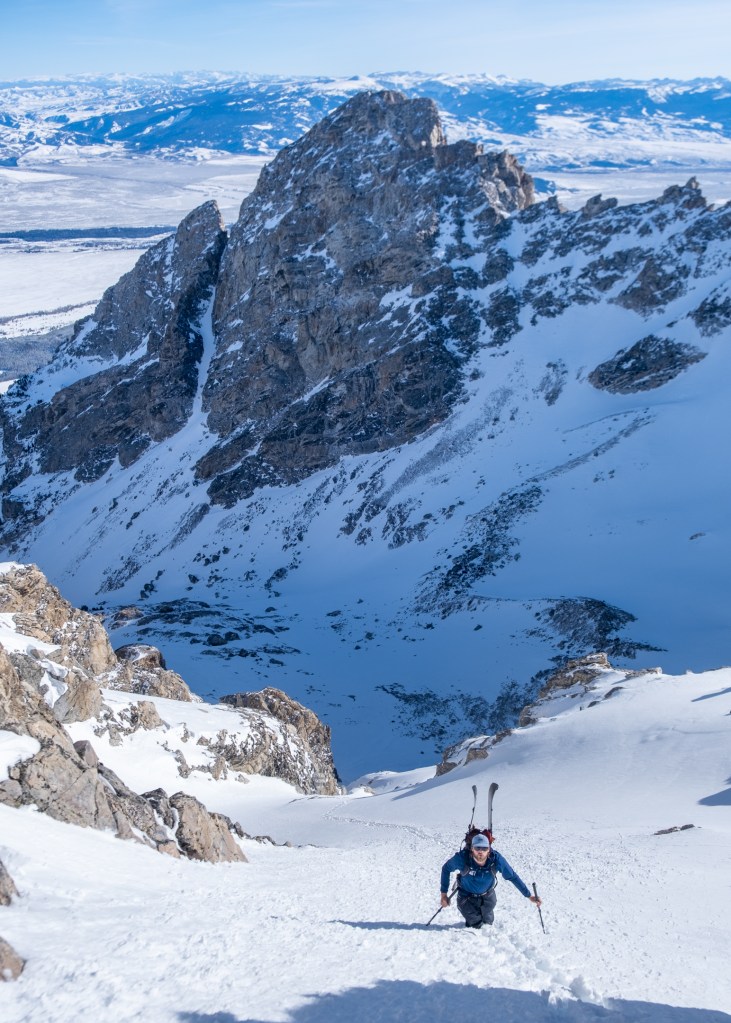
From the choke we still managed 1,300 feet of steep skiing at altitude, a great and ultimately reassuring litmus test for the season ahead. Wearing brand new boots and larger skis than typical for a line this steep, I took my time in the exposed and variable snow while Julian ripped a bit faster. Overall we experienced a typical alpine “mixed bag”, with some great turns and some horrendous turns, but mostly variable mank with a speed limit. Had it been March I may have been disappointed, but 50 degree jump turns at 12,000 feet are a rare commodity in December. We’ll take it – and be back for the full Chouinard when conditions allow.
Want to support? Consider a donation, subscribe, or simply support our sponsors listed below.
Ten Thousand Too Far is generously supported by Icelantic Skis from Golden Colorado, Range Meal Bars, The High Route, Black Diamond Equipment and Barrels & Bins Natural Market.





subscribe for new article updates – no junk ever
DISCLAIMER
Ski mountaineering, rock climbing, ice climbing and all other forms of mountain recreation are inherently dangerous. Should you decide to attempt anything you read about in this article, you are doing so at your own risk! This article is written to the best possible level of accuracy and detail, but I am only human – information could be presented wrong. Furthermore, conditions in the mountains are subject to change at any time. Ten Thousand Too Far and Brandon Wanthal are not liable for any actions or repercussions acted upon or suffered from the result of this article’s reading.
 Ten Thousand Too Far
Leave a comment