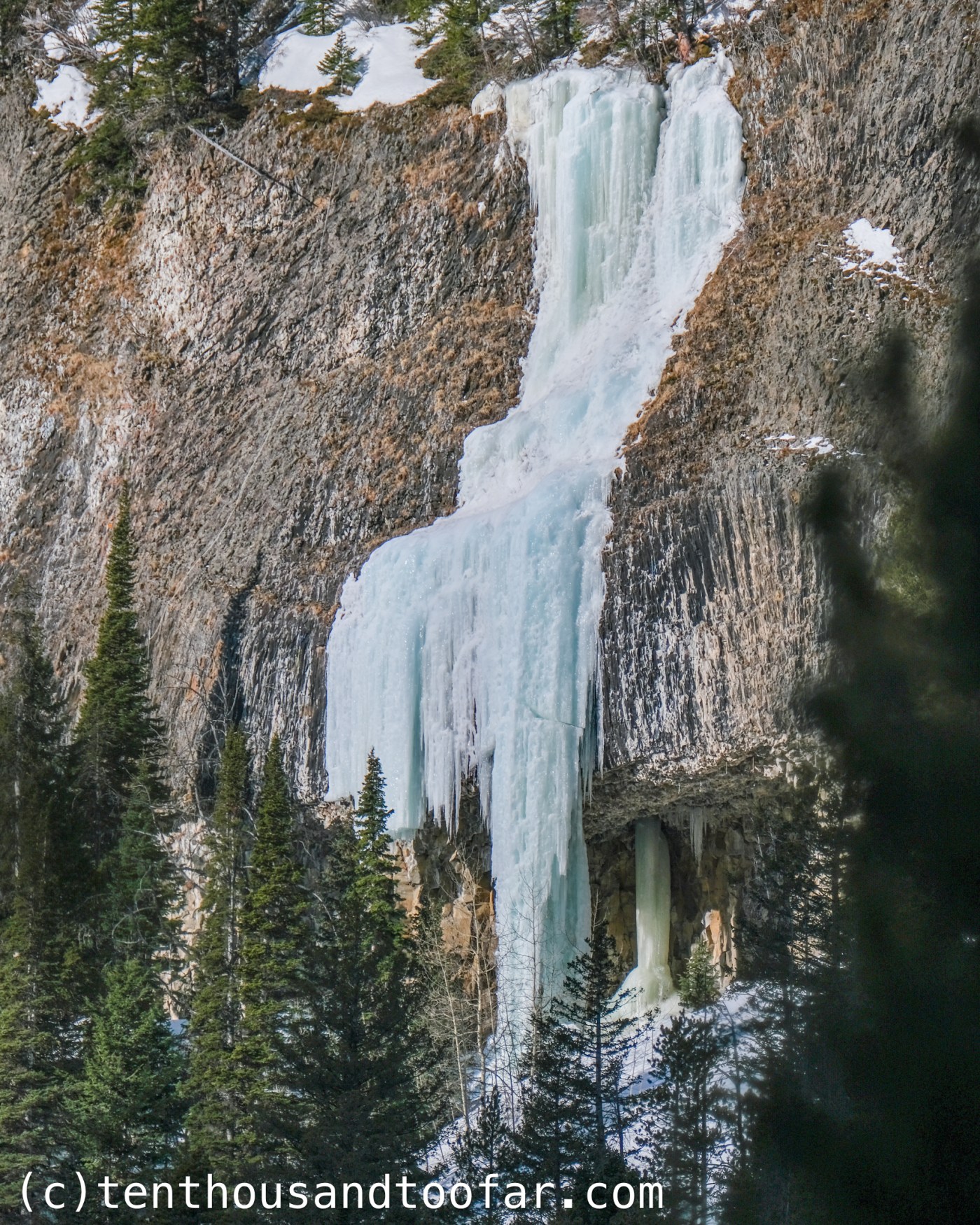
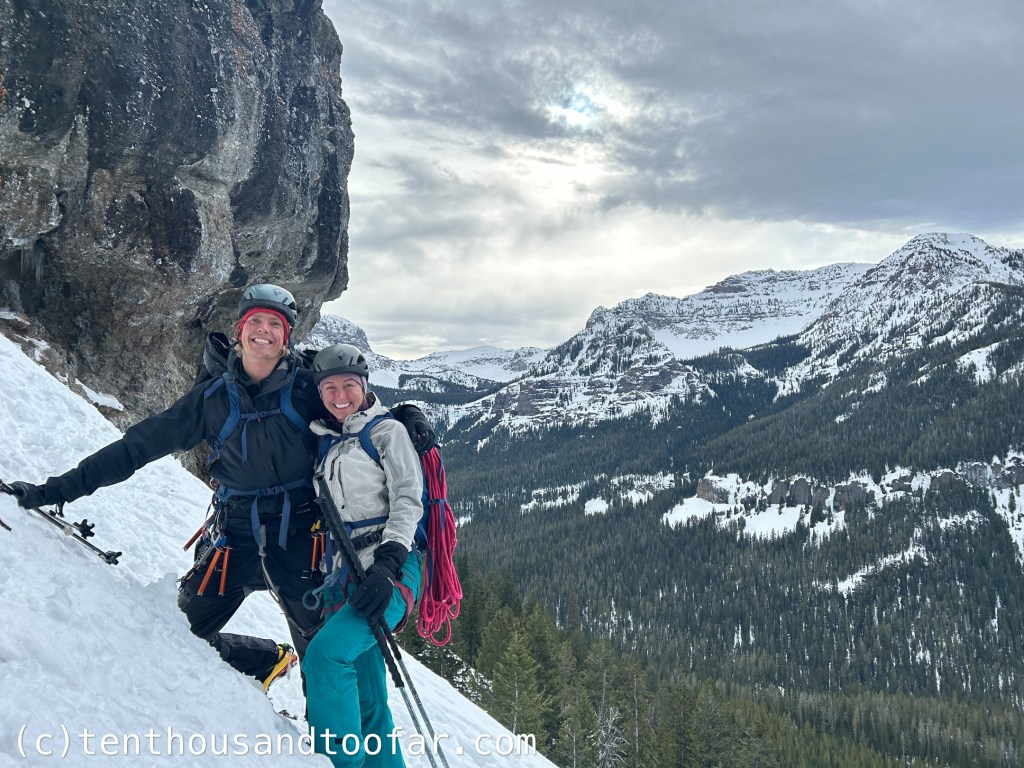
On March 8th, 2025, Bobbi Clemmer and and I climbed Bingo World (WI5-6), one Hyalite Canyon’s most difficult, notorious and ephemeral freestanding pillars. The route is known to form about twice a decade.
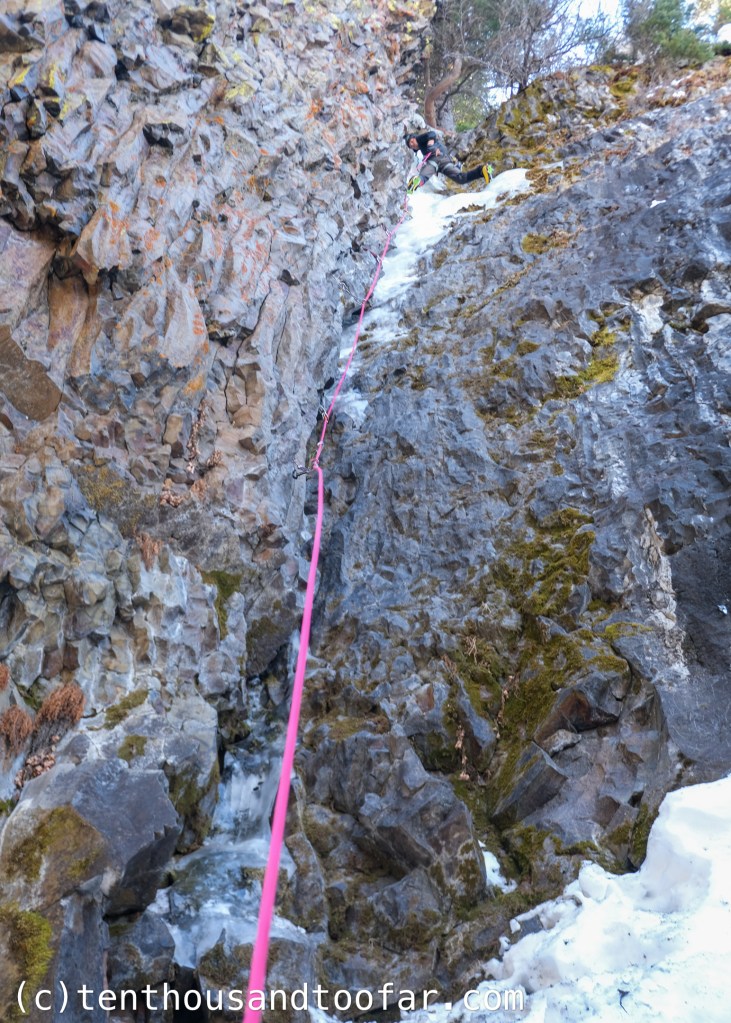
My goal for the 2024/25 ice season was to climb my first WI6. For matters both within and outside my control, that almost certainly will not happen. I spent the near entirety of February, a prime month for hard ice climbing, on the bench with frostbite. March is a gray area for ice in the Lower 48. With moisture and cool temperatures conditions can remain stellar, or longer days combined with high pressure can roast all non-north facing routes to oblivion – it’s a coin toss. On March 1st, Bobbi supported me on a mission to climb the classic Mummy IV (WI6, M6) in Hyalite Canyon, but the gatekeeper approach pitch, Mummy III (M5+), shut us down. In order for Mummy III to be considered “not that bad” ice needs to pour over a five meter section of especially smooth, vertical, and difficult to protect slab about halfway up the 150 foot pitch. Generally easy rock climbing with a sustained but well protected M5 crux preempts this slab. Today there was ample ice – adorned with screw holes from a fruitful season of successful ascents – but it was hollow, poorly bonded and aerated. Despite a hard freeze the evening before, a week of unseasonably warm weather had taken a serious toll on this classic. I placed a nest of marginal gear and tried to evade the suspect ice by stemming up two turfy cracks. A turf clump sheared after a handful of moves, plunging me onto a half-hilt angle piton, which improbably held. To regain the steep wall I hooked into an old hole in the ice, immediately heard a crack, and watched with terror as a coffin sized chunk crashed to the ground below, grazing my knee on exit. While assessing my new bruise and trying to rationalize continuance, a plume of foreboding kitty litter streamed down the Mummy drainage. The writing was on the wall.
Love Ten Thousand Too Far? Support independent mountain journalism with $5.10 per month through Patreon (and receive extra bonus content), or with a one-time donation. Any and all support is greatly appreciated.
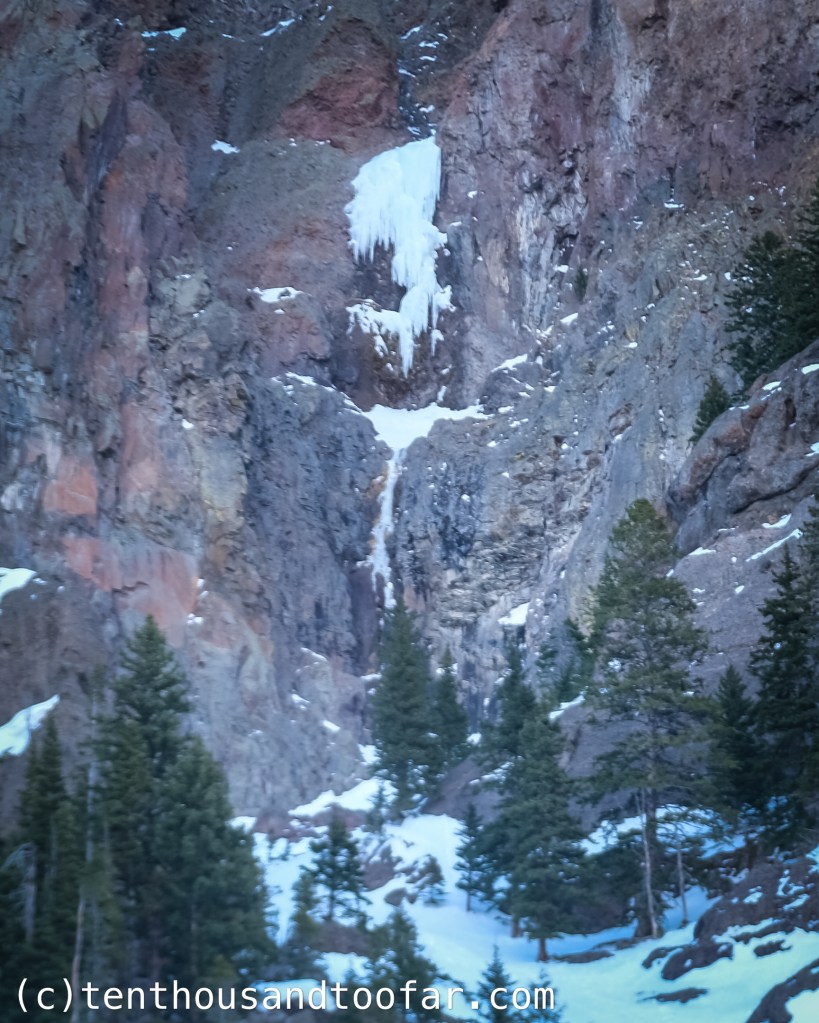
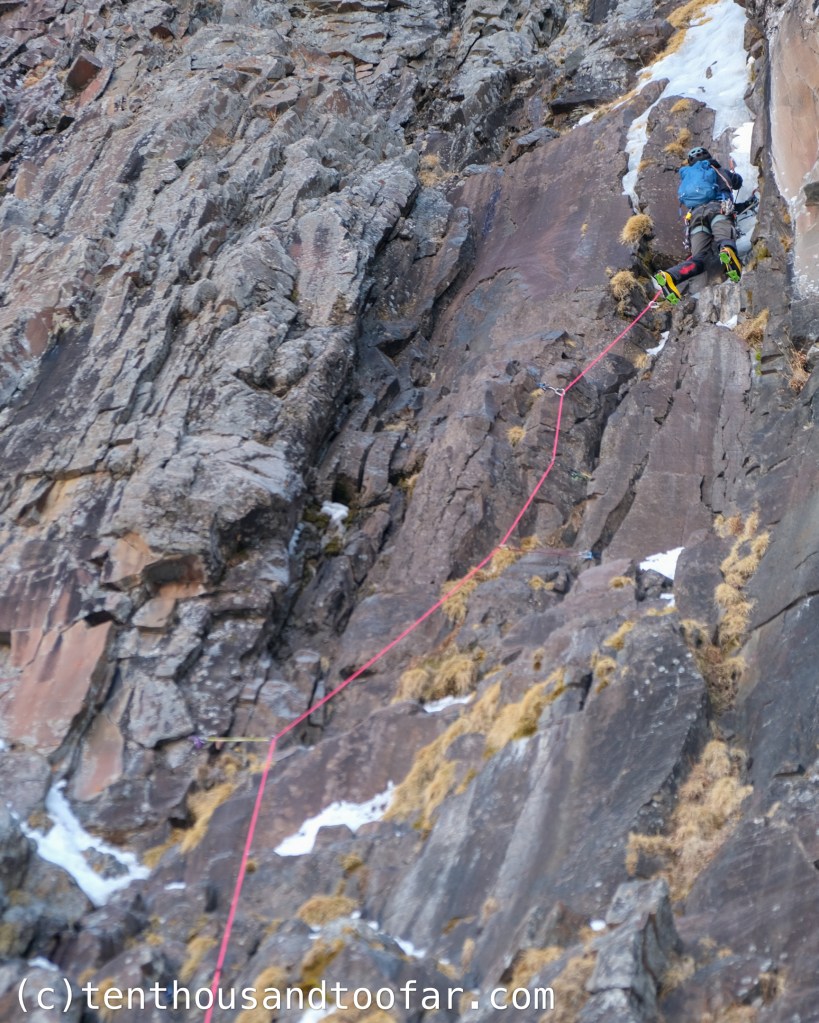
Unlike rock climbing, where the project will always be there waiting for perfect conditions – ice is ephemeral. Even the most reliable flows will shape-shift throughout a given year, changing in steepness and technicality. When talking WI6 – the upper terminus of ice climbing difficulty – conditions become exponentially more chaotic. WI6 routes are characterized by fragile features like free-hanging daggers, anemic columns, thin smears, touchy mixed climbing, and periods void of protection. Weather plays a critical role in determining the “safety” and viability of such routes. On dry years a WI6 will become unjustifiably dangerous, or vanish completely. Conversely, on the atypical “huge” year a WI6 could form in colossal proportions, thereby earning an easier grade. Basically, chasing severe ice routes at the upper end of feasibility commands equal proportions of respect and restraint. Patience is the key.
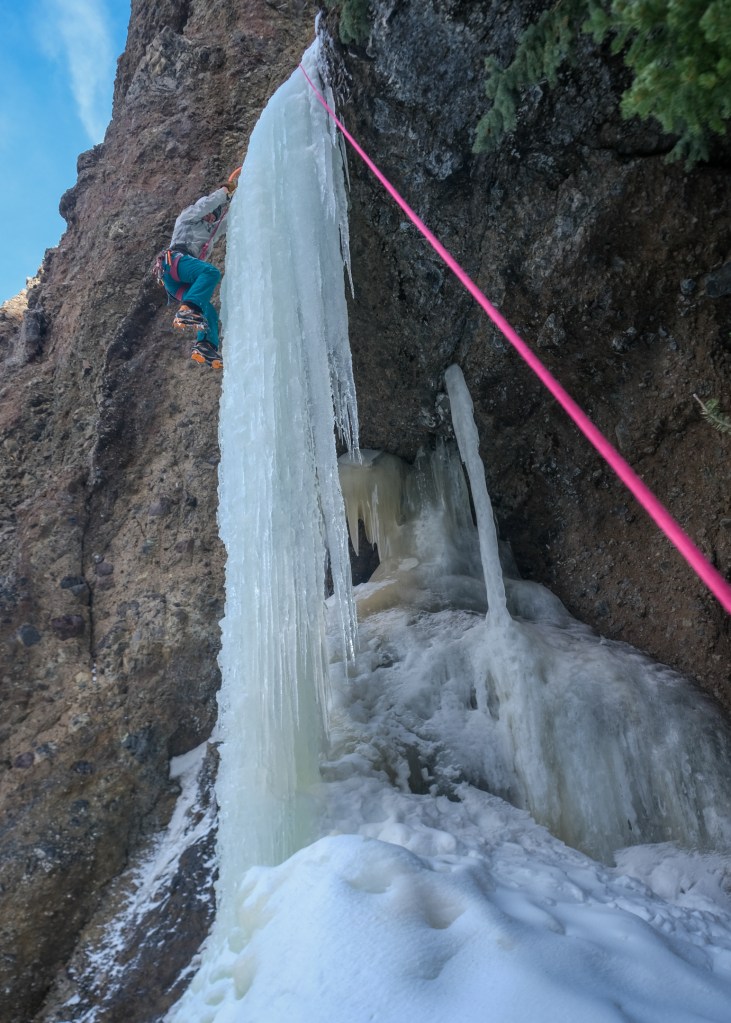
Cue stage right: Bingo World. If one Hyalite Canyon ice climb represents ephemeral, it’s Bingo World. This extremely rare 85 foot freestanding pillar forms about twice a decade, and this year, it was both touching and gigantic. The House Of Hyalite guidebook lists WI5-6 as the official grade, and Mountain Project concurs. Cautionary tales of natural ice roofs, and a pencil-like lower half in which only a fool would place a screw, are woven into both descriptions. However, this year Bingo sported no large roofs nor sinewy strands. The only foreboding features were two prominent but long-since healed horizontal cracks creating slight overhangs, and a bifurcated initial 30 feet where protection was either dubious or unwise. Beyond that, she appeared a straight in, no tricks, vertical column. Veteran local climbers insist they have never seen Bingo form in such generous proportions. Humans are prone to exaggerating, but there’s a backbone of truth in every hyperbole. If there was any year to bag a free-range Bingo without wagering my life, it was 2025. However, following our Mummy III fiasco and several consecutive afternoons of blazing 50 degree sun, I was hard pressed to imagine the east facing beast would be in safe climbable conditions. We hiked to the Unnamed Wall early the following morning hoping for a miracle, but our suspicions were confirmed. I don’t know much about pillars, but I do know this: ice stability favors temperature consistency. The nights were just too cold, and the days just too hot. By first light Bingo looked sickly, pale and weak, just waiting for an excuse to snap. By afternoon she was a melting mess of weeping tears. While every neuron of my impulsive masculine ape-brain wanted to tie in, I knew the right decision was to walk away – and walk away I did.
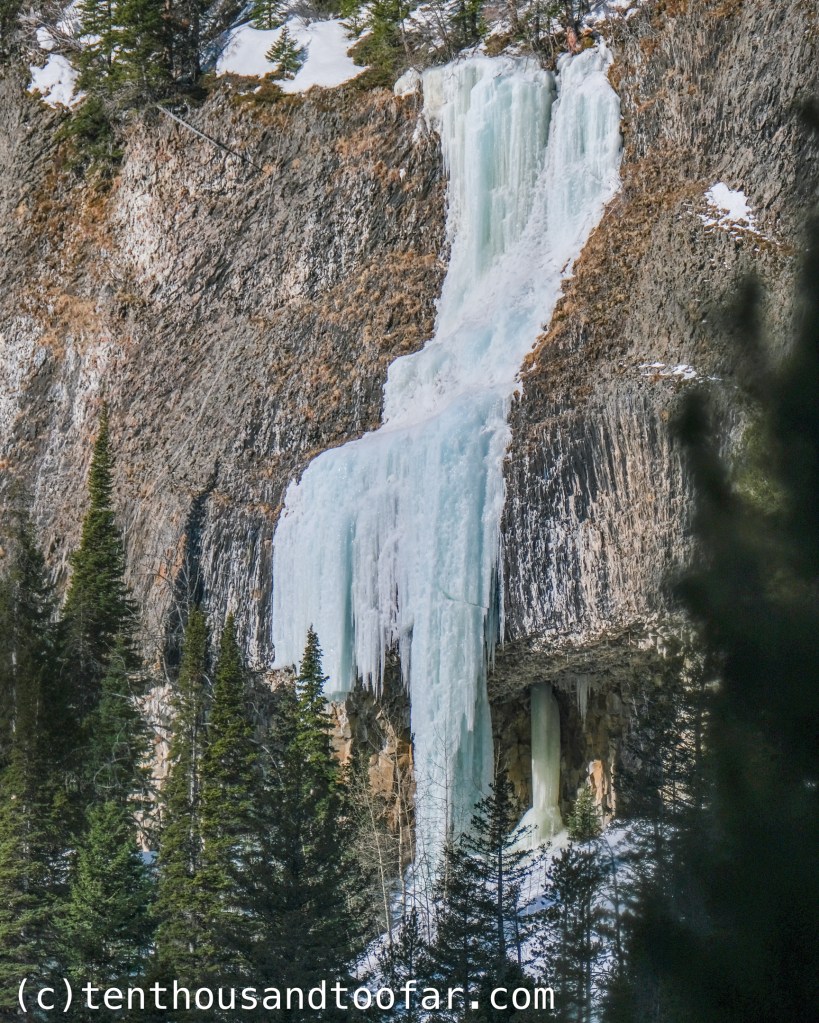
While driving the four long hours back to Teton Valley, Bobbi and I talked incessantly about the commanding aura of Bingo. Throughout the week we closely monitored the Hyalite weather, which appeared to center on less dramatic melt-freeze conditions – daytime highs in the upper thirties, and nighttime lows in the teens. Without consulting local sources for fear of misinformation, we packed up the van again with our sights on one singular goal: Bingo.
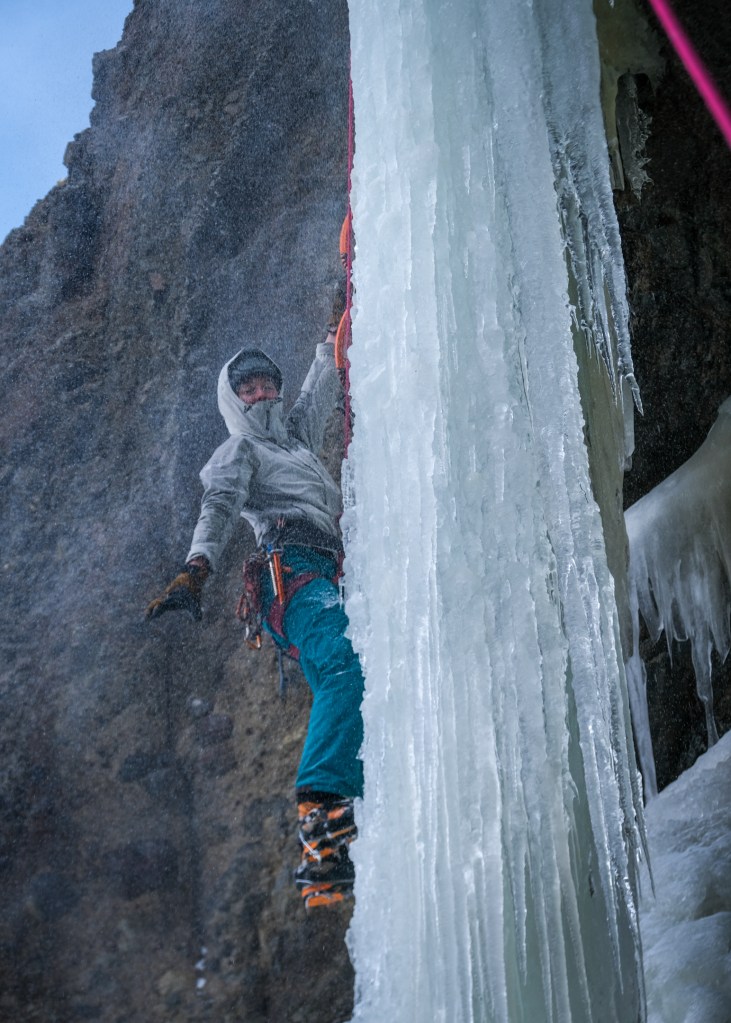
Seven days later we were back at the Unnamed Wall, and sure enough, Bingo looked healthier. The pillar hadn’t necessarily grown, but was sporting a deeper blue hue indicative of higher quality ice. Our plan was to tie in about one hour after dawn, allowing the cold nighttime ice to transition towards supple, without becoming fully wet. I racked 14 screws, asked Bobbi to let me know when I reached a distinct point of increased thickness in the pillar about twenty feet off the ground, and cast off. Despite ample hooks and large features for footholds, I struggled to repress an impending feeling of doom as I creeped higher onto Bingo. I placed my first two screws about 20 feet off the ground per Bobbi’s cue, clipped with a Yates screamer. Just above was the first aforementioned roof which marked the point of no return. Once I turned the lip, there would be no retreat.
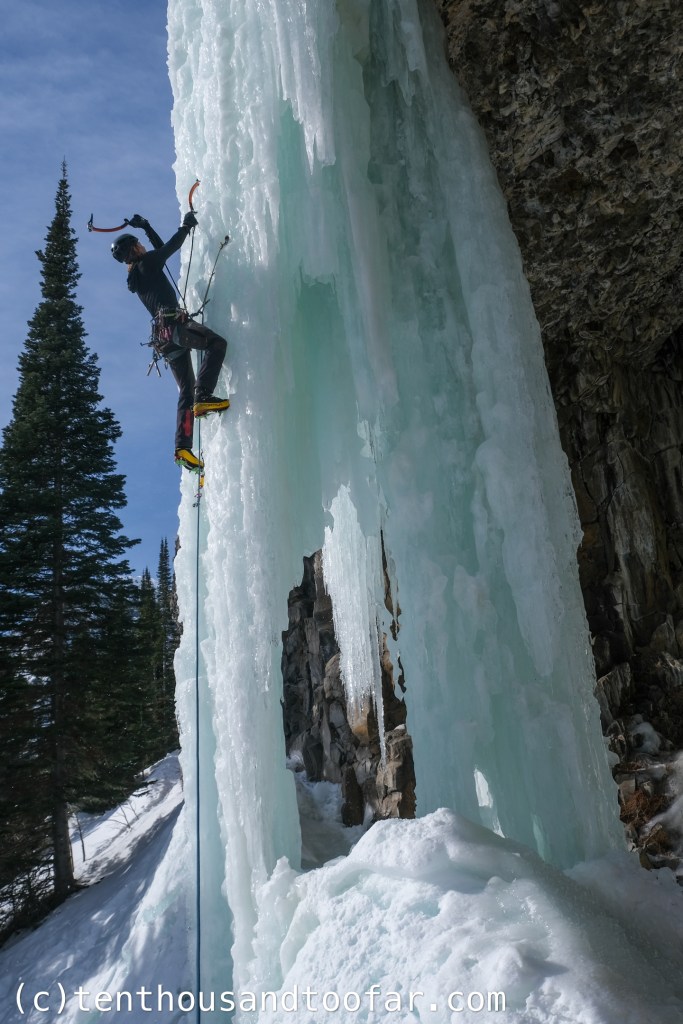
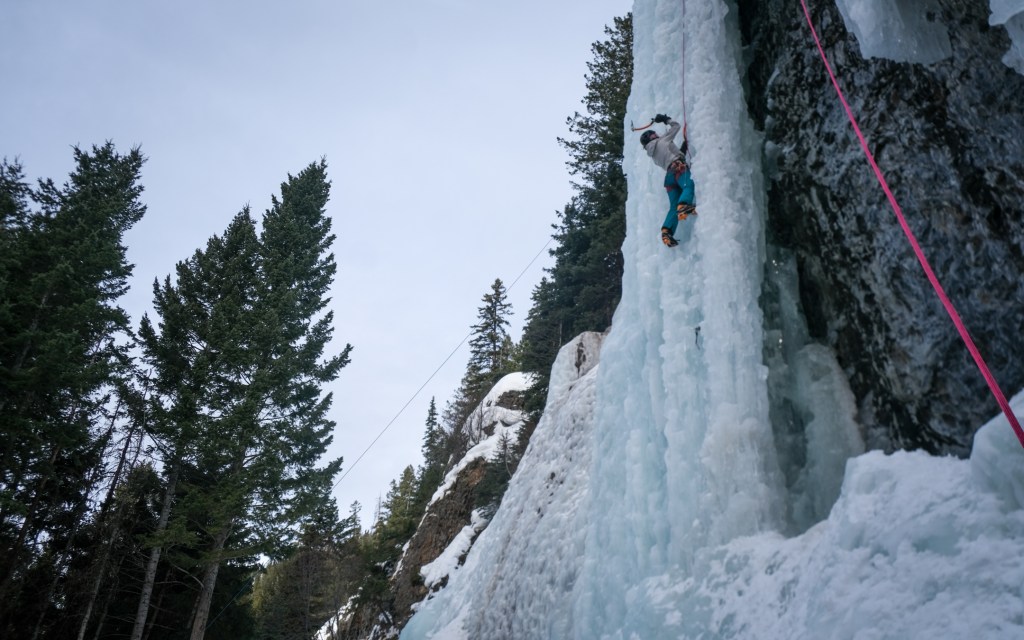
I passed the first roof on the right with relative ease, nestled into a decent stance, and sunk another screw. Above lied the obvious crux climbing – a more “straight in” vertical section with less protruding features for feet, capped by a slightly larger roof. Passing an old horizontal fracture was another significant milestone, and soon, I was at the second roof. This overhang was formed by a substantial crack where the lower pillar leaned outward a few feet, self arrested, and long since healed. The silver lining? There was a flat twelve inch ledge above the roof – if I could just get there, I’d have a no-hands rest. Fighting a building pump and sensing tribulations, I placed two solid screws before committing to the roof and mantle. Much as I feared, the roof moves were the closest I’ve ever felt to falling while ice climbing. I looped both tools over the lip, hiked my feet with meticulous attention to maintaining a downward force on my tools, hooked a thin concavity over the roof, took an intentional deep breath, and committed to a tenuous high-step mantle with two forearms verging on entirely numb. I placed a long screw from the ledge, kicked out a fully flat stance for one foot, and humbly announced to Bobbi my intention to spend at least five minutes regaining my arms. I had done it – or so I thought.
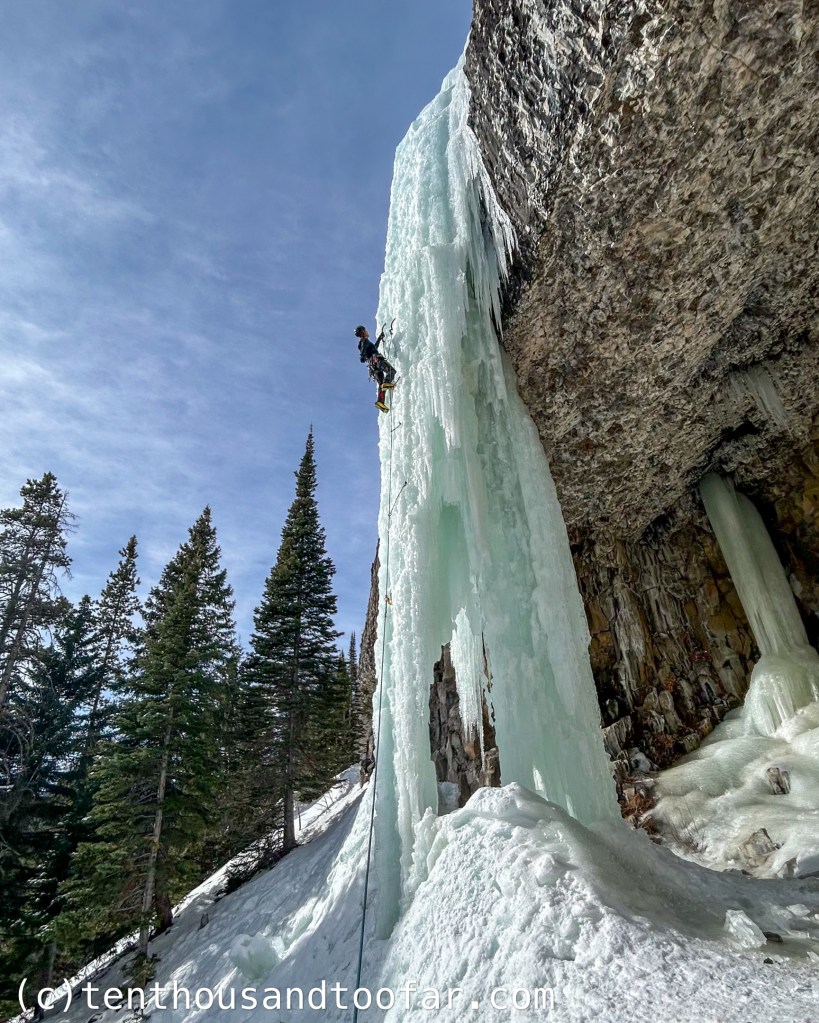
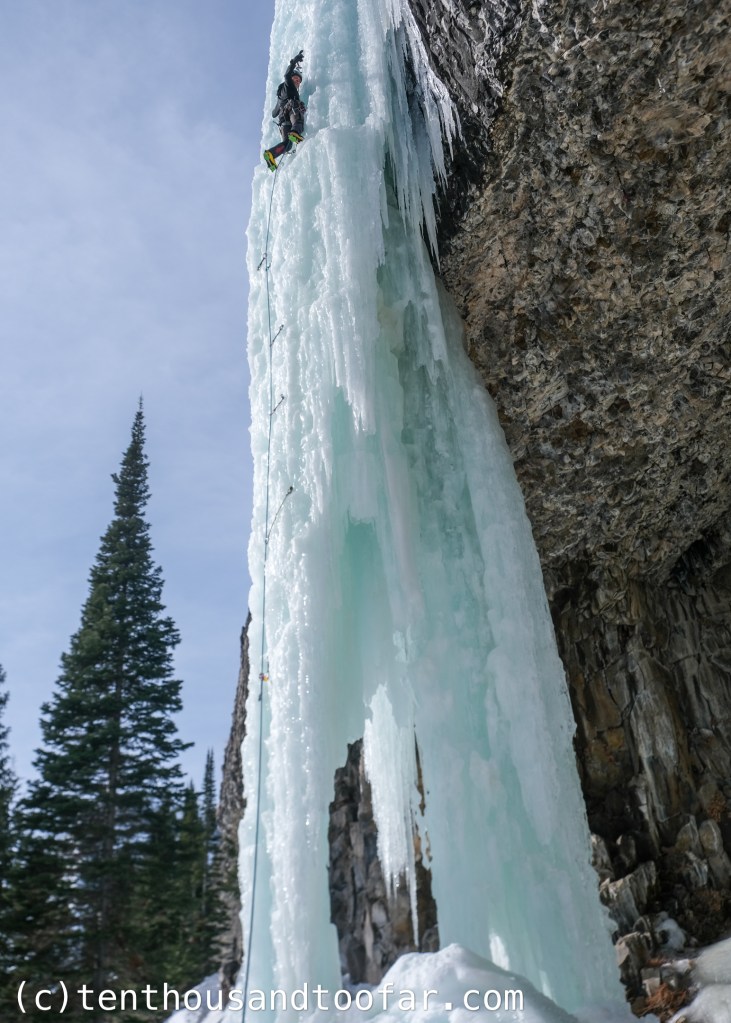
A mere 30 feet of WI4 climbing stood between the rest ledge and the top of the 80 foot pillar. On paper that reads like a cakewalk, especially given the 50 feet of atypical WI5+ puzzling below, but in reality, of the three distinct sections marked by both roofs, this final stretch would become the true test. Without a roof at it’s head, ample virgin ice had formed. I struggled for solid tool placements, needing several preemptive swings to clear away fresh and brittle ice. Through the first 50 feet I maintained something of good style and form, but now, on the final body lengths of Bingo World, matters deteriorated. Camera timestamps revealed I spent approximately 50 minutes on the pillar itself, and 70 on the route in full. To say I was pumped is an understatement – I was completely exhausted. Had I sheared a crampon, there was no chance my actively opening hands could’ve held on. Footwork was the only ally I had left, so I focused intensely on making every kick perfect. Move by painstaking move I worked towards the promised land, shaking out incessantly whenever possible. I fantasized about resting on every screw I placed, only to remind myself of the reality: Bingo may not form for another decade. Who knows, routes like Bingo have been known to magically dry up for a quarter century. My time was now, and in my heart of hearts, I knew I wasn’t letting go.
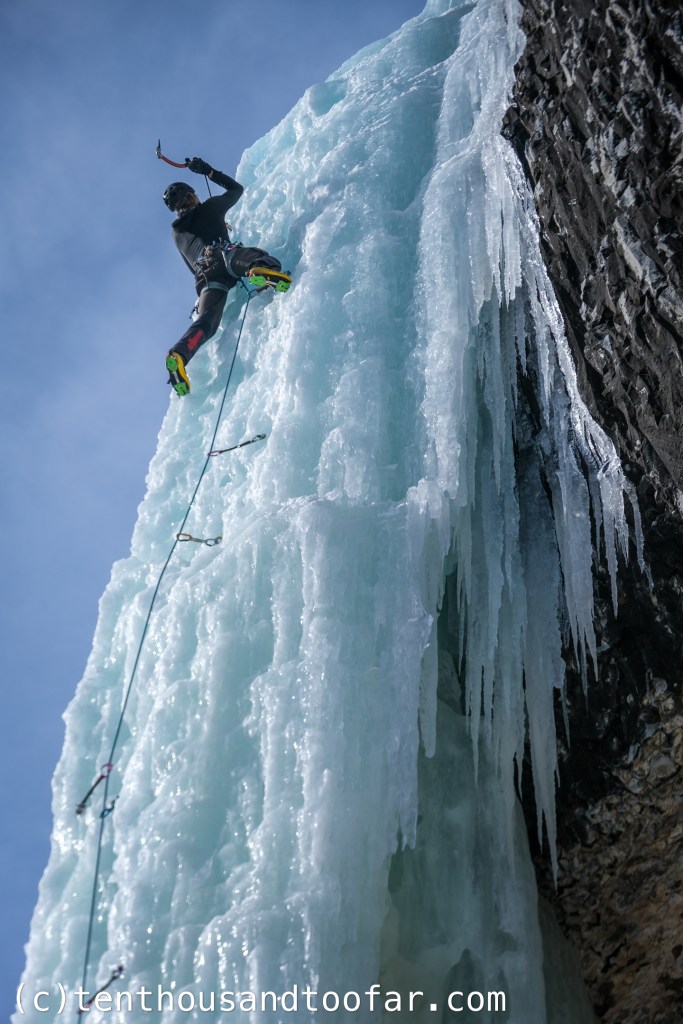
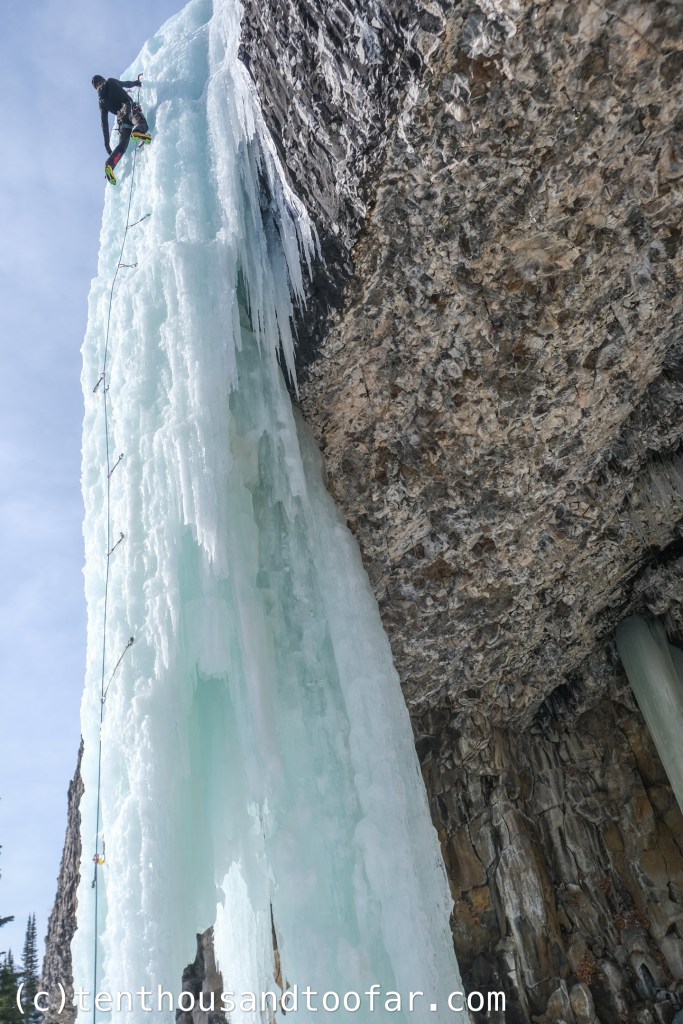
The tidal wave of relief I felt cresting the pillar rivaled any climb, rock or ice, of my life. 50 feet of WI3 guarded the anchor, but this time I knew, beyond any sliver of doubt, the cat was bagged. I rested for another five minutes before wrapping Bingo up, braving a rambling mess of dissolving over-baked slush with a scant two screws. I wished desperately for more. Clipping the anchor was transcendent.
Bobbi went on to follow Bingo free, a truly remarkable feat to cap her first season of ice climbing. I can honestly say I’ve never seen her climb better, and as both her mentor and lover, I was proud beyond available words. As with all hard climbs, I reflected deeply on my Bingo experience, sifting for growth points. I kept a calm and calculated demeanor the entire way, placing an adequate amount of thoughtful protection for my ability. I also did a good job of anticipating difficult sections, honing in on proper footwork during periods of greatest pump, and being mindful of efficient resting. Besides the obvious elephants of increased fitness and technical ability, I’m not sure there are any stand-outs I would do differently. I placed a few screws from overly strenuous stances, particularly through the second roof, but forgoing protection despite a terminal pump can spell catastrophe – there’s a razor thin line there. In a similar vein, I started trusting hooks less, and over-driving my picks, as exhaustion built. But once again, when so fried you can feel your grip loosening, having a secure multi-directional tool is almost a requirement. The only sour tasting element was that I didn’t have fun on the second half of the pillar. In hindsight, I can genuinely say the final headwall was a “type three fun” experience – even looking back, nothing about those last 30 moves was pleasant. My longtime ice partner and mentor told me afterwards, “sometimes you have to burl down, and you did.” In reality, I would be a fool to expect anything less than a dogfight from one of Hyalite Canyon’s most difficult, notorious and ephemeral freestanding pillars. The lump sum of Bingo World was resoundingly positive, standing as one of the most powerful climbing moments of my life. Furthermore, I feel honored to have shared the experience with Bobbi.
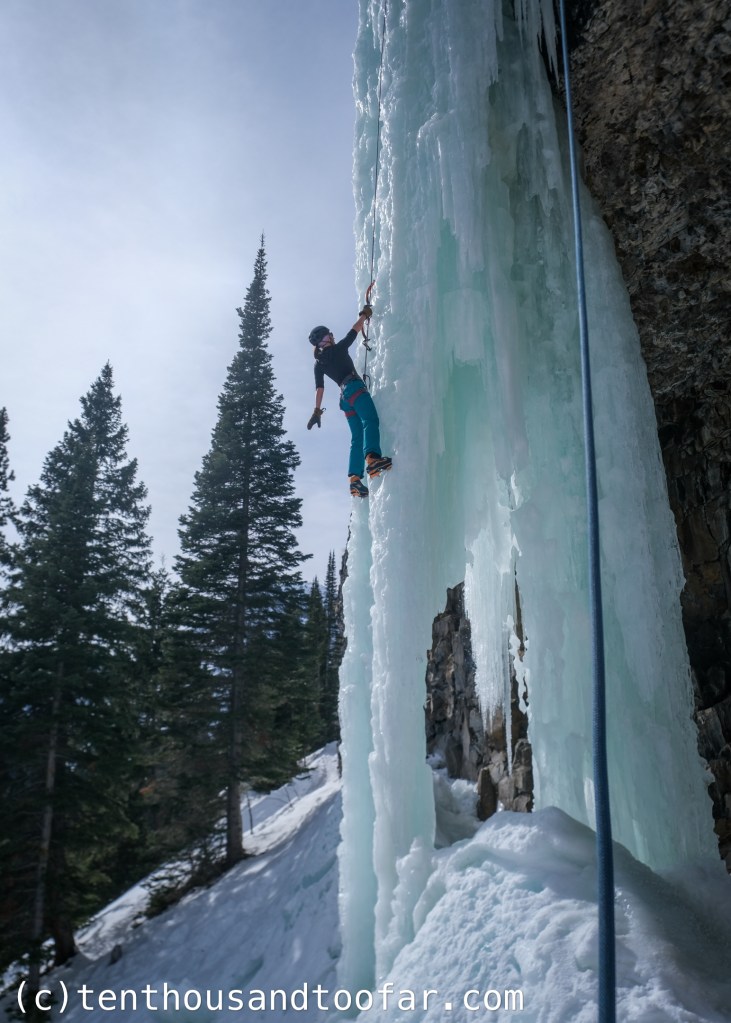
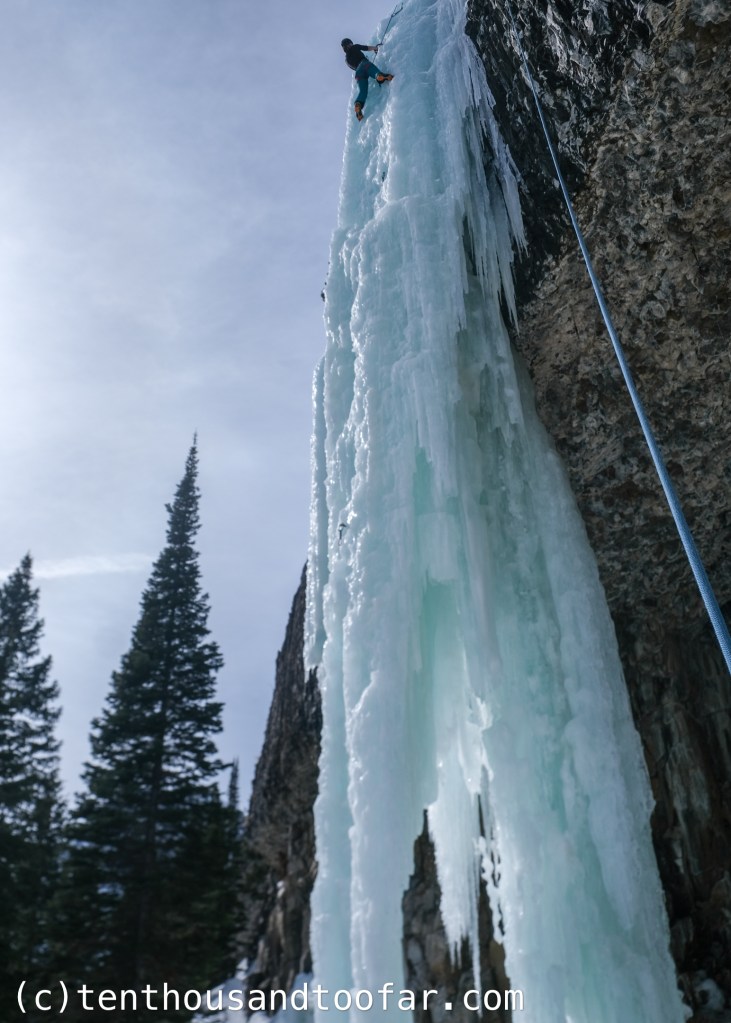
Despite having the mystical and elusive “six” as part of it’s grade, Bingo World was not in WI6 conditions on March 8th, 2025, and therefore my quest for WI6 continues. Conferring with other 2025 climbers, I think WI5+ is appropriate. To tie this jumbled knot, I’ll close with a fitting quote from North American ice climbing legend Joe Josephson, on this special climb.
“The uncertainty and strangeness of local weather due to climate change has created an unpredictable time for when it forms completely. Waiting for the route to form and finding the right timing and headspace to make an ascent is what makes Bingo World, Bingo World. No matter what conditions are like, it’s always steep and never anything to take lightly. Good Luck.”
Joe Josephson, House of Hyalite (guidebook),
Want to support? Consider a donation, subscribe, or simply support our sponsors listed below.
Ten Thousand Too Far is generously supported by Icelantic Skis from Golden Colorado, Range Meal Bars, The High Route, Black Diamond Equipment and Barrels & Bins Natural Market.



subscribe for new article updates – no junk ever
DISCLAIMER
Ski mountaineering, rock climbing, ice climbing and all other forms of mountain recreation are inherently dangerous. Should you decide to attempt anything you read about in this article, you are doing so at your own risk! This article is written to the best possible level of accuracy and detail, but I am only human – information could be presented wrong. Furthermore, conditions in the mountains are subject to change at any time. Ten Thousand Too Far and Brandon Wanthal are not liable for any actions or repercussions acted upon or suffered from the result of this article’s reading.
 Ten Thousand Too Far
Y’all seriously ROCK!!
LikeLike