
On April 24th, 2024 I rose early and kept an open solo itinerary that resulted in a link-up of routes on the Dike Pinnacle, South Teton and Wanda Pinnacle. All three routes had been on my radar for years, and it was especially meaningful to link them in a single logical push.
The Greater Yellowstone region lost an especially bright light in Austin Mallet, who passed away May 9th, 2024 in an avalanche on Utah’s Lone Peak. Austin was a passionate climber, alpinist and ski mountaineer who was always eager to share his love and enthusiasm for the mountains with me, and inspired many of the adventures detailed on this blog. His adventures are immortalized on mtnchronicles.com. Information about the incident on Lone Peak can be found here. He will deeply missed. Shred in peace, my friend.
How to experience an unplanned 9000 foot spring ski traverse in the Teton Range: pack lots of food, know your way around, have a fitness reserve and get lucky with the weather. The last factor was the most notable on this particular day, where I was able to score corn on two consecutive solar descents as the result of hanging thin clouds that delayed warming, then spontaneously boot up a northeast facing chute and collect what’s likely to be my last top-to-bottom powder descent of the season at 2:00PM on a warm late-April day. In other words – this day was basically perfect, with a wide variety of terrain and snow surfaces across three unique objectives.
Love Ten Thousand Too Far? Support independent mountain journalism with $5.10 per month through Patreon (and receive extra bonus content), or with a one-time donation. Any and all support is greatly appreciated.


I left the car solo around 4:00AM and made a nearly continuous on-snow ascent into Garnet Canyon separated by only small bouts of dry hiking. I rolled the dice, center-punching an anemic Bradley Lake and nearly paying the price when my skis busted through thin ice on the far shore. Luckily only the top sheets submerged (preserving the integrity of my dry socks), and snow surfaces were well-enough frozen to resist glopping. I sauntered into the South Fork of Garnet by hour three and was delighted to find the South Couloir of the rarely skied Dike Pinnacle in ski-through shape. (for any avid TetonAT.com readers, Steve Romeo called this line the Southeast Couloir – however, in my opinion the line really faces due south, and another couloir on the Dike Pinnacle is more apt to be named the “Southeast”) I had tried the South once before in February of 2022 but turned around due to a shark tooth snowpack underpinning a highly reactive windslab. Today the couloir was generously filled, lightly desecrated with debris but acceptable for an open mind. A soft overnight freeze made for difficult boot-packing through a robust breakable crust, which I prayed to the ski mountaineering gods would support my skis on descent. A thin icy band at the top of the couloir led to the upper east face and ridge, where the snow hardened to supportable neve and provided a delightful exposed climb to the ~12,400 summit by 8:30. A glaze of wispy clouds prevented solar warming, and I spent nearly an hour on the summit watching a few late parties make their way up the Chevy and Ford Couloirs en route to the summit of the Grand Teton. Eventually I got bored and decided to use my Ice Coast upbringing to its fullest potential, skiing the exposed east ridge in just edge-able baby corn conditions and forking right into the South Couloir for a deafening descent of chattery jump turns between bulletproof chicken heads. I’ll certainly have to return and ski one of the many other attractive lines on the Dike Pinnacle in more favorable conditions, but I was satisfied with the opportunity to hone my firm snow technique and get oriented on what I believe to be one of the most inspiring and underrated ski objectives in Garnet Canyon. This was my first with skis, and second total, summit of the Dike Pinnacle – and I’ll certainly be back.
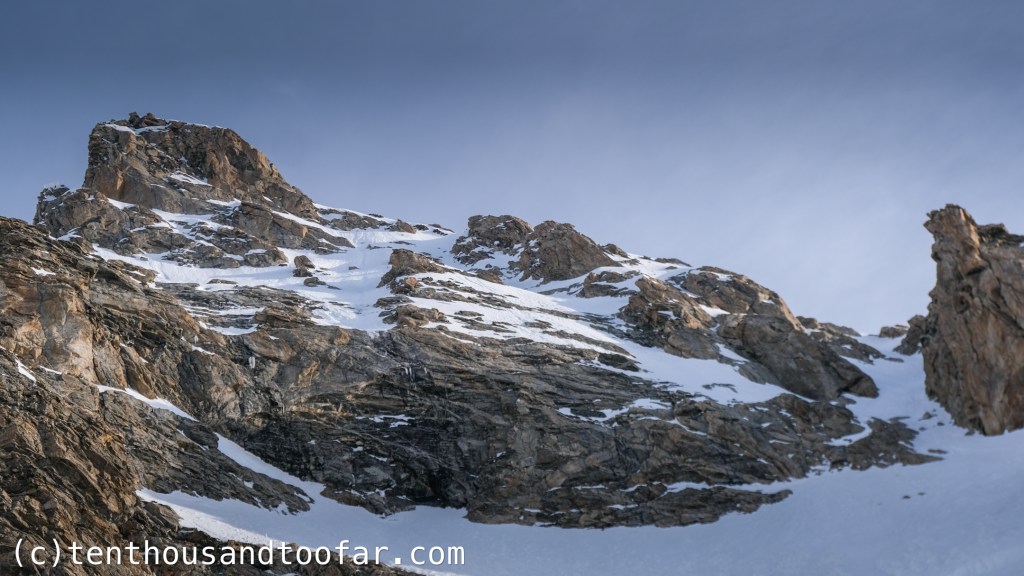
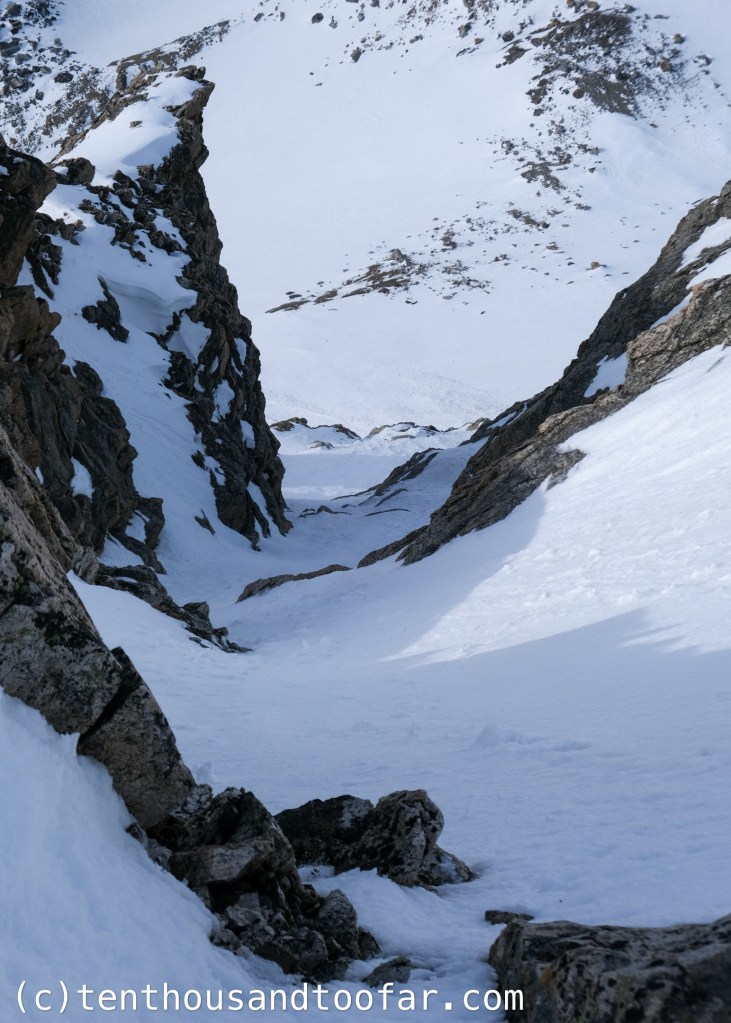
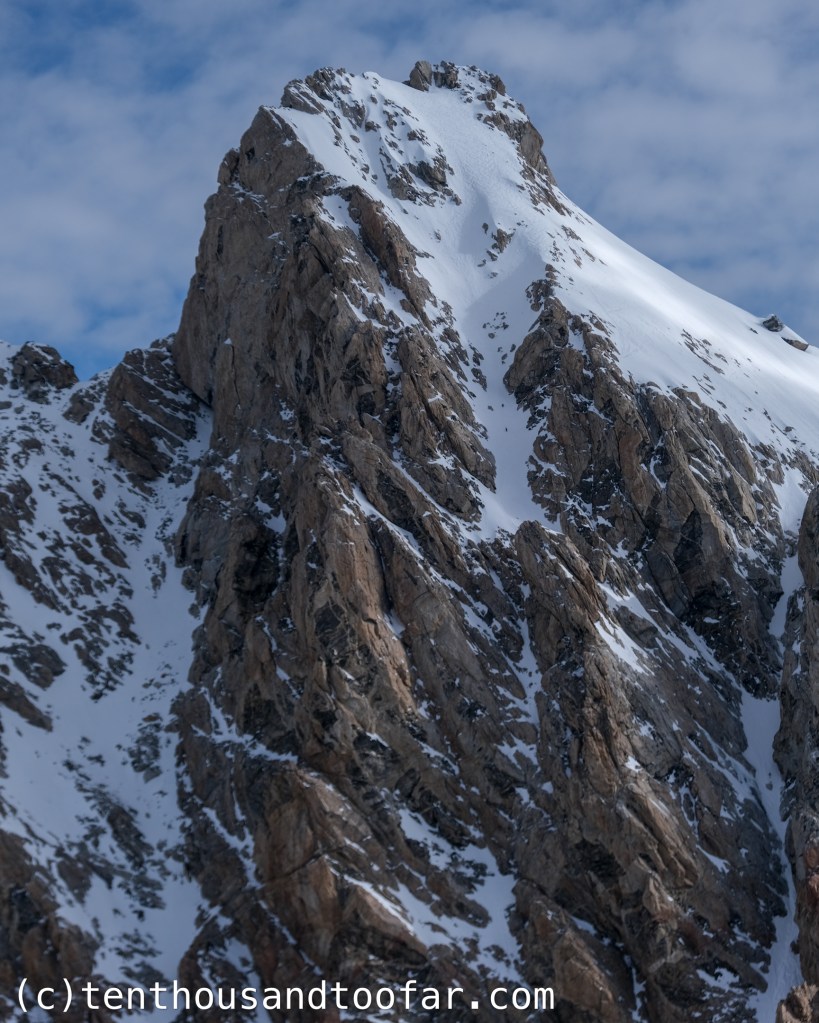

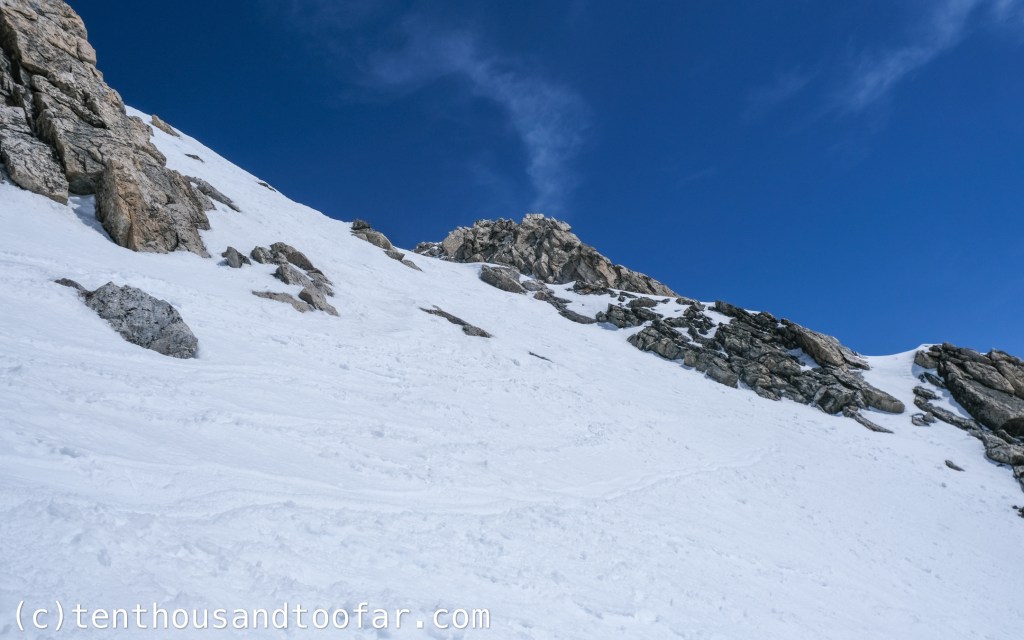
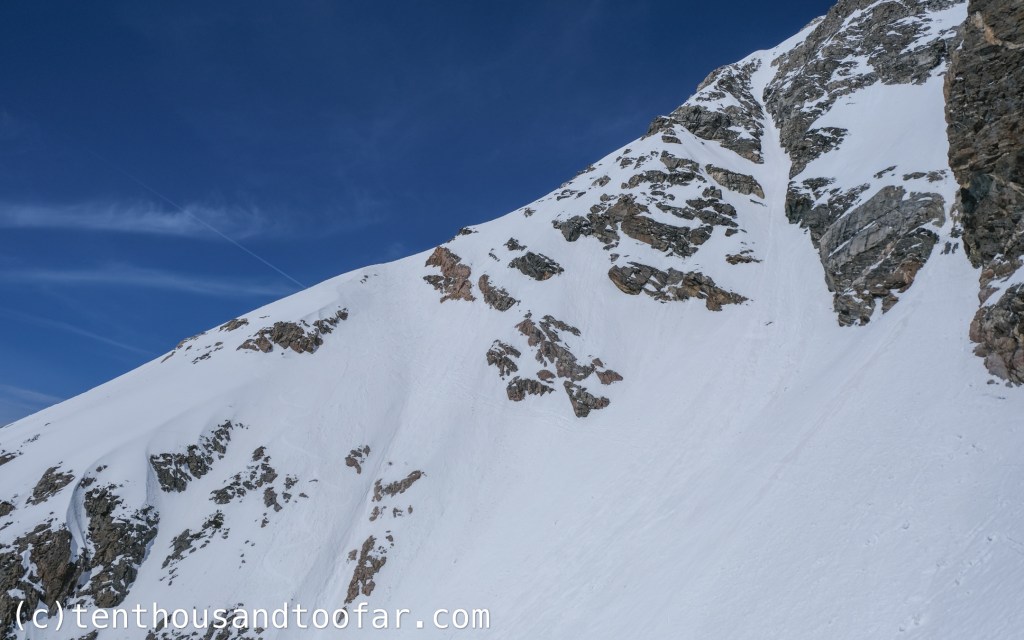
With the aforementioned veil of clouds holding strong I decided to extend my day via the South Teton, to attempt a classic line I’ve long desired yet never prioritized, the Southeast Face. I summited on the Northwest Couloir route after momentarily nodding out while changing over to crampons below the steepening couloir – I didn’t sleep all that well the night before – and clicked into my skis around 11:30AM. The rock studded snow capping the summit was disappointingly isothermal, but as I committed to a steeper and deeper Southeast Face the slush stiffened to playful spring corn. I arced long and aggressive turns down the brilliantly exposed 40 degree face, arranging a descent rivaling the South Teton’s most famous ski line, the Amore A Vida Couloir. After exiting the close-out face by way of a convenient ramp on skier’s left, a deliberate traverse and short boot-pack brought me to Matternaught Col, the saddle just north of Matternought Peak, where I was able to ski continual corn to the shores of Lake Taminah, a 3,500 foot descent in full. Exiting the Southeast Face and Couloir via the east side of Matternaught Col is generally recommended to avoid a sweeping cliff in the direct fall line that seldom fills in.
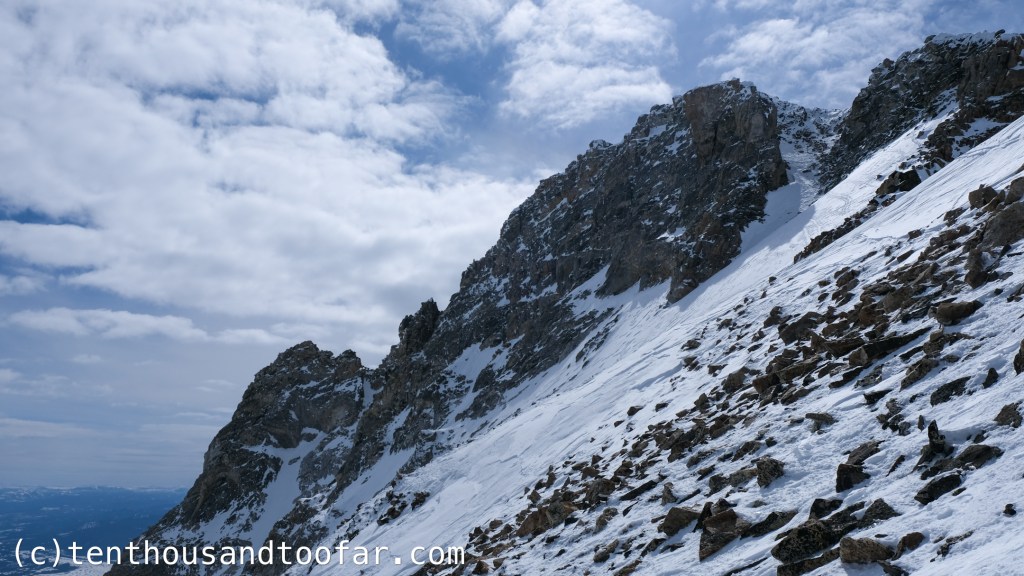


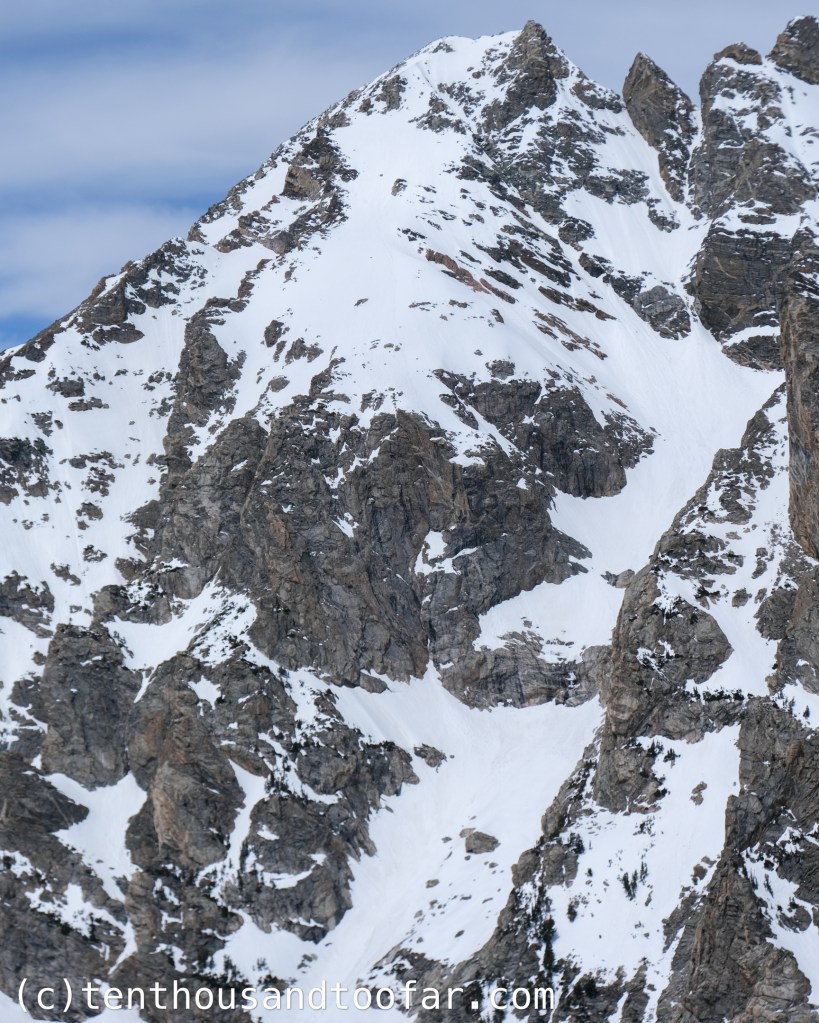
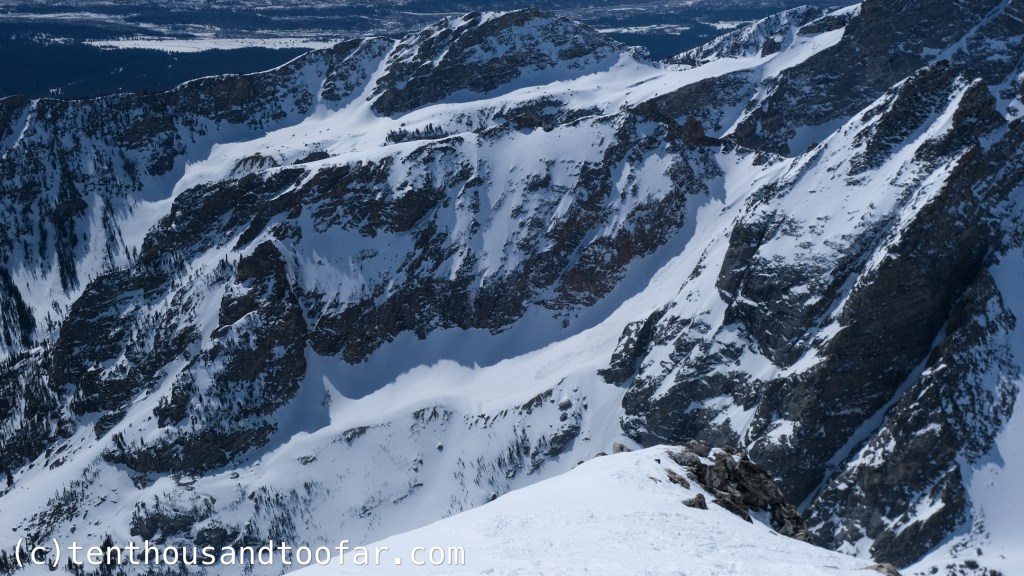
I had no intention of skiing another route that day, but as I chopped a hole in the eastern shore of Lake Taminah with an ice axe to refill my water bottle I noticed the upper annals of the Northeast Couloir on Wanda Pinnacle were beginning to transition into afternoon shade. I just couldn’t resist, and despite heinous isothermal conditions on the apron I cut a trench warfare skin track to the shade line and began an inspired, yet sadly quite wet, boot-pack up yet another line I’ve wanted to ski for years. Slushy mank gradually transitioned to warm powder as I climbed through the elevation bands, and by the time I topped out the north ridge I was amazed to find something of dry winter powder. Upon intensive photo review I was slightly disappointed to see a second derivative couloir, out of sight from the main couloir when climbing, that led directly to the summit plateau and would have provided a higher prize descent I’ll have to return for. Instead, I began my descent from the top of the main Northeast Couloir at 10,200 feet on the rocky north ridge, still harvesting nearly 2,000 feet of top notch fall-line skiing that gifted steep carves and hop turns in the first thousand feet, and slow but supportable mushy corn to the canyon outlet. Wanda has a plethora of overlooked steep skiing I hope to explore in years to come, and this micro-line was a great way to dip a toe in this peak’s character.


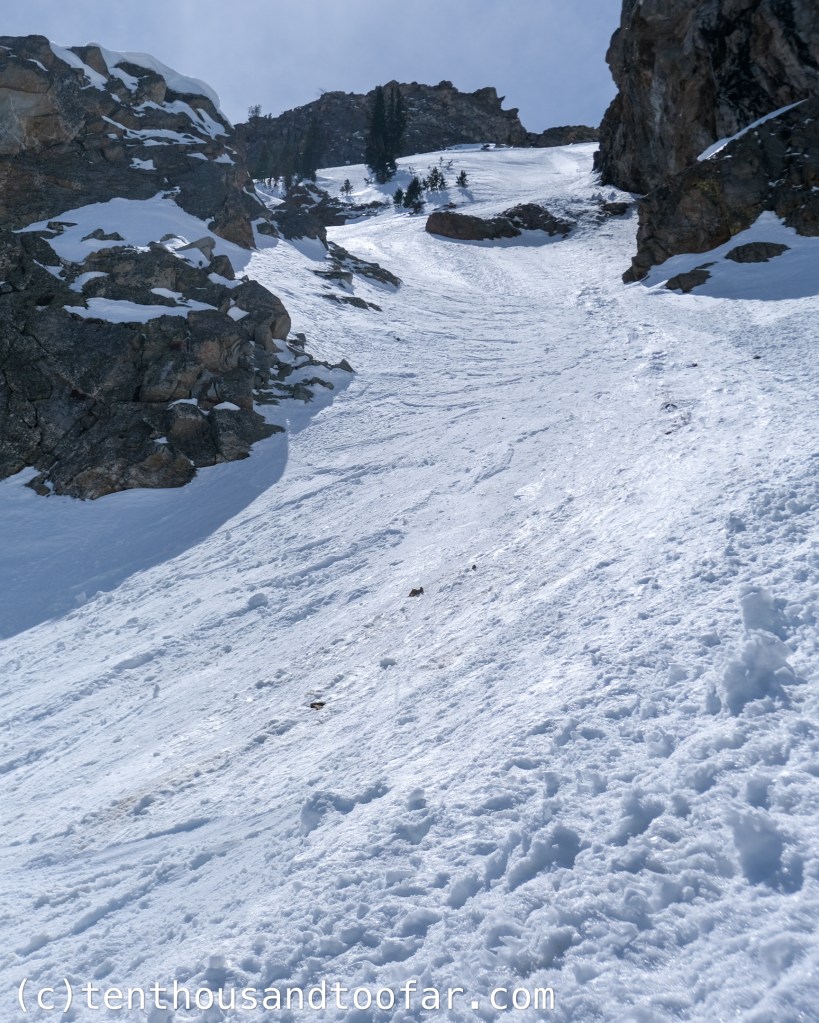
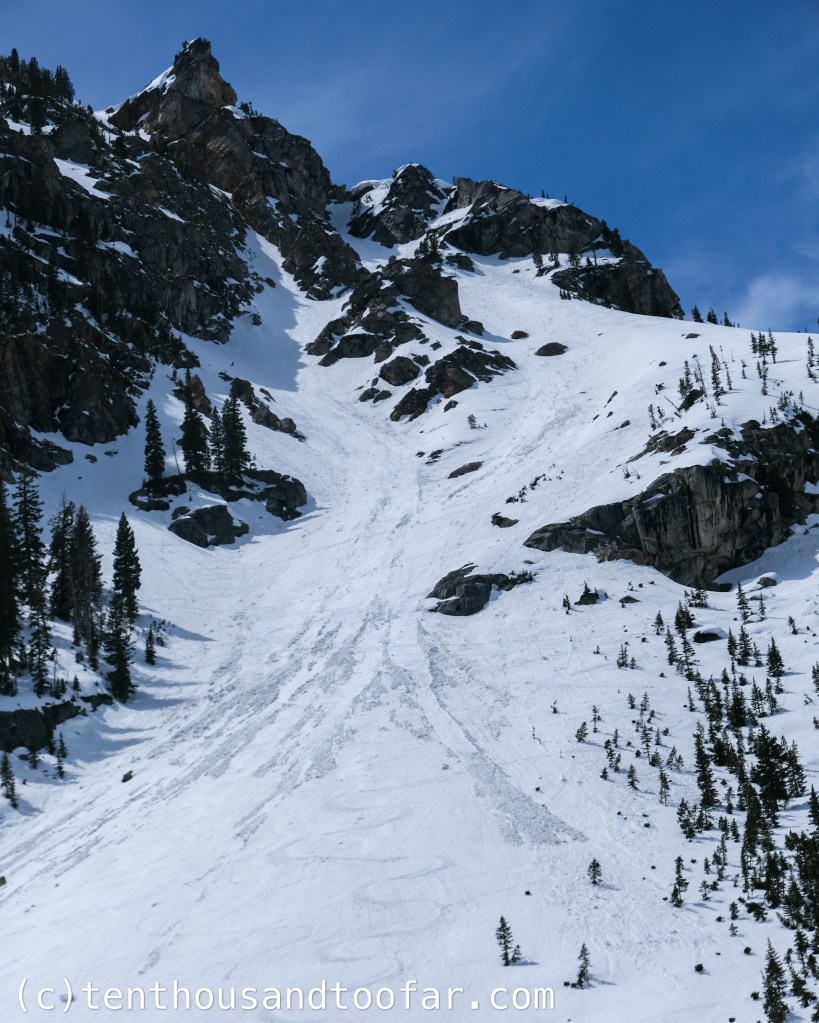
If I was close to biting the dust anywhere on this day, it was halfway through my incredibly impulsive decision to manic-skate across the gut of Taggart Lake. The surface was bright turquoise and baking in direct 60 degree sun when I launched straight from the sloped forest of Avalanche Canyon at 2:00PM without second thought. I would just skate fast and zoom right over any weak spots… or so I thought… until my skis cracked through the ice over 1000 feet from the shore. Well – I’m still here to write about it, and the primary winter ice layer about two feet beneath the surface prevented fates far worse, but wading through the center of a barely frozen lake while water poured into my ski boots wasn’t my finest moment. At least there weren’t any tourists around to photograph the spectacle. Lesson learned. All in all this was a stellar and relatively casual ten hour day in the mountains, full of excellent snow and turns around the sundial. As I finish this article I think of Austin, who seemed to gravitate towards never-ending days in the mountains like these. His spirit will burn bright in the Tetons and beyond for years to come.

Want to support? Consider a donation, subscribe, or simply support our sponsors listed below.
Ten Thousand Too Far is generously supported by Icelantic Skis from Golden Colorado, Barrels & Bins Natural Market in Driggs Idaho, Range Meal Bars from Bozeman Montana and Black Diamond Equipment.



enter your email to subscribe to new article updates
DISCLAIMER
Ski mountaineering, rock climbing, ice climbing and all other forms of mountain recreation are inherently dangerous. Should you decide to attempt anything you read about in this article, you are doing so at your own risk! This article is written to the best possible level of accuracy and detail, but I am only human – information could be presented wrong. Furthermore, conditions in the mountains are subject to change at any time. Ten Thousand Too Far and Brandon Wanthal are not liable for any actions or repercussions acted upon or suffered from the result of this article’s reading.
 Ten Thousand Too Far