
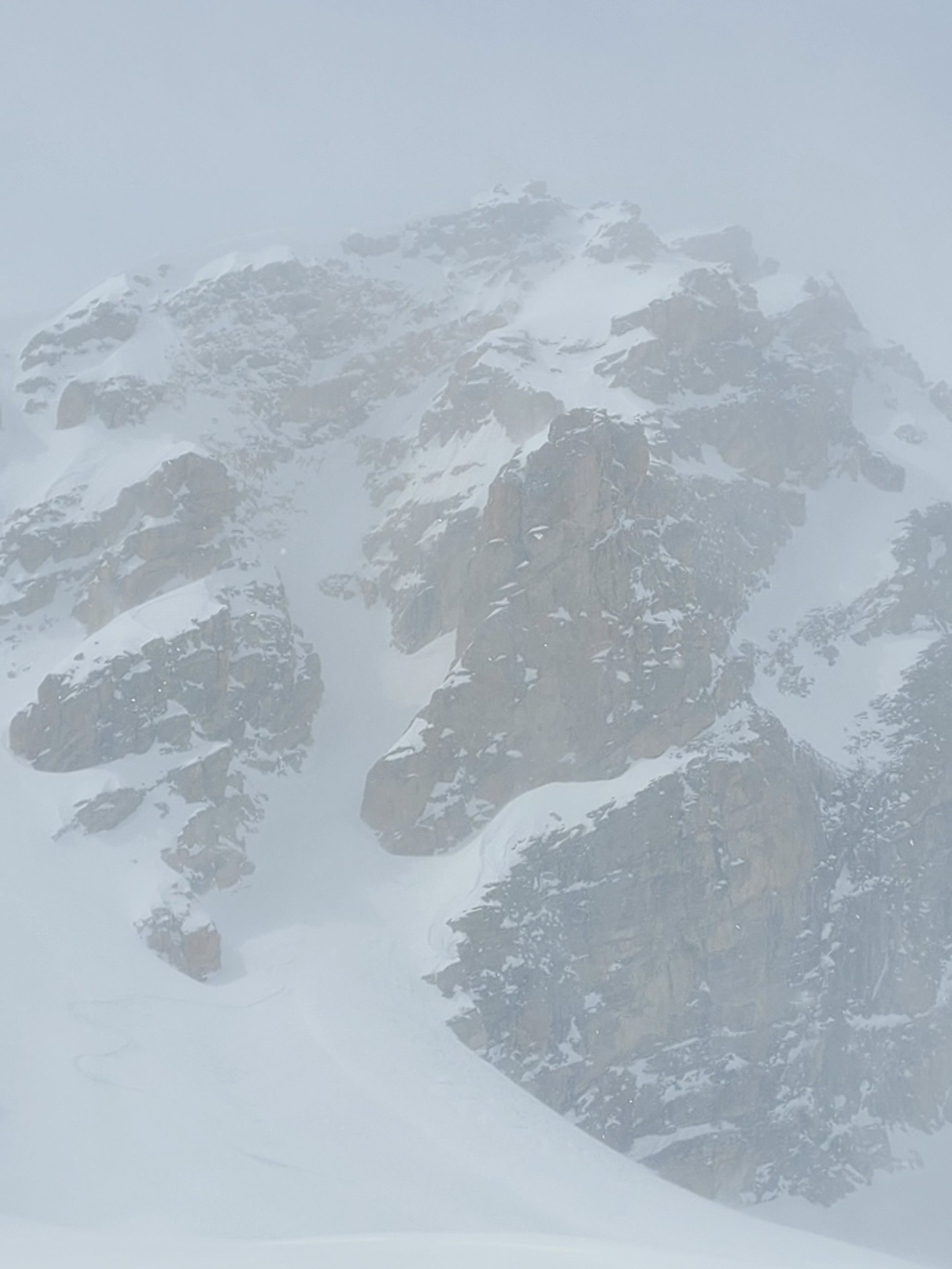
I’ve stared at this couloir nearing a decade – a beautiful winding dance down the improbable North Face of Peak 10,696. I naively kept skiing lower hoping the snow would get better… an exercise in edge control. This line also goes by the name Breakneck Road.
Peak 10,696 is the highpoint and southern terminus of the broad buttress that houses 25 Short and Mavericks, two of the most popular backcountry ski destinations in GTNP. The North Couloir shares a ridge line with three of the most classic entry level Teton couloirs, Turkey Chute, Moonwalk and Chute The Moon. It’s mesmerizing, twisting, cobra shape is striking from the summit of 25 Short, and I reckon thousands of skiers point at it every winter – however, it sees very, very, little traffic. There’s a sloping cliffband in the middle that always seems to make one ponder whether or not they’d be able to keep skis on, and a devilish looking entry that often appears guarded by a nasty network of bulging cornices. For a piddly 850 feet, this couloir packs equal amounts of aesthetics and mystery. It’d been on my second tier hit list for years, one of those lines I talked about regularly yet always had something else more important to do. After skiing the Turkey Chute with Bobbi in chalky powder the day before, and faced with a marginal weather window that beckoned restraint on bigger objectives, I got a bit fidgety and slipped out to give er’ a look.
Love Ten Thousand Too Far? Support independent mountain journalism with $5.10 per month through Patreon (and receive extra bonus content), or with a one-time donation. Any and all support is greatly appreciated.
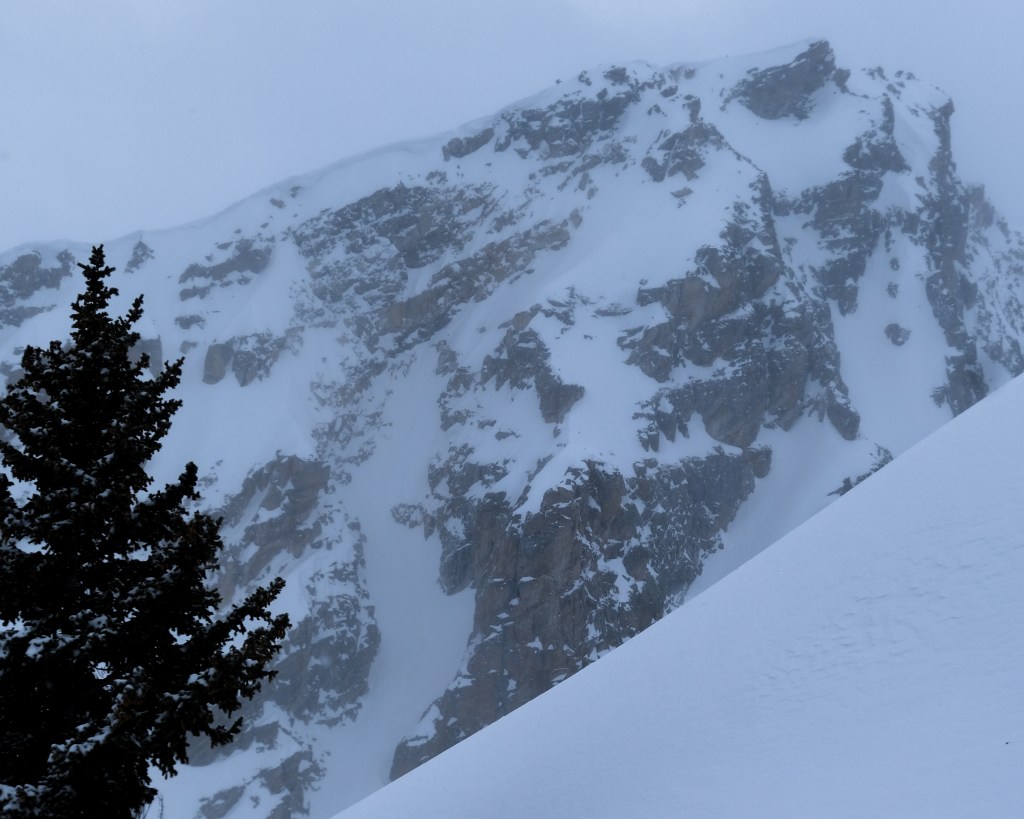
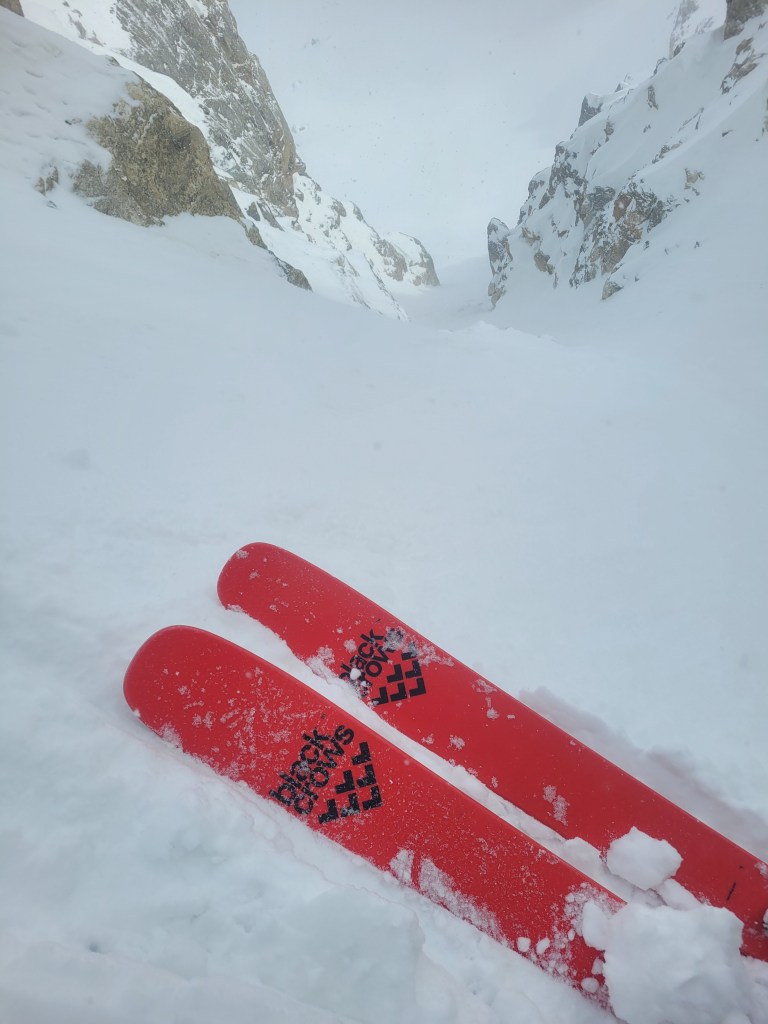
After two weeks of mostly steady high pressure, a short pulse of moisture dropped up to ten inches across the Teton Range, blown every which way by extremely bipolar winds. I hadn’t the faintest clue what to expect, except that yesterday’s Turkey Chute skied surprisingly well – a similar aspect and elevation to 10,696’s North Couloir. I carried a rope and relatively robust rack, expecting up to two rappels and an absence of fixed anchors. I reached the summit via Mavericks in a little under three hours. Much to my surprise I was able to keep skis on for the entry, side stepping through some exposed rock and straight lining through a small notch into the top of the line. The steepness and exposure caught my attention immediately, my inclinometer confirming a slope angle of 55 degrees and my rational brain calculating that a fall at any point in this twisting little beast was likely to be fatal, especially given the extreme disparity of fresh snow. After two unruly turns through a nasty breakable crust above the first crux, a constriction with an exposed rock slab guarding the main couloir, I heavily considered bailing – but hopes and dreams of yesterday’s fresh wind buff seduced me into continuance. I utilized dry skiing tactics to edge my way over a smooth sugar dusted slab, and was immediately faced with bulletproof glaze hidden beneath a one centimeter varnish of pasted fluff, classic dust-on-crust ski mountaineering conditions – barely edgeable. I once again pondered retreat, but the idea of reversing the slab crux I just slipped, and changing over to crampons on a slope this firm, was a bit daunting. My ice intuition from 15 years of skiing in Massachusetts and New Hampshire clicked into hyperdrive as I made my way towards the sweeping mid-run cliff, finding the now 40-45 degree bulletproof jump turns surprisingly routine and rhythmic with factory sharp edges on a new pair of Black Crows Camox Freebird skis, which gripped remarkably well with little chatter. As the slope rolled back over nearing the cliff, and my skis began to resist purchase on intermittent solar runnels, I stopped worrying about turning and started looking for anchor opportunities. I spotted a faded fixed anchor guarded by a substantial wind drifted fin that seems to form every year, but as I sidestepped my edges into it I got some hollow sounds, and quickly realized that if this fin was to break – not entirely improbable given the bed surface I just skied – then I’d be in for one hell of a ride. Despite the tat being all of five feet away, I resisted temptation and took advantage of a convenient crack at eye level, banging in an inverted angle piton and two stoppers. My wallet groaned with every swing of the hammer.

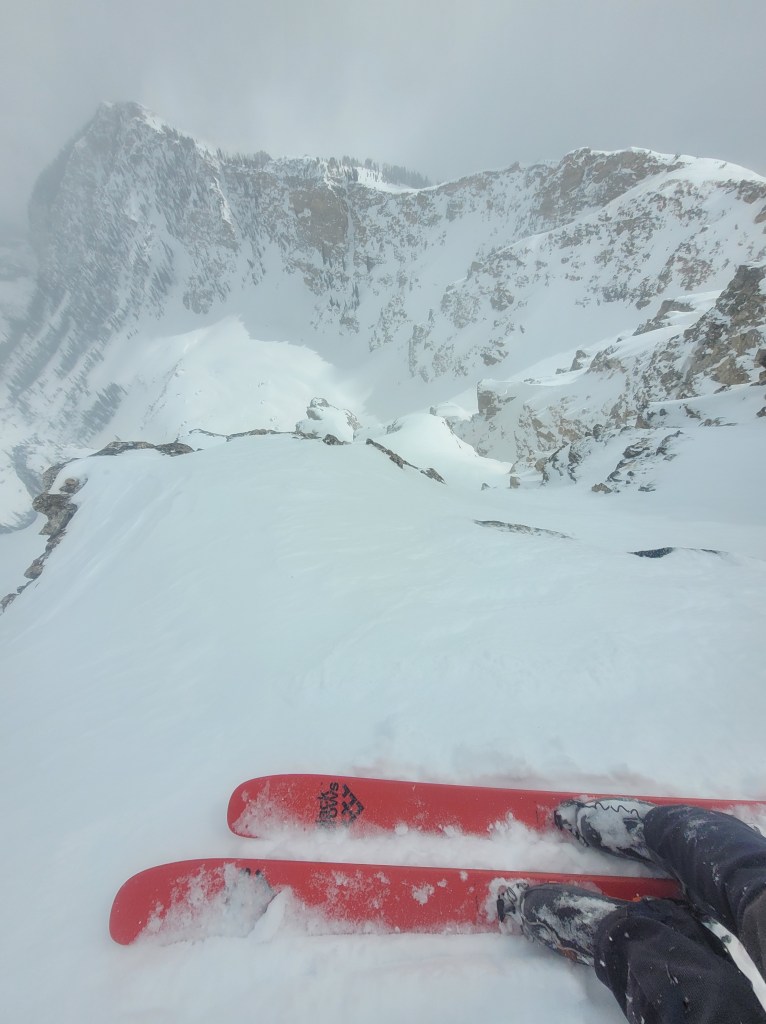
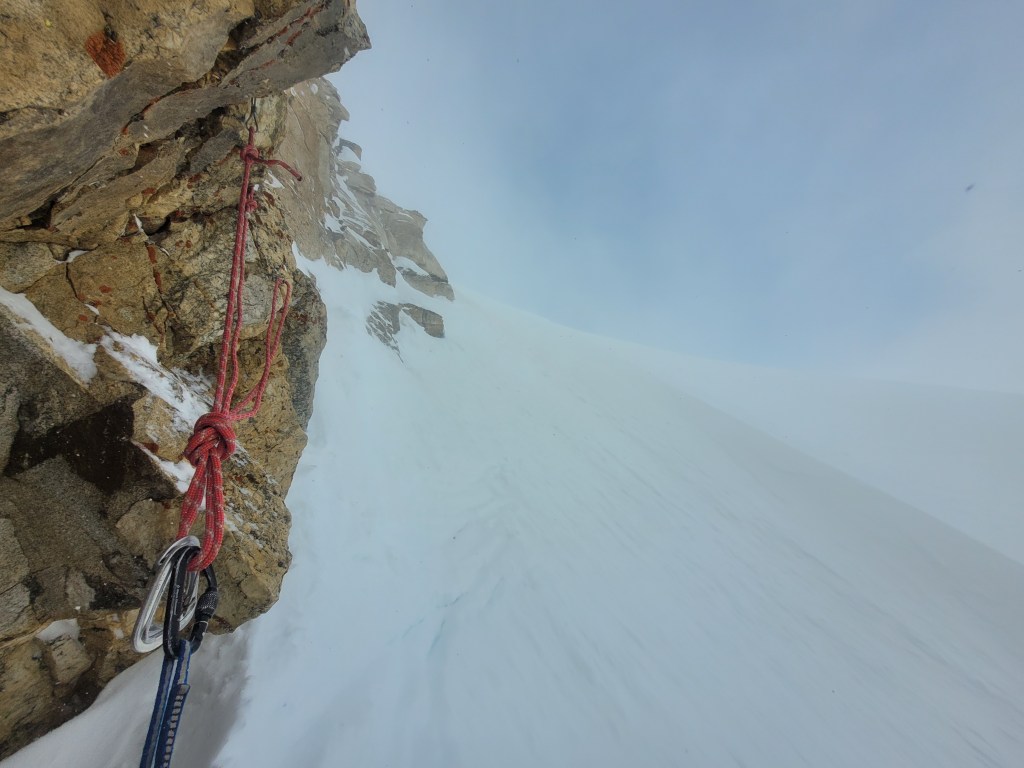
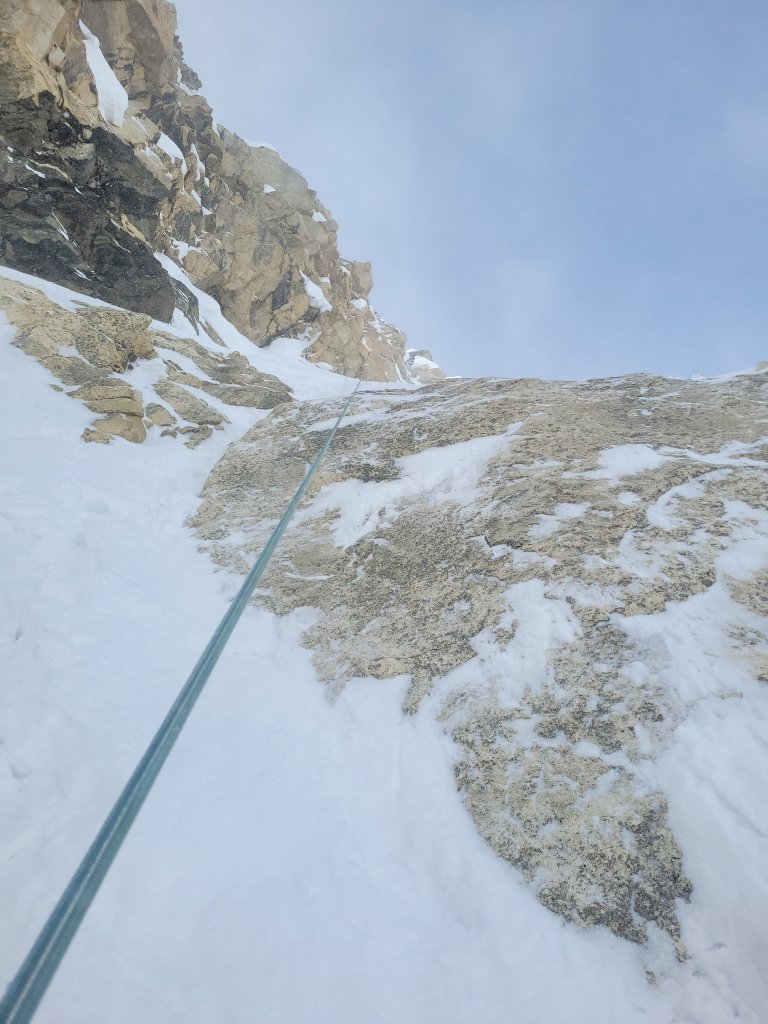
One 30M rappel got me over the slabby cliff and into the lower couloir below, which provided four excellent powder turns followed by forty-four more bulletproof, breakable, or otherwise wind hammered turns spiked with small refrozen solar debris. Mother nature really did a number on this one, surprising given the conditions I skied less than 24 hours earlier only a quarter-mile down canyon. Despite the dodgy ice, I was actually pretty stoked on the descent. The ability to ski barely edgeable snow above exposure is indispensable to the ski mountaineer, and after a winter of generous powder steeps it was nice to resupply my firm confidence going into the spring season. When in good condition the rappel goes ski-through, just a little sneak on skier’s right – though it’s worth noting the picture I attached is actually a bit deceiving, with the slip appearing more viable than the barely covered slab it was, and I think most skiers would need quite a bit more well-adhered snow to keep the sticks on. This line officially made my top tier list of GTNP front-country couloirs, and I’m awaiting my opportunity for a rope-less descent in years to come. 3000 feet of generally excellent powder skiing saw me to the valley floor.
Quick Notes
- The upper half of the couloir has a steep and unobstructed NE tilt, catching more sun in the morning than expected. This explains the stouter than expected solar crust following a spring high pressure system, the runnels approaching the crux cliff and the undesirable collection of wet loose debris in the lower couloir.
- Very large cornices overhang the bulk of the couloir.
- The best time of year to ski this line might be mid-late winter, before the first spring shed. Though I haven’t skied the North Couloir of Albright Peak, the lines seem quite similar.
Want to support? Consider a donation, subscribe, or simply support our sponsors listed below.
Ten Thousand Too Far is generously supported by Icelantic Skis from Golden Colorado, Barrels & Bins Natural Market in Driggs Idaho, Range Meal Bars from Bozeman Montana and Black Diamond Equipment.



enter your email to subscribe to new article updates
DISCLAIMER
Ski mountaineering, rock climbing, ice climbing and all other forms of mountain recreation are inherently dangerous. Should you decide to attempt anything you read about in this article, you are doing so at your own risk! This article is written to the best possible level of accuracy and detail, but I am only human – information could be presented wrong. Furthermore, conditions in the mountains are subject to change at any time. Ten Thousand Too Far and Brandon Wanthal are not liable for any actions or repercussions acted upon or suffered from the result of this article’s reading.
 Ten Thousand Too Far
Leave a comment