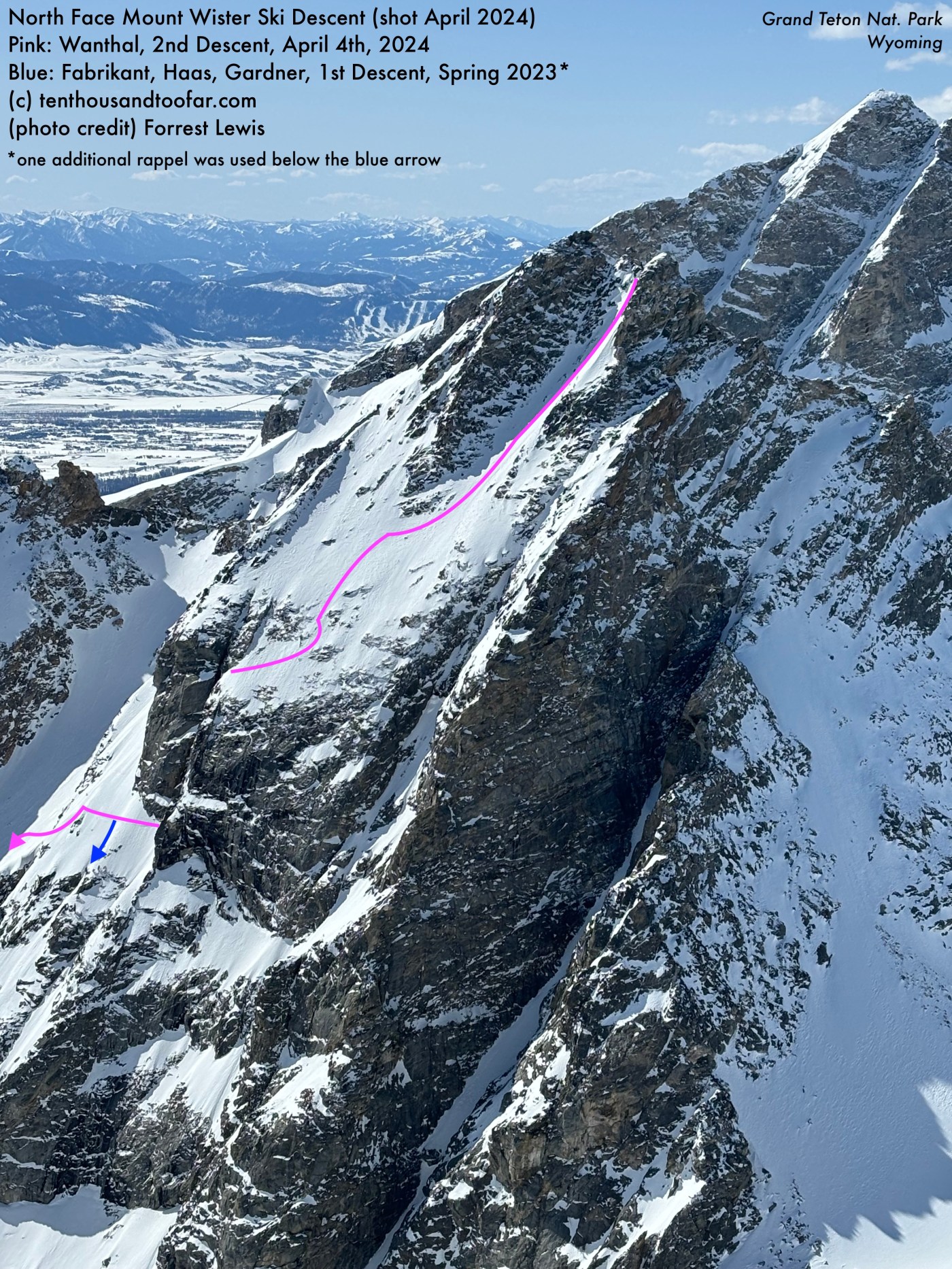
The North Face of Mount Wister was a visionary ski descent first accomplished by Adam Fabrikant, Billy Haas and Micheal Gardner in the spring of 2023. On April 4th, 2024 I made the second descent, and first solo descent, of this incredible line that will hopefully attract more eyes. This was one of my finest days in the mountains to date.
There’s very few first descents available in the core Teton Range – at least ones that aren’t marred by excessive rope work – so when I heard about local guides Adam Fabrikant, Billy Haas and Micheal Gardner skiing the North Face of Mount Wister last spring, a face I’ve skied beneath at least a dozen times, I was floored. I toured up Avalanche Canyon soon after and immediately my eyes popped – there was something there. A continuous 800 foot snowfield hangs precariously above a 300 foot cliff, with a plenty wide canvas for linking quality steep turns the entire way. Below the monster rappel, a complex apron with a variety of exit strategies provides another 1300 feet of quality skiing (with either one or no rappels) to the canyon bottom. Ruminating on their descent was a paradigm shifting experience. I’d been staring at this commanding north face for the better part of decade, and long had an affinity for an airy jump turn or twenty, but only through Adam, Billy and Mike’s vision was I able to digest this very skiable line and conceive my own adventure. As the terraced cliffs nearing the bottom of the upper face gradually filled in with generous pulses of late winter moisture, my efforts to corral a partner fell on deaf ears. Then I skied a handful of steep descents that calibrated my ski mountaineering spidey senses. Then I had two partners fall victim to work obligations on the final day of a brief high pressure window. Last year the face quickly faded out of condition with the first April warm spell, and I just couldn’t stomach the idea of spending another twelve months daydreaming about this line. Then I found myself over caffeinated and alone in the Bradley-Taggart lot, bag full of bangable steel, sharp things and rope… head full of dreams. I was ready to take my shot.
Love Ten Thousand Too Far? Support independent mountain journalism with $5.10 per month through Patreon (and receive extra bonus content), or with a one-time donation. Any and all support is greatly appreciated.


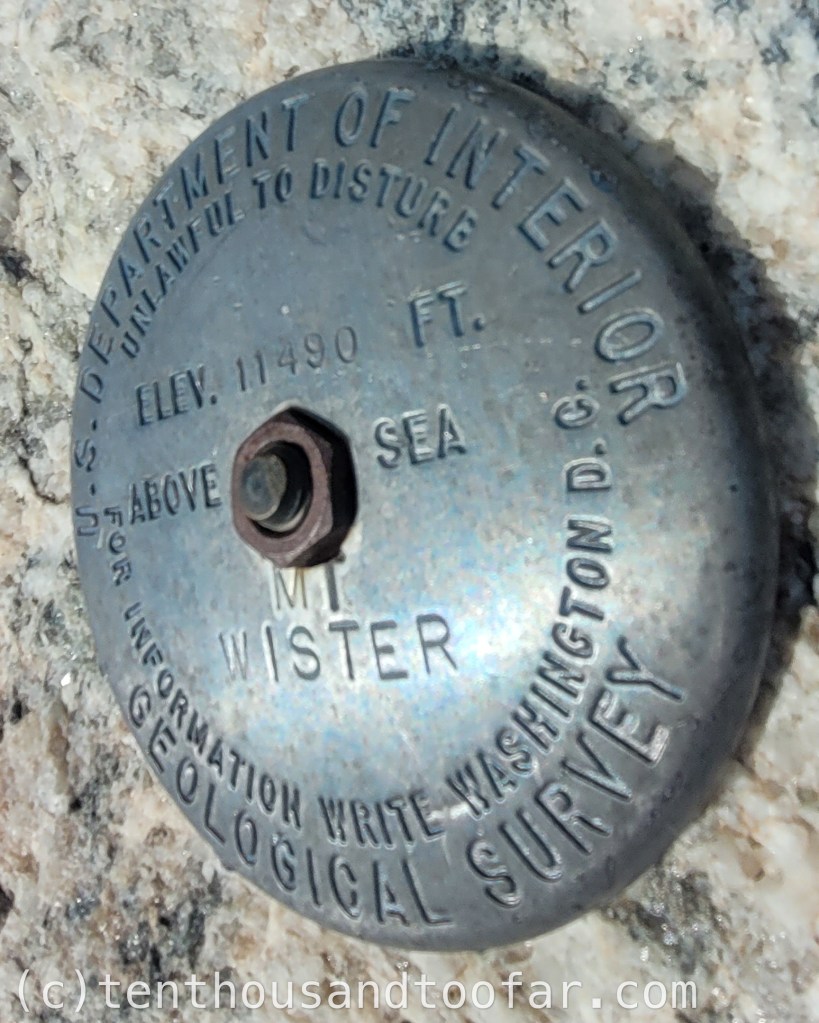
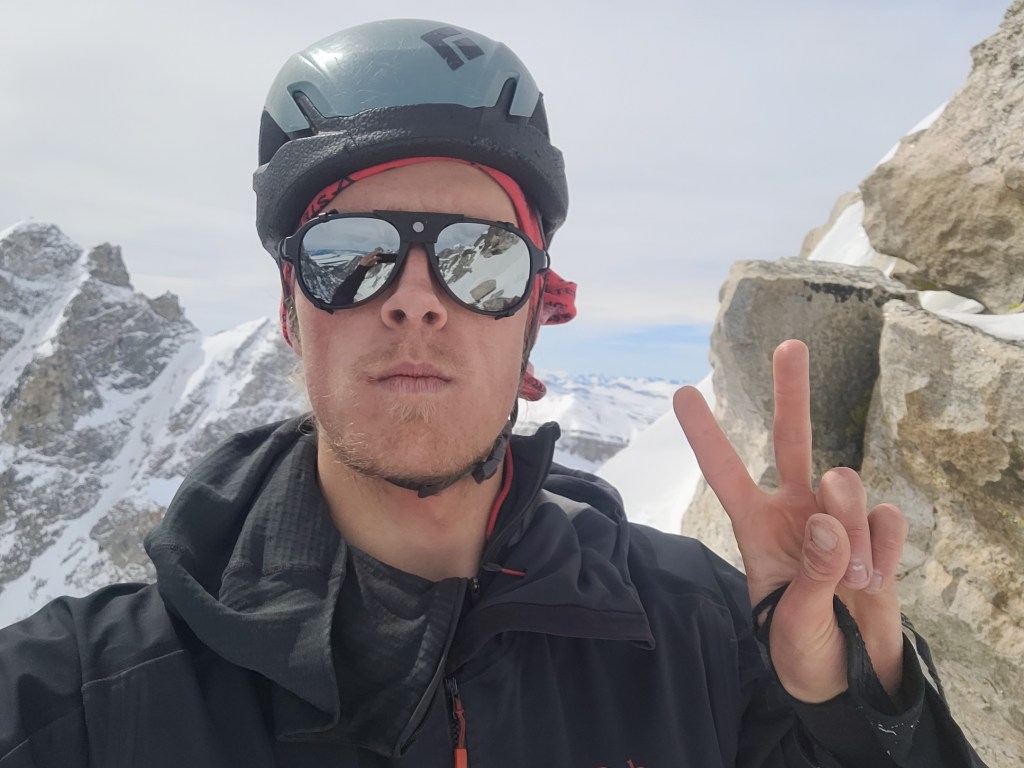
Although I have personal connections to the first descentionists, I decided to forgo beta and approach this dream with an onsight mentality. The only formal information I had was second hand, tales of unreliable anchors likely swept away or compromised by gravity and nature. I was looking forward to deciphering the puzzle of the mountain myself, and in hindsight this approach would make the whole experience extra fruitful – much like Hayden Evans and I’s recent descent of the Bubble Fun Couloir. I left the car around 6:00AM and made my way directly into Avalanche Canyon, reaching the summit around 11:00. Despite high wind forecasts the day was remarkably docile, with gentle south gusts and cloud whisps interspersed by periods of bluebird quietude. The bulk of the climb was a mix of bulletproof or breakable crust, but the upper neck of the North Face, visible from the summit, had an inviting, seductive, wind buffed texture. A complex ridge void of snow connects the summit to the beginning of the descent, which the first descentionists were able to down-climb but left me befuddled. I down-climbed about 100 feet of fourth class terrain until a convenient boulder facilitated a 50 meter tension-traverse rappel onto the face. I was elated to land in shin deep unconsolidated powder – quickly digging a hand pit to confirm stability, pulling my rope and setting a short boot-pack to the top of the snowline. The top 100 feet was steeper than I expected, a sustained pitch of 54 degrees according to my inclinometer. I was donning a brand new, never ridden, pair of Black Crows Camox Freebird skis for the descent and couldn’t help but chuckle – what a way to test out the new sticks.


The North Face begins with alarmingly steep turns that quickly belly out to a sustained snowfield in the 40-45 degree range – ski mountaineering casual if not for the 300 foot cliff and shallow snowpack underpinning every turn. Fortunately I had nothing short of stellar conditions, allowing me to fluidly ski the entire 800 feet in two pushes. A blind rollover with exposed rock nearing the edge prompted a quick photo consultation before commitment, and as I wove jump turns through the rock islands I kept speed in check, core tight, technique sharp, lest I hook a tooth of hidden granite. I found a mangled anchor from the first descent party near the top of the chimney – a rusted yet trustworthy #0.75 Camalot tied to a fully dislodged DMM stopper lying in the snow, with a loop of core-shot cord that had either fallen victim to rockfall, a curious marmot or both. Reaching the anchor required some committing dry ski shuffling on a glazed granite slab, and a reach with my whippet pick to snag the master point. Hopefully the first descent team had a more favorable ski interface than I.

I doctored up the dicy one piece anchor with two stoppers and fresh cord, rigged my 6mm Edelrid Rap Line with a Beal Escaper I borrowed off a friend that morning, and threw my rope into the dark chimney knowing I almost certainly wouldn’t hit the ground. Since I was in such a rare location, benefitted from excellent snow and came here to ski, I then detached from the anchor and made four more jump turns to the true edge before clipping into the rope for descent. Right about here I got a little laissez faire with my systems – thinking I had the cat in the bag – and proceeded to drop my last loop of anchoring cord and one glove off the mountain. Then I descended a bit too fast and literally rappelled into my stopper knot. As my downward progress came to an alarming halt I realized I was dangling on a slightly overhanging bulge of granite with no convenient means of re-ascent, no fixed anchors available and no cord to build another anchor. My original plan for a mid-chimney anchor, should I not have found anything fixed, was to cut a loop off my rope – but that train had officially left the station – I was stuck. I am both embarrassed and proud of the events that transpired next – embarrassed because I spent the next hour dangling from a cliff at 10,500 something feet as the result of my own carelessness, but proud because I actually had the skills to troubleshoot and self-rescue. First I pendulumed to the nearest available crack and built a four piece anchor from two nuts, a knifeblade and a large pecker. I equalized the lot with the shredded cord I cut off the original first anchor, taking care to isolate the coreshots on the worst anchor pieces, and use the healthy segments for the strongest two anchor pieces. I tied my backpack with skis, and poles, off to the anchor and prepared for phase two. To release the Beal Escaper I would need to reascend the rope and find a way to fully unweight it, so I could pull the rope the requisite number of times required to release the device. I was hanging on a vertical wall nearly void of ledges so I had to get creative. I used my Black Diamond Piolet and some sloping handholds to drytool up the chossy crack, desperately edging on icy granite with my ski boots, backed up by a friction hitch on the rappel rope, until I could fiddle in a stopper and clip into it with my Metolius PAS to rest – essentially mid-winter, no aiders, one tool, solo aid climbing in ski boots. I repeated this tactic for another body length until I was high enough, and clipped to worthy enough gear, to detach from the rope and begin pulling. Given the mechanical disadvantage of free-hanging in a ski-mo harness on smooth granite clipped directly into two stoppers, releasing the Beal Escaper took well over 100 pulls. By the time my rope came careening down the chimney I was sure I’d torn both my rotator cuffs. I rigged a single rope rappel off my best piece (yes, I rapped of a single piece, but had been banging on it with my full weight for the better part of half an hour) and lowered gently about two meters until I could clip back into the four piece anchor I had originally built. I pulled the rope once more, threaded through the main anchor and rappelled to the bottom of the chimney with a measly half dozen nuts and pins on my harness, taking great care to ensure my rope ends were touching the snow. I reached with little more than two meters to spare!

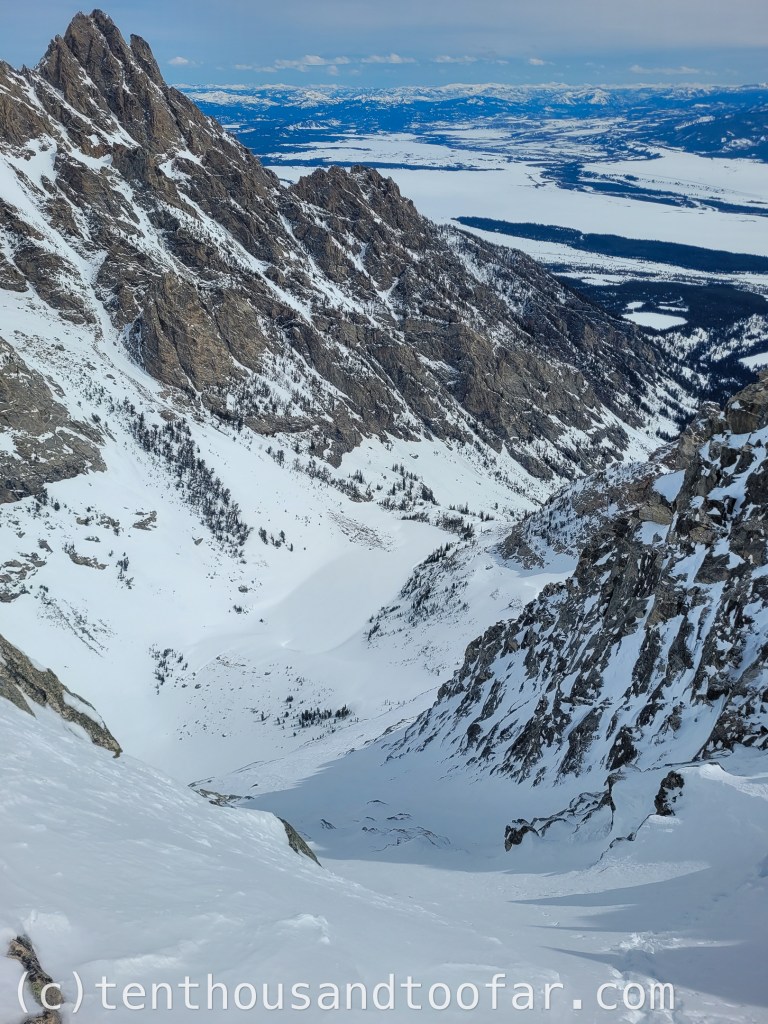
Below the hanging North Face and chimney is one last cliffband with two potentially skiable tounges of snow ending in a final rappel, but as I descended the chimney and craned my neck into the abyss I couldn’t quite tell if either of them were accessible this year. The direct fall line below the chimney was full snow, but looked too narrow and runnelled by debris for skis. And the next chute to the east, where I would later learn Adam, Billy and Mike had descended with better coverage, had an exposed cliffband at its entry and another rappel to exit – an inconceivable task for my dwindling rack. Instead I hung a hard traverse 300 feet east to a third chute that dropped me directly onto the North Wister Glacier without a rappel, where I was able to ski 1300 feet of peaceful powder to the shores of Lake Taminah. It’s interesting to consider that no human had ever made turns on this very patch of snow – quite novel. My initial fire for continuation up canyon to attempt the Northwest Couloir was doused by the hour lost in the chimney, and general reverence for the amazing experience that just transpired. I found a nice boulder on the lakeshore and clicked my skis off for an extended snack break. With a perfect view of the North Face I couldn’t help but sit in quiet appreciation, and thank the mountain for allowing me safe passage.

I’m no stranger to solo ski mountaineering, but this was by far the biggest and most technical face I’ve skied solo, and onsight to boot. I must admit, I leveraged a bit of “real world” stress to pull this one off. In Alex Honnold’s book Alone On The Wall, he talks about harnessing the power of certain life stressors as the extra kick needed to pull off a daunting goal. I resonate with this – and no, it’s not suicidal, reckless or self deprecating. The North Face of Wister is a line I’ve wanted to ski, and knew I had the skills to ski, for years – but the motivation to commit to such a daunting face by one’s lonesome eluded me. However, much like how a runner might go through a difficult moment in life and set out the door for an extended run, ski mountaineering is my way of expressing myself in these snowy mountains I call home – and the scene is painted. I appreciate the clarity that solitary technical mountain adventures, especially on a pair of skis, affords me. I find it therapeutic – meditative – and given my experience on skis in the mountains, relatively low risk. That said, I had a rare case of the nervous jitters when I rappelled onto the face and pulled my rope, without any practical means of retreat. I was committed, and commitment is the word that flashed through my mind over and over again as I ruminated on this adventure in the days proceeding. In some ways the skiing is actually quite routine, reminiscent of the Northeast Snowfields on Mount Owen or East Face of the Grand Teton. There’s plenty of space to make as many turns as you need, and once you’re through the top 100 feet the gradient eases off substantially – I measured 43 degrees approaching the anchor. However, the extensive down-climb or rappel in, the rollover with tricky route-finding between rock islands nearing the edge, the likelihood of fixed anchors being swept away in the North Chimney and of course, the terminal 800 feet of cliffs hanging just a few meters away from your last ski turn raises the stakes a bit. I connected with the first descent team in the hours and days to come and wasn’t surprised to hear they skied a more direct, and arguably stylistically pure, way through the lower cliffband – but I’m no Fabrikant, Haas or Gardner, and I actually found it quite nice to not pull out the rope again. My variation still involved some pretty steep and exposed no fall skiing to sneak through to the glacier (the picture is a little deceiving), and the lower snow coverage this year probably would have necessitated two rappels to ski their variation (one entering the tongue, and one exiting) as opposed to the singular exit rappel of first descent. All in all, I am satiated with my “less ropework the better” style, and don’t feel a pull to return to the face lest the direct fall line beneath the chimney were to fill on a unique year. I think that would be the plum prize. The North Face of Mount Wister was a rad line, and I feel proud and honored to do the second descent. I hope more people enjoy this worthy objective in the years to come. Hats off to Adam, Billy and Mike for their vision, and for having the skills to open the door for the rest of us.
Want to support? Consider a donation, subscribe, or simply support our sponsors listed below.
Ten Thousand Too Far is generously supported by Icelantic Skis from Golden Colorado, Barrels & Bins Natural Market in Driggs Idaho, Range Meal Bars from Bozeman Montana and Black Diamond Equipment.




enter your email to subscribe to new article updates
DISCLAIMER
Ski mountaineering, rock climbing, ice climbing and all other forms of mountain recreation are inherently dangerous. Should you decide to attempt anything you read about in this article, you are doing so at your own risk! This article is written to the best possible level of accuracy and detail, but I am only human – information could be presented wrong. Furthermore, conditions in the mountains are subject to change at any time. Ten Thousand Too Far and Brandon Wanthal are not liable for any actions or repercussions acted upon or suffered from the result of this article’s reading.
 Ten Thousand Too Far