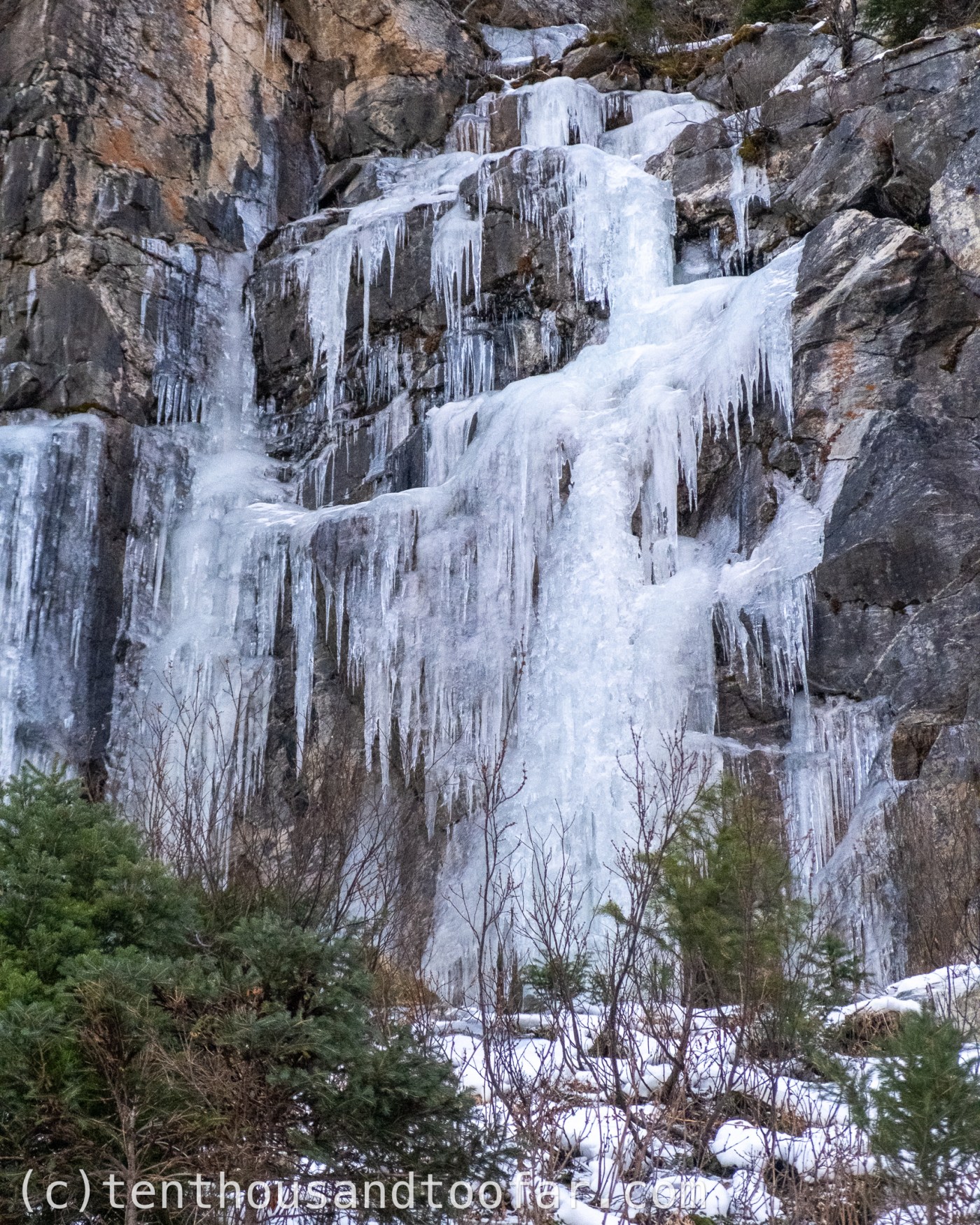
A bike-ice-bike kickoff to the Grand Teton National Park ice season in Cascade Canyon- a proper pump before a Tofurky feast on Indigenous People’s Day.
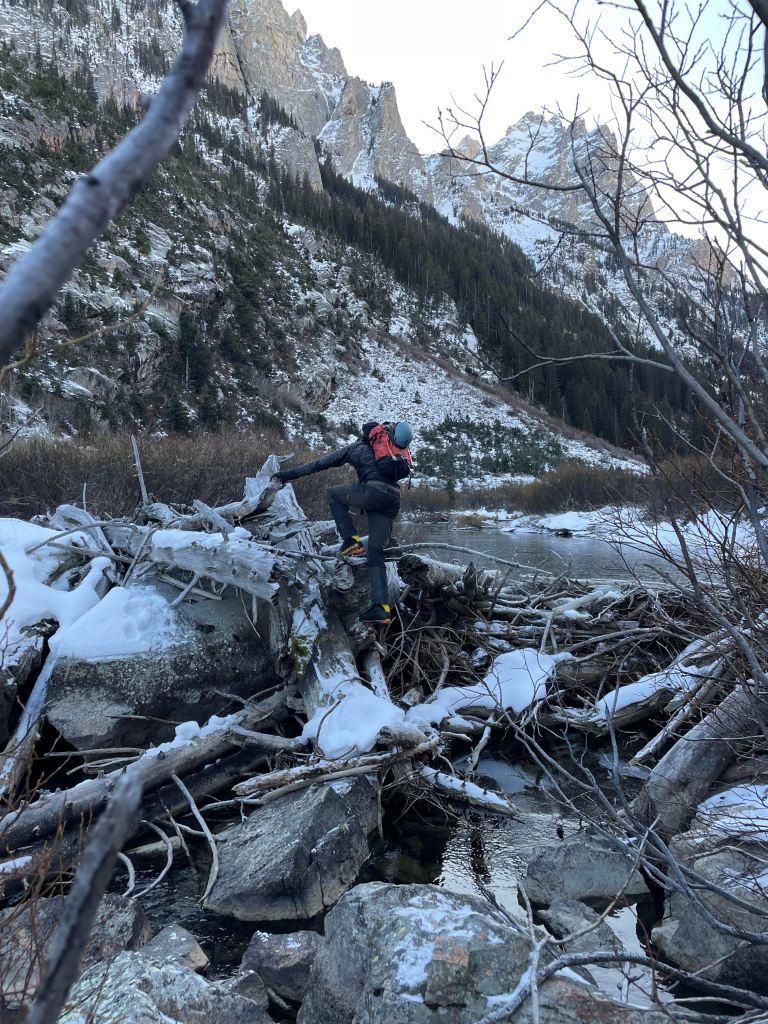
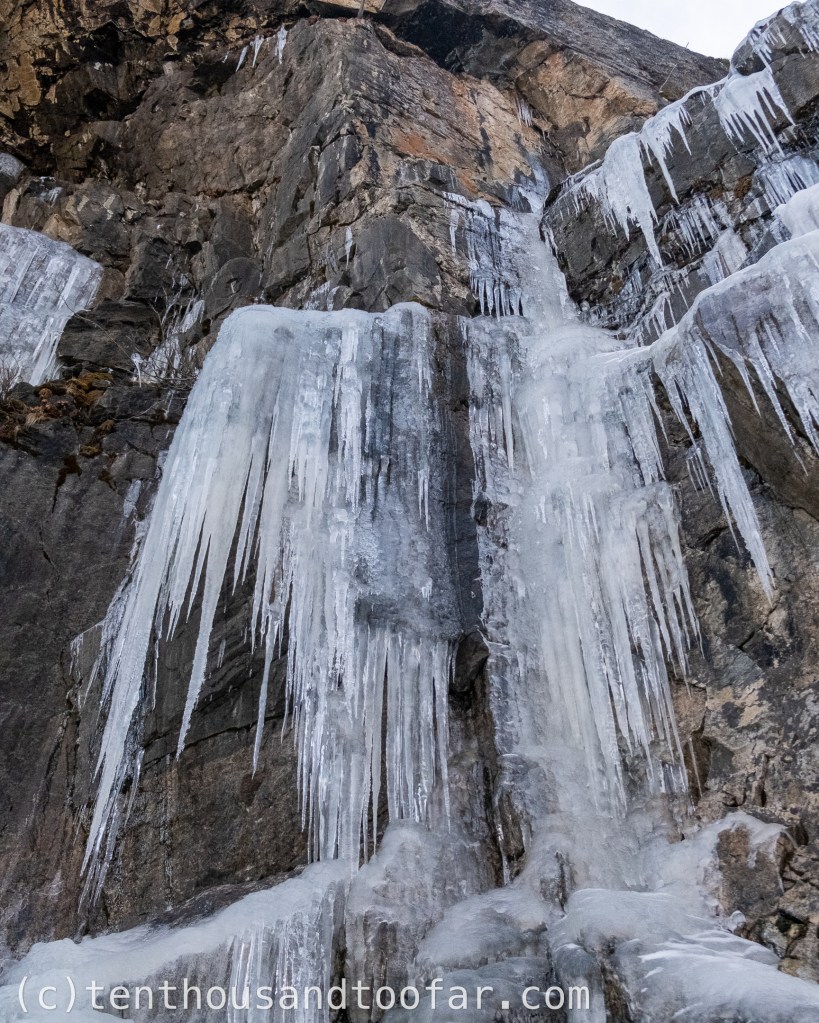
Ice ice baby! After two fruitful yet strenuous trips to the high elevation North Face of Sphinx Mountain, the Northern Rockies’ renowned early season ice venue, I finally got to swing some tools in the ol’ backyard. Vinny Gwynn and I left the Bradley-Taggart trailhead by bicycle around 7:45AM, headed for Jenny Lake and Cascade Canyon. Cascade might have the highest concentration of ice climbs in the range, but once snowbound access becomes a nearly unreasonable eight-ish mile ski. Today we took advantage of a dry park road, knocking off the first five miles with two rubber tires. Three miles of sneaker hiking took us into the gut of Cascade. There are three “climbs” on the initial North Gullies of Teewinot Mountain, aptly named North Gullies “Left”, “Center” and “Right”. The Center and Right lines are eloping rambles of steppy ice early season, steeper and shorter nuggets with the lower pitches mostly buried by winter, between WI2 and WI3 each. The Left is a shorter but significantly more strenuous outing, forming anywhere from a 20 meter technical WI4+ pillar in early season to a buffed out WI3 by mid-winter. Crossing the creek “can be the crux”, as stated in the Teton Ice Guidebook, but we found a convenient beaver dam just west of the climb. 500 feet of willow stricken bushwhacking leads to the base. We arrived about three hours after donning bikes.
Love Ten Thousand Too Far? Support independent mountain journalism with $5.10 per month through Patreon (and receive extra bonus content), or with a one-time donation. Any and all support is greatly appreciated.
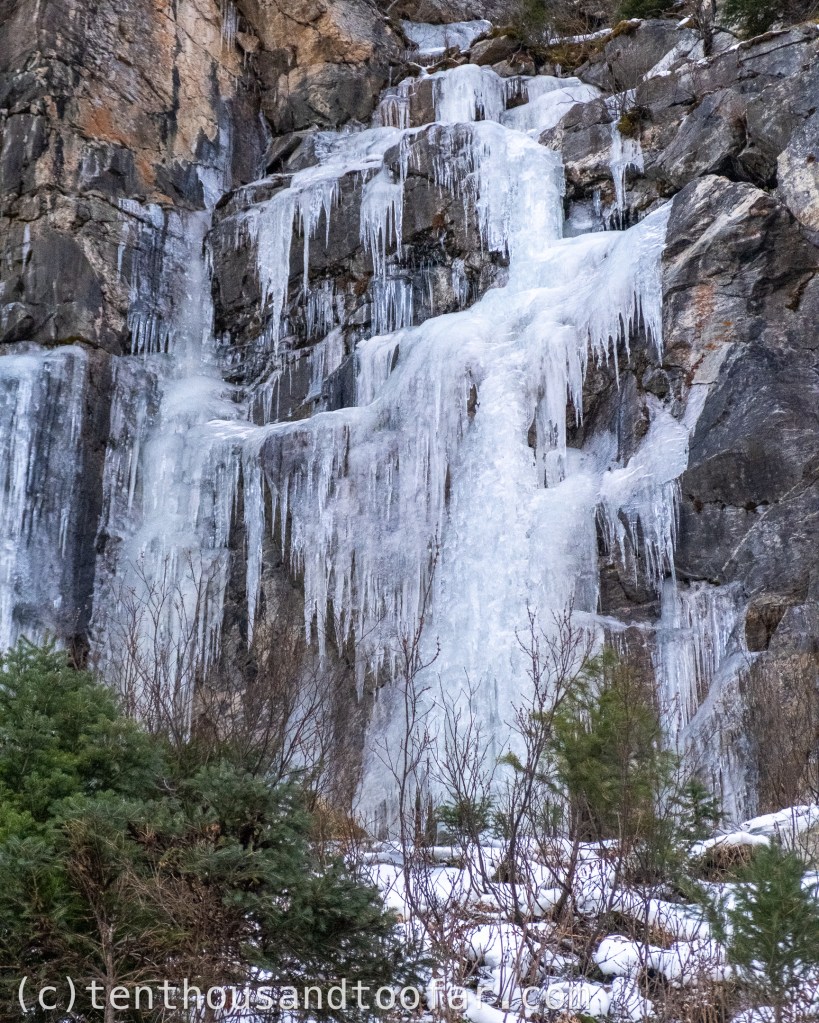
The climb itself was exactly as the book promised, a technical, delicate, candled, vertical adventure with an interesting finish on a body-height mini-pillar in a rock corner. The initial pillar, fortunately well adhered to the rock behind, was strenuous, with lots of exhaustive clearing needed to place reliable protection. The second step “mini pillar” had less inspiring ice, but protected well with a medium sized cam in a horizontal slot. The ice atop the climb was too thin for v-threads, so we donated a rock anchor for abseil and ran three top-rope laps until a healthy pump and setting sun called us towards bicycles.
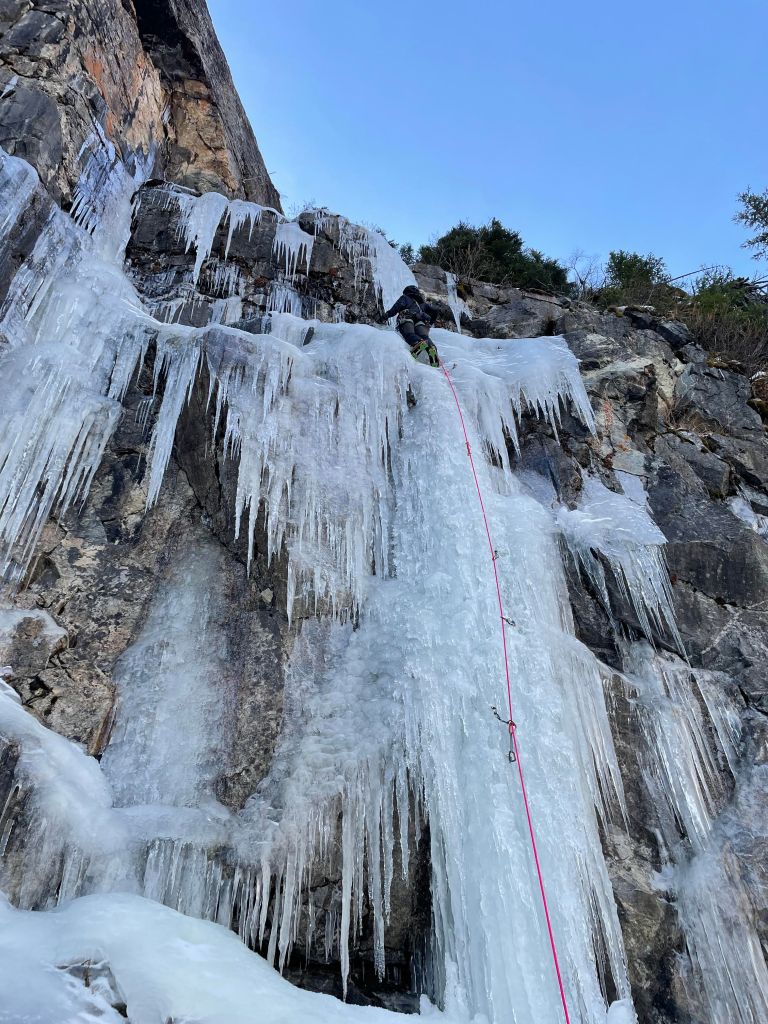
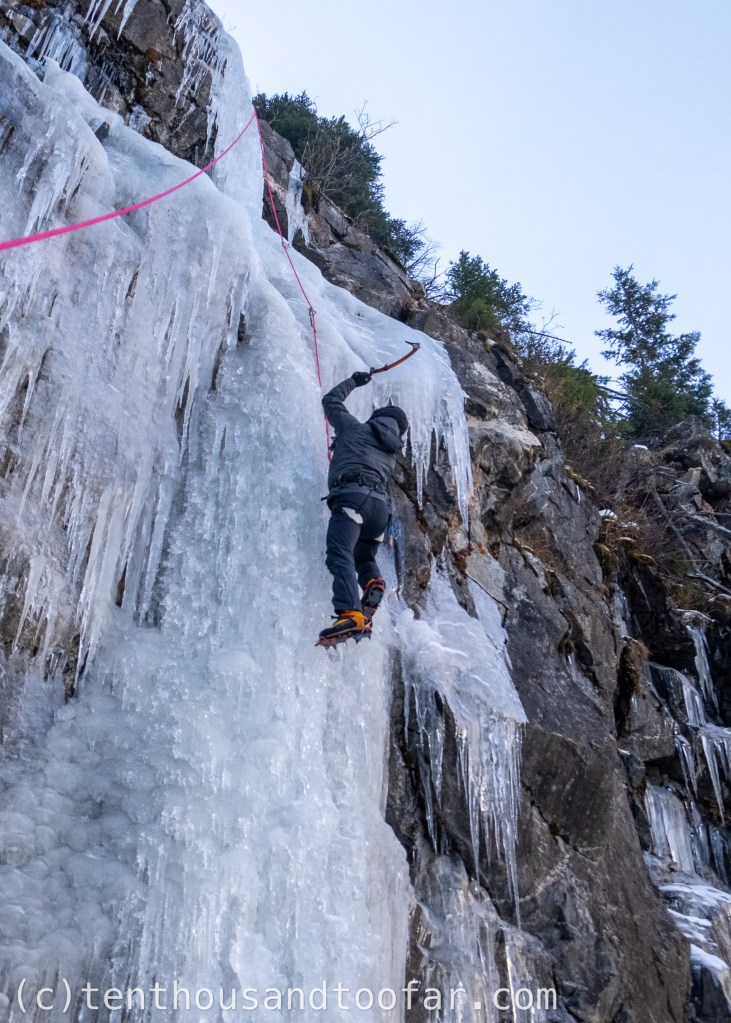
We returned to the car at a causal nine hours round trip – ballpark ten bike miles, eight trail miles and 200 feet of pumpy ice! Single pitch ice climbing in Cascade Canyon is a labor of love, but provides a nice early season alternative to the increasingly popular Death Canyon climbs. There also happens to be a “well protected mixed route in a corner” just left of the climb, at the grade of M6, WI4. We did not climb Smells Like Money, but spotted six modern bolts of reasonable spacing leading to a single bolt just beneath a black roof with a fixed quick-link (single bolt anchor?). A variation after the fourth bolt led climber’s right, with one additional bolt, back to the ice. If bolt-protected mixed climbing is your thing, or the pillar doesn’t touch, I believe six quick draws would get the job done. No traditional gear appeared necessary, but this is unverified.

Climber’s Notes – Rack and Resources
Screws to comfort with a few shorties should get the lead done in most conditions. A medium sized cam (Red Metolius #4) can be placed at the second ice step in thin conditions. The rock anchor above the second step may or may not get covered as the season progresses. Trees above the second step, or ice screws, will likely be the preferred anchor/descent option mid-winter. Descent from the second step rock anchor is about 20M. Continuation above will obviously extend the rope requirement. Setting a top-rope appears possible, but would involve a steep, bushy and aggravating journey up the hillside west of the climb. Like most ice climbs in GTNP, the Teewinot North Gullies have significant overhead avalanche danger.
The Teton Ice guidebook is the best resource for ice climbs in the Teton Range.
Ten Thousand Too Far is supported by Icelantic Skis, Range Meal Bars and Black Diamond Equipment.
Ten Thousand Too Far is also supported by reader donations. If you’ve used this website to plan an epic adventure, consider kicking in a few bucks. The hours spent writing these articles are fueled solely by the desire to enhance our vertical community.
Enter your e-mail to subscribe to updates from Ten Thousand Too Far, only alerts from new posts, nothing else!



DISCLAIMER
Ski mountaineering, rock climbing, ice climbing and all other forms of mountain recreation are inherently dangerous. Should you decide to attempt anything you read about in this article, you are doing so at your own risk! This article is written to the best possible level of accuracy and detail, but I am only human – information could be presented wrong. Furthermore, conditions in the mountains are subject to change at any time. Ten Thousand Too Far and Brandon Wanthal are not liable for any actions or repercussions acted upon or suffered from the result of this article’s reading.
 Ten Thousand Too Far
Leave a comment