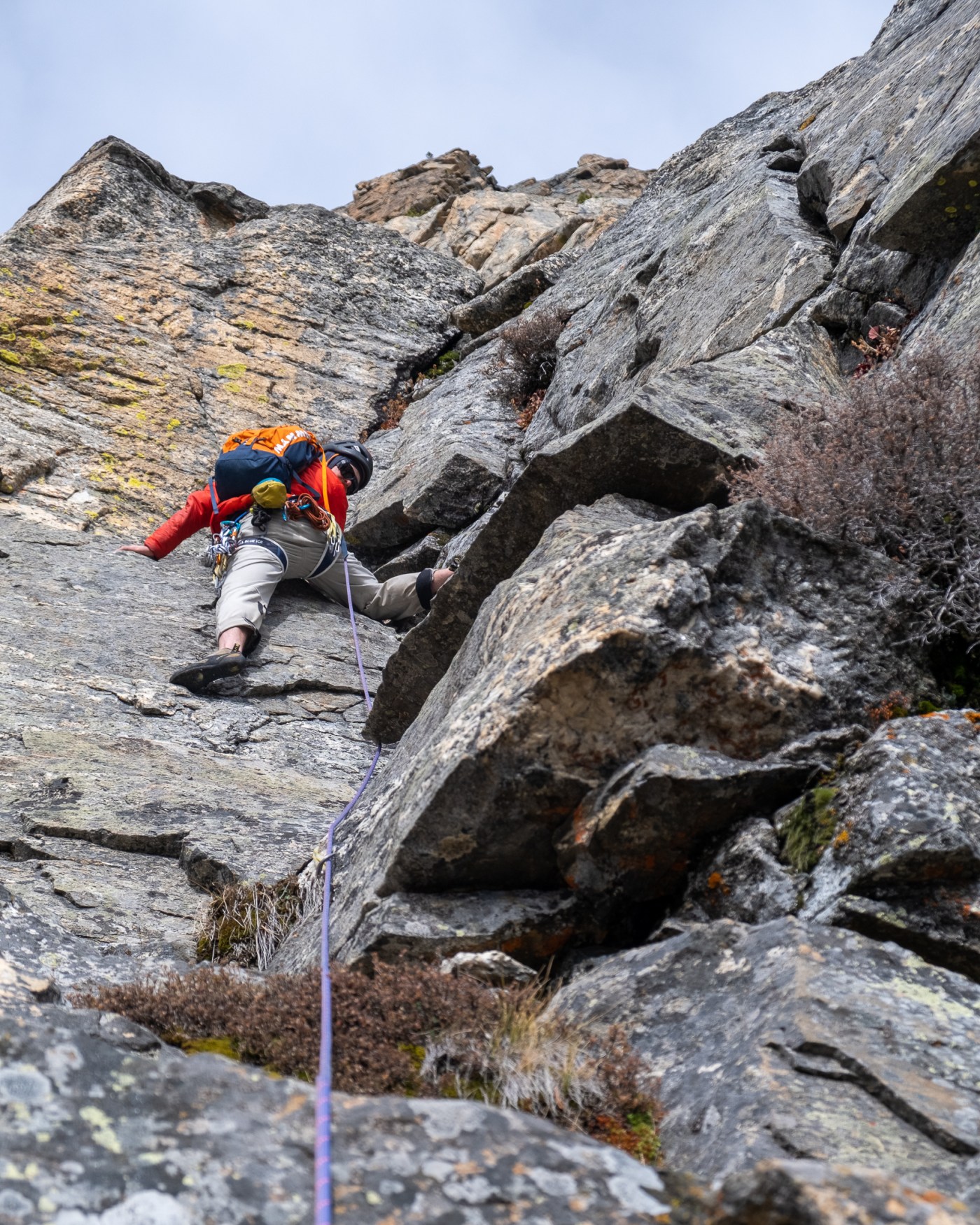
The Durrance Ridge is a classic south-facing alpine moderate on Symmetry Spire. Our motivation to climb was two-fold: search for some lost gear the week prior, and enjoy a final alpine day before the impending onset of winter.

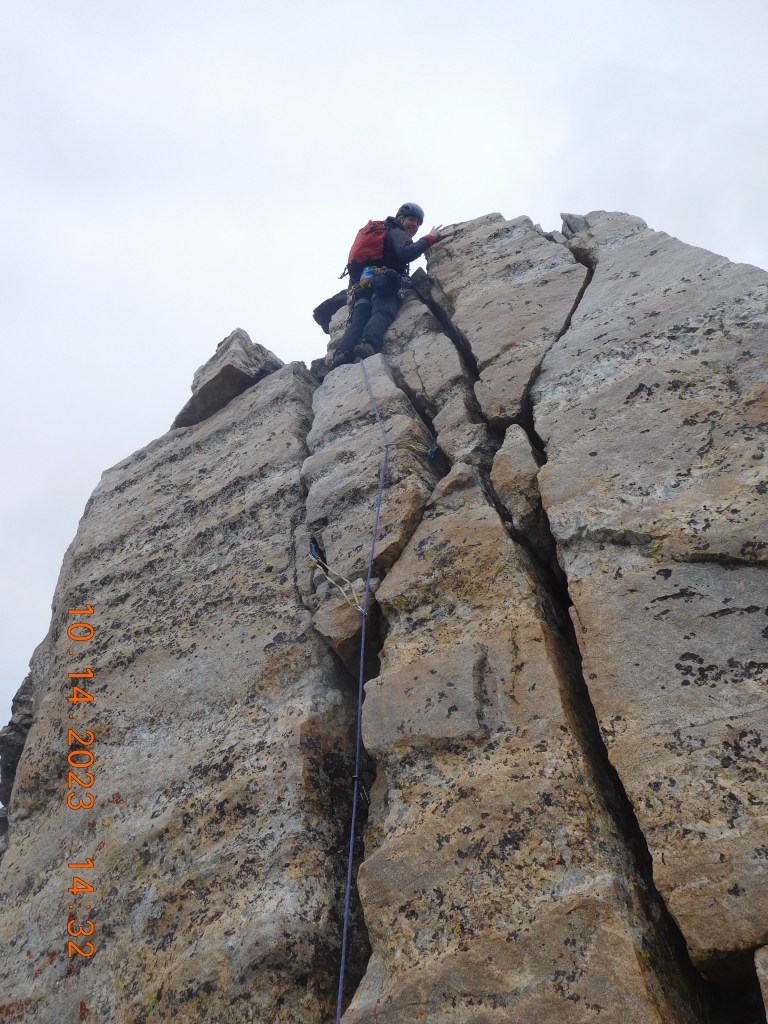
Wow! What a treat. After an adventurous outing on the Direct Jensen Ridge (5.8, III) only six days earlier left emotional scars of rope drag and heady runouts, the Durrance arrived like a warm fuzzy blanket to tuck Teton rock season into hibernation. Never say never, but something tells me alpine rock will be closed for business after this week’s snow and subsequent cold snap. Scott Melin and I climbed the Durrance in an efficient six pitches and final pleasant solo. There was snow on the ledges and even periods of light snow, but the bulk of the day was radiant sun that felt almost like July when the wind wasn’t swirling. The rock on the ridge was primarily that golden bullet Teton granite dreams are made of. After the first pitch, which began just left of the toe of the ridge in an obvious black chimney with two fixed pitons, we back pocketed the topo and climbed the crest, involving many pleasant low-angle crack pitches up to 5.7 interspersed with easy-fifth class rambling. Modern topos seem to suggest intermittent dips left of the crest to avoid certain difficulties, but we didn’t see the need. Our intentions were to climb the 5.8 black dihedral variation to the final pitch listed in the Gams guide, but a snowy ledge traverse barring access and some relevant icicles above the corner nudged us towards the traditional 5.6 corner finish, which was more awkward than expected for the grade with superb positioning on the ridge.
Love Ten Thousand Too Far? Support independent mountain journalism with $5.10 per month through Patreon (and receive extra bonus content), or with a one-time donation. Any and all support is greatly appreciated.


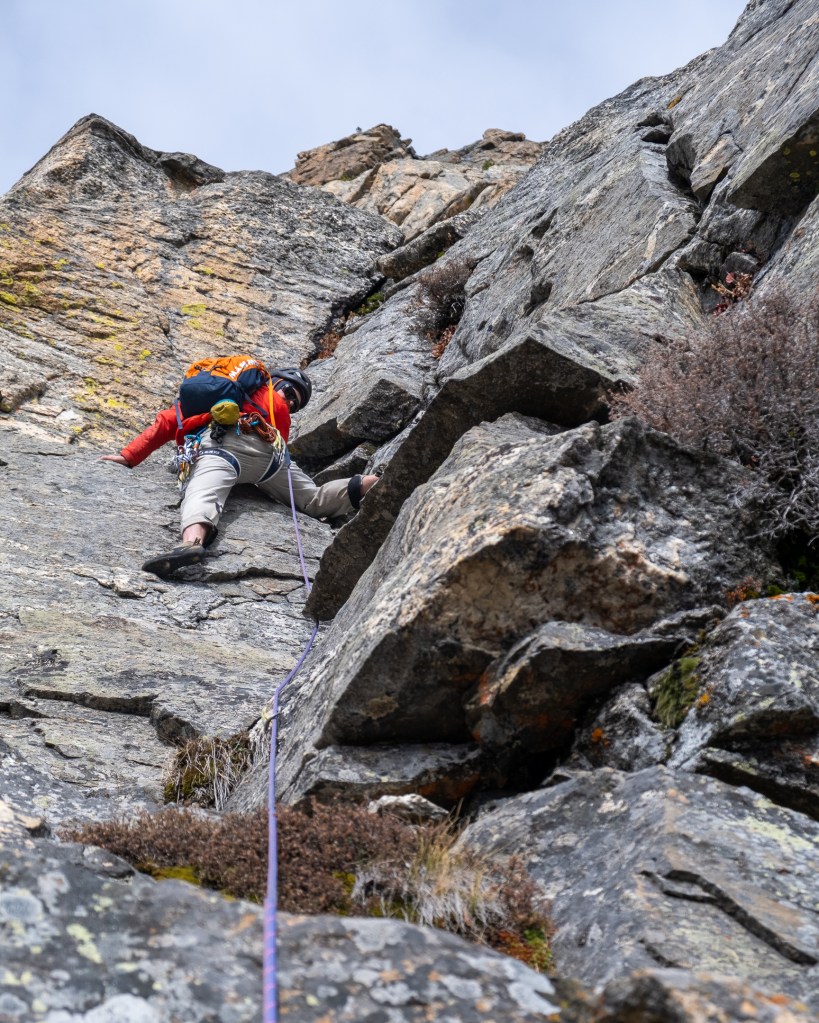
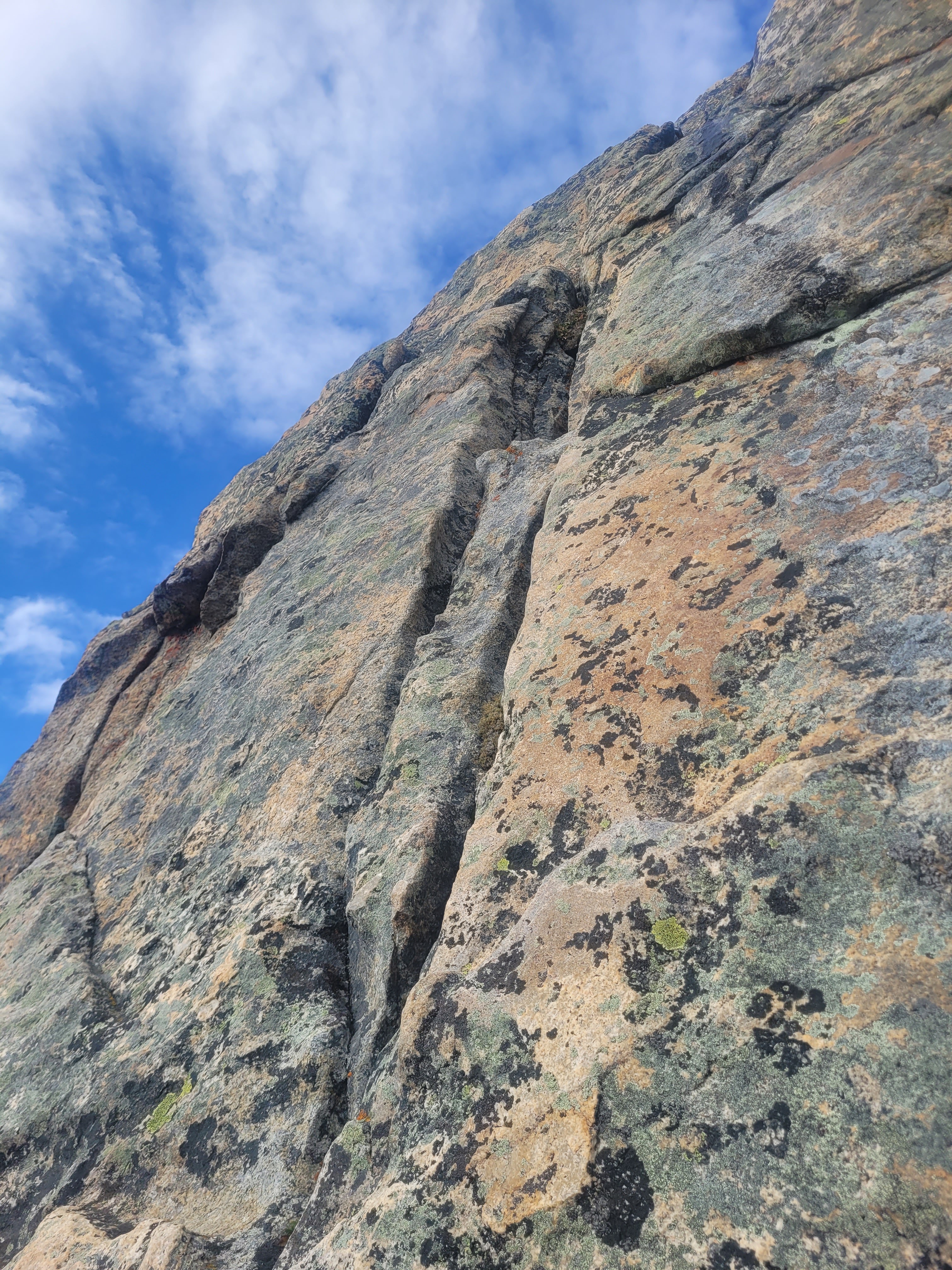

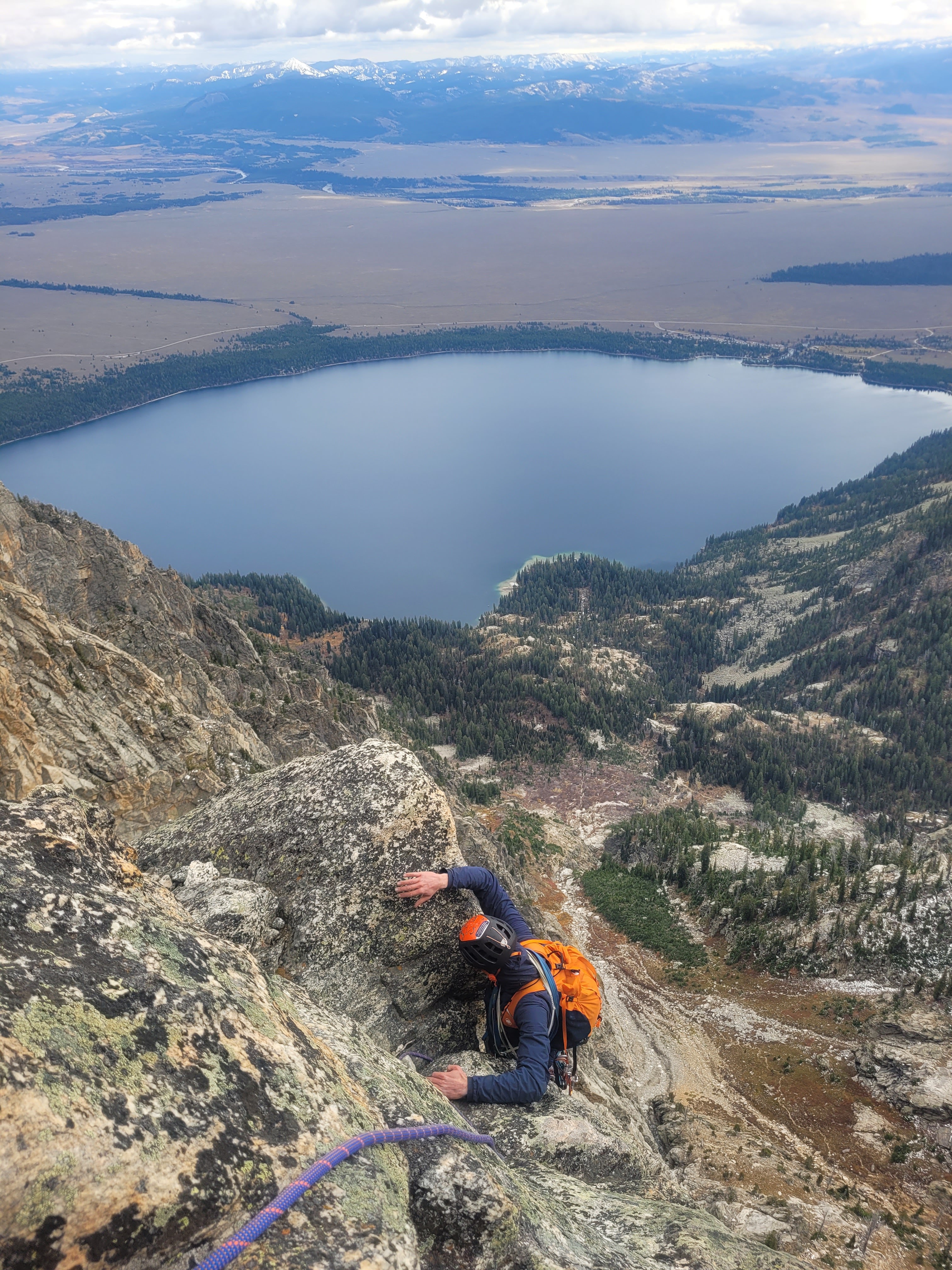
Above the Durrance Ridge we scrambled a few hundred feet to a gendarme impeding passage to the notch rappel station and summit scramble. This tower offered seemingly easier terrain on the east, but an attractive steep double crack system on the crest proper called our name. 30 feet of clean but short lived 5.7+ jamming and compression overtook the tower, from which we traversed to the notch and ultimately soloed the Upper Southwest Ridge. Six days prior Neil Gleichman and I soloed west of the notch rappel, which involved a short-lived but airy 5.6 hand traverse to easier terrain. This time, Scott and I tried steep ledges on the east, which provided an easier but more sustained path, maybe 5.2. The summit was rewarding, but the chilling winds of late fall and extensive snow across the range reminded us winter is indeed coming at any moment, and the descent could be involved.

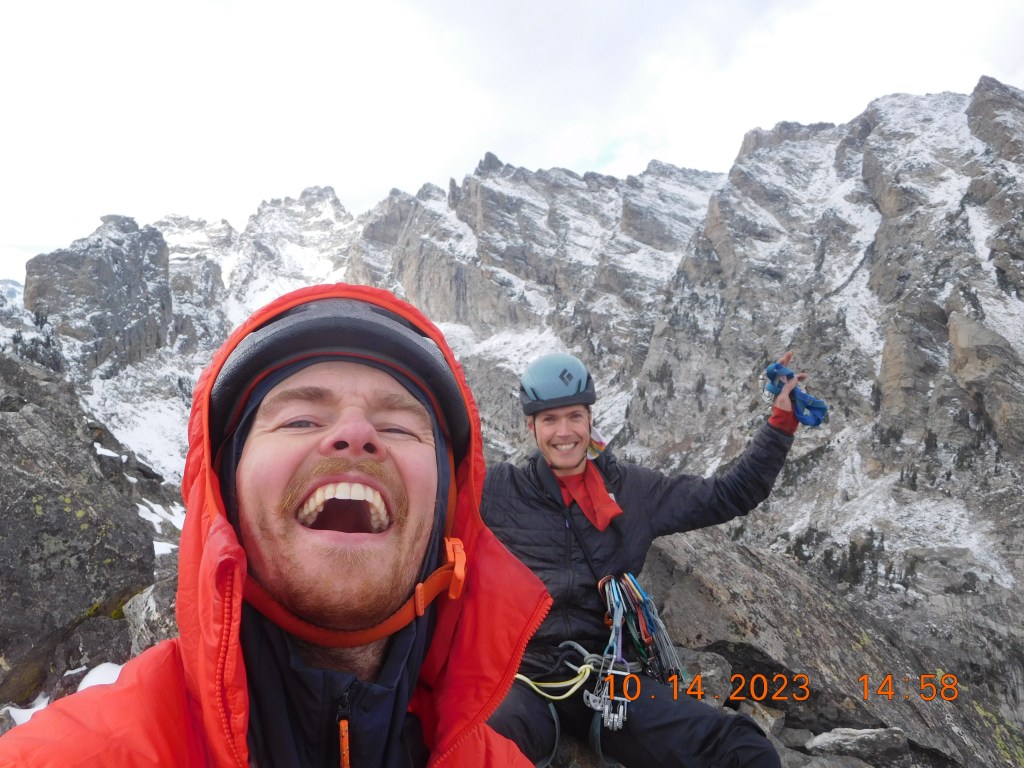
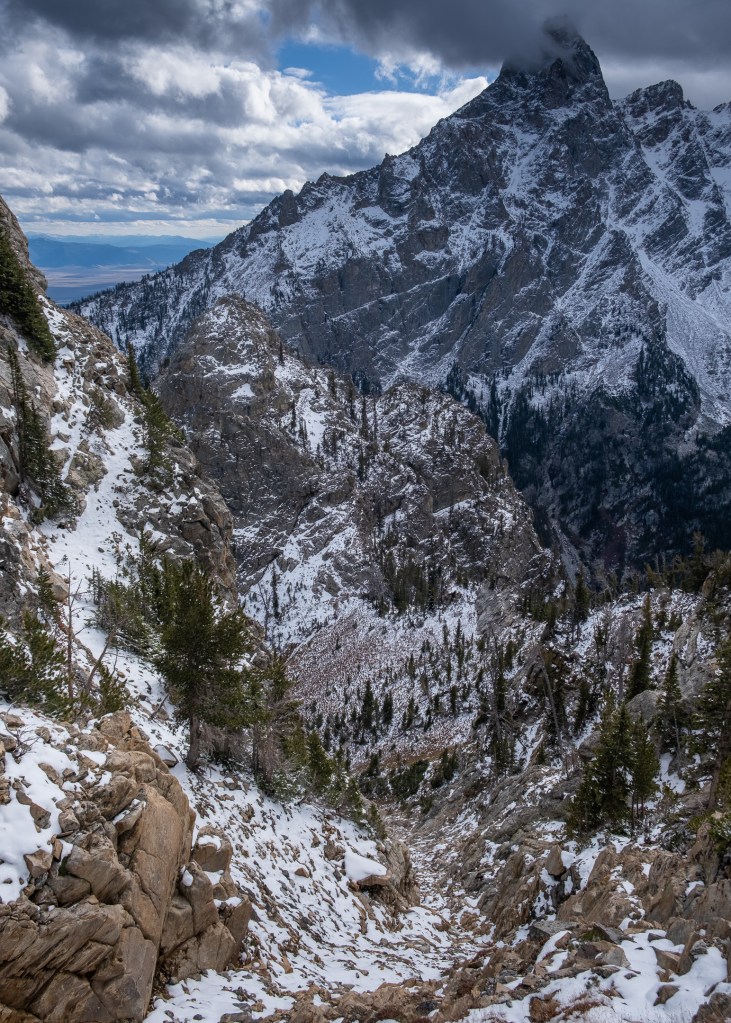
We descended by way of the same Southwest Ridge rappel station Neil and I installed the previous week (see Direct Jensen Ridge for more detail), followed by the traditional rappel into the Southwest Couloir. Unlike last week, the couloir was now wall-to-wall with patchy snow, and the ledges beneath the rappel funneling into the couloir were chocked with anywhere from 6-24 inches of slop. Slow and methodical down climbing over icy steps and chimneys, sans crampons, brought us to a tree for one last rappel into the couloir proper. With every 500 feet lost in elevation the snow halved, and by 9,500 feet we were back on scree, with wet socks and happy souls. The initial inspiration for a late foray into the high alpine was born from dropping my approach shoes off the Direct Jensen and leaving a pair of rappel gloves in the Symmetry Couloir, both of which I hoped to find this day. Sadly, all I recovered was two squirrel desecrated gloves, leaving the true prize of October 14th, 2023, as a smooth salin’ season ender on a classic ridge I cannot wait to repeat in the years to come. The Durrance Ridge marked my 27th complete alpine route in Grand Teton National Park this summer, for a total of 158 pitches and at least 1,000 smiles. Man, do I love climbing in this amazing place. Thank you to all the people that shared a rope, smile and memory the past few months. A separate reflection is soon to come.


Climber’s Notes (Rack, Extra Beta & Splits)
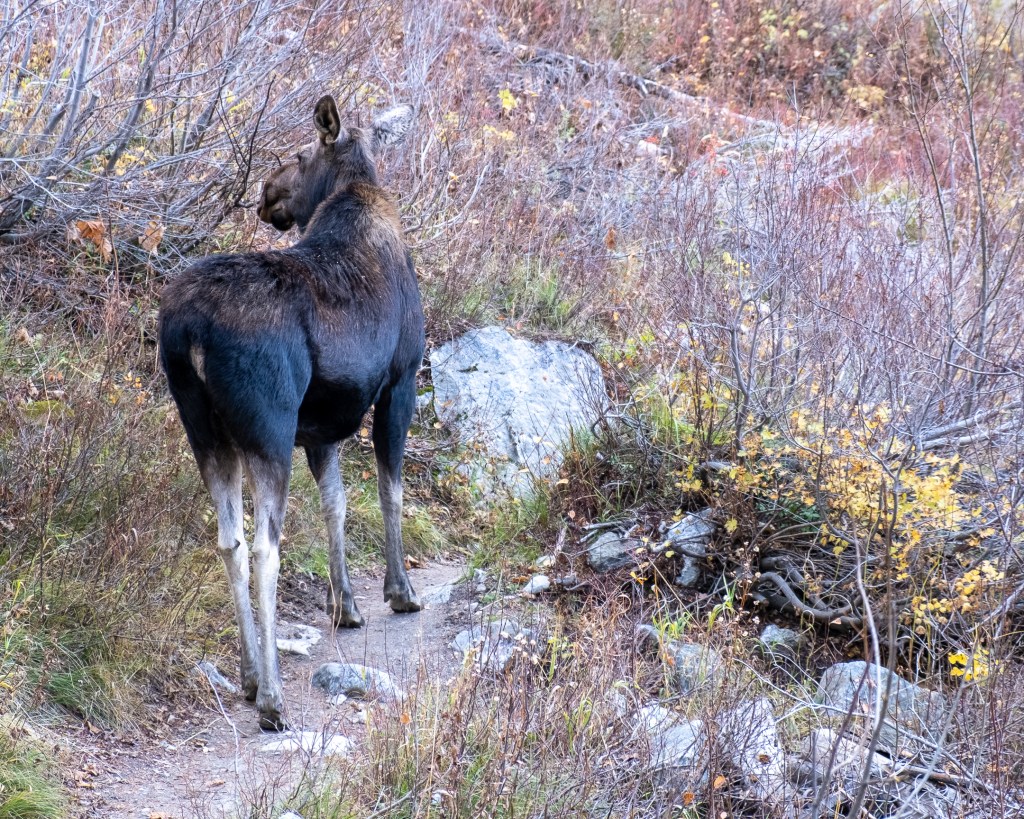
We pleasantly climbed the Durrance Ridge with a light rack of cams from finger size to 2.5 inches, a set of wires and a 60M rope. Long slings as always are quite handy in low angle alpine terrain. If planning on the notch rappel and not the Northwest Ledges down-climb, I wouldn’t bring shorter than a 60M rope (50M might work?). If uncomfortable soloing fourth and easy-fifth class terrain, reaching the summit will add an additional few pitches. Though only (and fairly) rated Grade II, this route could easily turn into an all day fiasco if pitched out and zipped up completely. It does, after all, involve some 1,000+ feet of rock! We comfortably climbed in `10 hours car-to-car at a casual but consistent pace, complete with snow, ice, ample soloing, simul-climbing, three rappels, one lost PB&J and two moose.
For extra information on the Symmetry Couloir approach, see my post from the Direct Jensen Ridge. Reaching the Jensen involves scrambling to the base of the Durrance, then down into Templeton’s Crack. The Durrance is listed in all three current Teton rock guidebooks by Ortenburger/Jackson, Gams and Rossiter, though a topo is largely irrelevant for this route. The only appealing variation to this route is on the final pitch of the ridge, where an obvious right facing black dihedral can be climbed about 50 feet left of the crest at 5.8.
Want to support? Consider a donation, subscribe, or simply support our sponsors listed below.
Ten Thousand Too Far is generously supported by Icelantic Skis from Golden Colorado, Barrels & Bins Natural Market in Driggs Idaho, Range Meal Bars from Bozeman Montana and Black Diamond Equipment.




subscribe for new article updates
DISCLAIMER
Ski mountaineering, rock climbing, ice climbing and all other forms of mountain recreation are inherently dangerous. Should you decide to attempt anything you read about in this article, you are doing so at your own risk! This article is written to the best possible level of accuracy and detail, but I am only human – information could be presented wrong. Furthermore, conditions in the mountains are subject to change at any time. Ten Thousand Too Far and Brandon Wanthal are not liable for any actions or repercussions acted upon or suffered from the result of this article’s reading.
 Ten Thousand Too Far
Leave a comment