
On Saturday Mike Parri and I climbed the FNG Variation to the classic Aerial Boundaries. This significant four-pitch variation is nearly it’s own route, but benefits from a shared (and excellent) first pitch with the original. Unlike the original, it follows a natural line up a consistent geologic weakness through the upper buttress, with many pitches of physical 5.10 climbing.
Sometimes I waffle between sharing my own personal experience on a route, versus providing a more “prospective climber oriented” traditional trip report. This particular climb presents a dueling narrative. On a personal level, this was my first time on-sighting consecutive pitches of traditional 5.10 in the alpine. At the start of this season Teton 5.10- felt like a vigilante undertaking, something I lost sleep over, and while I was usually met with success, I was often over-gripping, void of style and a little shaky from adrenaline at the next belay. As I move through the season 5.10- became somewhat routine, replaced by the mid-5.10 grades. This particular climb was the first time I felt truly confident and comfortable tying in for one of many battles on a single route at the 5.10 grade, and I was beyond excited, and left slightly emotional, to be able to on-sight all three crux pitches from 5.9+ to 5.10c with a composed demeanor. Alpine climbing is a sport that has captivated my heart and rewarded me with a longing desire to work hard – a cardinal direction I have lacked at times – and for that I am ever grateful. Personal jargon aside, the opposite narrative announces the exciting news that this less popular variation is actually a four-star outing of the highest quality, with varied and sustained climbing at the grade on excellent rock. Though I haven’t climbed the original route, the FNG Variation follows the same geologic weakness from bottom-to-top, an attractive proposition if you are motivated by aesthetics and put off by traversing pitches – extra bonus points for not needing the four and five inch pieces recommended for the neighbor to the left.
The keynote pitches of the climb were one, three and five. Pitch one, shared with the original Aerial Boundaries, offered a cranky 5.10- undercling traverse and subsequent mantle directly off the ground, followed by 30-some meters of remarkably sustained 5.9 laybacking and underclings that had me Ondra screaming with forearms ballooned – some way to warm up! Pitch three was the definitive physical crux, blue collar 5.10, a fist and big hands crack through a bulge and imposing roof, followed by more difficult laybacking after turning the corner. Pitch five offered a committing 5.9+ bouldery start, through another bulge and roof, evolving into a sweet and sustained 5.9 crack that oscillated between hands, ring-locks and fingers with few face holds. The saving grace on all these pitches was excellent protection at every turn, the extra fuel needed to push grades in alpine trad. I would lap each of these pitches incessantly if they got transported to the local crag, and somewhere down the line I will be eager to repeat this route.
In the name of efficiency and a busy week ahead, I’ll conclude with the description and topo for the FNG Variation I recently added to Mountain Project. For those up to the challenge I cannot recommend this climb enough. It is a more sustained and difficult outing than the classic Snaz (5.10a, IV) to the east, and likely of similar character, but with a slightly harder conclusion, than the traditional Aerial Boundaries. We completed the route in a laissez-faire pace of nine hours car to car.


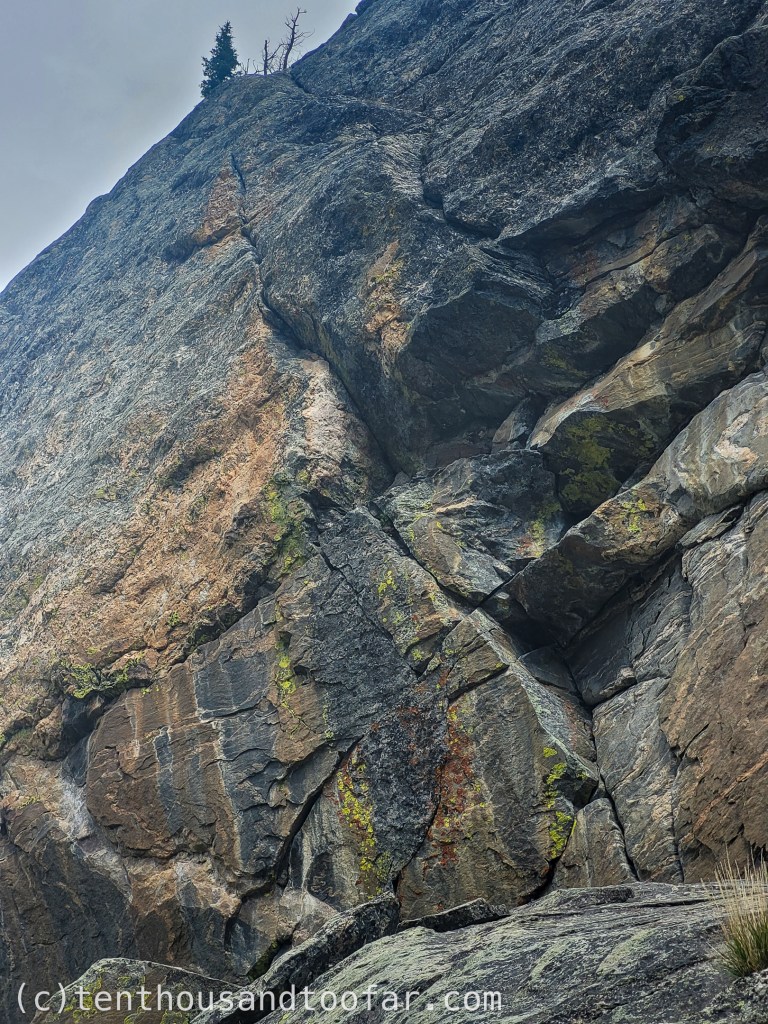
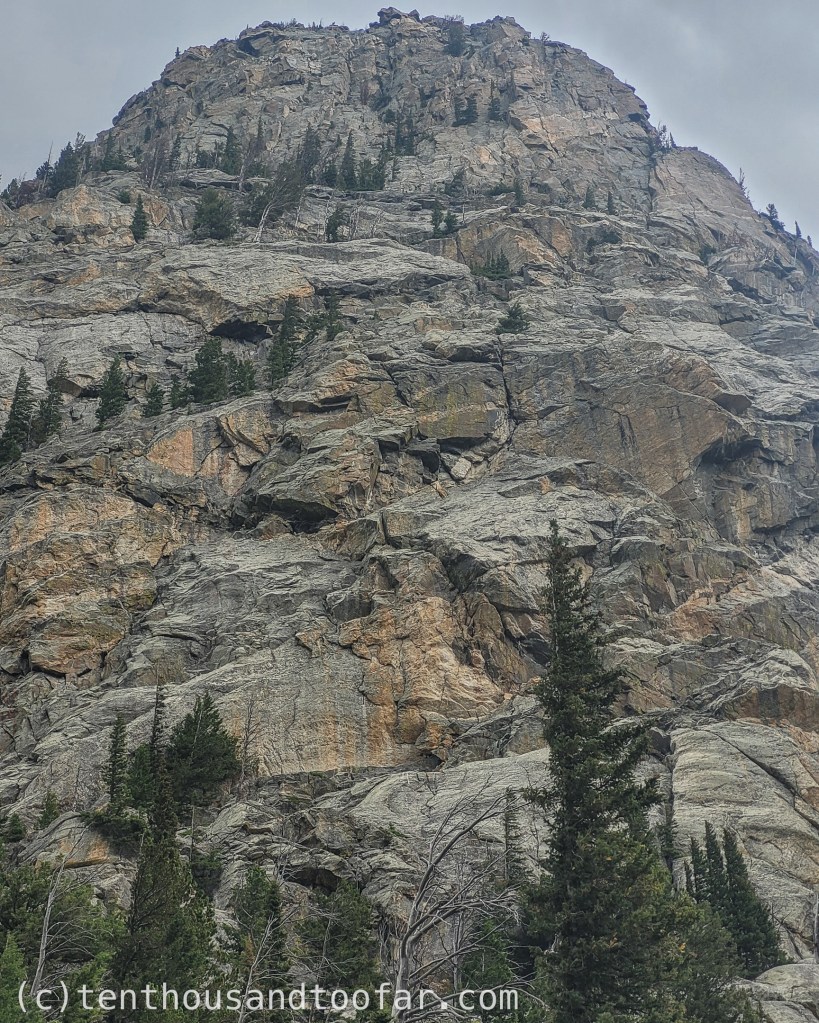
Aerial Boundaries, FNG Variation (5.10c, II)
Description
This substantial variation to Aerial Boundaries could almost be considered its own route, if not for the shared, and absolutely stellar, first pitch. When looking at the Aerial buttress from afar this variation seemed more natural and appealing than the standard route, following the same geological weakness through the vegetated ledge separating pitches three and five, with no traversing or contrived climbing. The original grade given was 5.10-, but pitch three felt fair 5.10/10+ to me, a blue collar big hands crack through a bulge and roof, on slick feet. Overall this climb was very enjoyable on excellent stone, and all the difficult climbing protects great. Another benefit is not having to bring the #4 or #5 as suggested for the original Aerial – a three-inch piece is the biggest you’ll need!
Pitch One**** (5.10a, 40M) – The money pitch! Shared with original Aerial Boundaries. A cranky undercling and subsequent mantle straight off the ground (5.10a) leads to some 30 meters of sustained 5.9 laybacking following an unbelievable flake system. Follow the flakes to their termination, turn the corner, and continue up 5.7 terrain to a mantle and a fixed anchor with rings.
Pitch Two* (5.7, 5.6R, 30M) – Continue up and right above the belay, and step right around the prow when convenient. A delicate move (5.7) will lead to a mantle and a low angle slab with minimal protection. Belay at the base of the next steepening wall, just right of a large black chimney behind a monster flake. There might be some ratty tat right of the belay to guide the way.
Pitch Three**** (5.6R, 5.10c, 50M) – Another money pitch! Climb the easy chimney left of the belay with no real protection (5.6R). At the top of the chimney, an intimidating crack/corner with a bulge and a roof lies just left. Chimney, jam, undercling and layback this blue collar pitch (5.10c) with great protection and bold movement. The crack at the roof is dead parallel three inches, so plan your gear accordingly. Above, rambling 5.8-ish terrain leads to a forested ledge.
Pitch Four (easy, 30M) – Not really a pitch, but listed as one in the OJ book. Locate the dead obvious 5.9+ crack of pitch five and move the belay across jumbled terrain to the base.
Pitch Five*** (5.9+, 40M) – Yet another money pitch. Awkward moves off the belay lead through two bulges into a nice varied fingers, ring-locks and hands crack (5.9+). When the crack peters out and face holds appear, escape right and proceed straight up through gentle slabs (5.6) to the forested ledge above. Trees available for belay.
Descent: Rappel from trees above the top pitch (60-ish meters) to the vegetated ledge above pitch three, or downclimb low-fifth terrain, after following the top ledge east, to the same ledge. From the vegetated ledge above pitch three, hike down and west until the terrain steepens and many slung trees will be found. It could be possible to use a single rope, but we used doubles, so I can’t say for sure.
Location
Shared start with Aerial Boundaries. The orange undercling/layback flake system of pitch one can be spotted from the trail, as soon as the Death Canyon trail levels beyond the Snaz/Caveat Emptor approach trail. Scramble the talus gully until a logical traverse right can be made to the base. Trees available to hang packs.
Protection
Gear to three inches. If pushing grades, consider a double set of cams from fingers to two inches. Pitch one is quite sustained.

Want to support? Consider a donation, subscribe, or simply support our sponsors listed below.
Ten Thousand Too Far is generously supported by Icelantic Skis from Golden Colorado, Barrels & Bins Natural Market in Driggs Idaho, Range Meal Bars from Bozeman Montana and Black Diamond Equipment.



subscribe for new article updates
DISCLAIMER
Ski mountaineering, rock climbing, ice climbing and all other forms of mountain recreation are inherently dangerous. Should you decide to attempt anything you read about in this article, you are doing so at your own risk! This article is written to the best possible level of accuracy and detail, but I am only human – information could be presented wrong. Furthermore, conditions in the mountains are subject to change at any time. Ten Thousand Too Far and Brandon Wanthal are not liable for any actions or repercussions acted upon or suffered from the result of this article’s reading.
 Ten Thousand Too Far