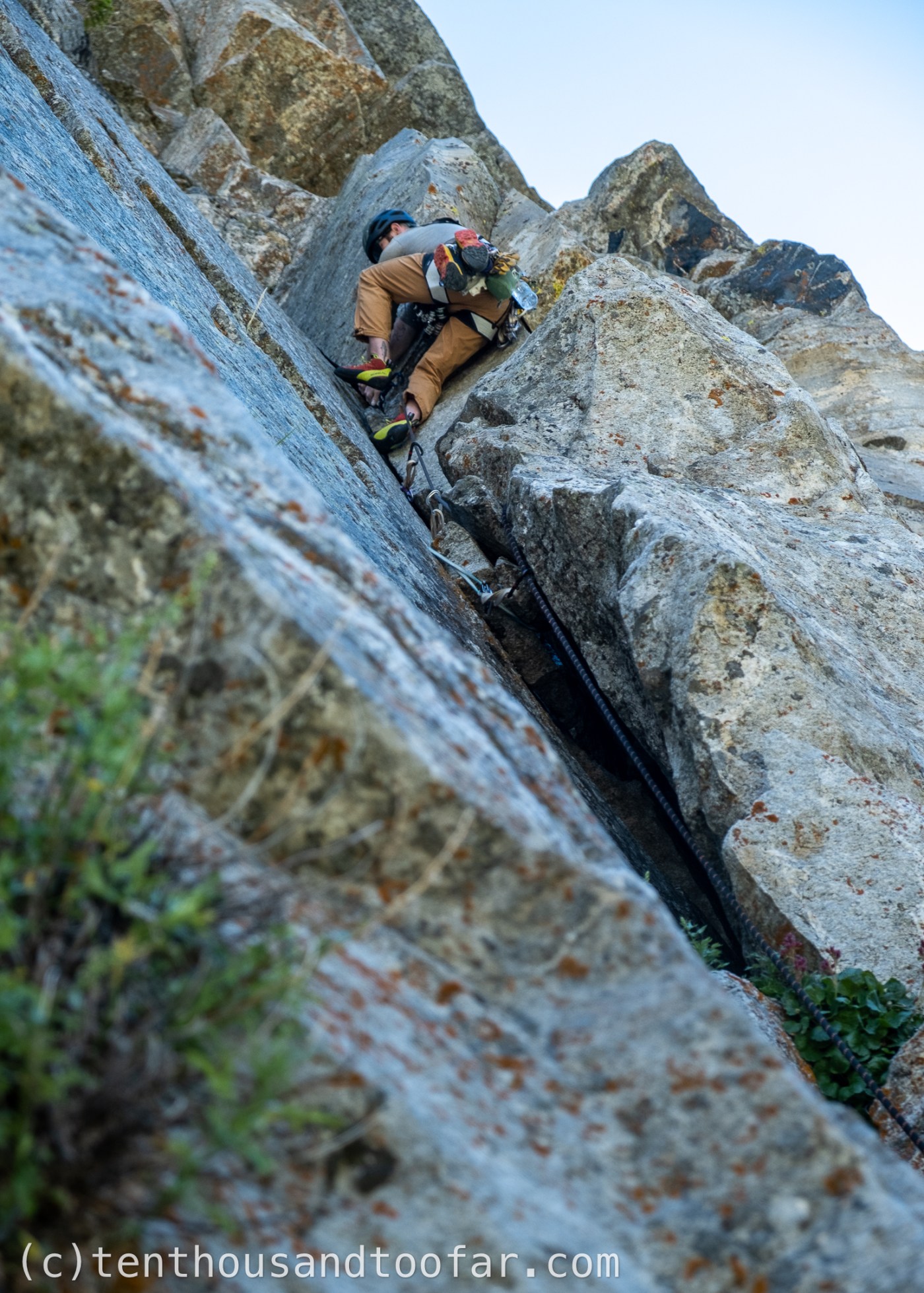
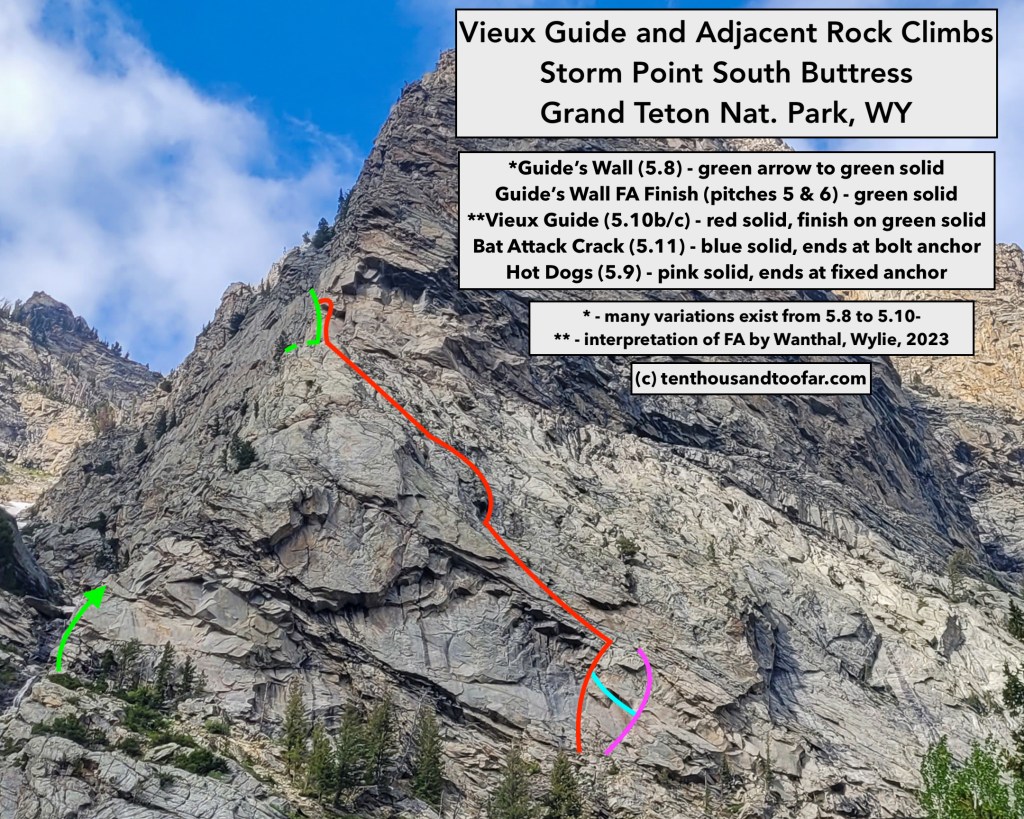
Vieux Guide is a five pitch alternative to the standard Guide’s Wall route, meeting the classic Flake Ledge after 4 pitches up to 5.9, and tackling a burly 5.10 roof crack before traversing to the final Guide’s Wall pitch. Though established by “two highly regarded climbers” of the previous generation, I was disenchanted by this pretty contrived route – but a few gems are worth noting, as they can be accessed and enjoyed without climbing the entire route.
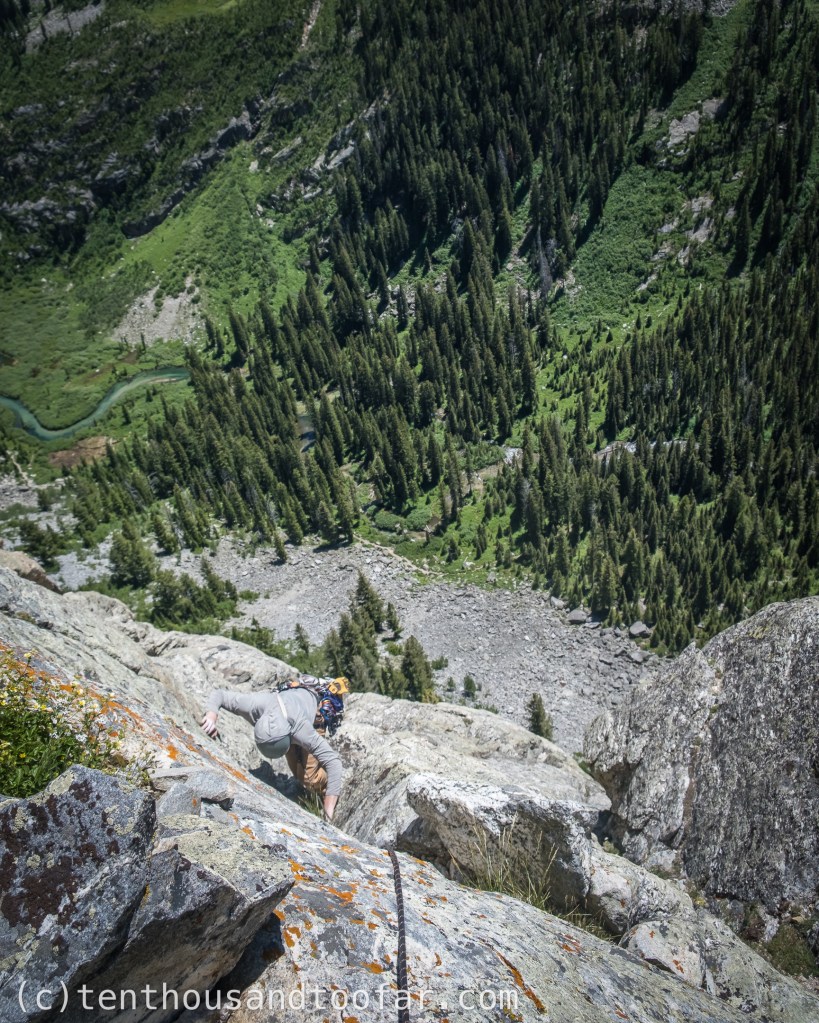
On July 16th Liam Wylie and I climbed Vieux Guide, a five pitch alternative to the ever popular Guide’s Wall on the South Buttress of Storm Point, established by Yvon Chouinard and Jim Donini on July 22, 1980. I’d been eyeing Vieux for a while, hoping to find another nice short approach Cascade moderate for the busier days. Unfortunately, what we churned up was one pitch of excellent rock climbing spoiled by a desperate, contrived, diagonal journey across three pitches of dirty and often loose stone. The fifth pitch, which can also be climbed from the standard Guide’s Wall, featured an excellent hand-crack capped by an awkward and unnecessary dead-end roof pull, which can easily be avoided by a logical traverse left. Vieux Guide certainly supplies value to modern Teton climbing, but perhaps only if segmented into pieces.
Love Ten Thousand Too Far? Support independent mountain journalism with $5.10 per month through Patreon (and receive extra bonus content), or with a one-time donation. Any and all support is greatly appreciated.
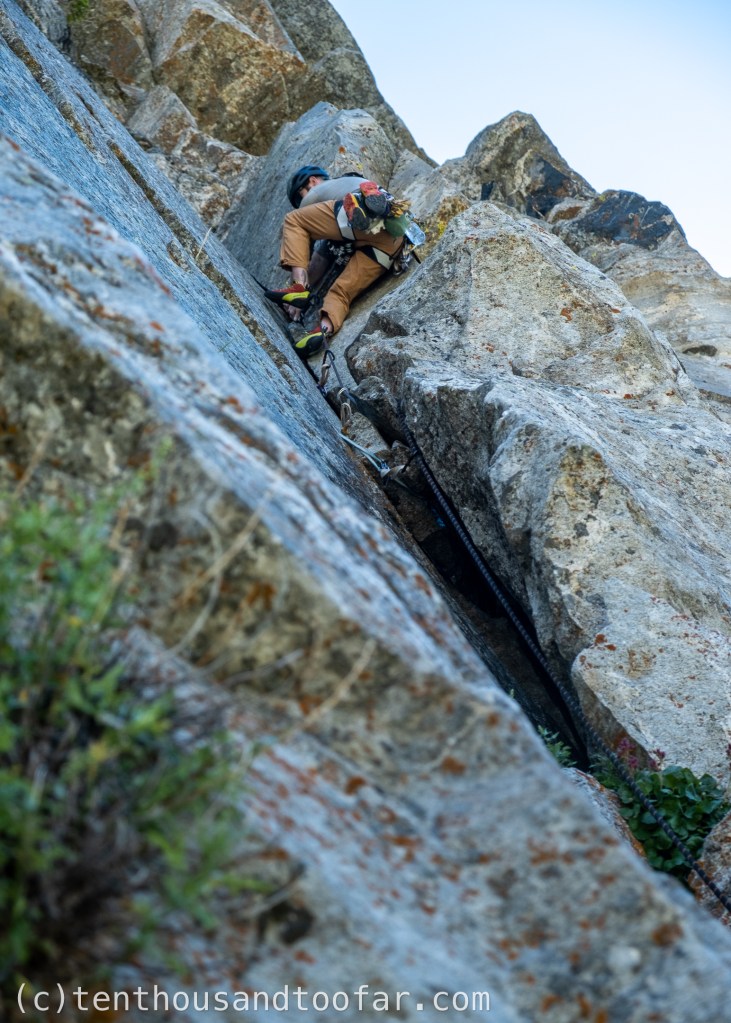
For starts, the first pitch is four-star 5.9 laybacking and friction stemming in a clean left facing dihedral that provides a worthy single pitch addition to a longer day in the canyon. After exiting the dihedral, the pitch crosses the bolts for Bat Attack Crack (5.11) and therefor could easily be led, top-roped and cleaned with little fuss, and even used to set a top-rope on Bat Attack. Liam led this pitch, and I was pleasantly surprised by the pump I drew nearing the top. A standard rack would get the job done.
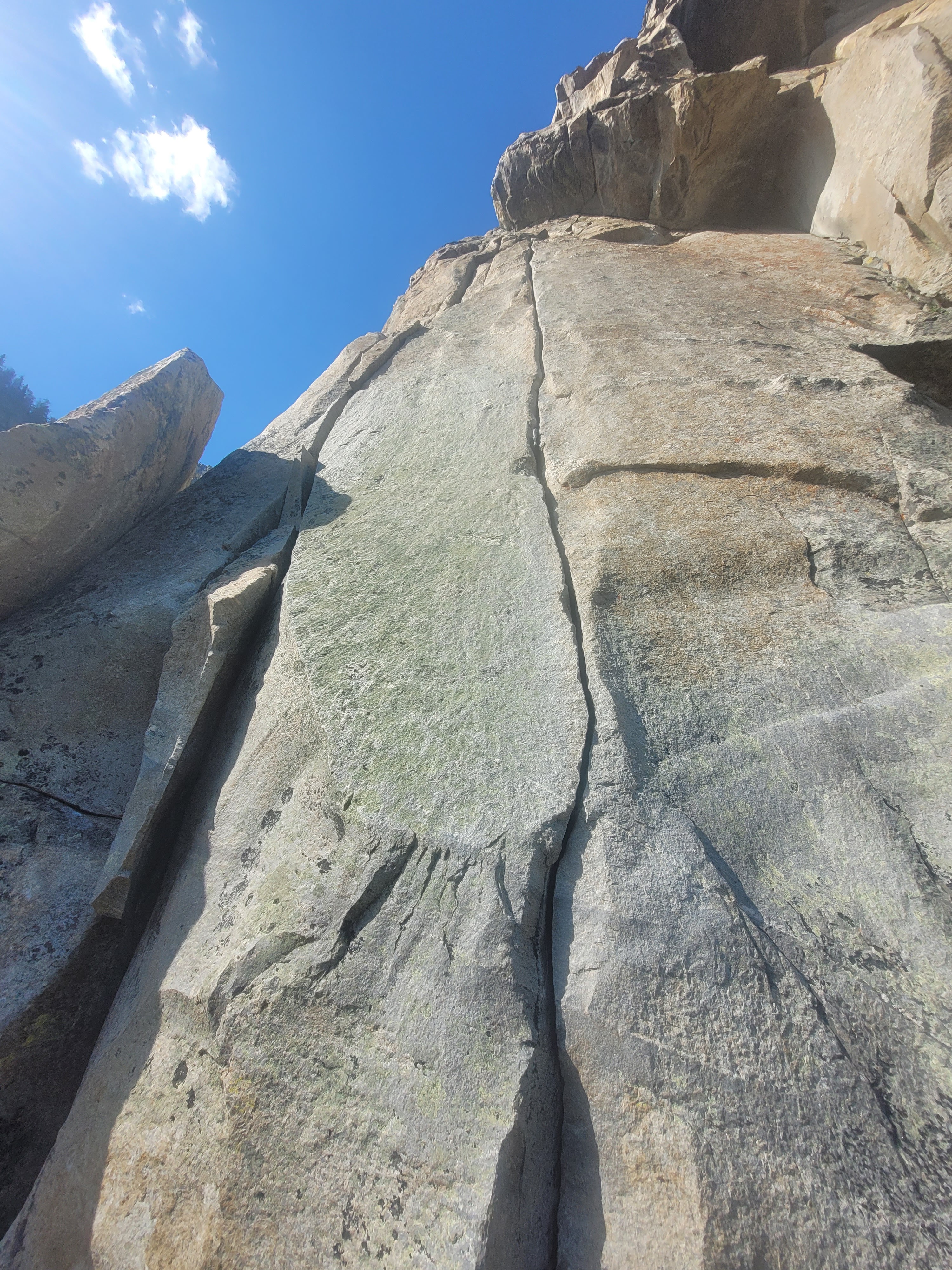
The first three-quarters of pitch five is the other gem of Vieux Guide, which can be reached, and is mostly commonly climbed, from Guide’s Wall. This pitch begins twenty feet right of the original Guide’s Wall 5.7 wide crack, taking an attractive golden 5.9 hand-crack reminiscent of the City Of Rocks. This is about as close to a splitter as I’ve seen in the Teton alpine, and was a difficult on-sight for me. The crack terminates in a mega dead-horizontal roof split by an eerie finger crack. The FA of Vieux Guide took the crack and pulled the roof, though most parties that climb this pitch easily hand traverse back left to the final pitch of Guide’s Wall. The roof felt about 5.11 to me, but Liam confirmed I’m just weak and is likely closer to 5.10b/c. Monster holds adorn the lip yet sadly face inconvenient directions, and took two tries from both of us to lead free (we set an anchor above the roof and both led the pitch). After pulling the roof the crack suddenly dead ends, requiring a semi-hanging belay followed by an unprotected 5.7-ish traverse left to the final, super classic, sixth pitch of Guide’s Wall. In my opinion, this strange roof-crack boulder problem to dead-end slab should be forgotten, as it detracts from the flow of an otherwise excellent 5.9 hand-crack that can be linked seamlessly into the final 5.8 finger crack with a 60M rope. That said, if one does decide to try the roof pull, your smallest micro-cams will be especially useful.

All in all I’m glad we climbed Vieux Guide, even if I did come home with some shoulder impingement from over-gripping the titan roof. It was definitely the steepest thing I’ve led in the alpine, so I guess that counts for something. Considering we may not even have been on route, it’s probably better to let sleeping dogs lie on the pitch two through four beta – but here’s the cliff notes. If someone did decide to give Vieux a roll, they can expect abundant loose rock on strange, discontinuous, diagonal, lichen covered ramps with no signs of previous travel except for a single fixed piton on pitch two. A pink trim-cam perfectly protects a delicate, dirty, crux traverse on pitch two, which was directly above and left of our semi-hanging belay. Previous knowledge of Guide’s Wall and the general location of Flake Ledge will be of great navigational aid. Grade II felt like a sandbag for the intensive route-finding nature of the climb. The number one reward of this adventure was connecting with Liam, hopefully sparking more adventures in the future.

For Aspiring Climbers
Location
See Hot Dogs. Vieux Guide starts in the clean left-facing dihedral just left of Hot Dogs and Bat Attack Crack, and crosses the bolt anchor for Bat Attack Crack before heading through the roof.
Rack
Standard 5.10 Teton rack to three inches with extra long slings and preferably a pink tri-cam. If planning on the original 5.10 roof of pitch five, micro-cams will be helpful.
Descent
Two ropes. Descend as for Guide’s Wall
Resources
- A Climber’s Guide to the Teton Range, Jackson, Ortenburger (guidebook, topo, description)
- Mountain Project
Ten Thousand Too Far is generously supported by Icelantic Skis from Golden Colorado, Barrels & Bins Natural Market in Driggs Idaho, Range Meal Bars from Bozeman Montana and Black Diamond Equipment. Give these guys some business – who doesn’t need great skis, gear and wholesome food?




If you would like to support Ten Thousand Too Far, consider subscribing below and/or leaving a donation here. The hours spent writing these blogs is fueled solely and happily by passion, but if you use this site to plan or inspire your own epic adventure, consider kicking in. A couple bucks goes a long way in the cold world of adventure blogging. I also love to hear your thoughts, so don’t leave without dropping a comment! Thanks for the love.
Follow my photography at @brandon.wanthal.photography
enter your email to subscribe for new articles
DISCLAIMER
Ski mountaineering, rock climbing, ice climbing and all other forms of mountain recreation are inherently dangerous. Should you decide to attempt anything you read about in this article, you are doing so at your own risk! This article is written to the best possible level of accuracy and detail, but I am only human – information could be presented wrong. Furthermore, conditions in the mountains are subject to change at any time. Ten Thousand Too Far and Brandon Wanthal are not liable for any actions or repercussions acted upon or suffered from the result of this article’s reading.
 Ten Thousand Too Far