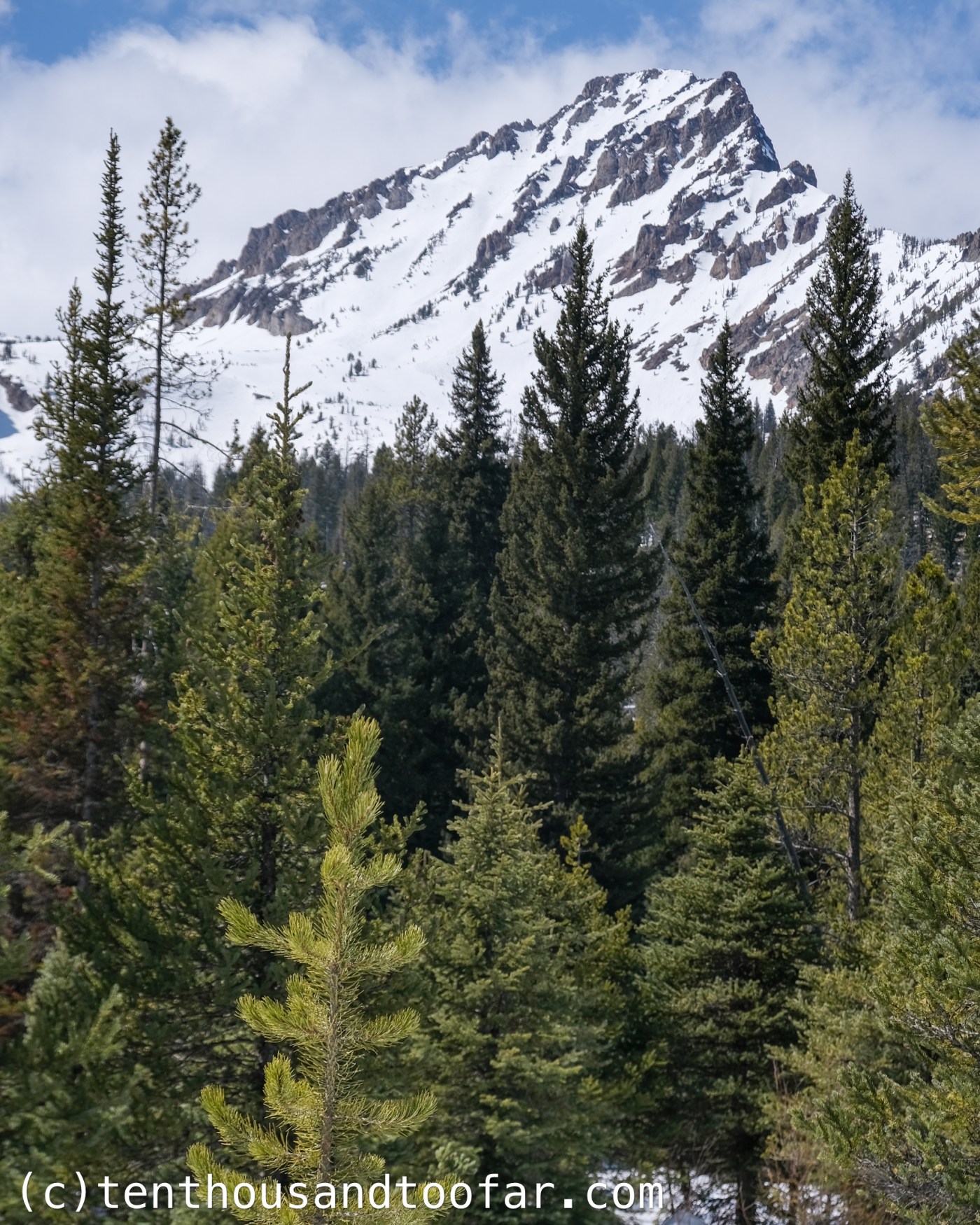
On April 21st, 2025, Bobbi Clemmer and I skied the classic South Face of 10,636 foot Williams Peak in Idaho’s Sawtooth Range. With 1,600 feet of consistently pitched fall-line shred, and 3,500 some feet of skiing in full, this must be one of the finest corn descents in the Gem State. We had perfect conditions.
After skiing Mystery Mountain with Bobbi on Saturday, and the McGown Peak Triple solo on Sunday, I was pretty beat, in need of a rest day. Well, rest days don’t fit well into three day ski trips. Alas there I was, awake at 4:00AM on Monday morning, funneling a bowl of muesli down my gullet. The silver lining? After two long days of spring ski mountaineering, and an evening at the Sunbeam Hot Spring with the Alpine Peanut, I fell asleep early and slept pretty damn well.
Our objective was the South Face of 10,636 foot Williams Peak, a Sawtooth classic. From highway to summit, the task is about 7.5 miles and 4,200 feet of vertical gain – no small order. Fortunately, strong southerly winds and a deep overnight freeze allowed a slightly later start time. We kicked off from the van by bicycle around twilight, cruised the few miles to the Fish Hook Trailhead, and followed the summer trail around the north margin of Redfish Lake with varying amounts of walking, skinning and log hopping. We left the trail at the drainage leading to the unnamed lake beneath William’s South Face, and followed the south side to the base of our line. Along the way we enjoyed inspiring views of Hortsmann Peak, including the 50 Classic Sickle Couloir and ultimate Sawtooth “bad boy”: the Northeast Face (a.k.a. The Shield). A pair of friends nailed The Shield in all time conditions earlier this year, but today the northward traverse leaving the massive face looked peppery, sugary, and all things deceptive. While the biggest of Teton lines remain in great shape, the Central Idaho tells a different narrative. Lower elevation, a thinner snow-pack, and more exposed rock make the Sawtooths extremely susceptible to the strong spring sun. When comparing spring skiing in the Sawtooths to the Tetons, add one month to the timeline. Sawtooth March looks like Teton April. Sawtooth April looks like Teton May. Sawtooth May… well… better hit the river.
Love Ten Thousand Too Far? Find the information useful? Support independent mountain journalism with $5.10 per month through Patreon (and receive extra bonus content), or with a one-time donation. Any and all support is greatly appreciated.

The cirque between Williams’ South Face, and Thompson Peak to the south, is a true ski mountaineering paradise. The north wall of Thompson is dramatic and expansive, studded with dozens of inspiring pinner couloirs, some approaching the upper reaches of Lower 48 technicality. Then you have the sprawling South Face of Williams, with at least half a dozen moderate ski descents. This would be one hell of a place to pitch a tent.


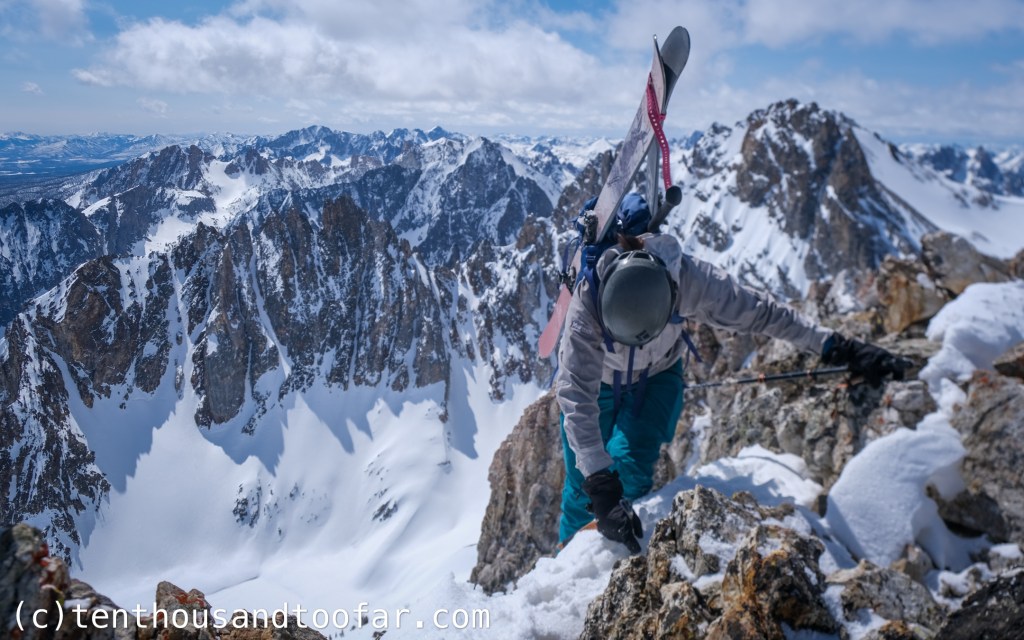
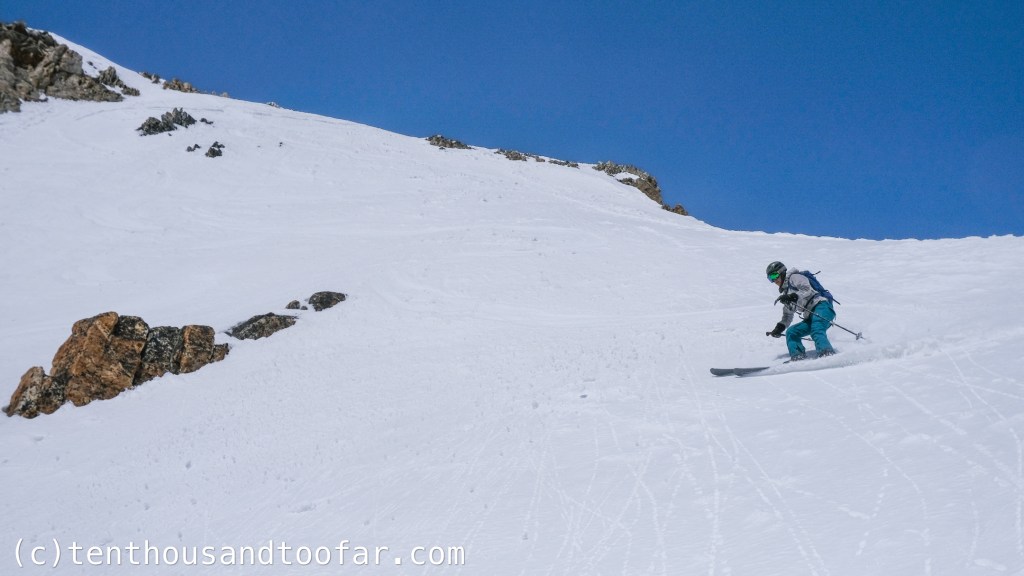
We climbed our line directly to the 10,636 foot summit, with only one small accidental diversion near the summit that culminated in an enjoyable third class scramble. The views were seriously impressive, and our timing just right. The skiing was perfect from top to bottom, with some pleasantly exposed 45 degree steeps off the top that quickly bellied to a consistent pitch in the 35 degree range. Conditions held steady through the many rolling headwalls exiting the cirque. Overall, we enjoyed about 3,000 feet of exceptional spring skiing before affairs devolved, pretty damn good for a low elevation Idaho range in late April. I was especially proud to see how confident Bobbi looked for the entire descent. Her turns were more balanced and effortless than past objectives of similar magnitude. Sure, perfectly ripe corn helps, but this peanut has made leaps of progress. 2025 marks her fourth season of skiing, nearly exclusively backcountry taught. She’s got bright days ahead.

The Sawtooths are an impressive range, and if timed correctly, a great venue for steep and moderate skiing alike. In a mere 72 hours I was able to round up approximately 15,000 feet of quality snow sliding across five unique descents – 8,500 feet of those with the Alpine Peanut – but this is only the tip of the iceberg. There’s enough inspiration in these hills for years to come. Perhaps our next foray will be mid-winter, using one of the many backcountry yurts sprinkled across the range. One thing is for sure – we’ll be back.
Want to support? Consider a donation, subscribe, or simply support our sponsors listed below.
Ten Thousand Too Far is generously supported by Icelantic Skis from Golden Colorado, Range Meal Bars, The High Route, Black Diamond Equipment and Barrels & Bins Natural Market.





subscribe for new article updates – no junk ever
DISCLAIMER
Ski mountaineering, rock climbing, ice climbing and all other forms of mountain recreation are inherently dangerous. Should you decide to attempt anything you read about in this article, you are doing so at your own risk! This article is written to the best possible level of accuracy and detail, but I am only human – information could be presented wrong. Furthermore, conditions in the mountains are subject to change at any time. Ten Thousand Too Far and Brandon Wanthal are not liable for any actions or repercussions acted upon or suffered from the result of this article’s reading.
 Ten Thousand Too Far
Leave a comment