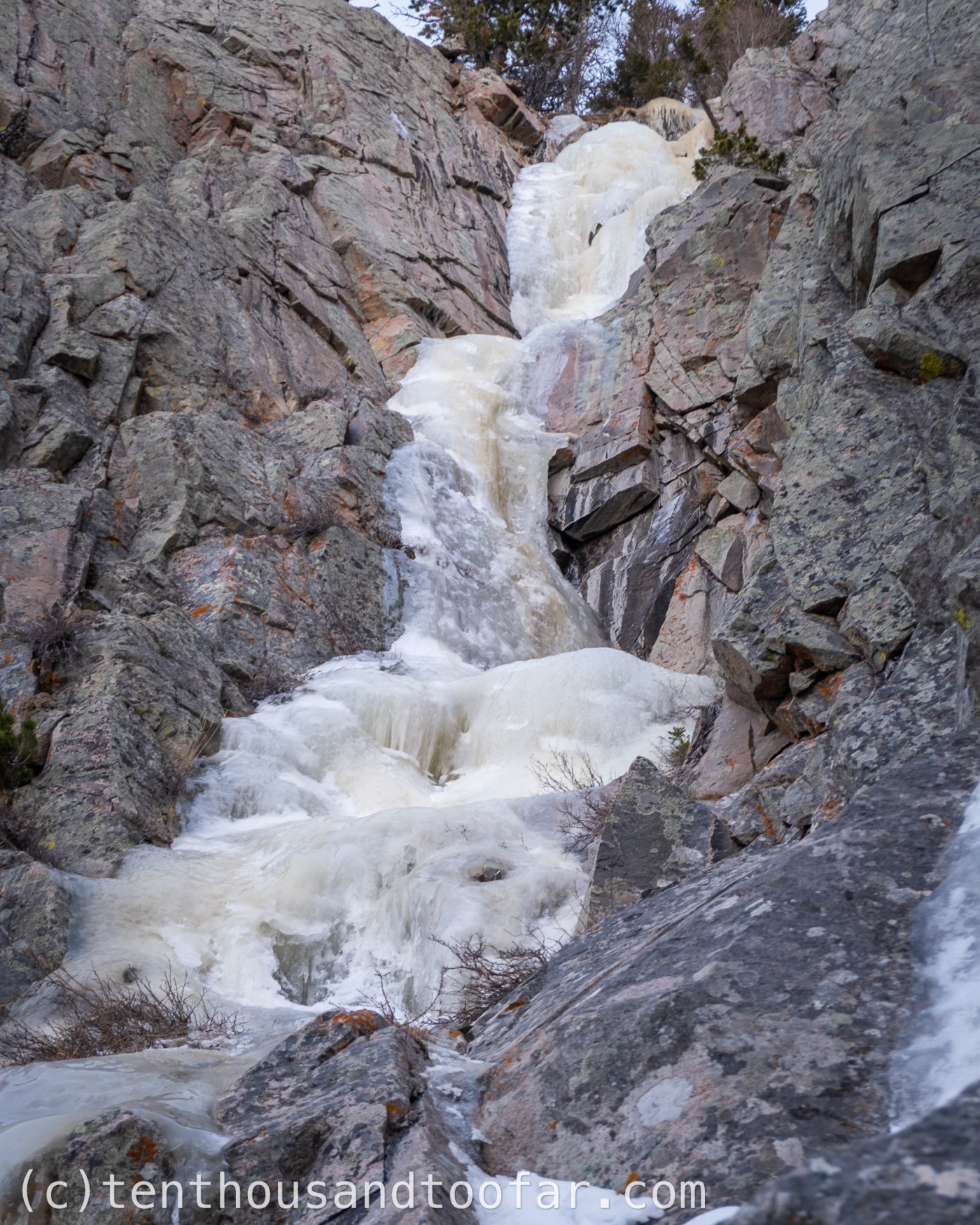
On Sunday December 17th Erik Boomer and I climbed two variations to the standard and classic Lake Louise Ice Gully route in Wyoming’s Wind River Range. Since the Gully has been well documented on Ten Thousand Too Far, this article will focus primarily on the variations, which are both exciting and unique ways to experience a classic climb from a different perspective.
The Lake Louise Ice Gully is a 3-4 pitch moderate classic in the Northern Wind River Range, accessed from the small town of Dubois. The route as commonly detailed is a straightforward three pitch ~150 meter WI3, with an additional optional 10 meter WI4 nugget (grows steeper with more ice) to complete the flow to the highest ice point. I’ve climbed the route twice in the springs of 2022 and 2023, and both times took notice of two steeper flows pouring into the main flow from the left and right respectively. I’m assuming these spur climbs see little traffic, as neither go to the highest ice line and aren’t particularly aesthetic. However, each provide worthy additions or deviations for the climber who either blazed up the standard and needs extra entertainment, or returner who desires a little more than a mellow romp. Having climbed both the Gully and its test piece neighbor Golden Tears (WI4+, III), I was excited to tick off these two obscure lines, as I have now climbed every piece of ice on the south shore of Lake Louise. Rather than provide a full detail trip report, I will add a brief paragraph on the first two pitches for current conditions, and a summary of the two variations we climbed. If you are interested in specifics on the standard Lake Louise Ice Gully route or Golden Tears, hit the Ten Thousand Too Far search bar.
Love Ten Thousand Too Far? Support independent mountain journalism with $5.10 per month through Patreon (and receive extra bonus content), or with a one-time donation. Any and all support is greatly appreciated.

There was one dormant car with Jackson plates at the trailhead when we pulled in, and another pair of local climbers pulled in as we set off hiking. After weeks of freezing temperatures and record fall precipitation, it’s no shocker everyone was gunning for Golden Tears. Alas as we reached the west shore of Lake Louise we saw the big rig was in fat, similar to the conditions Jorge Hedreen and I climbed it in last year. However, our stoke was quickly dashed by the sight of two climbers racking at the base. The first pitch of Golden Tears is quite channeled, and neither of us were particularly keen on leading a full ice pitch in the firing lane. Knowing another Golden Tears aspiring pair wasn’t far behind and was likely to get denied as well, we quickly pivoted to the classic Lake Louise Ice Gully only a few hundred yards to the east. The first pitch was in fatter than I’ve ever seen, requiring no rock protection and climbing at gentle WI3. The second pitch had none of its usual packed snow, making for thirty some meters of unpleasant low angle crawling. Knowing I’d climbed the standard route twice, Erik was generous in allowing me to lead the two spur variations to the main flow. We set an ice anchor between the two, tied off the packs and settled into a day of alpine cragging. I named both these climbs for the sake of reference, but we certainly did not do any first ascents.

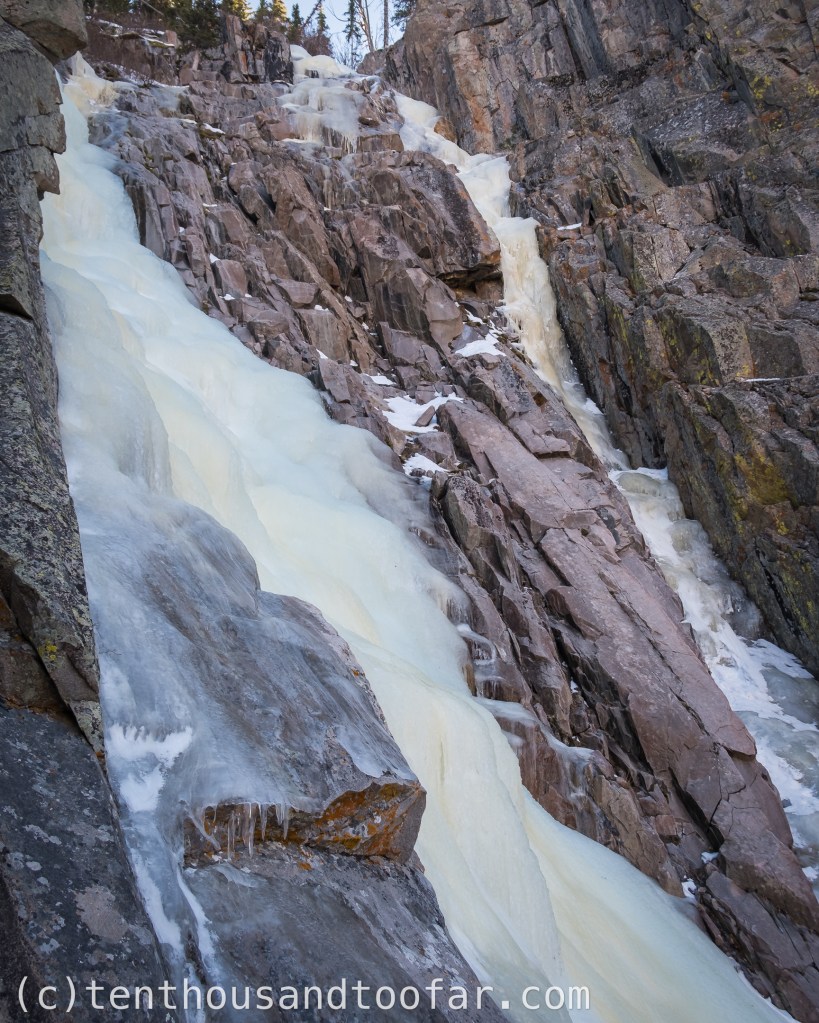
Left Gully (WI3+, 35-40 Meters)
Our first bid was the Left Gully, which climbed at tricky WI3+. At times the ice was quite thin, and infringing rock walls with generous edges beckoned some mixed tactics. This flow looked nearly identical to a photo I took last spring, suggesting it probably forms early and sees little growth thereafter. Descent can be made with a single 70M rope to a large tree just left of the climb, which also provides a nice sheltered spot for belaying and top-roping the second.
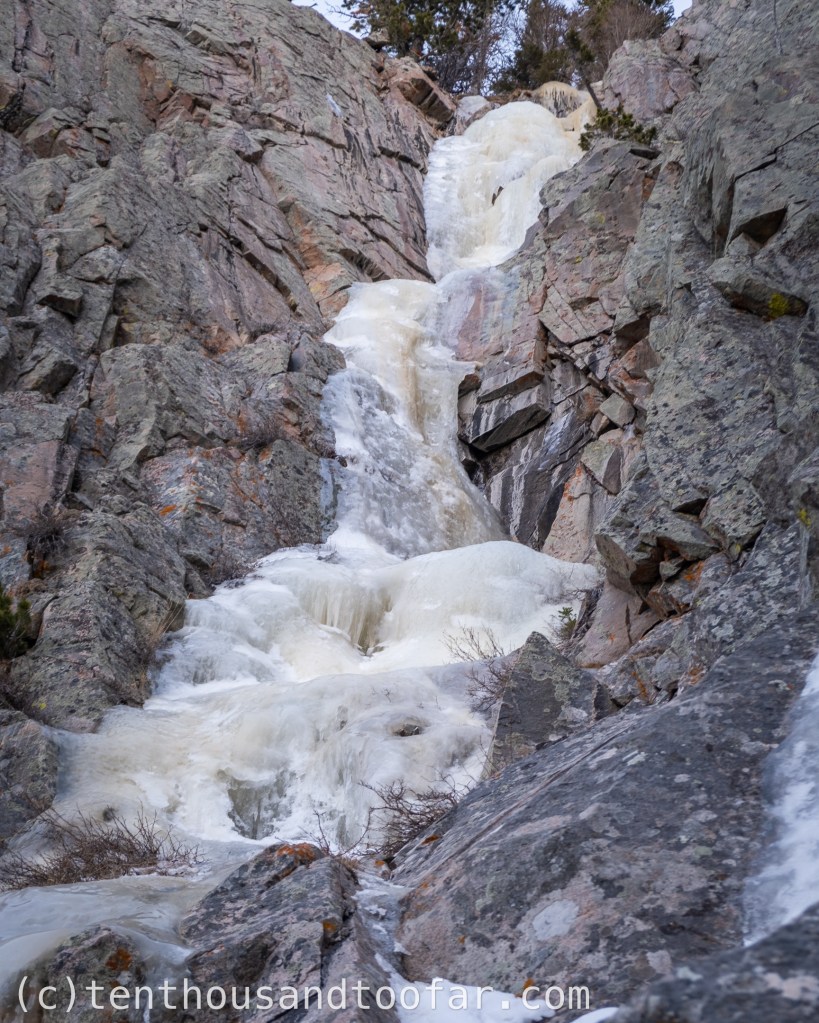

Right Chimney (WI3+, 60 Meters)
From the ice anchor below the main flow we climbed the Right Chimney, which might get devoured by ice as the season progresses. We found mostly trivial bulges with about 10M of steeper climbing in a very interesting chimney system. A few cool mixed moves saw me through the crux which was more technical and awkward then imagined from below. We did not proceed to the top of the ice as Erik dropped a tool on the previous pitch. Instead I set a v-thread at the top of the steep ice which we used to top-rope, clean and rappel. If taken to the end this pitch would be at least 60-70M.


Ten Thousand Too Far is supported by Icelantic Skis, Range Meal Bars and Black Diamond Equipment.
Ten Thousand Too Far is also supported by reader donations. If you’ve used this website to plan an epic adventure, consider kicking in a few bucks. The hours spent writing these articles are fueled solely by the desire to enhance our vertical community.


DISCLAIMER
Ski mountaineering, rock climbing, ice climbing and all other forms of mountain recreation are inherently dangerous. Should you decide to attempt anything you read about in this article, you are doing so at your own risk! This article is written to the best possible level of accuracy and detail, but I am only human – information could be presented wrong. Furthermore, conditions in the mountains are subject to change at any time. Ten Thousand Too Far and Brandon Wanthal are not liable for any actions or repercussions acted upon or suffered from the result of this article’s reading.
 Ten Thousand Too Far
Leave a comment