
“The Gap” is an unlikely quartzite climbing area just south of Pocatello, Idaho, known for long winter mixed routes up to 1200 feet rising directly from the road. Jed Porter and I unknowingly climbed a first ascent while looking for the Alpine Simulator in a winter storm – thankfully, our route was excellent! We named it Agri-Alpinism, where the worlds of agriculture and alpinism collide.

Multi-pitch mixed climbing in South Idaho? I was beyond skeptic when Jed reached out over Thanksgiving week with the proposition of a 1200 foot dry winter climb in an area I commonly associate with uninspiring rolling hills, crumbly basalt and widespread agriculture. However, a quick peruse of Mountain Project turned up favorable reviews for at least five long mixed lines on a jagged buttress that truly looked like a transplant from the high alpine. With choices from M2 to M6+ C1, we chose the median graded, area classic, Alpine Simulator, which receives the consensus grade of “5.7+, WI2, M4-5”, also known as 5.7+ in summer with rock shoes, some WI2 on a generous year and highly conditions dependent winter mixed climbing between M4 and M5? We prepared our minds for everything and more, with a healthy rack of cams, nuts and pitons. From the road the route was confirmed ice free, so we left screws in the truck. This was going to be an adventure.
Love Ten Thousand Too Far? Support independent mountain journalism with $5.10 per month through Patreon (and receive extra bonus content), or with a one-time donation. Any and all support is greatly appreciated.
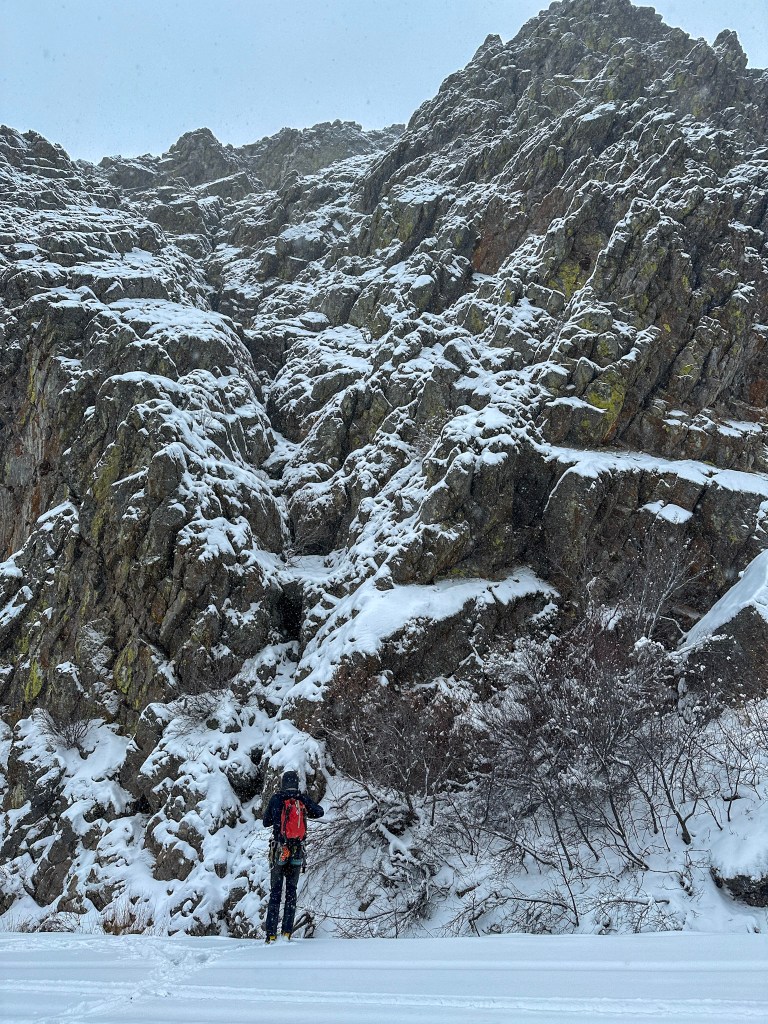
The Gap is located about half an hour south of Pocatello, just west of the small farming community Arimo. A narrow road and creek cleaves Garden Creek Gap, exposing eroded quartzite walls facing north and south respectively. The north side of the road features sunny rock climbing up to 5.11, and the south side a la’ winter mixed venue. The walls sky rocket directly from pancake flat fields, in a confounding manner like nothing I’ve seen before. For this reason the approaches are refreshingly non-existent, a mere five minute stroll from a pull-out east of The Gap. The Alpine Simulator and Agri-Alpinism begins in what appears to be the main weakness of the central buttress, just right of a couloir that probably holds a few dribbles of yellow ice (I Want My Mommy Couloir, M3, WI2). I’m about as optimistic a climber as they come, but even I had a hard time visualizing the journey that was about to ensue.
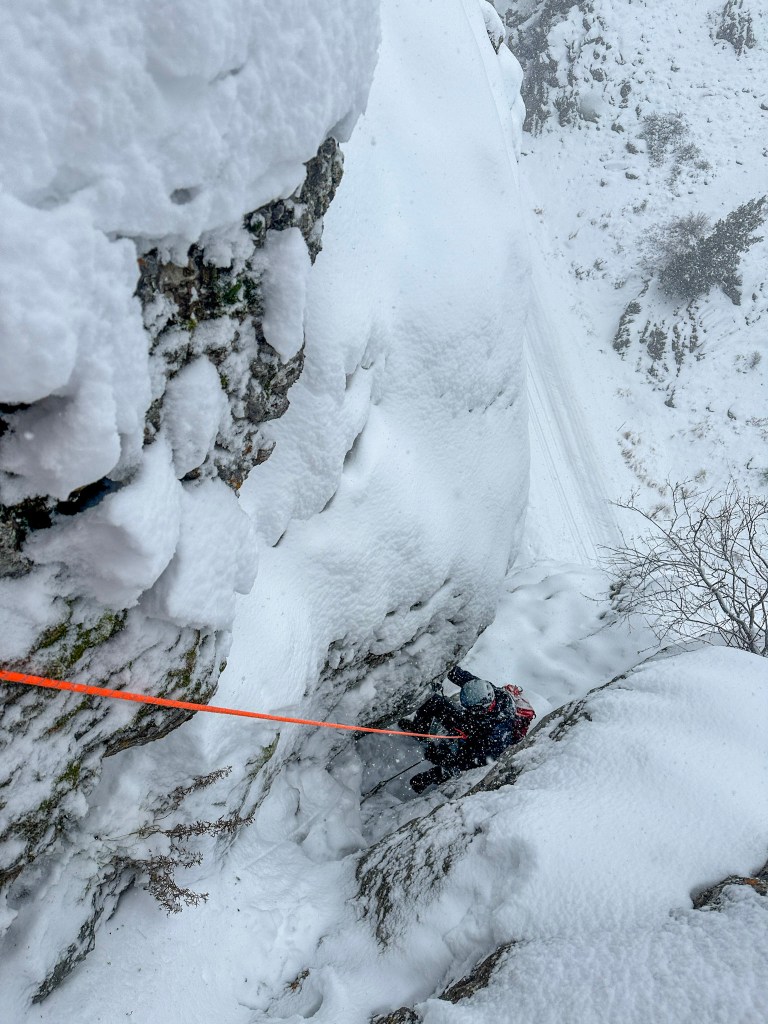
The first two pitches were entry fare, part of Jed’s lead block which would carry our team through pitch three. A few chockstones provided a bit of difficulty, but ultimately Jed led 90 meters with little more than a half-dozen protection points. Much to my shit grin, the rock quality far exceeded roadside impression. The water polished quartzite was grippy and bullet hard, allowing for confident climbing on abundant small edges. Our third lead deviated from the central weakness, up a right trending attractive slab ramp onto the steepening 800 foot central prow. A foot of sugar-snow made the lower angle climbing difficult, requiring extensive cleaning to reveal holds. Pitch by pitch I grew increasingly comfortable with this bizarre style of mountain climbing, eager for my first lead on pitch four.

Our fourth and fifth pitches were the crux, which I broke into two after rope-dragging myself with an overly conservative piece straight off the belay. From a cave above the previous ramp we unknowingly left the Alpine Simulator for a weakness of gullies and dihedrals directly overhead, probably the steepest on the wall, defended by a five meter overhanging entrance. This mini-cave was a poorly protected crux of pumpy M4+ climbing, with my only saving grace a large pecker hammered into an anemic slot from an overhanging stance. Steeper stem gullies led to a belay cave at 20 meters and the subsequent crux, which took some 20 minutes to decipher. From another right trending slab ramp, a gently overhanging and technical sequence on thin hooks leads into a shallow dihedral with meager feet, trustworthy hooks and good protection that left me grunting like a gorilla, pumped out of my tree. This crux would be rated M5+ on the Hyalite andesite, but perhaps only M5 by harsh Gap standards. A final difficult off-width and pleasant stem chimney presented the last remaining difficulty and deposited us in lower angle terrain on the upper face, with a sixth lead galavanting 50 meters through pleasant steppy climbing trending just right of the prow summit, which appears the true summit from below. I was both dismayed and excited to peek around the prow and see a substantial portion of mountain remaining – more cold snowy shenanigans, but also more climbing – we did come to climb.
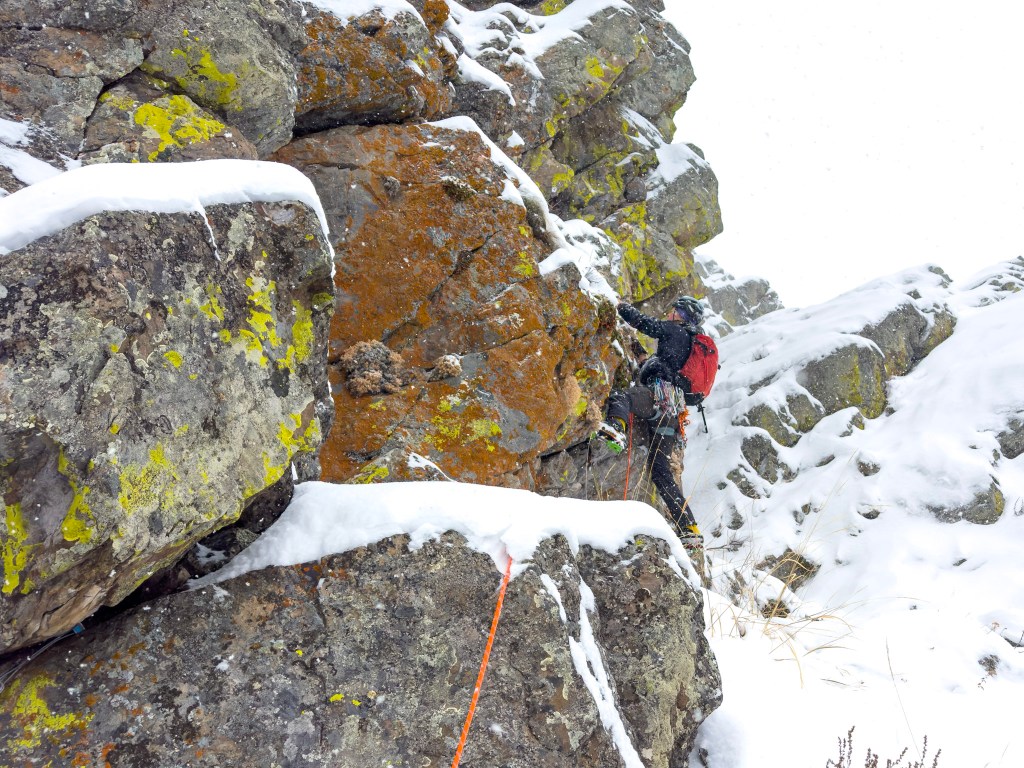
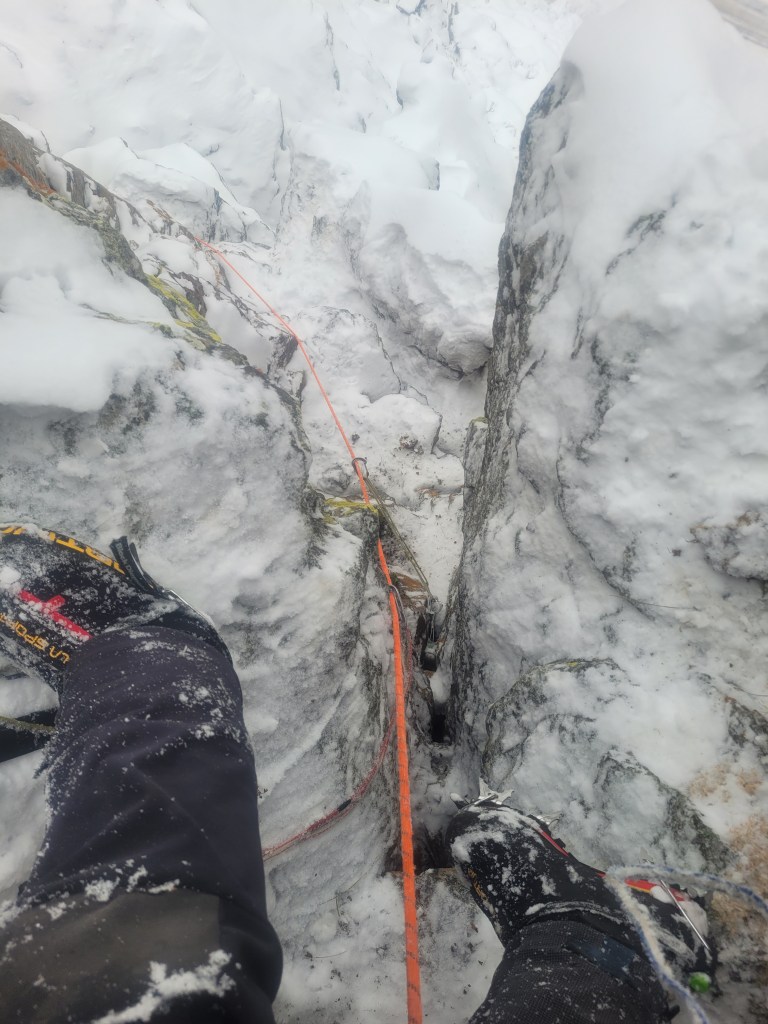


Our seventh and eighth leads also unknowingly deviated from our intended line, tracking into the couloir climber’s right. Research later revealed the Alpine Simulator stalks the low-angle blocky crest between the prow and route summit. I suspect our deviation produced better climbing. The seventh lead traversed easily into the couloir and up mostly steep snow with a few easy rock steps. Jed swung back into command for the summit push with a valiant M4 chockstone straight out of the couloir and more technical slab dancing to the summit. We topped out approximately six hours after tying in, descended via walk-off terrain on the east and reached the car just after sunset, seven some hours round trip.
Agriculture + Alpinism = Agri-Alpinism. While tractors ran laps on the road a mere 500 feet below, I toiled around on the crux pitch banging peckers and eating spindrift – Jed coined the name. It wasn’t until after a second trip to the Gap, and at least an hour studying old scratchy Gap topos I realized we climbed a new route. In hindsight this makes total sense, as the crux pitch felt infinitely harder than M4 and left me sweating like a dog, bonking despite a well devoured Range Meal Bar, perhaps a little scared. For those in search of a steep alpine style winter route with no more than a five minute approach Agri-Alpinism could be for you, and maybe the crux pitch will get easier without a foot of low density sugary fluff to clear off each ledge. One thing is for sure, if torquing ice tools into seams while kicking frozen moss pods on a 1200 foot snow blasted wall with farm vehicles droning beneath your crampons doesn’t scream Idaho adventure, I don’t know what does. I’ll be looking forward to many more trips to the Gap, with the Alpine Simulator near the top of the tick list.

Climber’s Notes – Rack and Resources
For a rack we carried a single set of cams from #0.2 to #3 and doubles from #0.5 to #1, a plentiful selection of wires and a few thin pitons. This rack served us well and is probably exactly what I would bring for a second lap. There is no fixed gear on the route. Mountain Project is the only resource besides this website for Gap information.
Ten Thousand Too Far is supported by Icelantic Skis, Range Meal Bars and Black Diamond Equipment.
Ten Thousand Too Far is also supported by reader donations. If you’ve used this website to plan an epic adventure, consider kicking in a few bucks. The hours spent writing these articles are fueled solely by the desire to enhance our vertical community.
Enter your e-mail to subscribe to updates from Ten Thousand Too Far, only alerts from new posts, nothing else!



DISCLAIMER
Ski mountaineering, rock climbing, ice climbing and all other forms of mountain recreation are inherently dangerous. Should you decide to attempt anything you read about in this article, you are doing so at your own risk! This article is written to the best possible level of accuracy and detail, but I am only human – information could be presented wrong. Furthermore, conditions in the mountains are subject to change at any time. Ten Thousand Too Far and Brandon Wanthal are not liable for any actions or repercussions acted upon or suffered from the result of this article’s reading.
 Ten Thousand Too Far
Leave a comment