
The North Face of Sphinx Mountain is a renowned early season ice venue outside of Cameron, Montana. The Lowe Route is the trade fare, which can be climbed anywhere from WI5 to WI3 to M5. We found it in WI4- and ever so slightly mixed conditions. First ice of the season baby!
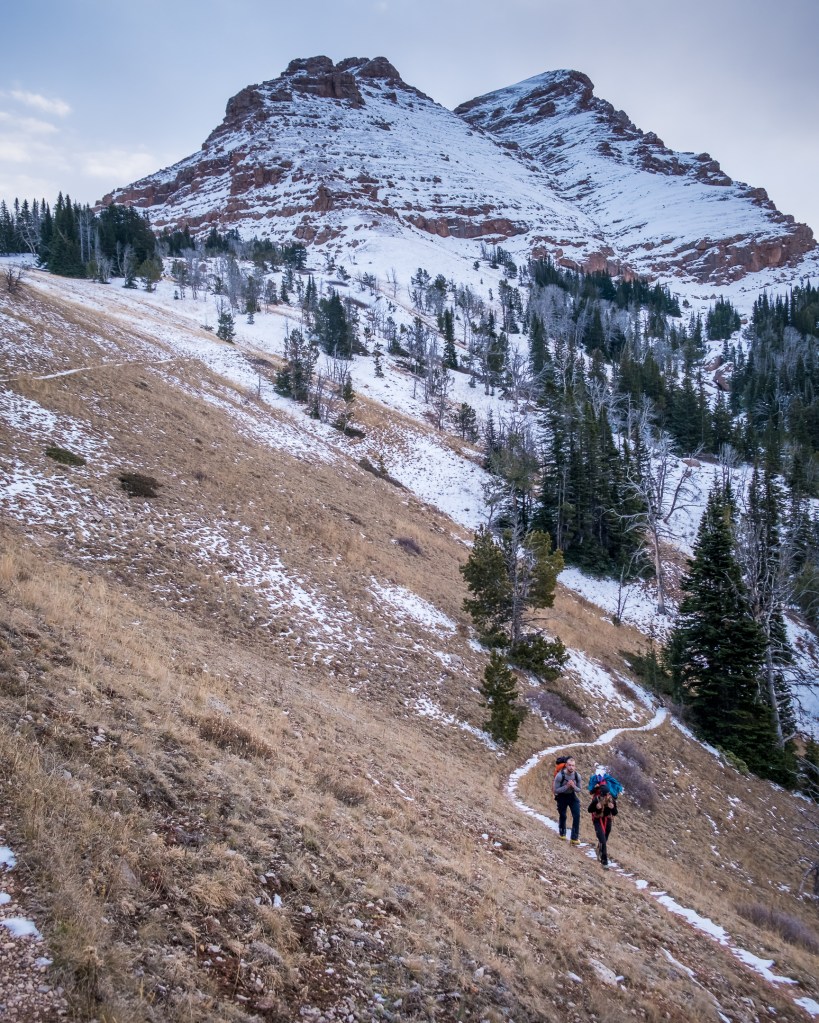
After a failed early ice mission in the Lost River Range two weeks ago, Scott Melin and I packed up the van once again, but instead pointed north. Sphinx Mountain is renowned for harboring perhaps the earliest forming ice in the region, on a dramatic, remote and inspiring north face hanging high above the Madison Range, Beaverhead National Forest and Lone Peak. Bobbi Clemmer and I actually scrambled the peak before we were climbers of any kind, four summers ago via the broad Northwest Face, so I had welcomed familiarity with area. Unlike the ruthless bushwhacks of the Lost Rivers, our approach would be made via a 4.5 mile maintained trail to the 9,000 foot saddle separating the Sphinx from The Helmet. Then the fun really begins, circumnavigating to the North Face across endless bands of conglomerate cliffs following nothing but intuition, to hopefully catch one of four classic, yet ephemeral and elusive, 600-1000 foot ice lines. Prepared for anything from thick water ice to thin choss wrangling, we packed a healthy rack of pins, peckers and nuts to supplement ten ice screws, with lofty ambitions set towards the “best on the face” yet rarely formed Earl-Trimble Route (WI4) or a backup of the classic Lowe Route, which purportedly forms every year from WI3-5 at fattest, and M5 at leanest. Another unlikely but exceptionally full value diversion is the Lowe Direct, which adds a few more pitches of ice beneath the already classic Lowe, and if formed would be hard to resist. I guess one could say we simply planned to “peek around the corner”, and after the wettest fall in the Greater Yellowstone Ecosystem I can remember, hopefully strike gold.
Love Ten Thousand Too Far? Support independent mountain journalism with $5.10 per month through Patreon (and receive extra bonus content), or with a one-time donation. Any and all support is greatly appreciated.

The Lowe Route ascend the left of the three prominent ice lines in the center of the face
A casual 6:00AM start brought us to the saddle around 8:00 where we overlapped two other parties, changed from approach shoes to ice boots and set off towards the North Face. Following a crusty boot-pack of climber’s past we traversed rather low across the north-northwest face to preserve our slim chances of finding the Lowe Direct in all-time conditions. Sure enough, only a few ratty drips covered the lowermost cliff which climbs at 5.9 in iceless varnish – above our pay grade. This failed scouting mission derailed our approach to the upper tier, which is usually accessed from a notch higher on the Sphinx’s Northwest Ridge, but at least there was quite a bit of attractive ice pouring over the upper face to amplify spirits. The next few hours were lost goating around choss bands with our four new associates, an exercise in knee deep wind-board trail breaking, kitty litter slabbing and frozen-dirt front pointing. All parties reached the ice and dispersed between 11:00AM and high noon.

We followed the leading party of two local guides towards the Lowe Route, which appeared in the most realistic condition, while a pair of Bozeman-Cody climbers tied in for an awfully thin excursion on the Earl-Trimble (they would later get turned around at a “chossy M6-ish” pitch after the first 1-2 ice pitches). The first pitch of the Lowe occasionally forms a freestanding WI5 pillar, but was nothing more than a harrowing jumble of discontinuous daggers this year. Following the guide crew we bypassed the pillar via an icy ramp on climber’s right and a short nugget of WI2 to the base of the main flow visible from a mile away. In hindsight we could (and probably should) have soloed this first pitch, as the rope drag was punishing and the climbing quite routine. The second pitch was a full 60M rope stretcher at 10,500 feet with spectacular exposure. Right off the belay, a brittle 50 foot curtain relented to a more traditional iced up alpine gully with a little bit of everything, including an engaging corner with opportunities for stemming between cobbles and ice, and some dry-tooling. The ice was minimally traveled yet generally thick, offering the perfect balance of well protected physical and technical challenge for my first lead of the season. Our anchor above this pitch was a true choss-a-neering science project, two knifeblades and two medium wires in an uninspiring lump of conglomerate mudstone. “Pretend your leading” I radioed to Scott as I put him on belay.
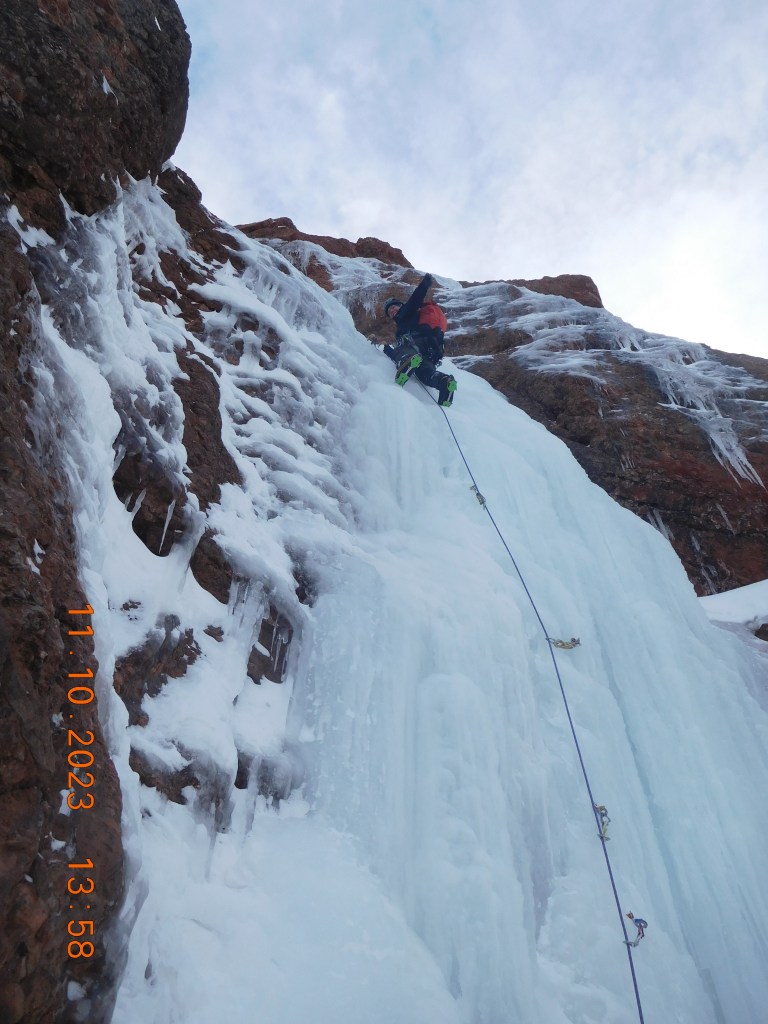
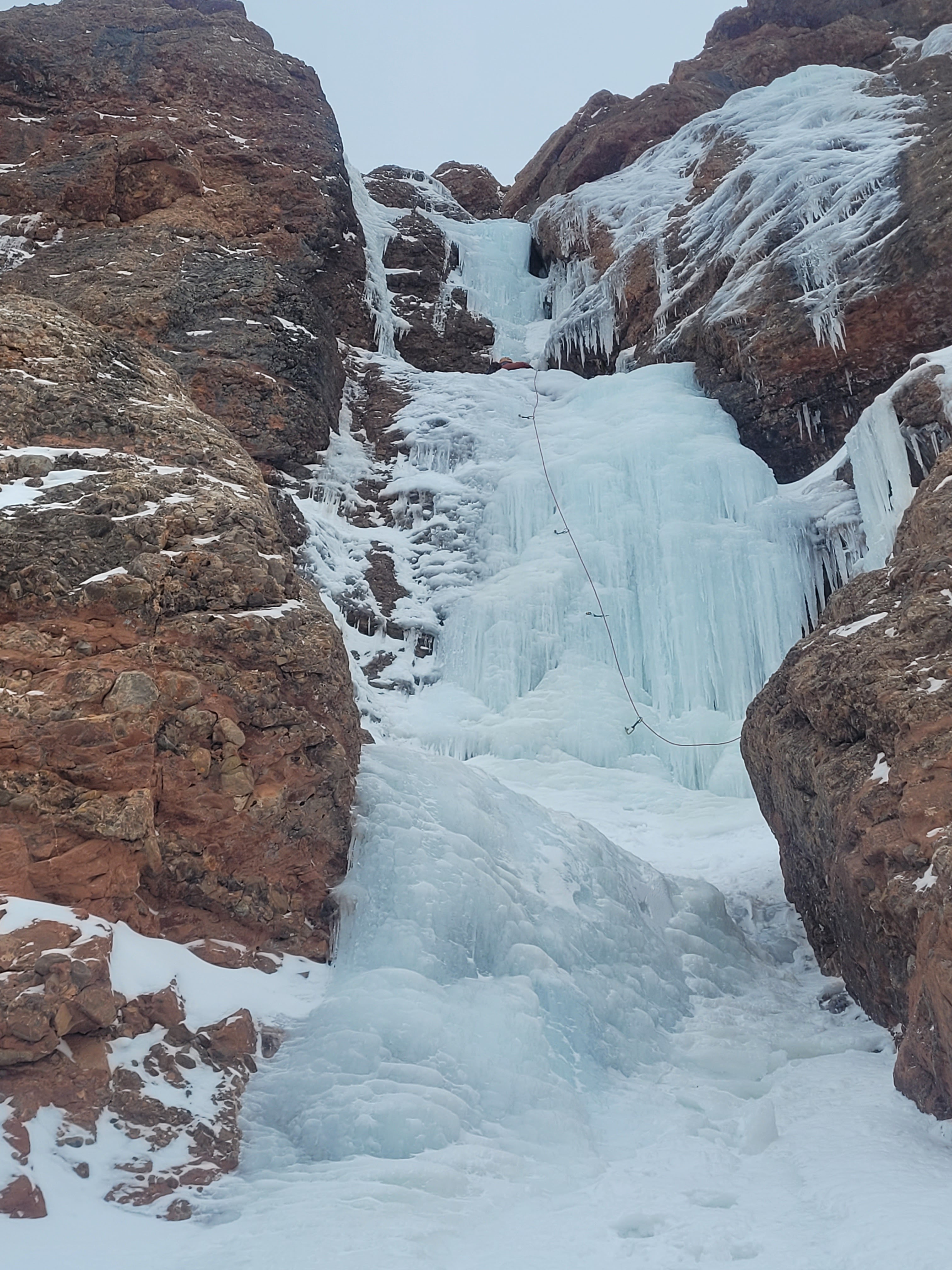

A long couloir of approximately two more rope-lengths led to the summit ridge, with four separate lumps of easy ice separated by crusty snow. We micro-traxion simul-climbed out of formality but in hindsight could have easily soloed. From the rope coiling point, 500 feet of jumbled ridge scrambling led to the impressive 10,840 foot summit. A crushing wind and fading daylight kept celebrations short as we made our way down the non-technical Northwest Face to the saddle, moonwalking a marvelous 35 degree powder field that almost had me wishing for skis.

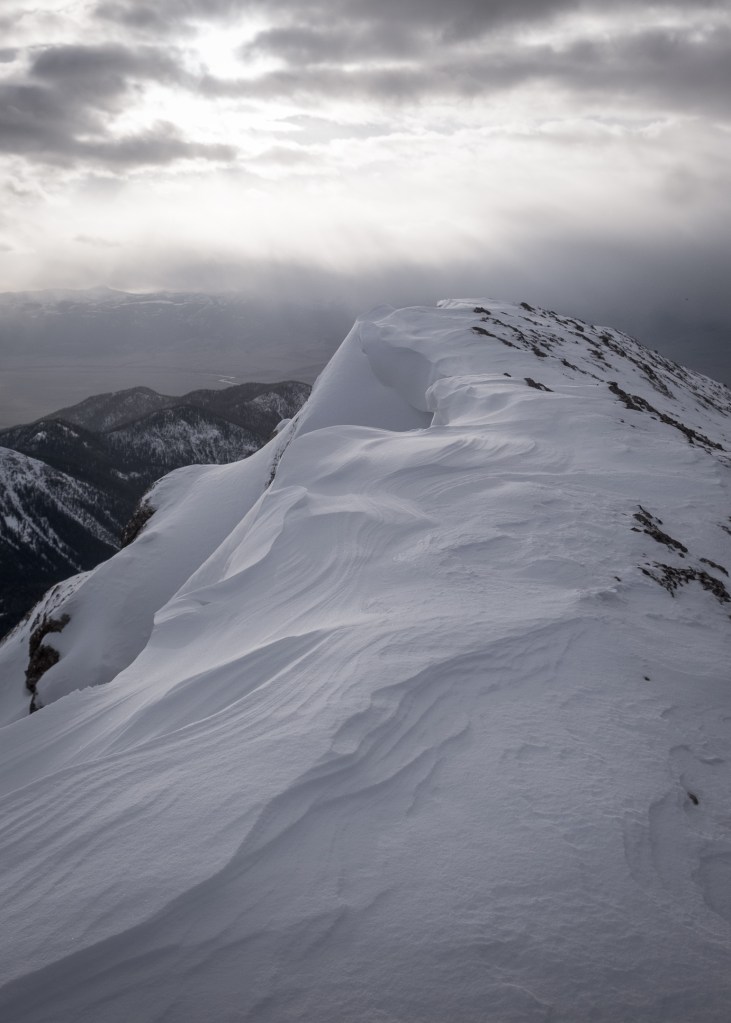

For the first ice route of the year, on a remote and seldom traveled north face at 10,000+ feet in Montana, I’m not sure we could have asked for much more. 13 hours car-to-car, factoring a detour to the Lowe Direct, a traffic jam waiting for the guide party to clear the route and a non-obligatory trip to the summit, amidst 12-ish miles and 4,000 feet of vertical gain, seems pretty reasonable. Furthermore, to clear the first lead jitters with a brilliant pitch of WI4- at 10,500 feet sets a great tone for the season ahead. Had the first pitch WI5 pillar or the entire Lowe Direct been formed the approach may have felt increasingly justified, as 13 hours is a long way to go for only one sustained, and four total pitches of ice, but herein lies the bane of early season adventuring in any discipline: stoke often outpaces conditions. All said, the Lowe Route was a full spectrum mountaineering adventure of great quality – the perfect way to acclimate a body to a long winter of climbing ahead. I’m not sure I’ll ever return for the Lowe alone, but for any of the other routs on the face I’d be there at a moment’s notice.
Rack and Resources
Alongside ice screws to comfort for a full 60M pitch of ice (we brought ten), we made use of thin pitons and a few nuts, both as lead protection when I ran out of screws and for anchoring. A 60M rope is probably the minimum required to climb past all the ice on pitch two without belaying in the firing line. Stubbies might be useful in lean conditions, but ours got placed in thick ice. Winter Dance (out of print) is the only guidebook I know of with the Sphinx routes detailed. The new House Of Hyalite book (2024?) might have a section on the Sphinx.
Ten Thousand Too Far is supported by Icelantic Skis, Range Meal Bars and Black Diamond Equipment.
Ten Thousand Too Far is also supported by reader donations. If you’ve used this website to plan an epic adventure, consider kicking in a few bucks. The hours spent writing these articles are fueled solely by the desire to enhance our vertical community.
And if you would like to get updates on new content, enter your email below – no spam ever.


DISCLAIMER
Ski mountaineering, rock climbing, ice climbing and all other forms of mountain recreation are inherently dangerous. Should you decide to attempt anything you read about in this article, you are doing so at your own risk! This article is written to the best possible level of accuracy and detail, but I am only human – information could be presented wrong. Furthermore, conditions in the mountains are subject to change at any time. Ten Thousand Too Far and Brandon Wanthal are not liable for any actions or repercussions acted upon or suffered from the result of this article’s reading.
 Ten Thousand Too Far