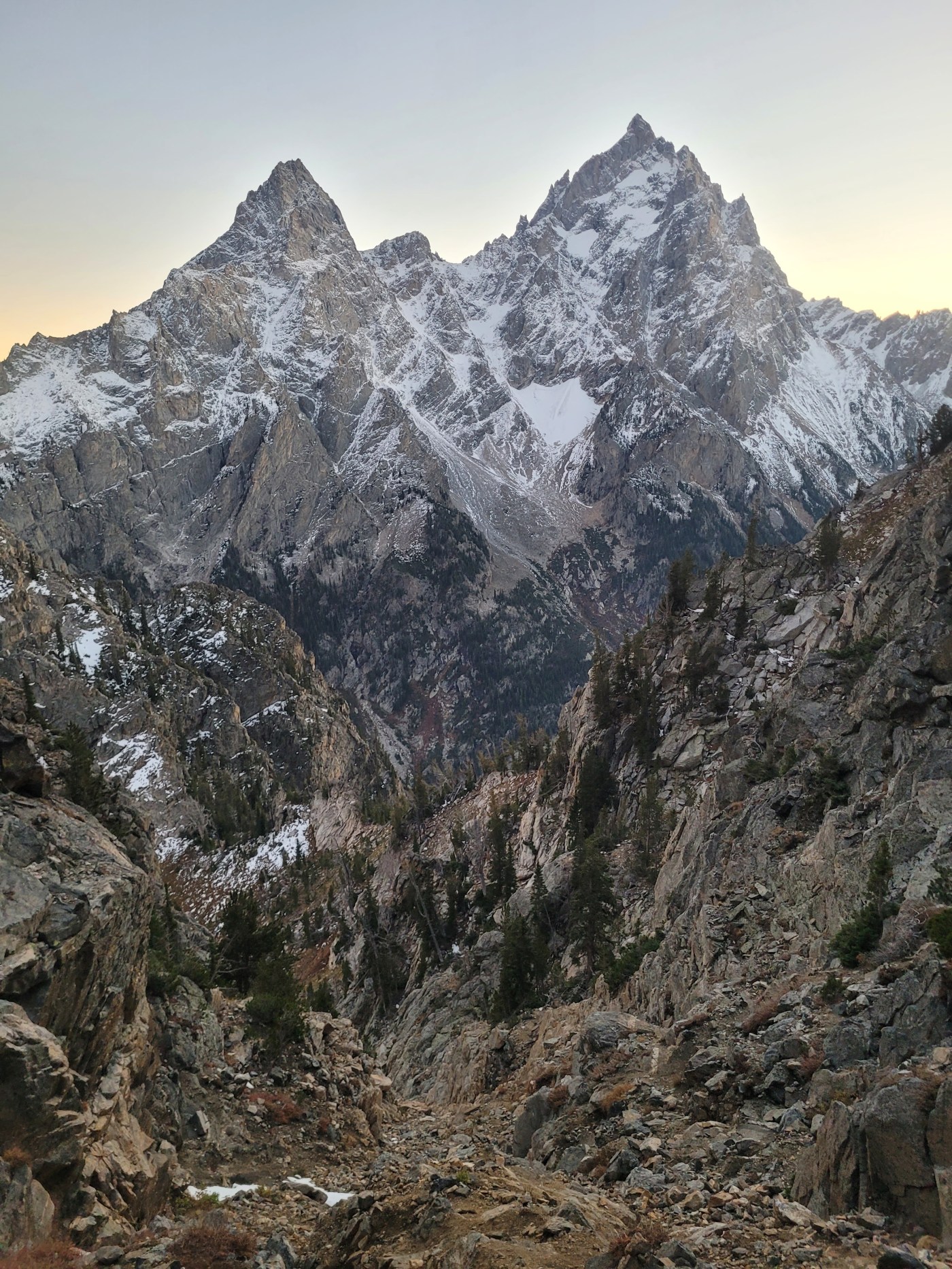
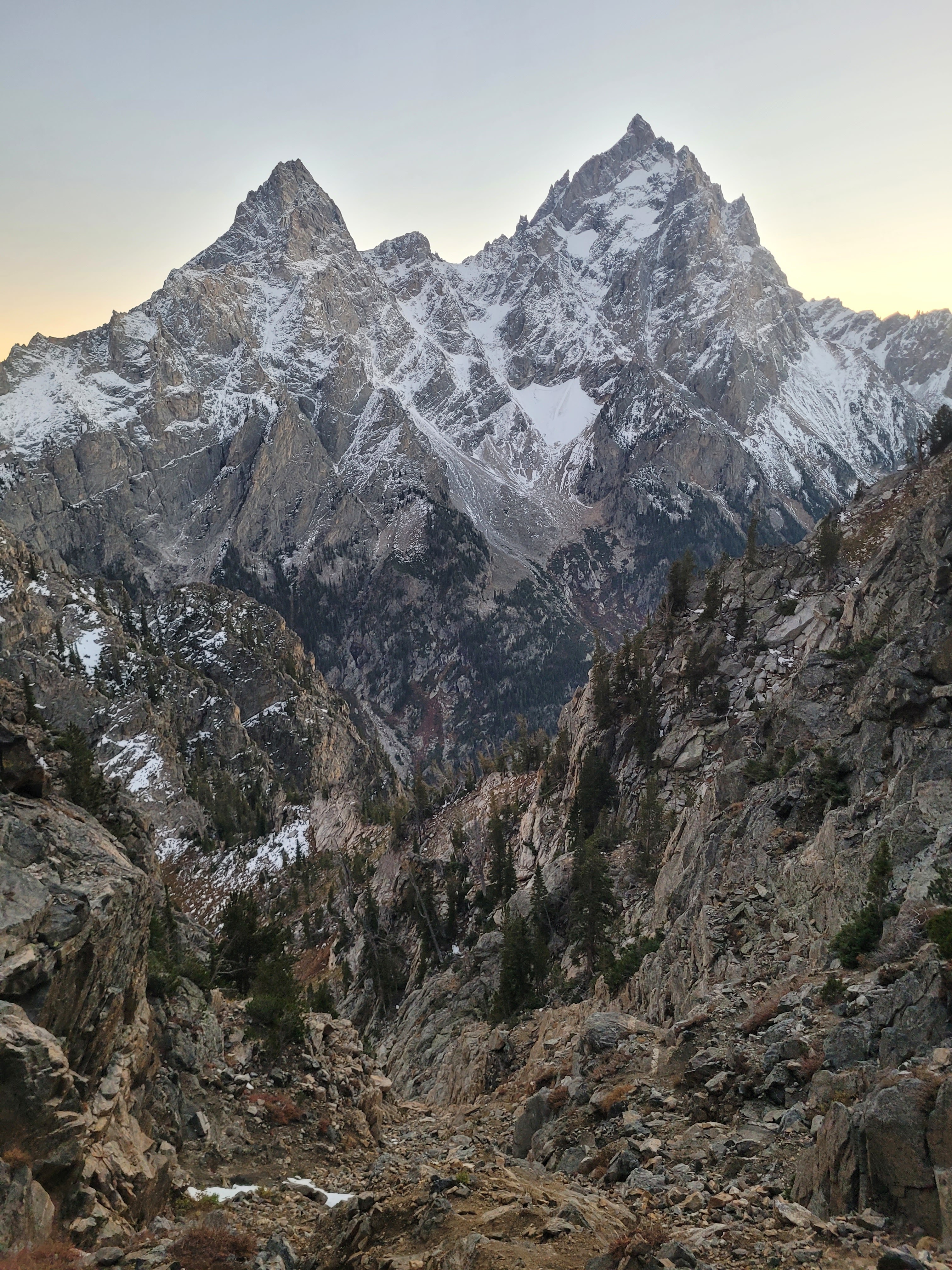
The Direct Jensen Ridge is a 1,000 foot rock climb on the longest and most impressive south ridge of the 10,561 foot Symmetry Spire. This route was both memorable and taxing, as you’ll soon read.
The Direct Jensen Ridge is the longest and most impressive of the many south facing ridges on Symmetry Spire, a peak which I’ve somehow never summitted, and Neil only once in the 1990’s via the Durrance Ridge – I think the same year I was born. The Jensen is about 1,000 vertical feet and openly sandbagged at the original 5.7 grade. After an excellent climb with Neil two weeks earlier on Heartbreak Ridge I was excited to reunite for another long moderate. Ice climbing season is only a cold snap away, and my priorities have shifted from hard rock climbing to ice specific training, mainly hanging on tools, core work and physical therapy. The goal was a carefree outing on perhaps the premier short approach 10,000+ foot Teton peak, maybe some approach shoe pitches and a little picnic – home before dark? Well, that didn’t quite pan out. As you’ll come to find, the Jensen wasn’t your average Grade III 5.7, and a few other mishaps compounded into a fairly epic adventure.
Love Ten Thousand Too Far? Support independent mountain journalism with $5.10 per month through Patreon (and receive extra bonus content), or with a one-time donation. Any and all support is greatly appreciated.
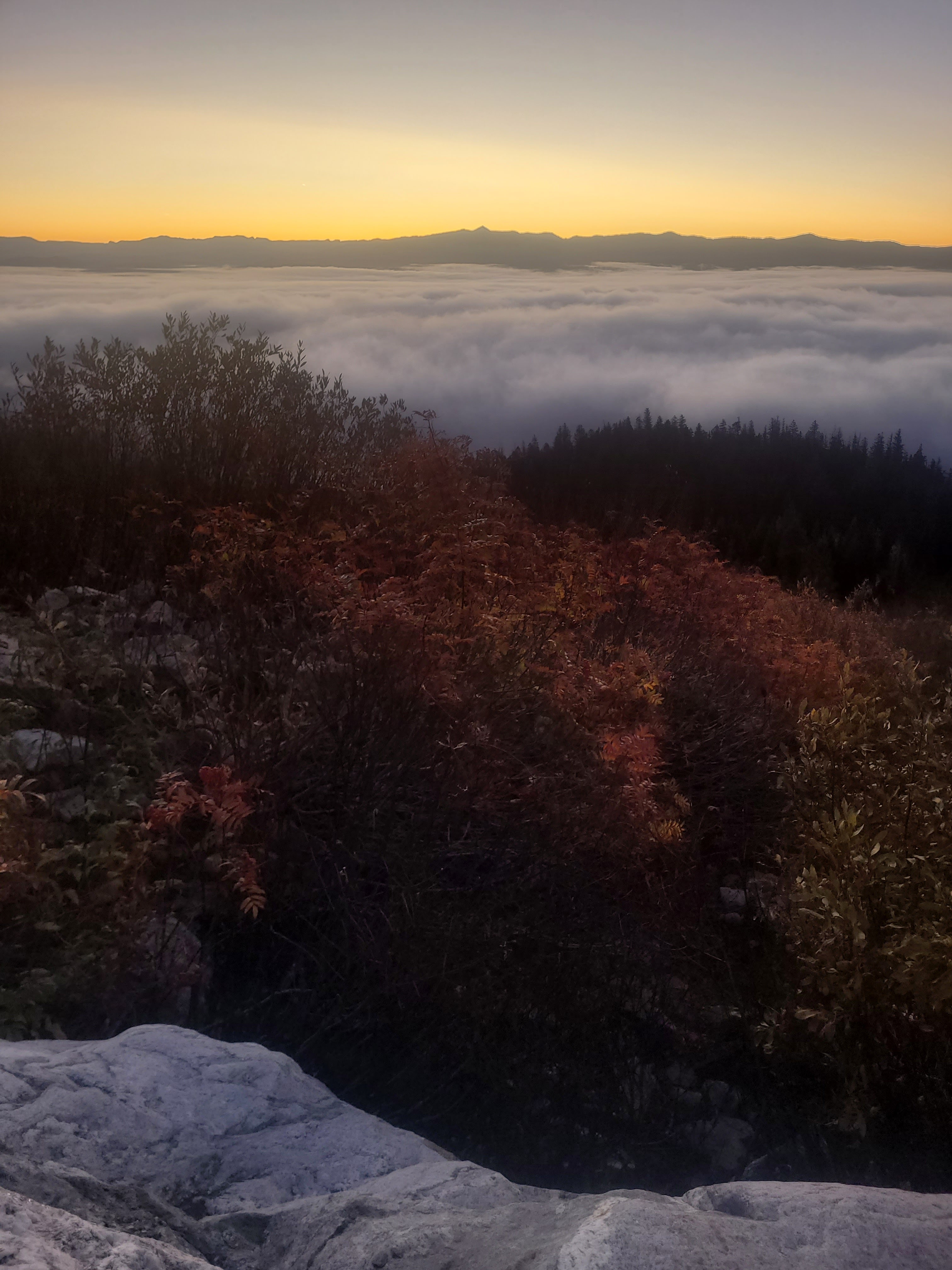
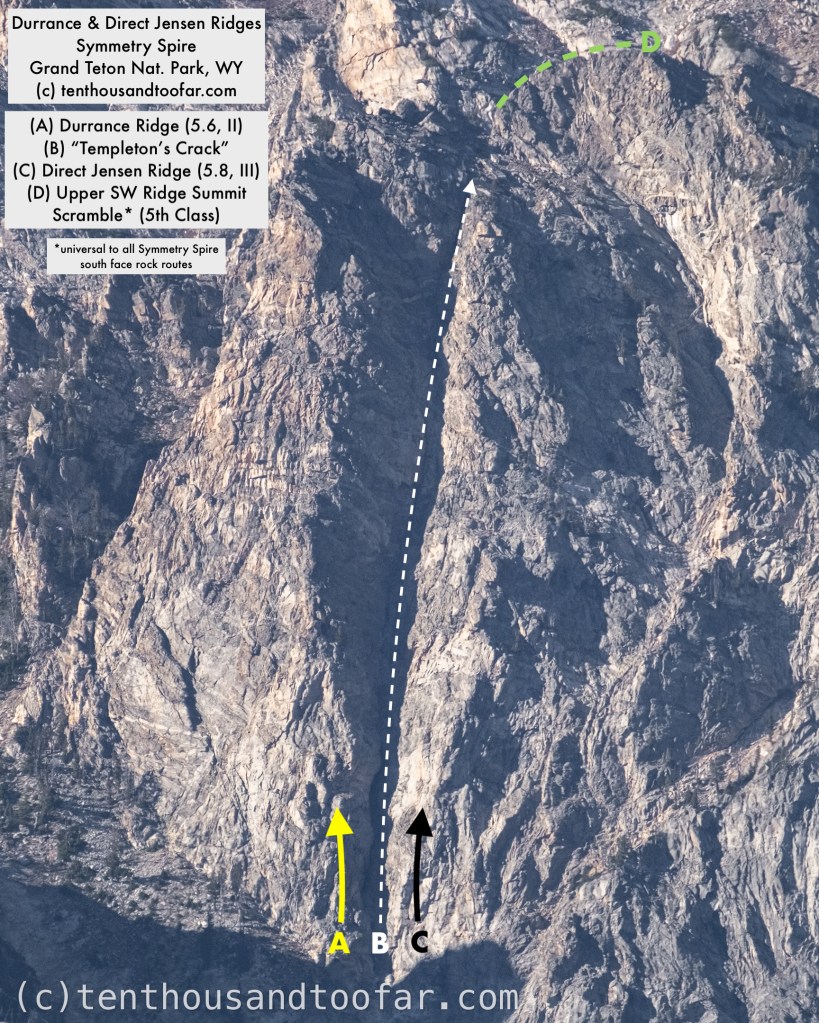
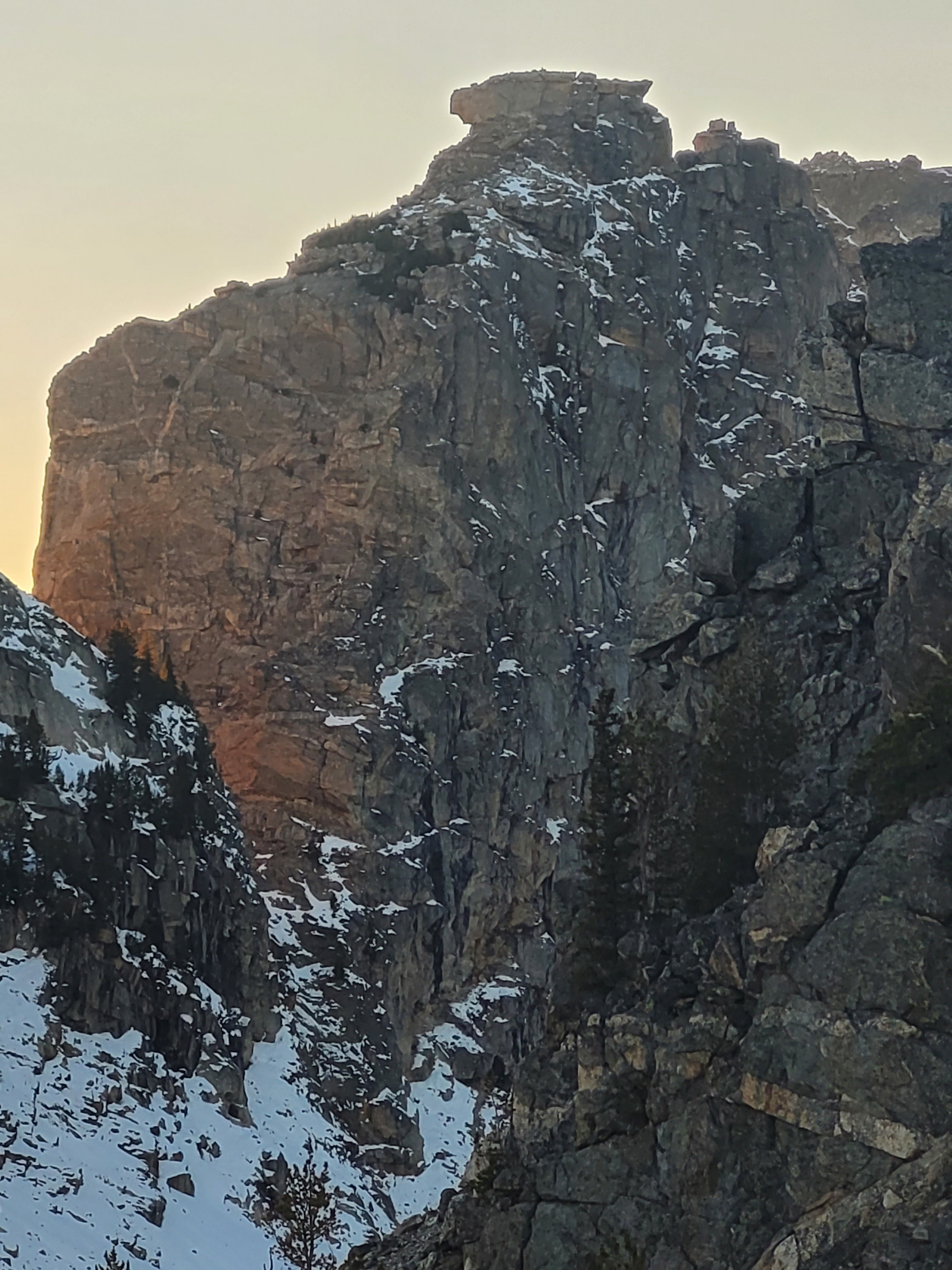
We approached via String Lake, Cascade Canyon Horse Trail and the Symmetry Couloir, directly up the main drainage, which I only later discovered is skirted on the north by a climber’s trail we never found in the daze of early morning. After a prolonged mess of rock hopping and wet slab climbing we reached the main couloir, located the well-beaten trail, and eventually the base of the Direct Jensen Ridge by 10:00AM, some three and a half hours after leaving the car. The Direct Jensen is easily identified as the right barrier of Templeton’s Crack, the striking, steep and narrow black couloir before the Southwest Ridge, also marked by a large square cut roof about a rope’s length off the ground. The weather was splitter and quite warm for October, leaving us excited to jump on the brilliant pane of attractive granite overhead. However, herein lies the first obstacle: where to start? The Gams and Ortenburger-Jackson (OJ) guidebooks are at odds on the first pitch, with the former suggesting a first pitch beginning in the black left-facing dihedral on climber’s right, and eventually arching climber’s left towards the crest, and the OJ suggesting a direct start on climber’s left heading towards the the large prominent roof feature on the crest, which would eventually get skirted on climber’s right. Then you have Mountain Project, which suggests to start ambiguously “in the middle of the face”. We were attracted to the OJ start purely for aesthetics – there was a beautiful splitter crack just below, but we struggled to find a protectable way through the steep knobby face climbing required to reach it. In response we took to the Gams start, where a testy, poorly protected 5.8 lead was found on somewhat suspect stone. I think I placed about eight wires and clipped two fixed pins in the down sloping rock, which offered mostly thin slots not conducive to camming devices. Eventually I arched back left through a low angle vegetated trough with a tree to a nice belay ledge adjacent to the big roof on the crest, an 80 meter pitch in full, to the top of the second pitch listed on the OJ topo.
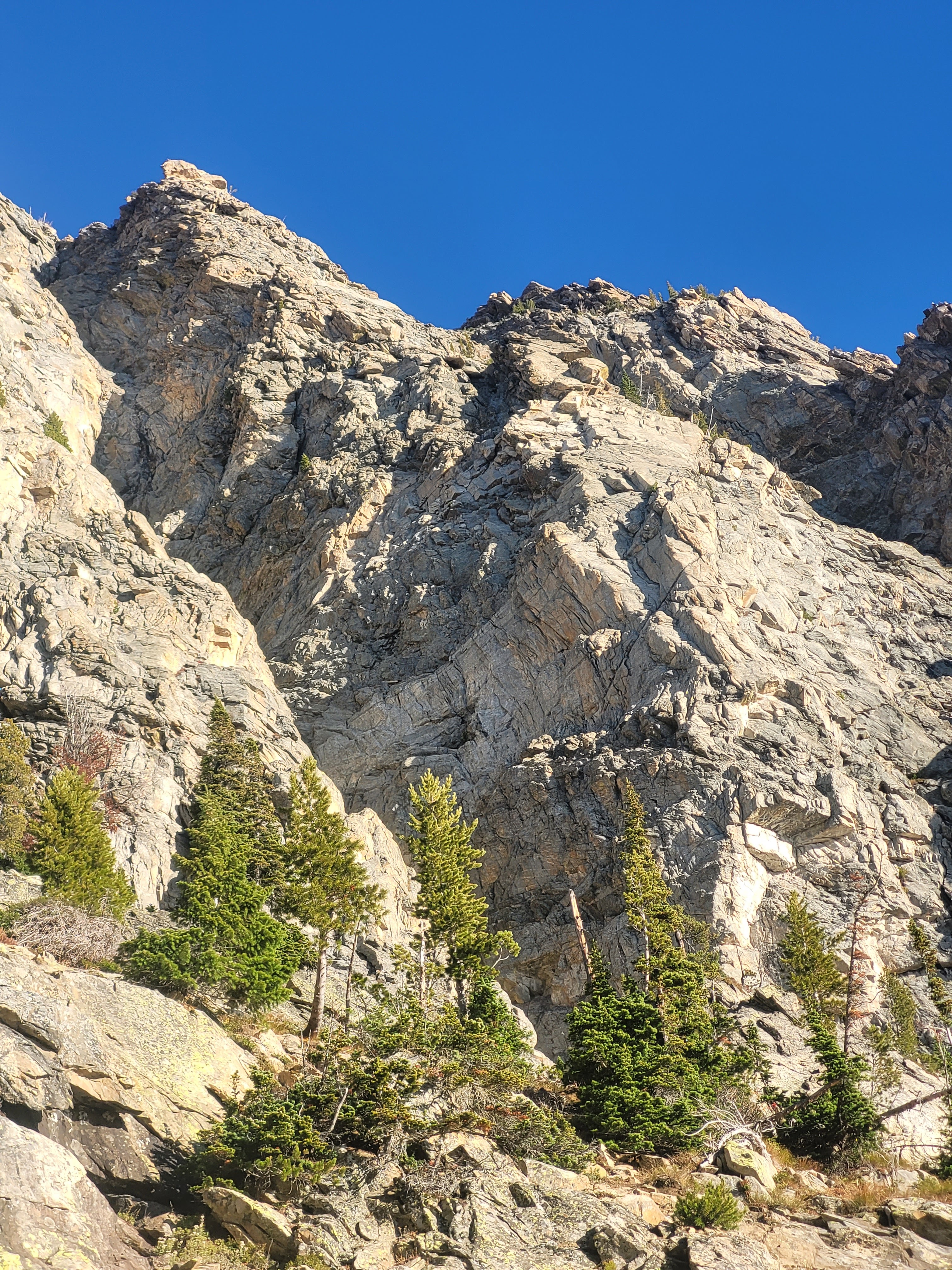
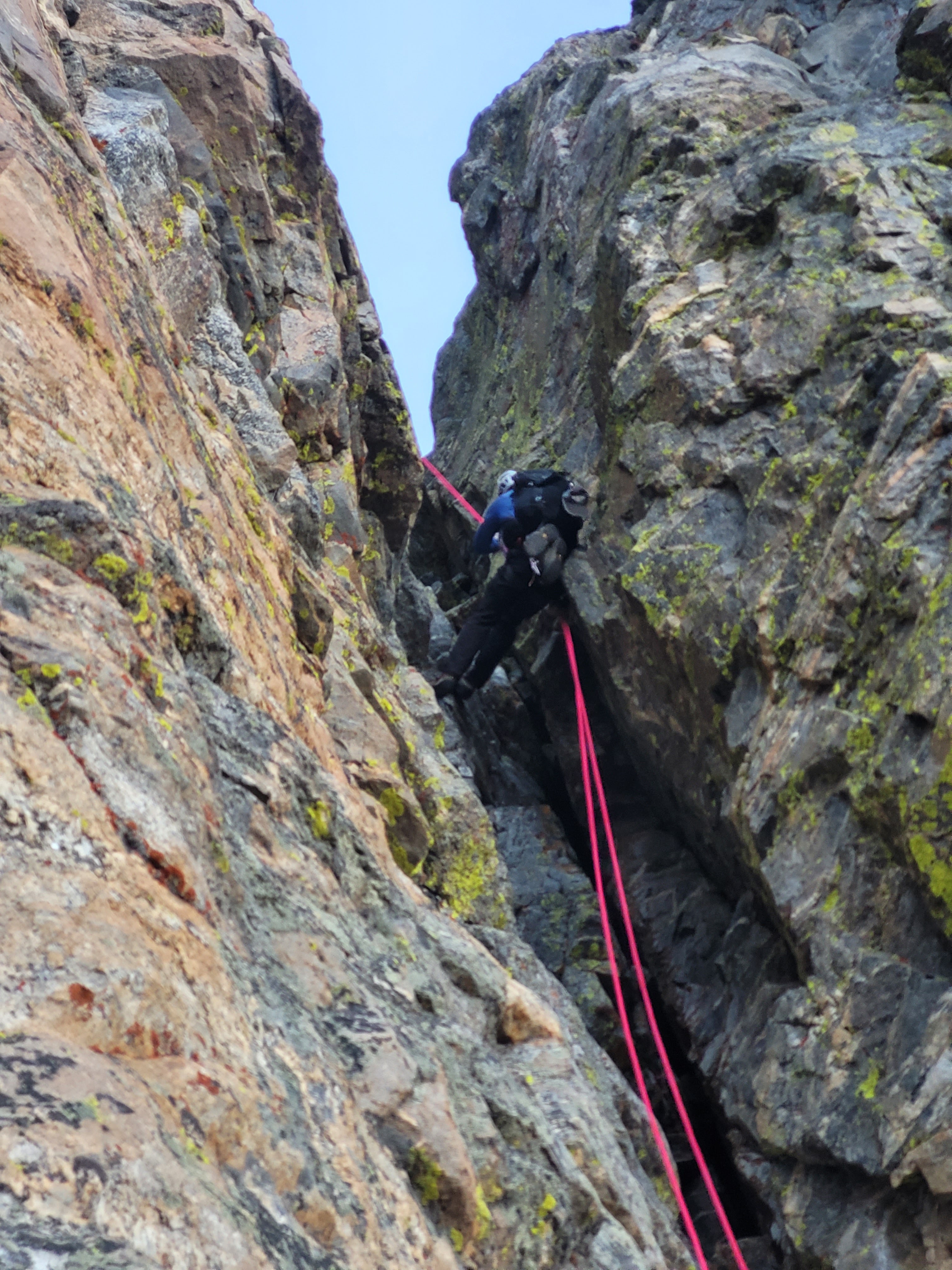
Our second pitch traversed aways before ascending a clean dihedral with a fixed pin. This smooth corner featured the most difficult climbing, with some insecure funk and ledge-fall potential above the pin, delicate 5.9 stemming (after good pro), a step right to easier ground and eventually an arc to the crest. Compared to the topo, where the third lead lies west of the crest, this hard pitch was on the east and could be the 5.9 variation described on Mountain Project. From this point forward we had a difficult time discerning anything from the topo, and basically stopped referencing it. Four more leads, two stretching our 70M rope and requiring some simul-climbing, took us to the conclusion of the ridge along more or less the direct crest. At many points it seemed easier to dip off the crest, and the topo seemed to suggest it, but the climbing on the steeper skyline gendarmes was too tempting. There were two distinct sections of 5.8/5.9 with remarkable exposure, one being an especially tricky step west of large roof with a fixed pin that could be the “steeper face” listed in the OJ. Five meters east of this crux was an overhanging chimney through a roof sporting two more fixed pins. If I could rename this route, I would call it The Teton Piton Museum. Clearly the Jensen saw an impressive amount of early traffic, and a variety of variations exist all over the crest, as evidenced by many fixed pins on the topo we never saw, visible fixed pins in cracks we didn’t climb and of course, the dozen or so we did find. Neil was also quick to remind me that “just because you found a pin doesn’t mean it’s on route” – wise sentiment dissuading the pervasive practice of using fixed gear to track a “proper route”. Somewhere around pitch four I also bombed my approach shoes off a hanging belay while rearranging my harness, watching them careen into Templeton’s Crack for several hundred feet and out of view. This was a sickening sight I vowed not to worry about, for there was no chance of retrieval, and a lot of adventure still lied ahead.
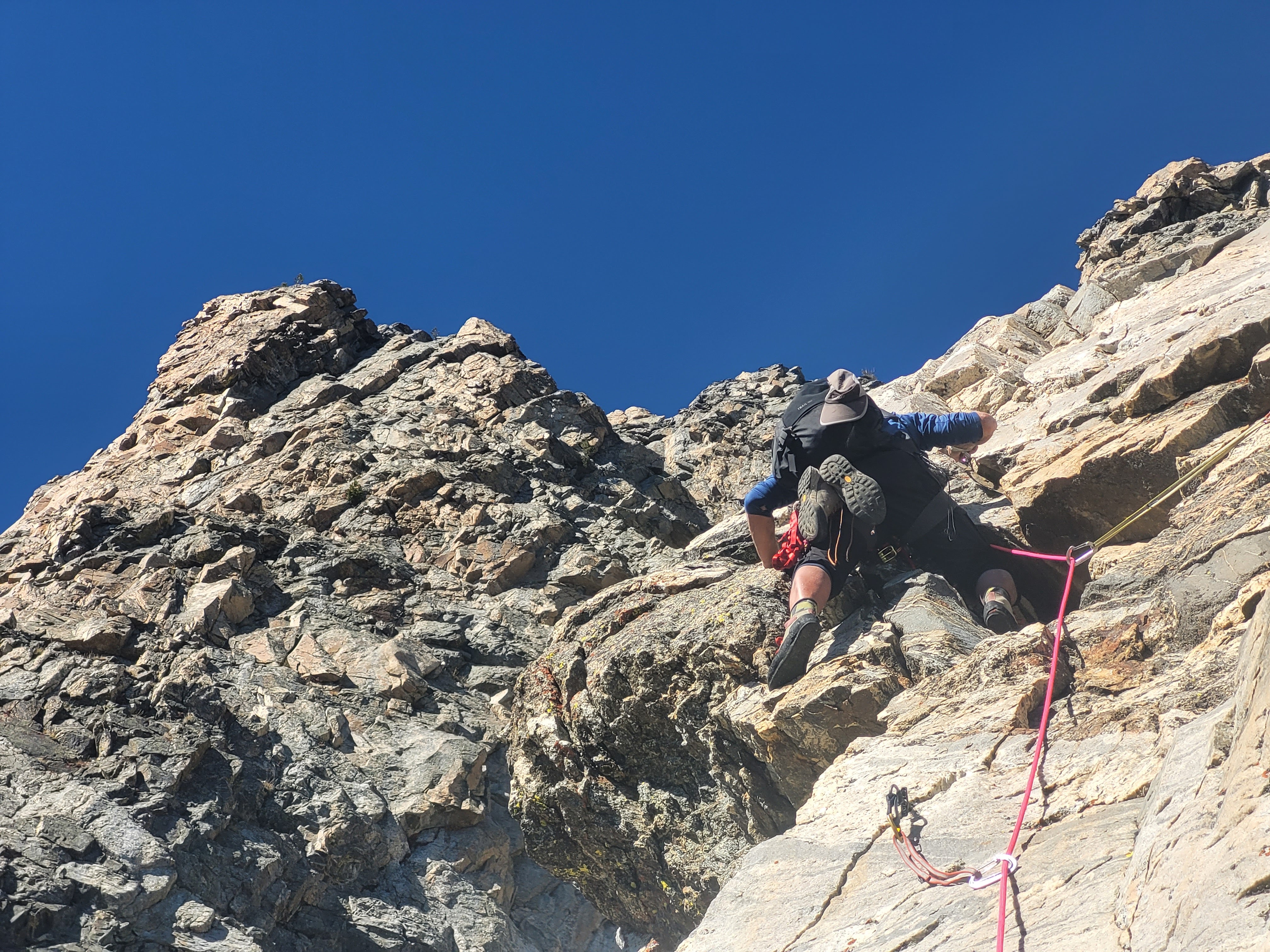
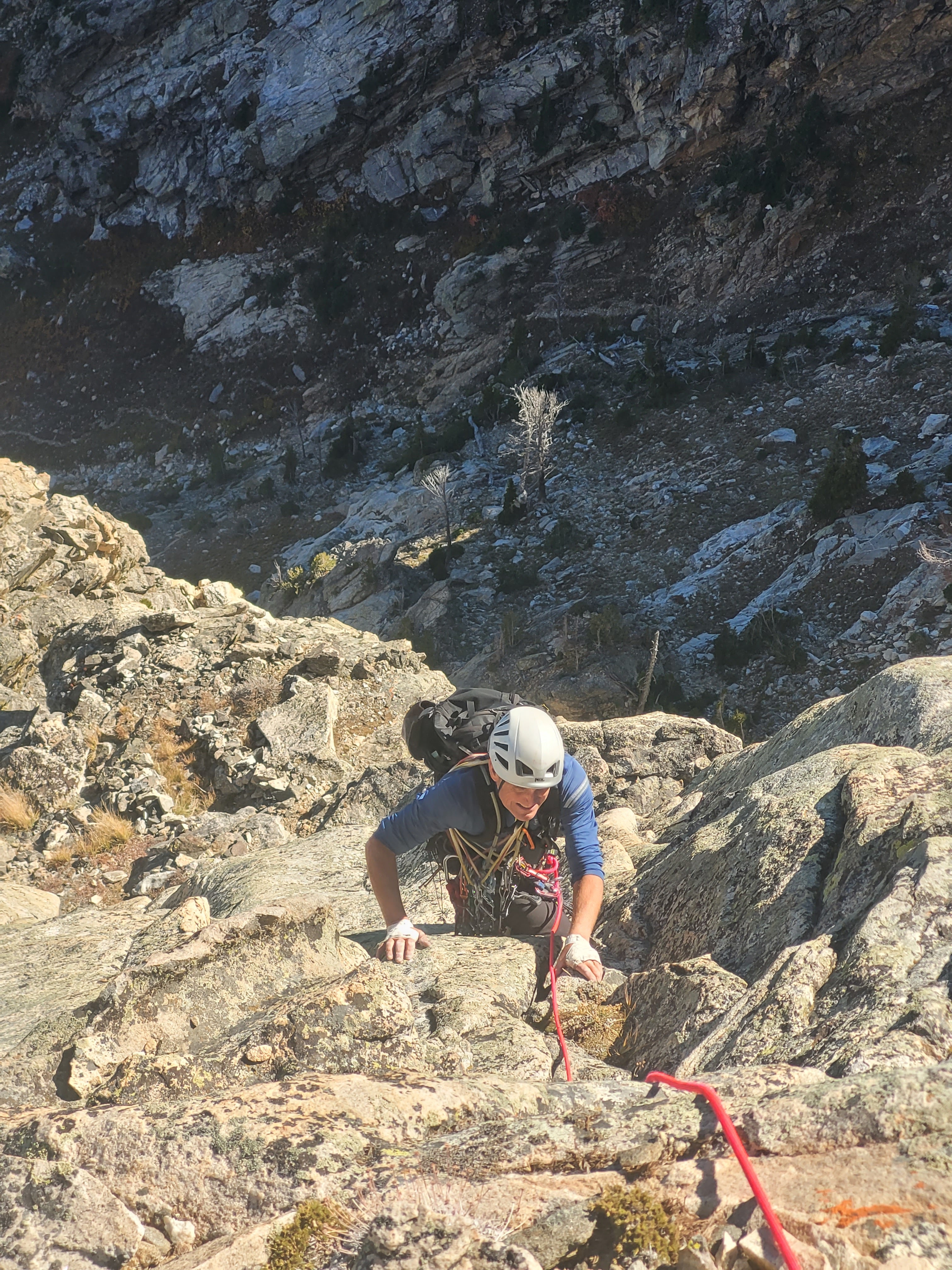
We topped out the Jensen proper at 5:15PM and were surprised to see an intimidating 100 foot ridge lying between us and the summit, a final obstacle universally shared by all the south facing ridge routes on Symmetry. At first glance I thought “no way”, as we certainly couldn’t afford to belay any more pitches and make it off the upper mountain by dark, and a rappel station before the last ridge is rigged for early descent into the Southwest Couloir – but Neil had other plans. From the rappel station he took off ropeless, pioneering a gutsy hand traverse above hundreds of feet of direct exposure to the west side of the ridge and easier ground. I was impressed and fired up. Aside from the first ten feet of steep terrain, the remainder was a reasonable low-fifth solo scramble to the summit block. We topped out the snow-clad ridge just shy of 6:00PM.
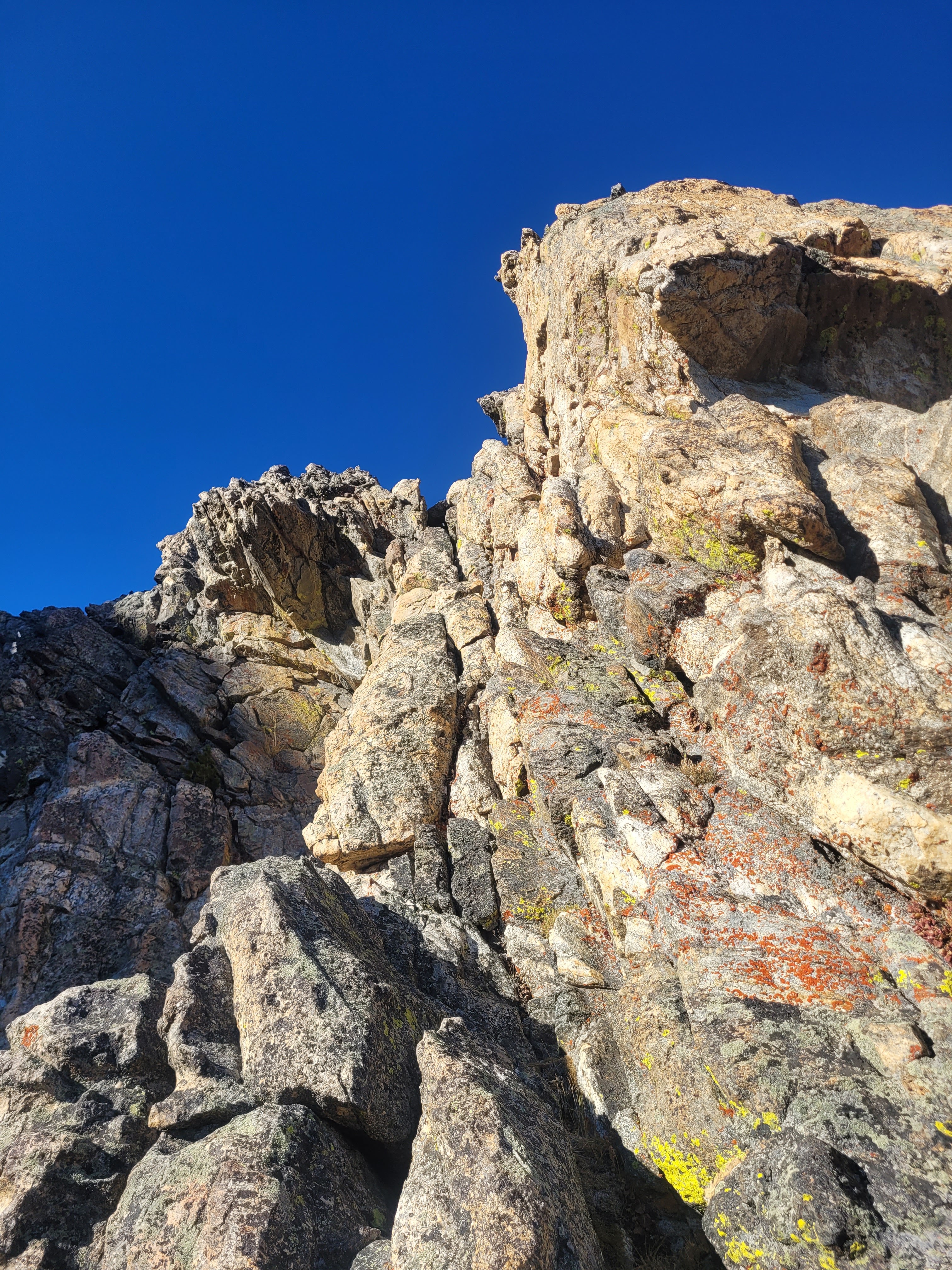
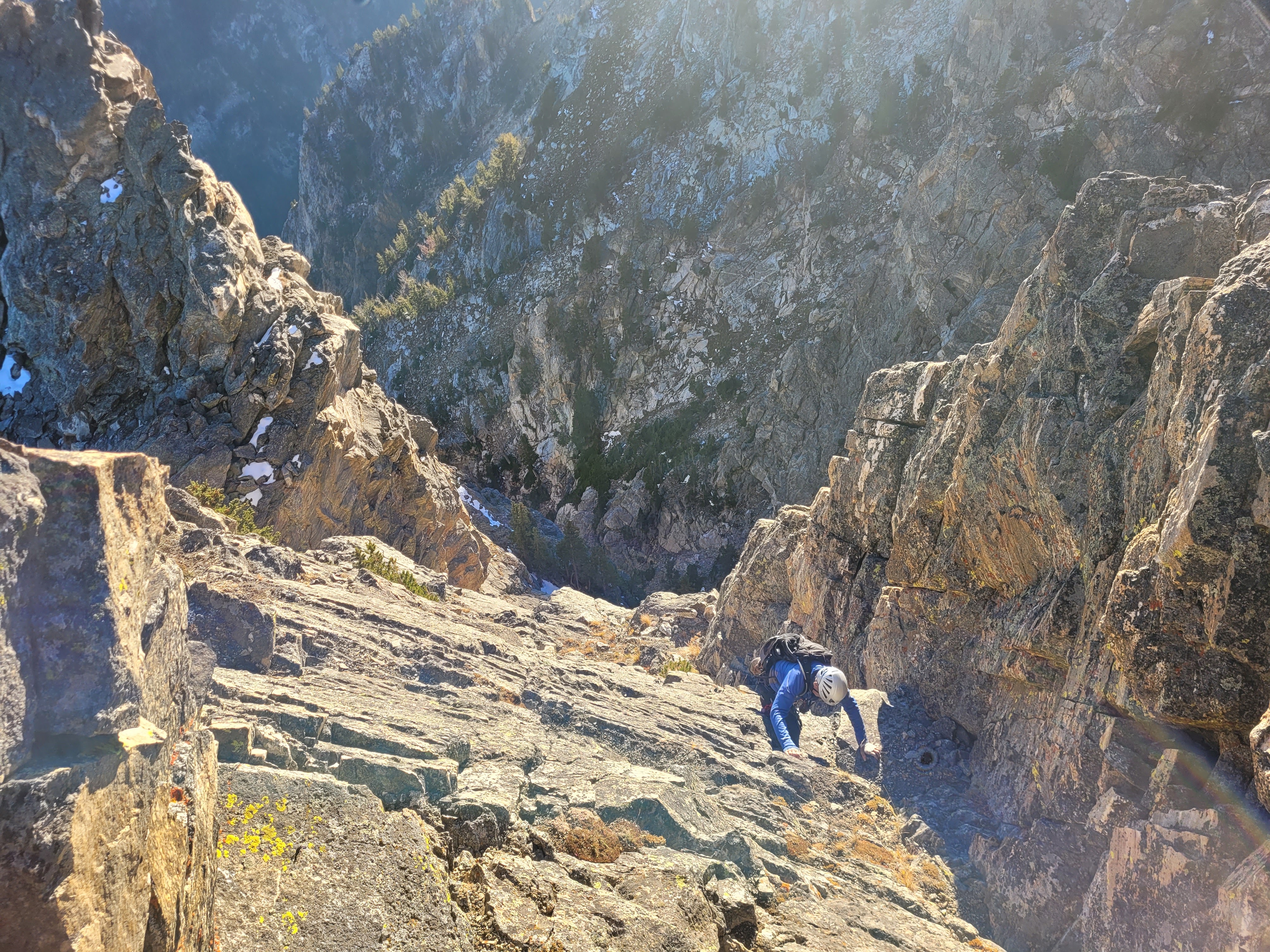
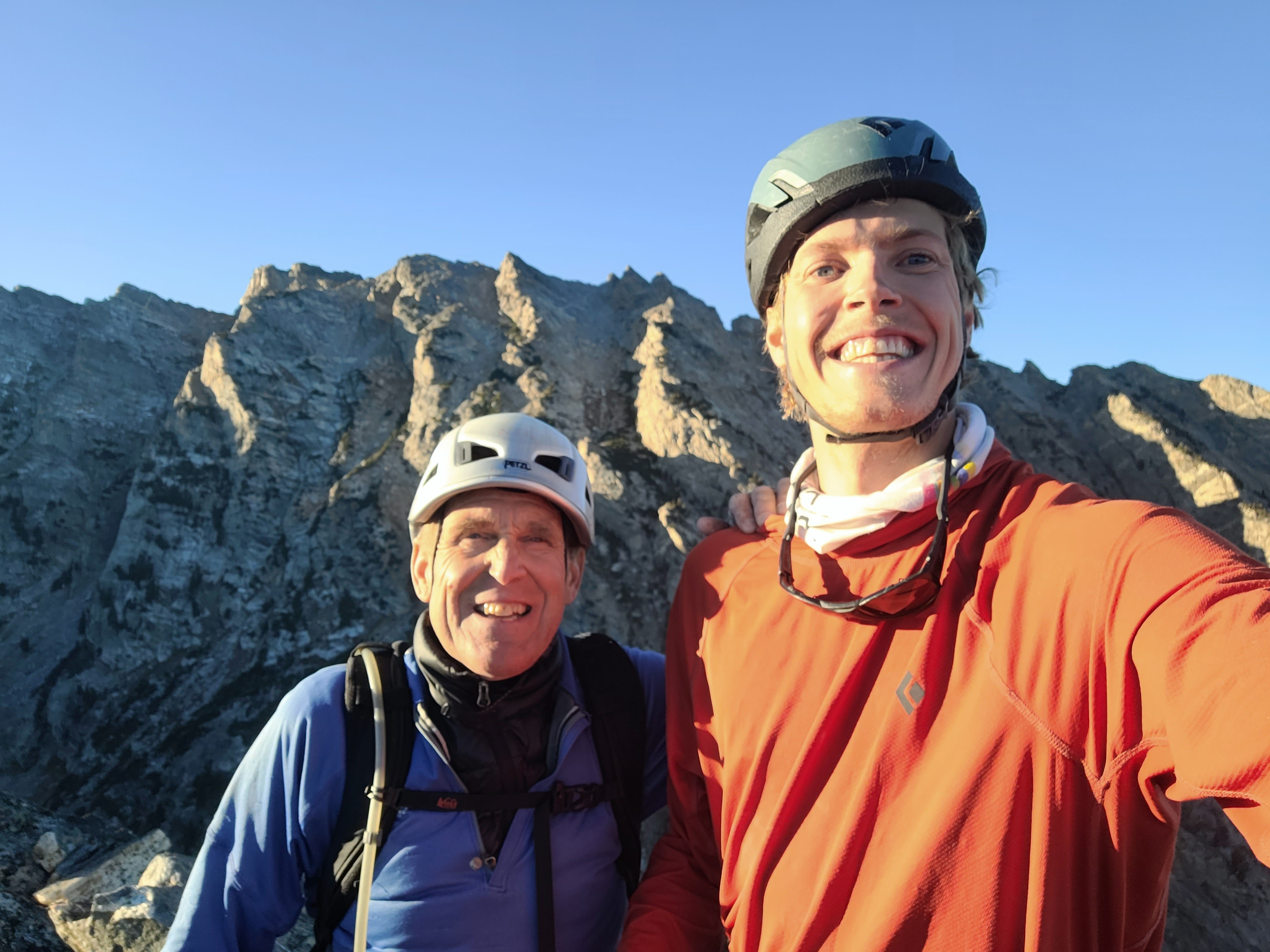
Our descent was on the slower side of things, nearly six hours from summit to car. The traditional north-facing walk-off ledges were snowed up, and I did not want to reverse that hand traverse out of the notch, so we down-climbed the true Southwest Ridge until a 30M rappel off the east side returned us to the aforementioned notch. From there it was another 20-25 meter rappel and a bit of easy but snowy down-climbing into the Southwest Couloir. There were rappel slings on a tree to bypass a short step of fifth-class terrain, but we didn’t find the rope prudent. Keep in mind, I walked all the way down in performance sized climbing shoes, also weighed down by a mirrorless camera for which I forgot a memory card and therefore, was nothing more than deadweight. Adding insult to injury I left a pair of belay gloves at the base of a final short rappel needed to bypass a wet fourth class crux near the bottom of the Symmetry Couloir (see climber’s notes for proper approach/descent beta), presumably because by this point my toes were swollen to the point of shuddering pain, we’d been on-the-go for 16.5 hours and my liver was fogged out by the half dozen Tylenol needed to walk without a limp. Hiking the final two flatland miles along Jenny Lake to the car were transcendent, and not in the romantic way. Two days later my foot pads were still sore to the touch, and only a full week removed am I considering tossing on my comfort climbing shoes, padded by wool socks, for a little season ending alpine jaunt.
Summary
The Direct Jensen Ridge… what a sandbag! If a 5.7 climber stumbled upon this route they’d be in for a doozie. It’s substantially more challenging than any of the classic 5.7’s I’ve romped this summer including Irene’s Arete, Durrance Direct (Lower Exum Ridge) and the Direct South Ridge on Nez Perce. However, at least this is forecasted in both the Gams and OJ books. The bigger sandbag for us was the commitment grade. I’m assuming the Grade III designation doesn’t include the final summit scramble, and even without the summit ridge this could easily be Grade IV. Guidebooks list ten pitches (excluding the summit ridge), and it seems a bit of a double standard to call routes such as Armed Robbery (5.9, 7 pitches) and the Full Exum Ridge (5.7, 12 pitches) Grade IV, and not a 10-12 pitch, 1,000 foot “5.8” (Jensen). Aided by a bit of soloing on pitch one we cleared the ridge in six belayed pitches, almost every one stretching a 70 meter rope or requiring a bit of simul climbing. We climbed efficiently with a light single rack and didn’t place much gear on terrain easier 5.8, and soloed the last 1-2 “pitches” on the summit ridge. Even with these heavy handed tactics we needed seven hours from tie in to summit, illustrating the length of, and difficult route finding required, on the Direct Jensen. That said, the rock quality is generally excellent and many of the harder cruxes offered amazing exposure and great movement with a stunning backdrop of the Cathedral Group and Mount Owen’s captivating Northeast Snowfields.
As for me – well, you can probably tell by the title I’m getting a little frayed. According to my journal this was my 28th attempted alpine route in Grand Teton National Park this summer, with a pitch count somewhere near 148. My joints are getting a touch creaky, and I’m growing a little sick of run-outs, loose rock and rope drag. About halfway up the ridge I broke a foothold and caught myself on a jug rail, dead hanging with two feet dangling above Templeton’s Crack. Luckily I identified the suspect stone and had reliable protection at my belay loop. Forgetting the memory card for my camera, dropping my approach shoes and leaving a pair of belay gloves sitting at a rappel station are illustrations of mental carelessness associated with burnout. I think I’m hitting an equivalent point to what I felt on a late May ski descent of the Grand Teton this past season. It doesn’t mean I love the mountains any less, or am doing things for the wrong reasons – I think it’s just my body’s way of synchronizing with the mountains, like a little child tugging on the back of my shirt saying “look at me!” So long as the weather stays good I’m excited for a few more romps into the holy land, but I think I’ll remain below 10,000 feet until the snow starts flying and water starts freezing, if only to avoid losing another 250 dollars worth of gear, let alone give my body a chance to recover.
Climber’s Notes – Gear and Approach
We brought a single rack of cams to 2.5 inches, a plump set of wires and 12 slings. This rack served us well alongside a 70M rope, though a 60M should work just fine. If you stalk the path of least resistance, dipping on and off the crest, you might find a 5.8 path, but I’d bank on a few 5.9 sequences at the least. The proper Symmetry Couloir approach lies just north of the main drainage exiting the couloir. It ascends another small gully and has a fourth class crux in the meat of it, often wet, with a fixed hand-line on climber’s right. This hand-line is suspect and should be treated with caution or avoided entirely. Above this crux, find a climber’s trail moving back southwest, climber’s left, that will eventually lead up slabs and forested terrain into the Symmetry Couloir. The trail begins right of the creek but moves to the left side on the upper two-thirds of the couloir, and will become more robust as you go. On descent there are many rappel stations to negotiate the fourth class crux if down-climbing wet slabs in the dark doesn’t look fun.
Resources
- A Climbers Guide to the Teton Range, Jackson & Ortenburger, book (topo, description)
- Teton Rock Climbs, Gams, book (topo, description)
- Best Climbs Grand Teton National Park, Rossiter, book (topo, description)
Want to support? Consider a donation, subscribe, or simply support our sponsors listed below.
Ten Thousand Too Far is generously supported by Icelantic Skis from Golden Colorado, Barrels & Bins Natural Market in Driggs Idaho, Range Meal Bars from Bozeman Montana and Black Diamond Equipment.




subscribe for new article updates
DISCLAIMER
Ski mountaineering, rock climbing, ice climbing and all other forms of mountain recreation are inherently dangerous. Should you decide to attempt anything you read about in this article, you are doing so at your own risk! This article is written to the best possible level of accuracy and detail, but I am only human – information could be presented wrong. Furthermore, conditions in the mountains are subject to change at any time. Ten Thousand Too Far and Brandon Wanthal are not liable for any actions or repercussions acted upon or suffered from the result of this article’s reading.
 Ten Thousand Too Far